
How Often to Clean Cold Plunge Water and Keep It Clear
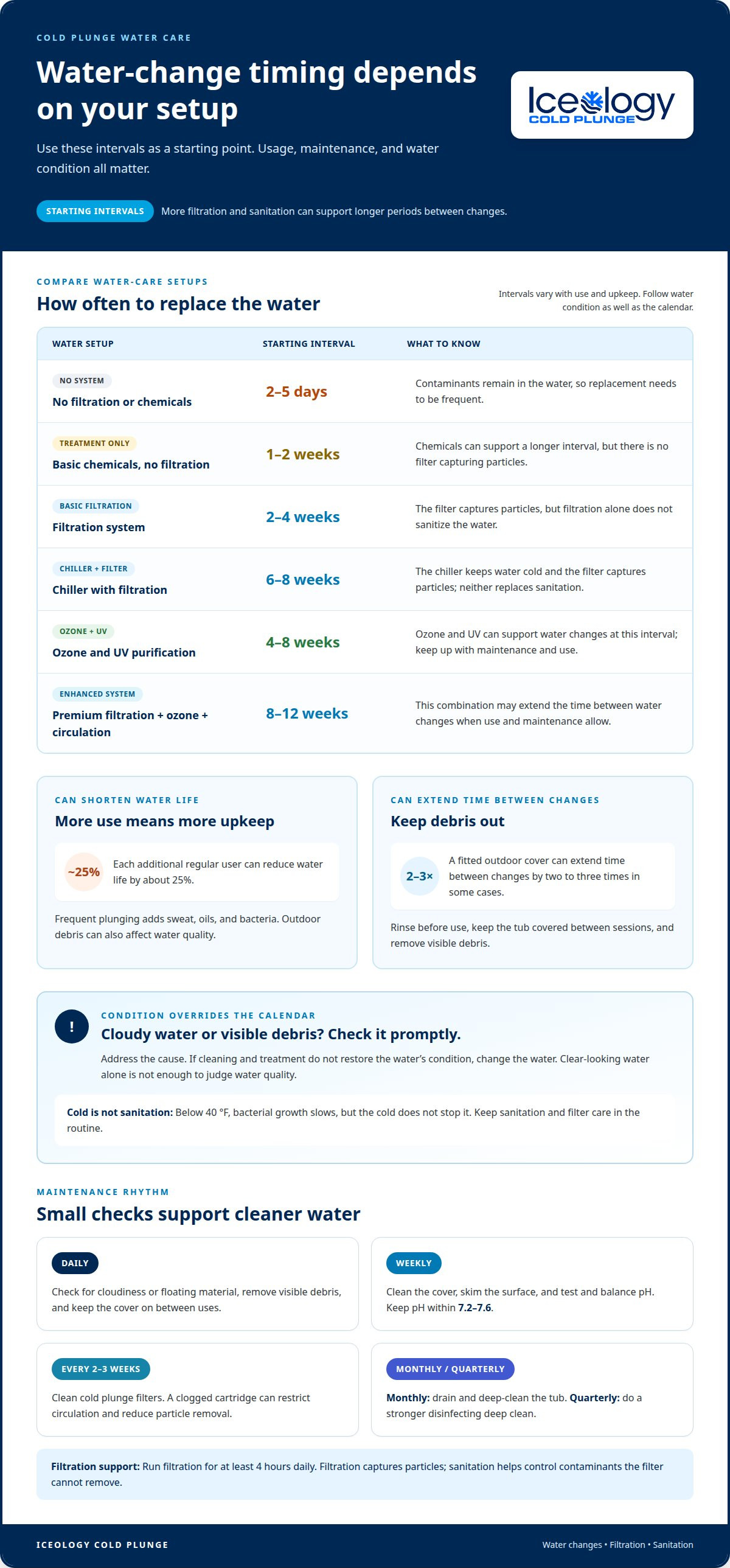
Water changes aren’t the whole answer: for most home users who maintain the water properly, change it every four to eight weeks; without filtration or sanitation, change it every 2 to 5 days. How often you should clean your cold plunge water also depends on how often it’s used and how consistently it’s maintained.
A simple schedule is useful, but water quality depends on more than the calendar. Filtration and sanitation help manage buildup between water changes. Rinsing before you plunge, keeping the tub covered, and removing debris also support a cleaner routine.
Learn when to replace the water, how filtration and sanitation help, and which habits support routine care. Use frequency also affects water quality, so tailor your maintenance schedule to how often the tub is used.
Key Takeaways
- Build a routine around water testing, filter care, and periodic tub cleaning to catch maintenance needs before water quality visibly declines.
- Test water pH weekly and keep it within the recommended range of 7.2-7.6.
- Clean cold plunge filters every 2-3 weeks, and include the tub cover in weekly maintenance.
- Account for how often the tub is used: each additional regular user can reduce water life by about 25%.
- Cold temperatures slow bacterial growth, but they don’t replace sanitation and consistent water care.
How Often to Change Cold Plunge Water?
Water-change timing depends on filtration, sanitation, and frequency of use. If the water turns cloudy or contains visible debris, address the cause promptly. Change the water if cleaning and treatment don’t restore its condition.
If you’re asking, “how often should you clean your cold plunge water?” start by considering your setup and how often it’s used. The intervals below offer a practical starting point.
Intervals by Filtration and Sanitation Setup
A filtration system captures particles, while sanitation helps control contaminants between water changes. With basic filtration, change the water every 2-4 weeks. Ozone and UV purification can support changes every 4-8 weeks. Premium filtration combined with ozone and circulation may extend the interval to 8 to 12 weeks. These schedules depend on use and maintenance, so the question “how often should you clean your cold plunge water?” also calls for considering how many people use it.
Water Changes Without Filtration or Sanitation
Without filtration or sanitation, contaminants remain in the water, so changes need to be frequent. Replace water every 2 to 5 days when the setup uses neither filtration nor chemicals. Basic chemicals without filtration can support a 1 to 2 week interval. Clear-looking water isn’t enough to judge its condition; follow the schedule for your setup and respond to changes in water quality.
Chiller and Filtration Water-Change Timing
A chiller with filtration can support water changes every 6-8 weeks. The chiller maintains cold water, and the filter captures particles, but neither function replaces sanitation. Below 40 °F, bacterial growth slows, but the cold doesn’t stop it. Keep sanitation and filter care in the routine, and reassess the interval if use increases or the water’s appearance changes.
Factors That Call for More Frequent Changes
Frequent use, additional bathers, and outdoor debris can shorten water life. Each additional regular user reduces water life by about 25%, while more plunging adds sweat, oils, and bacteria. A fitted outdoor cover can extend time between water changes by two to three times in some cases. Rinsing before use and maintaining sanitation support water quality, but don’t replace changing water when its condition calls for it.
Filtration and sanitation methods
Filtration captures particles, while sanitation treatments address contaminants that filters can’t remove. A reliable water-care routine uses both and includes regular checks of the water’s condition.
Filtration Methods
A filtration system circulates water through a filter that traps suspended particles. This helps keep debris from accumulating, but filtration alone doesn’t sanitize the water. Cold plunge filters can remove particles in the 5-20 micron range, and a circulation pump helps move water through the filter. Run filtration for at least 4 hours daily to support ongoing treatment. Regular filter cleaning also matters: a clogged cartridge can restrict circulation and reduce effective particle removal.
Sanitizers and Water Treatments
Sanitizers help control contaminants that filtration leaves behind, while water treatments support ongoing sanitation. Chlorine-treated water should maintain 1-3 ppm chlorine; bromine-treated water should maintain 3-5 ppm bromine. Hydrogen peroxide is another treatment option, with an ongoing concentration of 30-50 ppm. These approaches aren’t interchangeable instructions: use one treatment routine and test the water to understand its chemistry. After adding hydrogen peroxide, allow 15-20 minutes of circulation before use.
Sanitation in Cold Water
Cold water slows bacterial growth, but it doesn’t eliminate bacteria or remove the need for sanitation. Below 40 °F, bacterial growth is slower, so temperature can support a sanitation routine without replacing it. Ozone and UV purification provide additional sanitation methods alongside filtration. A circulation pump distributes treated water through the system, while the filter captures particles. Together, these methods address different water-quality concerns, which is why cold temperature alone isn’t a complete treatment.
Monitoring Sanitizer Levels
Testing sanitizer levels shows whether treatment remains active and helps guide water care. For chlorine-treated water, free chlorine below 1 ppm means the sanitizer is exhausted. Maintain chlorine at 1-3 ppm or bromine at 3-5 ppm, depending on the chosen treatment. Bromine can affect water chemistry, so test strips can also help determine pH. Test consistently, record results, and adjust treatment according to the product instructions. If readings fall outside the target range, restore the intended level before relying on sanitation.
Choosing a cold plunge setup that fits your water-care routine can help make ongoing maintenance more manageable.
What is a good cold plunge tub maintenance routine?
A dependable routine combines brief daily checks with scheduled testing and cleaning. Weekly, monthly, and quarterly tasks can help you spot changes in water quality early.
Daily Maintenance Tasks
Daily maintenance means checking the tub and keeping avoidable debris out of the water. Before each session, look for cloudiness, floating material, or changes in appearance. Remove visible debris and keep the cover on between uses. Don’t assume cold water replaces cleaning: regular testing and sanitation are still part of water care.
Weekly and Monthly Upkeep
Weekly upkeep focuses on the cover, surface debris, and basic water checks. Clean the cover weekly to prevent dirt, leaves, and moisture from entering the tub, and skim the surface as part of weekly maintenance. Test and balance pH weekly, aiming for 7.2-7.6. Monthly, drain and deep-clean the tub. A stronger disinfecting deep clean is recommended quarterly, giving the routine a clear schedule beyond surface care.
Water Temperature and Maintenance
Water temperature affects maintenance because cold slows some biological and chemical processes. Cold plunges typically use water around 55 degrees Fahrenheit or colder, but temperature doesn’t remove the need for sanitation. Below 50 °F, chemical reactions slow significantly, so treatment may behave differently than in warmer water. Don’t assume a colder ice bath automatically stays clean. Keep circulation and water testing in the routine, and follow the treatment directions for your chosen sanitation method.
Weekly Testing and Maintenance
Weekly testing checks whether water chemistry remains within its target ranges. Use a test strip to measure pH, and keep it between 7.2-7.6; total alkalinity should remain within 80 to 120 ppm. Test chemistry every 1-2 weeks or whenever you change the water. Calcium hardness should be 100-250 ppm. A common maintenance mistake is testing only when water looks cloudy, since appearance alone doesn’t show whether chemistry is balanced.
Use test readings to guide maintenance instead of adding treatment by guesswork. If a reading falls outside the target range for your system, follow the treatment instructions and retest as directed. Record the date and results; comparing weekly readings can reveal developing patterns. For example, repeated pH shifts may indicate that your upkeep routine needs attention. Consistent records make scheduled cleaning more purposeful.
How plunge frequency affects water cleanliness
Each plunge can introduce sweat, skin oils, and other contaminants. The more often the tub is used, the faster these materials accumulate and the more demand they place on filtration and sanitation. A tub used several times a day needs closer attention than one used occasionally. Set maintenance intervals according to actual use, not just the calendar.
User numbers matter too. Each additional regular cold plunge user can reduce water life by about 25%. More bathers mean more material entering the tub, even when everyone follows the same routine. Track how many people use the water and how often; that pattern helps explain why a tub may need attention sooner than expected.
Frequency also affects how reliably a sanitation routine keeps pace with contaminants. People who plunge 1-2 times a week can likely go longer between water changes. More frequent use increases the buildup of sweat, oils, and bacteria. If use rises, inspect the water and test its chemistry more often, rather than assuming the previous change schedule still fits.
A chiller keeps water cold, but it doesn’t remove material introduced through use. Filtration and sanitation may affect how often you need to change the water, but frequent use still matters. A regularly shared tub can accumulate contaminants faster than a lightly used one, even when both have chillers. Consider use, temperature, filtration, and sanitation together.
Filter care is another part of adapting to use. Clean cold plunge filters every 2-3 weeks so collected particles don’t remain in the system. A filter’s role is to capture debris; it doesn’t replace sanitation or water testing. When more people use the tub, check for visible buildup during routine maintenance and clean the filter on schedule.
Monitor chemical treatment consistently, especially as use changes. Frequent plunges can increase demand on sanitizer, so testing helps you assess whether its level is appropriate. Clear-looking water doesn’t prove treatment is working. Compare test results with the instructions for your sanitation method, particularly after heavier use.
Record use, filter cleaning, and water changes. Note periods when more people use the tub, then watch for changes in clarity and test readings. This makes frequency a practical part of maintenance rather than a guess. Aligning care with usage patterns makes a regular recovery routine easier to manage.
Reassess the schedule whenever the number of users or plunge frequency changes. If use drops to 1-2 sessions weekly, the water may last longer; added regular users can shorten its useful life. Keep the filter cleaning interval at 2-3 weeks, and use water appearance and test results to guide other adjustments. That approach connects daily use with timely maintenance.
Daily habits to keep water clean
A few habits around each plunge can limit debris and avoidable contamination. Rinsing before entry, keeping the cover clean, and checking the water surface help make daily care consistent. These steps support filtration and sanitation, but don’t replace testing or scheduled water changes.
Start before you enter. Rinsing your body before a cold-water immersion removes sweat, oils, and products that would otherwise enter the tub. This simple habit can help limit contaminants entering the water. It also reduces the material that filtration must capture and sanitizer must address. Make the rinse part of the same routine as preparing your towel.
After each session, check the surface and remove visible debris. Leaves, hair, and other particles can remain in the tub until skimmed or captured by filtration. If the water looks cloudy, investigate promptly rather than relying on appearance alone. Check sanitizer readings and filtration, then follow your system’s care instructions.
A fitted cover helps protect outdoor water from leaves, dirt, and moisture between sessions. In some cases, a cover can extend the time between water changes by two to three times. Keep your cold plunge covered whenever it’s not in use, and clean the cover weekly. A damp, dirty cover can transfer debris back into the water when opened.
Sanitizer needs consistent attention, not guesswork. For chlorine-treated water, maintain chlorine at 1-3 ppm; bromine-treated water should remain at 3-5 ppm. Test the water routinely and use the results to guide treatment. Don’t add chlorine or bromine simply because the water looks dull. The correct approach depends on the sanitizer already used and its measured level.
Follow a simple sequence: rinse before entry, replace the cover after use, and remove debris when you see it. Add weekly checks to your calendar, including testing pH, skimming the surface, and cleaning the cover. A quick daily look can catch changes between checks, while test readings can reveal water-quality issues you can’t see.
Shortcuts can undermine a water-care routine. A cover doesn’t replace sanitation, and a chiller doesn’t remove contaminants. Clear water doesn’t prove sanitizer levels are adequate, either. Keep filtration running as directed, follow treatment instructions, and change the water when its condition calls for it. Cleanliness depends on these steps, not on cold temperature alone.
Iceology Cold Plunge: Cold Plunge Tubs
Iceology Cold Plunge offers Cold Plunge Tubs for people building a consistent cold-water routine at home. Its tubs are made in the USA and feature built-in chillers that can lower water temperature to as low as 39 °F. A chiller supports temperature control, while water testing, sanitation, and regular cleaning remain part of keeping the tub in good condition.
Choose a setup that fits how often you plan to plunge and the maintenance routine you can sustain. Iceology Cold Plunge also offers Accessories, Ice Baths, and Cold Tubs. These offerings can help you shape a cold-water practice around your space and preferences, while the water-care guidance in this article helps you plan ongoing upkeep.
Contact Iceology Cold Plunge to discuss its cold plunge options.
Make Water Care Part of Your Routine
A cold-water routine is easier to sustain when upkeep fits into your day. Choose a manageable schedule, watch for changes in water condition, and adjust care when usage changes. Knowing how often you should clean your cold plunge water is only part of the process; consistent maintenance makes it a reliable routine.
If you’re considering a cold plunge or refining your setup, Iceology Cold Plunge can help you explore options suited to your recovery space and goals. Contact the team to discuss what could fit your routine.
Keep your approach steady, make water care manageable, and build a practice you’re ready to return to.
Frequently Asked Questions
What about filters?
Filters capture suspended particles, but they don’t sanitize water or replace chemical treatment. Clean a cold plunge filter every 2-3 weeks, and inspect it sooner if circulation weakens or debris remains visible. For example, a clogged cartridge can restrict water flow and reduce filtration performance. Rinse or clean the filter according to its manufacturer’s directions, and replace it when it’s damaged or no longer functioning properly.
Why do you need chemicals in a cold tub?
Chemical treatment helps control contaminants that a filter can’t remove, including those too small to be caught as particles. Cold water slows bacterial growth, but doesn’t stop it, so temperature alone isn’t sanitation. A filter and a sanitizer serve different purposes: filtration captures debris, while sanitation treats the water. Choose a suitable treatment system and test its levels instead of relying on water clarity as your only guide.
How often should you change cold plunge water?
The interval depends on the tub’s filtration and sanitation setup. Without either, change the water every 2 to 5 days; basic filtration calls for changes every 2-4 weeks. Ozone and UV purification can support 4-8 weeks, while a chiller with filtration supports 6-8 weeks. For a well-maintained home tub, four to eight weeks is a common interval. Increase frequency if use rises or water quality declines.
How often should you clean and disinfect a cold plunge tub?
Drain and deep-clean the tub monthly, then do a more thorough disinfecting clean quarterly. These tasks clean the tub’s surfaces and don’t replace treating the water between cleanings. Clear-looking water doesn’t remove the need for scheduled cleaning. Follow product instructions and rinse surfaces as directed before refilling and restarting your water-care routine.
What factors affect how often cold plunge water needs cleaning?
Usage, number of bathers, filtration, sanitation, and exposure to outdoor debris all affect water quality. More frequent plunging can add sweat, oils, and bacteria to the water. A fitted outdoor cover can extend the time between water changes by two to three times in some cases. Cloudiness or visible debris signals that the water needs attention sooner.
How often should cold plunge filters be cleaned or replaced?
Clean cold plunge filters every 2-3 weeks to remove captured particles and support steady circulation. Check the filter more often if multiple people use the tub or visible debris collects quickly. There isn’t a single replacement interval that fits every filter; replace it when it’s damaged, clogged, or no longer allowing proper flow after cleaning. Follow the filter manufacturer’s care instructions for the specific model.
What chemicals are safe for sanitizing cold plunge water, and at what levels?
Common treatment options include chlorine, bromine, and hydrogen peroxide, but use one compatible routine and follow its product directions. Maintain chlorine at 1-3 ppm or bromine at 3-5 ppm. Ongoing hydrogen peroxide treatment uses a concentration of 30-50 ppm. Don’t combine different chemicals unless their instructions explicitly allow it. Test the water after treatment so you can confirm the sanitizer level remains within its target range.
How do you test cold plunge water quality and sanitizer levels?
Use test strips to measure sanitizer and water chemistry, following the strip’s directions and reading its result within the stated time. A cold plunge water test strip takes about 30 seconds to use. Test at least weekly, and test again whenever you change the water. Check pH as well as sanitizer: pH should be 7.2-7.6. Record results so you can spot shifts and adjust treatment based on measured readings.