
A Beginner’s Guide to Cold Plunging: Start Your Recovery Journey in 2026
Most people view the first thirty seconds of a cold plunge as a test of sheer willpower, but it's actually a masterclass in biological precision. If you've ever stood over a tub of icy water feeling more dread than excitement, you're not alone. This cold plunge beginners guide is designed to transform that initial shock into a controlled, restorative experience that you'll eventually crave. You likely want the mental clarity and physical recovery that comes with the cold, yet the confusion over exact temperatures or the frustration of hauling heavy bags of ice often keeps you on the sidelines.
We're here to bridge that gap. You'll gain the confidence to master cold water immersion through a combination of thermal science and sustainable routine building. We will explore the updated 2026 safety standards and equipment requirements that ensure your water remains pristine and effective. This guide provides a comprehensive 30 day roadmap, moving from the beginner's range of 50 to 60 degrees Fahrenheit toward advanced performance levels. You'll learn how a professional home setup can replace the guesswork with precision, allowing you to focus entirely on your personal results and long term well being.
Key Takeaways
- Understand the biological shift that occurs during cold water immersion, specifically the sustained surge in norepinephrine and dopamine for peak mental performance.
- Learn how to build a baseline tolerance through a deliberate 30 day cold shower challenge before attempting your first full immersion.
- Follow this cold plunge beginners guide to navigate your first session at a manageable 50-55°F while avoiding the common hesitation traps that stall progress.
- Master a sustainable progression ladder by dropping temperatures incrementally each week until you safely reach the advanced 39°F threshold.
- Discover how to eliminate the logistical frustration and physical strain of hauling ice by transitioning to a professional grade home recovery sanctuary.
What is Cold Water Immersion and Why Start Now?
Cold water immersion isn't just about shivering in a tub; it's a precise biological intervention designed to optimize human performance. To understand What is Cold Water Immersion, you must view it as a controlled stressor that triggers a systemic reset. Unlike a quick cold shower where water runs off the skin, full immersion in a dedicated tub provides consistent hydrostatic pressure and total surface area coverage. This distinction is vital for any cold plunge beginners guide because the physiological response is significantly more profound when the body is fully submerged and the water is kept at a static, low temperature.
When you step into the water, your body activates brown adipose tissue, also known as "brown fat." This specialized tissue burns calories to generate heat, effectively turning your body into a more efficient furnace for metabolic health. Simultaneously, your brain releases a massive surge of norepinephrine. This chemical sharpens your focus and reduces systemic inflammation, moving you immediately from a state of lethargy to one of peak alertness. By following a structured cold plunge beginners guide, you can leverage these biological shifts to transform your daily energy levels and long term resilience.
The Science of the "Cold Buzz"
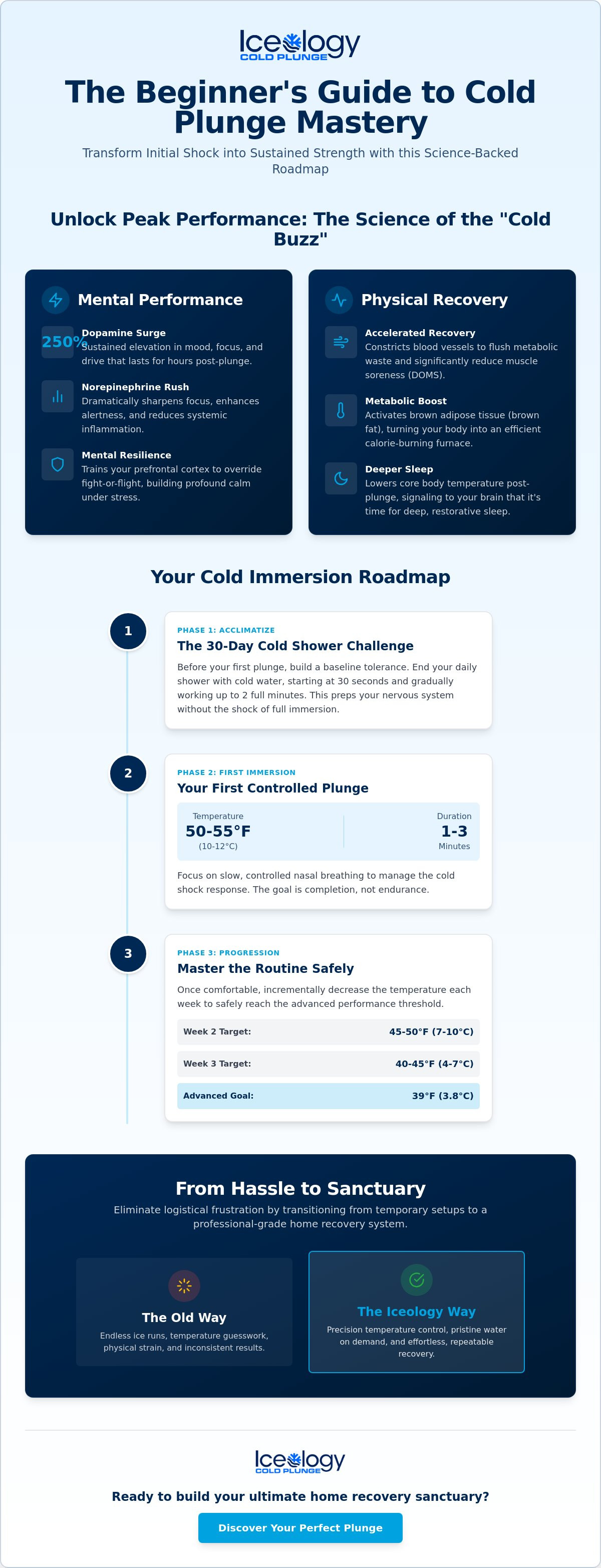
The sensation following a plunge is often described as a "buzz," and the data confirms this isn't just a placebo effect. Research indicates that cold exposure can lead to a 250% increase in dopamine levels that persists for several hours. This isn't a fleeting spike like you'd get from sugar; it's a sustained elevation in mood and drive. While your brain is firing, your cells are also hard at work. Cold shock proteins enter the bloodstream, acting as molecular chaperones that help repair damaged muscle fibers and protect against protein misfolding. The thermal layer is a thin, insulating shroud of warmed water that clings to your skin during still immersion, effectively buffering you from the surrounding chill.
Physical vs. Mental Performance Benefits
Physical recovery is the most immediate advantage of a disciplined practice. By constricting blood vessels, the cold helps flush metabolic waste and reduces the inflammation that leads to Delayed Onset Muscle Soreness (DOMS). This allows you to return to your training sessions faster and with more intensity. However, the mental gains are equally transformative as you build "top-down" mental control. Every time you stay in the water despite your brain's urge to exit, you're training your prefrontal cortex to override the primitive fight-or-flight response. This discipline carries over into high pressure work environments, allowing you to remain calm under stress. Finally, the drop in core temperature after you exit the tub signals to your brain that it's time for rest, which often results in deeper and more restorative sleep cycles.
Pre-Plunge Preparation: Mindset and Acclimatization
Preparation is the bridge between intention and execution. Before you ever touch the water, you must prime your physiology. This cold plunge beginners guide recommends starting with a 30 day cold shower challenge. It's a simple yet effective way to build a baseline tolerance. Begin with thirty seconds of cold water at the end of your usual shower. Gradually increase this duration until you can handle two full minutes of sustained exposure. This period allows your skin receptors and nervous system to adapt without the overwhelming pressure of full immersion. It's about building a foundation of resilience that makes the transition to a dedicated tub feel like a natural progression rather than a shock.
Safety remains the highest priority during this journey. Cold water immersion creates a significant, albeit healthy, stress response. Because this response involves rapid vasoconstriction, consulting a physician regarding your cardiovascular health is mandatory. Once you've been cleared, you can focus on adopting the "Iceology Mindset." This approach reframes the cold as a partner in your recovery rather than an adversary to be conquered. By accepting the sensation rather than fighting it, you unlock the profound mental health benefits associated with disciplined thermal stress.
Setting the environment is the final step in your pre-plunge ritual. Dim the lighting or choose a space with natural morning sun to align with your circadian rhythm. Some practitioners prefer high tempo music to build energy, while others opt for silence to foster internal focus. Remove all distractions, such as phones or notifications, to ensure your attention remains entirely on your breath and the physical sensations. This intentionality transforms a simple recovery session into a powerful meditative practice.
Breathing Techniques to Control the Vagus Nerve
Your breath is the primary tool for managing the initial "cold shock" response. Before entry, utilize the Box Breathing method. Inhale for four seconds, hold for four, exhale for four, and hold for four. This rhythmic pattern signals the vagus nerve to lower your heart rate and settle your mind. Never hold your breath during the initial immersion. Doing so can cause unnecessary spikes in blood pressure. Instead, use "physiological sighs." Take a deep double inhale followed by a long, slow exhale through the mouth. This technique effectively offloads carbon dioxide and calms the nervous system while you're in the water.
Essential Gear for Beginners
The right equipment ensures you stay focused on the practice rather than logistical discomfort. Standard swimwear is sufficient, but many beginners find that neoprene booties are essential. The hands and feet are often the most sensitive to cold, and protecting them can extend your session comfortably. Keep a high quality towel and warm, loose clothing nearby for the immediate post plunge period. While a standard bathtub might seem convenient, a premium cold plunge tub is a superior starting point. These dedicated systems provide consistent thermal management and ergonomic support that household fixtures simply cannot match. If you're ready to elevate your home setup, explore our collection of Cold Plunge Tubs to find the perfect fit for your recovery sanctuary.
Your First Session: A Step-by-Step Execution Guide
Transitioning from cold showers to a full immersion tub is a significant milestone in your recovery journey. For your first week, set the temperature of your Cold Plunge Tubs to a manageable 50 to 55 degrees Fahrenheit. This range is cool enough to trigger a response but warm enough to prevent immediate non compliance. When you're ready, enter the water slowly but deliberately. Avoid the "hesitation trap" of standing on the steps; lingering only increases the psychological barrier and makes the eventual entry feel more difficult than it needs to be.
Once inside, submerge yourself up to the neck. This depth is essential because it targets the high concentration of cold receptors in the chest and neck area, triggering the full hormonal cascade you're seeking. Focus entirely on steady, controlled exhalations. This practice bypasses the natural gasp reflex and keeps your heart rate within a safe range. For those with specific health concerns, reviewing expert medical advice on cold plunge safety ensures you are approaching this practice with the necessary clinical awareness. When your time is up, exit the tub calmly. Follow the Soeberg Principle by allowing your body to reheat naturally rather than jumping into a hot shower. This forced metabolic effort maximizes the benefits of the session.
The First 30 Seconds: Surviving the Cold Shock
The first half minute is often the most challenging part of any cold plunge beginners guide. You will likely experience a surge of panic as your body initiates the cold shock response. It's vital to remember that this feeling is a temporary physiological reflex, not a sign of danger. Research indicates that the cold shock response blunts after only five to six sessions as your body adapts to the stimulus. If your hands and feet feel a sharp stinging sensation, keep them active by gently moving your fingers and toes to maintain circulation through the extremities.
How Long Should You Actually Stay In?
Efficiency is better than endurance. Scientific data suggests an "11 minute rule," which means aiming for a total of 11 minutes of cold exposure per week, split into several short sessions. You don't need to stay in for ten minutes at a time to see results. In fact, allowing yourself to shiver slightly after the plunge is actually a goal, as shivering releases succinate from the muscles to further activate brown fat thermogenesis. However, you must recognize the signs of "too much." If you experience genuine numbness, mental confusion, or slurred speech, exit the water immediately. Safety and consistency will always outperform extreme durations.
Mastering the Routine: Frequency, Duration, and Safety
The path to peak performance is paved with repetition, not isolated feats of endurance. While your first session was a milestone, the true benefits of cold water therapy emerge when you establish a sustainable rhythm. Consistency beats intensity every time; a two minute daily immersion is far more effective for metabolic health than a single fifteen minute session once a week. This regular exposure keeps your brown adipose tissue active and ensures your nervous system remains resilient. By integrating this practice into your daily life, you move beyond the initial shock and begin to master the art of thermoregulation.
A structured progression ladder is the safest way to reach the advanced 39 degree Fahrenheit threshold. Following this cold plunge beginners guide, you should aim to drop your water temperature by approximately 2 degrees every week. This gradual descent allows your cardiovascular system to adapt without unnecessary strain. If you started at 55 degrees, you'll reach the high performance range of the low 40s in about six weeks. This methodical approach ensures that your journey remains a positive, empowering experience rather than a grueling chore that leads to burnout.
Timing your plunge can also influence your results. Morning sessions capitalize on the surge of norepinephrine and dopamine to provide a day long "cold buzz" and heightened focus. Conversely, evening plunges can improve sleep quality by triggering a rapid drop in core body temperature afterward. Be mindful of the "after-drop" phenomenon. This occurs about 10 to 15 minutes after you exit the tub when cold blood from your extremities returns to your core, often making you feel colder than you did while submerged. Allow your body to reheat naturally through light movement or warm clothing to maximize the metabolic demand of the session.
Ready to build a consistent recovery practice with precision equipment? Explore our high performance Cold Plunge Tubs designed for durability and effortless temperature control.
Safety Protocols and Contraindications
Safety is the cornerstone of a successful routine. You should never cold plunge alone as a beginner; having a partner nearby provides a critical safety net if you experience an unexpected reaction. Additionally, avoid the "sauna-to-plunge" transition during your first few weeks. While contrast therapy is highly effective, the rapid shift in temperature requires a level of cardiovascular conditioning that takes time to develop. Exit the water immediately if you experience wheezing, your skin turns a waxy white, or you notice a sudden loss of motor control in your limbs.
Tracking Your Progress
To stay motivated, maintain a journal to record the water temperature, duration of the plunge, and your subjective mood afterward. You will likely notice that the "mental barrier" to entry diminishes significantly over time. For a more data driven approach, monitor your heart rate variability (HRV) using a wearable device. An increase in HRV is a strong indicator of improved autonomic nervous system health and better overall recovery. Celebrate non scale victories, such as the ability to remain calm during a stressful work meeting or noticing a significant reduction in muscle soreness after a heavy training day.
Creating Your Ultimate Home Recovery Sanctuary in 2026
The final pillar of any successful cold plunge beginners guide is the transition from a temporary experiment to a permanent recovery sanctuary. Many enthusiasts begin their journey by hauling forty pound bags of ice from the local store, but this logistical burden is the primary reason most beginners abandon the practice within the first thirty days. It's a physically draining and inconsistent process that turns a wellness ritual into a chore. By moving toward a dedicated system, you replace the "ice problem" with precision technology, ensuring your water is ready the moment you are.
For those seeking long term durability and craftsmanship, investing in USA-made cold plunge tubs provides the peace of mind that your equipment is built to last. Placement is a critical consideration, especially in humid climates like Miami. If you choose an outdoor station, your tub must be able to withstand salt air and high moisture levels without degrading. A professional setup allows you to curate an environment that fosters calm determination, whether it's tucked away in a climate controlled garage or featured on a private patio. Essential maintenance is also simplified through integrated filtration. These systems keep your water crystal clear by constantly circulating it through high density filters, drastically reducing the time you spend on upkeep and maximizing the time you spend in the water.
Why Chillers and Insulation Matter
Precision engineering is what allows a recovery station to perform in extreme conditions. High density polyurethane foam insulation is a vital feature for thermal efficiency; it allows your tub to maintain a steady 39 degree Fahrenheit temperature even when exposed to intense Florida heat. While a built in chiller requires an initial investment, its cost efficiency far surpasses the recurring expense and hassle of buying daily ice. Hard-sided tubs offer superior thermal stability over inflatable options, providing a more consistent and reliable environment for your daily practice. This stability ensures that your body receives the exact stimulus required for metabolic and mental benefits every single time.
Designing the Space for Wellness
Your sanctuary should be designed with both safety and flow in mind. Incorporate high quality non slip mats around the base of your tub to prevent accidents when exiting with wet feet. Easy access to drainage is equally important, allowing for effortless water changes when necessary. We also recommend establishing a "dry zone" nearby, equipped with a bench and storage for warm clothing, which helps you manage the after-drop and transition smoothly back into your daily routine. Elevate your recovery with a professional-grade station from Iceology to turn your wellness goals into a permanent, disciplined lifestyle. Just as you prioritize your own hygiene and recovery, ensuring your pets receive expert care from specialists like Bohemian Spaw can help maintain a holistic sense of well-being for your entire household.
Step Into Your High-Performance Future
You've moved from initial curiosity to understanding the precise biological mechanisms that drive recovery. By mastering your breath and following a structured progression, you've laid the foundation for sustained mental and physical resilience. This cold plunge beginners guide has provided the roadmap to navigate your first 30 days, shifting your focus from surviving the cold to thriving within it. It's no longer a mere test of willpower; it's a disciplined commitment to your long-term well-being.
To truly sustain this practice, your environment must match your dedication. Precision engineering replaces the logistical frustration of hauling ice, allowing you to focus entirely on your personal results. Explore our premium American-made cold plunge tubs to discover the difference of professional craftsmanship. Our systems feature high-density polyurethane foam insulation and powerful built-in chillers that reach a crisp 39°F without a single bag of ice. Each unit is handcrafted in the USA to ensure peak durability and thermal management for your home sanctuary. Embrace the challenge, trust the science, and take control of your recovery journey today.
Frequently Asked Questions
Is cold plunging safe for everyone?
Cold plunging is not universally safe for everyone, especially those with underlying cardiovascular issues or respiratory conditions. The sudden immersion triggers a significant heart rate increase and a rapid blood pressure spike. It's mandatory to consult a physician before starting your journey. Pregnant women and individuals with Raynaud’s disease should also seek professional medical guidance to ensure the practice doesn't exacerbate existing health concerns or lead to unnecessary physical strain.
How cold should my first cold plunge be?
Your initial sessions should ideally range between 50 and 60 degrees Fahrenheit to allow for proper acclimatization. This temperature is cold enough to trigger the desired hormonal response without overwhelming your nervous system. As you follow this cold plunge beginners guide, you can gradually lower the temperature by two degrees each week. Starting too cold often leads to a panic response that can discourage beginners from maintaining a consistent, long term routine.
How long should I stay in the cold water as a beginner?
Beginners should aim for a duration of 30 seconds to 2 minutes during their first few sessions. The goal is to manage the initial cold shock reflex rather than testing your physical endurance. Once your breathing stabilizes, you've achieved the primary mental benefit of the plunge. You don't need to stay in longer to see results. Consistency is far more valuable than duration when you are just starting your recovery journey.
Can I cold plunge in my bathtub with ice?
You can use a standard bathtub with ice, but it's often an inefficient and inconsistent method for serious recovery. Bathtubs lack the depth for full neck immersion and the high density insulation required to maintain a steady temperature. Hauling heavy bags of ice daily is also the primary reason many people quit. A dedicated tub with a built in chiller provides the precision and convenience necessary to build a sustainable, professional grade routine.
What is the best time of day to cold plunge?
The best time to plunge depends on your specific wellness goals, though most practitioners prefer the morning. A morning session provides a sustained surge in dopamine and norepinephrine that enhances focus for several hours. If you plunge in the evening, the subsequent drop in core body temperature can signal your brain that it's time for sleep. Experiment with both times to see which aligns best with your natural circadian rhythm and daily energy demands.
What should I do immediately after getting out of the cold plunge?
You should allow your body to reheat naturally rather than rushing into a hot shower or sauna. This practice forces your metabolism to work harder to restore your core temperature, maximizing the metabolic benefits. Pat yourself dry and put on warm, loose clothing immediately. Engaging in light movement, such as air squats or walking, can also help stimulate circulation and manage the "after-drop" sensation effectively as your blood begins to warm.
How often should I cold plunge for the best results?
A frequency of two to three sessions per week is an excellent starting point for most beginners. Scientific research suggests aiming for a cumulative total of 11 minutes of cold exposure per week to maximize metabolic and recovery benefits. By following a structured cold plunge beginners guide, you can eventually move toward daily immersions. The key is to listen to your body and prioritize a schedule that you can maintain consistently over the coming months.
Does cold plunging help with weight loss?
Cold plunging supports weight loss by activating brown adipose tissue, which burns calories to generate heat through thermogenesis. This process increases your metabolic rate and improves insulin sensitivity over time. While it's not a replacement for a balanced diet and exercise, regular cold water immersion is a powerful tool for total body optimization. The metabolic demand of reheating your body after a plunge provides a significant caloric burn that compounds with every session.