
Are Ice Baths Dangerous? Risks, Warning Signs, and Safer Practices
What if the biggest risk of an ice bath isn’t the cold itself, but how your body responds to it? If you’re asking, “are ice baths dangerous,” the honest answer is that cold-water immersion can pose real risks. Sudden cold can trigger an involuntary gasp, rapid breathing, and cardiovascular strain. That doesn’t mean every plunge is unsafe, but it does mean wellness claims shouldn’t replace a clear-eyed look at your health and preparation.
It’s reasonable to feel unsure: advice about cold exposure can range from miracle claims to blanket warnings, while individual health conditions may change the equation. This guide covers immediate risks and warning signs, when to avoid immersion or seek individualized medical advice, and practical steps to reduce avoidable hazards. Temperature control and a well-designed tub can support a more controlled setup, but they can’t establish that cold exposure is medically safe for everyone.
Key Takeaways
- Are ice baths dangerous? They can carry risks, and your health, exposure, and circumstances all matter.
- Cold-water immersion affects people differently, so treat broad wellness claims with care.
- If you have a health condition or are unsure how cold exposure may affect you, seek individualized medical advice before plunging.
- Prepare carefully, plan how you’ll exit, and know when to stop rather than pushing through warning signs.
- A chiller-equipped cold plunge tub can help manage water temperature, but it can’t remove personal health risks.
Are Ice Baths Dangerous? Understand the Main Risks of Cold-Water Immersion
Yes, cold-water immersion can carry risks. If you’re asking, “are ice baths dangerous,” the practical answer depends on your health, the water and exposure conditions, and what happens during the plunge. An ice bath means intentionally immersing your body in cold water. There isn’t one temperature that defines every ice bath, and a setup that feels manageable to one person may be unsafe for another.
Risk is shaped by the person, the exposure, and the ability to respond safely. Water temperature is only part of the picture. Immersion affects breathing and movement, and difficulty staying oriented or getting out can make a difficult response more dangerous. This article offers general information to support informed decisions, not a diagnosis or a substitute for advice from a qualified healthcare professional.
What happens to the body during sudden cold exposure?
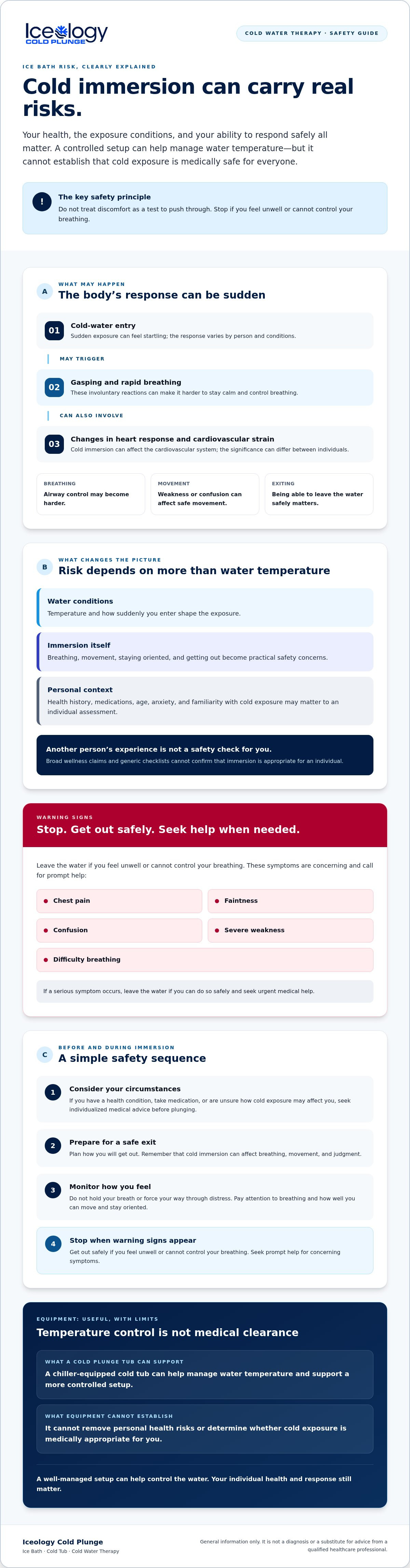
Entering cold water can trigger an immediate, involuntary response. You may gasp, breathe rapidly, and feel your heart beating faster. These reactions can make it harder to stay calm and control your breathing. Some discomfort and an urge to leave may occur, but pushing through isn’t a safety test.
Stop and get out if you feel unwell or can’t control your breathing. Chest pain, faintness, confusion, severe weakness, or difficulty breathing are concerning symptoms that call for prompt help. Ask a clinician about safety guidance and warning signs for your individual circumstances. For a general overview of cold-water immersion, including its uses and risks, see the encyclopedic summary.
Which ice-bath risks deserve the most attention?
Pay attention to the possibility of cold-related distress, impaired judgment, and difficulty exiting the water. A sudden gasp or rapid breathing can make it harder to keep your airway clear, while feeling weak or confused may interfere with a safe exit. Immersion adds practical hazards that a thermometer alone can’t capture: you’re in water, and your ability to breathe comfortably, move, and leave matters.
Cold exposure may also place strain on the cardiovascular system. If you have underlying health concerns, seek individualized medical guidance before trying an ice bath rather than relying on broad wellness claims or another person’s experience. If you experience a serious symptom, leave the water if you can do so safely and seek urgent medical help. A controlled setup can support better temperature management, but it can’t determine whether cold exposure is medically appropriate for you.
How Cold-Water Immersion Affects the Body: Why Responses Differ
Cold water doesn’t create one predictable response. The initial sensation may feel startling, and the body can react with an involuntary gasp, faster breathing, and changes in heart rate and blood pressure. The American Heart Association explains these potential cardiovascular effects in its overview of the dangers of cold water immersion. The intensity and significance of a response can vary, so don’t treat another person’s experience as a reliable guide to your own.
Responses differ with the person and the conditions, so no general description can confirm that immersion is safe for an individual. Factors that may shape the experience include:
- Water conditions: Temperature and how suddenly you enter affect the exposure.
- Immersion: Being in water can make breathing, movement, and exiting more consequential than simply feeling cold.
- Personal context: Health history, medications, age, anxiety, and familiarity with cold exposure may be relevant to an individual assessment.
This list is not a screening tool or medical clearance. Evidence for some broader claims about cold exposure is still developing, so distinguish a known immediate response from promises about long-term health benefits.
Why can the first moments of immersion feel intense?
The sudden contrast can prompt a gasp or rapid breathing before you’ve had time to settle. Surprise, anxiety, or unfamiliarity may make that sensation feel more intense, although they don’t explain every physical response. Don’t hold your breath or try to force your way through distress. If you can’t regain comfortable control of your breathing or feel unwell, leave the water safely and seek help if symptoms are serious or persist.
Which personal factors may change the risk?
A health condition or medication could affect how cold exposure should be assessed, and age or prior experience alone can’t establish that a plunge is safe. If you have a medical concern, take medication, or aren’t sure how immersion may affect you, talk with a qualified clinician before trying it. Share the intended exposure conditions and ask about your specific circumstances; don’t use a generic checklist as a substitute for that conversation.
Once you’ve considered personal suitability, equipment can help manage the setup, not determine medical safety. Iceology Cold Plunge offers hard-sided cold plunge tubs with built-in chillers for controlled water temperature. Learn more about Iceology Cold Plunge tubs as one equipment option to consider.
Who Should Be Especially Cautious About Ice Baths?
There isn’t one universal rule that says who can or can’t use cold immersion. But if you have a medical condition, take medication, or have questions about how your body may respond, pause before trying it. Cold exposure can affect the cardiovascular system, and the American Heart Association discusses these concerns in its guidance on cold-water immersion risks.
Health concerns that deserve an individualized conversation may include heart disease, high blood pressure, diabetes, peripheral neuropathy, or Raynaud’s disease. This isn’t a diagnosis or a complete list of situations that could matter. Your overall health, symptom history, and treatment plan can change what advice is appropriate.
When should someone ask a clinician before trying cold immersion?
Seek medical guidance first if you have a cardiovascular condition or another health concern that could affect your response to cold. A clinician can help assess your specific situation, including whether your medications are relevant. Don’t stop, skip, or change a prescribed medication to make an ice bath feel safer without professional advice.
Make the conversation practical. Explain that you’re considering intentional immersion, and share the planned water temperature and exposure approach. Ask what symptoms should prompt you to avoid the plunge or seek help. A general online checklist can’t account for your medical history or provide personal clearance.
Should beginners, older adults, or people with health concerns avoid ice baths?
Not automatically, and not necessarily without discussion. Age or inexperience alone can’t determine whether cold immersion is appropriate; personal health and the planned conditions matter. If you’re new to it, uncertainty is a good reason to seek guidance rather than relying on a friend’s experience or copying a wellness routine.
If you have a health concern or take medication, ask a qualified clinician to assess your individual situation before attempting cold immersion. Bring specific details about the planned exposure, and be candid about your health history and any symptoms you’ve experienced. That gives the clinician a clearer basis for advice than a broad question about whether ice baths are safe.
Be cautious with confident claims from social media, anecdotes, or product marketing. A controlled water temperature may help manage one part of the setup, but it can’t establish that immersion is medically suitable for you. Prioritize individualized clinical guidance over pressure to push through discomfort or match someone else’s routine.
How to Reduce Ice-Bath Risk: Prepare, Monitor, and Stop
Safer decisions start before you enter the water. If you’re weighing whether ice baths are dangerous for you, don’t rely on a universal temperature or time limit: individual health and exposure conditions matter. The steps below are general precautions, not a medically reviewed protocol or a substitute for advice tailored to you.
Before a plunge, consider this sequence:
- Check your personal risk. If you have a health condition, take medication, or are unsure how cold exposure may affect you, ask a qualified clinician first. Share the intended water temperature and exposure plan, and follow the clinician’s guidance.
- Set up a clear exit. Choose a stable position and make sure you can get out promptly without climbing over obstacles or relying on equipment you haven’t checked.
- Arrange support. Avoid plunging alone. Let another person know you’re entering the water and ask them to stay nearby and attentive, especially if you’re inexperienced or have concerns about your response.
- Decide your stop plan. Agree in advance that you’ll exit if you feel unwell. Don’t use breath-holding, pressure to endure discomfort, or a preset target as a reason to stay in.
Immersion can affect breathing and cardiovascular response, while distress or impaired judgment may make a quick exit harder. The American Heart Association’s overview of cold-water immersion risks provides additional context. No setup can guarantee a safe response, so stay attentive to how you feel rather than assuming the first moments are the only ones that matter.
When should you get out or seek urgent help?
Stop the immersion and get out safely if you feel unwell, cannot control your breathing, or notice unusual weakness, dizziness, or distress. Don’t wait for symptoms to become severe, and don’t push through them to complete a planned exposure.
Seek urgent medical help for serious symptoms such as chest pain, fainting, confusion, or severe difficulty breathing. If you’re unsure whether a symptom is serious, err on the side of getting medical advice. Have someone nearby assist rather than trying to manage alarming symptoms alone. These warning signs are general guidance and don’t replace emergency or clinical advice for your situation.
For a temperature-controlled cold plunge setup, explore Iceology Cold Plunge’s hard-sided tubs, while keeping in mind that equipment can’t establish whether cold exposure is medically appropriate for you.
Are Cold Plunge Tubs Safer? What Equipment Can and Cannot Do
A cold plunge tub and an ice-filled bath can differ in how the water is cooled and managed. Adding ice is a hands-on approach; a tub with a chiller uses equipment to manage water temperature. Those are differences in setup, not proof that one method is medically safer for every person. If you’re asking, “are ice baths dangerous,” equipment alone can’t answer that. Your health and how your body responds still matter.
Temperature control can make it easier to know and maintain the water temperature. It can’t prevent an involuntary response to cold, determine how your body will react, or remove the challenges of being immersed and needing to exit. The American Heart Association describes potential cardiovascular and breathing responses to sudden cold-water immersion in its cold-water safety overview. For personal suitability, equipment specifications are no substitute for guidance from a qualified clinician.
Does controlled water temperature remove the risks of cold exposure?
No. A chiller can manage water temperature, but it can’t establish whether a particular temperature or immersion plan is appropriate for you. Knowing the water temperature gives you information about the setup; it doesn’t predict your individual physiological response. Follow clinician guidance if you have health concerns, and don’t assume that a stable reading means the plunge is risk-free.
What should you know about Iceology Cold Plunge tubs?
Iceology Cold Plunge designs and manufactures hard-sided cold plunge tubs in the United States. The tubs have built-in chillers that can lower water temperature to 39°F. That is a product capability, not a recommended temperature for every user or a guarantee of safety. Consider the temperature-management feature alongside your own needs, and seek individualized medical advice if you’re uncertain about cold exposure.
If you’re comparing ways to manage plunge water temperature, you can explore the Iceology Cold Plunge product range as an equipment option. Choose equipment based on your setup needs, not as a substitute for medical guidance or a reason to ignore warning signs.
Make Your Next Cold-Exposure Decision With Confidence
So, are ice baths dangerous? They can carry real risks, and no single temperature or setup makes cold immersion appropriate for everyone. Your health, the conditions of exposure, and your ability to exit safely all matter.
Keep the practical takeaways in mind: seek individualized clinical guidance if health concerns or medications could affect your response, plan how you’ll get out before entering, and stop if you feel unwell. Don’t treat another person’s experience or a controlled water temperature as personal medical clearance.
For those comparing equipment after considering these safety factors, Iceology Cold Plunge designs and manufactures hard-sided cold plunge tubs in the United States. Their built-in chillers can lower water temperature to 39°F, a temperature-management capability, not a guarantee of safety for every user.
Move at a pace that respects your health and your limits. An informed choice is a strong place to start.
Frequently Asked Questions
Are ice baths dangerous for healthy adults?
Ice baths can pose risks even for healthy adults, although individual responses and circumstances vary. Sudden cold exposure may trigger an involuntary gasp, rapid breathing, and changes in heart rate and blood pressure. Being generally healthy doesn’t guarantee a predictable response or make every water temperature and exposure plan suitable. If you’re asking “are ice baths dangerous,” consider your own health, the setup, and whether you can exit safely rather than relying on someone else’s experience.
Can an ice bath cause cold shock or hypothermia?
Yes. Sudden cold immersion can trigger a cold shock response, which may include gasping and rapid breathing. Prolonged or intense cold exposure can also lead to hypothermia, a dangerous drop in body temperature. These are different concerns, and neither can be ruled out just because a plunge is planned or supervised. Leave the water if you feel unwell, and seek urgent medical help for serious symptoms such as confusion, fainting, chest pain, or severe difficulty breathing.
Who should avoid ice baths or talk to a doctor first?
People with health concerns should seek individualized medical advice before trying cold immersion. This is especially important if you have heart disease, high blood pressure, diabetes, peripheral neuropathy, or Raynaud’s disease, as cold exposure may carry additional risks. Ask your clinician whether your medications or health history matter, and describe the water temperature and exposure you’re considering. This list isn’t exhaustive, and online information cannot determine whether an ice bath is safe for you.
How long is it safe to stay in an ice bath?
There isn’t one exposure duration that can be called safe for everyone. Risk depends on factors such as your health, the water temperature, and your response to immersion. Don’t treat a timer, online routine, or another person’s tolerance as proof that you should stay in longer. Ask a clinician for individualized advice if you have health concerns. Leave the water if you feel unwell or can’t control your breathing, even if you planned to stay longer.
What should you do if you feel dizzy or unwell in an ice bath?
Stop the immersion and get out safely as soon as you can. Tell someone nearby rather than trying to manage alone, and don’t re-enter to complete a planned exposure. Seek urgent medical help for serious symptoms such as fainting, chest pain, confusion, or severe difficulty breathing. If symptoms continue or you’re unsure how serious they are, contact a medical professional promptly. Don’t dismiss warning signs as ordinary discomfort or try to push through them.
Are cold plunge tubs safer than ice baths with added ice?
They may differ in how water is cooled and managed, but that doesn’t establish that one is medically safer for everyone. Adding ice requires adjusting the water manually, while a chiller-equipped tub can manage water temperature through its equipment. Either way, your personal health and response to immersion still matter. A controlled reading can help you know the water temperature, but it can’t predict how your body will react or replace medical advice.
Can a chiller-equipped cold plunge make cold-water immersion risk-free?
No. A chiller can manage water temperature, but it can’t remove the risks of cold exposure or determine whether immersion is appropriate for you. Iceology Cold Plunge designs and manufactures hard-sided cold plunge tubs in the United States, with built-in chillers that can lower water temperature to 39°F. That describes equipment capability, not a recommended temperature or a safety guarantee. If you have health concerns, consult a qualified clinician before cold immersion.