
Cold Plunge for Boosting Metabolism: What the Evidence Really Says
A cold plunge can make your body work harder to stay warm, but that doesn’t mean it will melt away body fat. The idea behind a cold plunge for boosting metabolism has a real physiological basis: cold exposure can activate brown adipose tissue, which uses energy to produce heat. But a temporary increase in energy use isn’t the same as lasting weight loss.
It can be difficult to separate wellness claims from what the evidence supports. Cold exposure may influence how the body uses energy, but the size and duration of that effect matter. Research doesn’t establish cold plunging as a reliable weight-loss shortcut.
This article explains the proposed metabolic mechanisms, what the evidence can and can’t show about body weight, and why short-term energy use shouldn’t be confused with lasting change. It also offers a practical way to assess claims, set expectations, and consider safety when deciding whether cold exposure belongs in your routine.
Key Takeaways
- Understand how metabolism relates to energy use, and why a brief increase in heat production isn’t the same as a lasting change in resting metabolism or body weight.
- Learn how cold-triggered thermogenesis works, including shivering, without mistaking the body’s response for a guaranteed health benefit.
- Assess what the evidence can support about a cold plunge for boosting metabolism, and which weight-loss claims need stronger proof.
- Use a practical framework to clarify your goal, weigh claims carefully, consider safety, and keep expectations realistic.
- See how the Grizzly 450’s built-in chiller and integrated ozone system support a controlled cold-water setup, rather than promise metabolic results.
What does a cold plunge 'metabolism boost' actually mean?
“Metabolism” refers to the processes your body uses to function, including how it uses energy. That energy supports essential activity at rest, movement, digestion, and temperature regulation. In cold-plunge discussions, a “boost” usually means the body temporarily uses more energy while responding to cold and working to maintain its core temperature. It doesn’t automatically mean your resting metabolism has permanently changed.
Cold-water immersion exposes the body to a temperature lower than its own. The body responds, but that response isn’t a switch that stays on after you get out. The phrase cold plunge for boosting metabolism can describe a short-lived process, not a promise of lasting weight change.
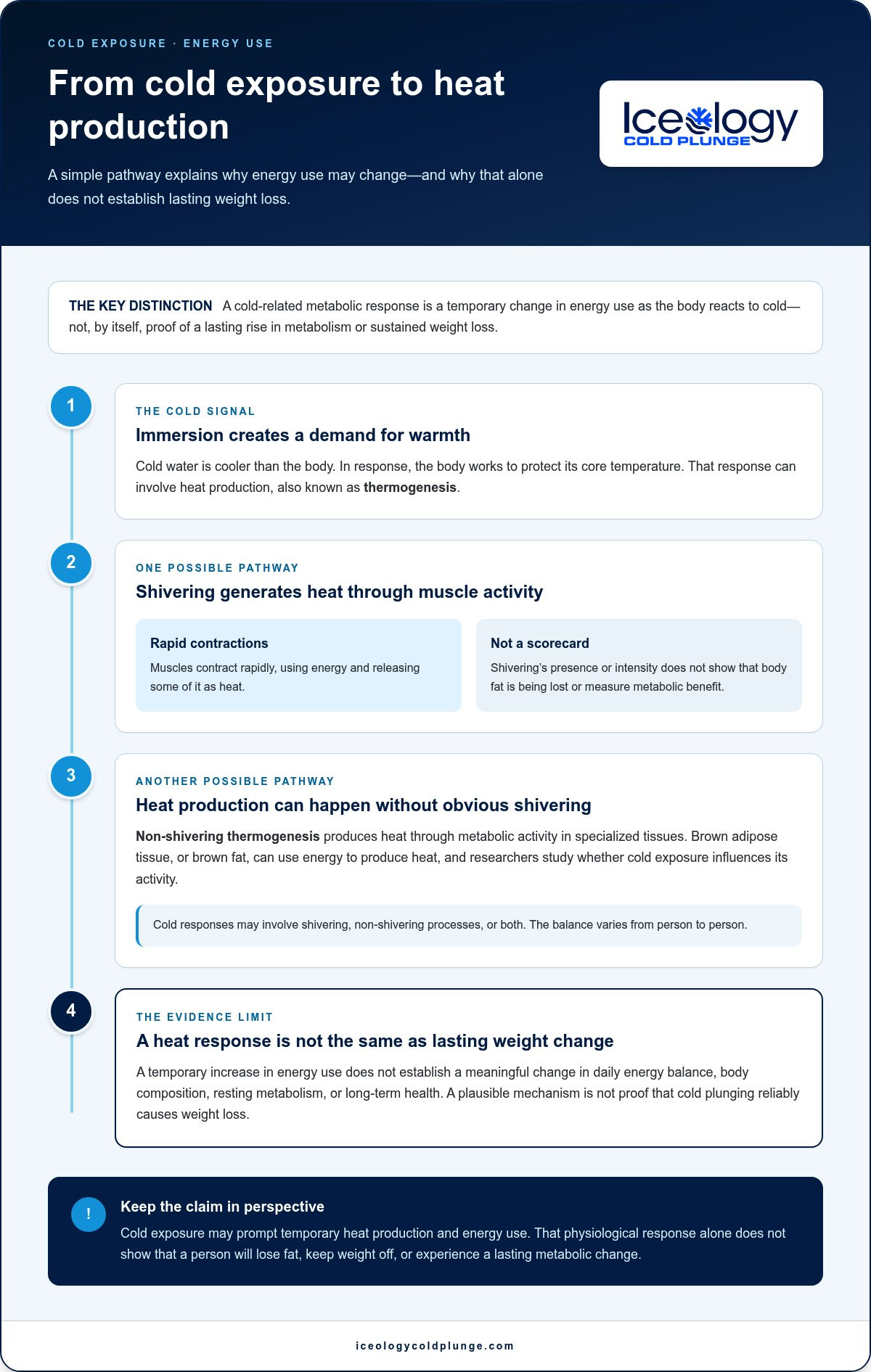
Quotable definition: A cold-related metabolic response is a temporary change in energy use as the body reacts to cold; it is not, by itself, evidence of a lasting rise in metabolism or sustained weight loss.
What does the body use energy for?
Your body uses energy even when you’re resting. It fuels ongoing functions such as breathing and circulation, while additional energy supports activity and helps maintain a stable internal temperature. In a cold environment, keeping warm can require extra work. The general process of producing heat is called thermogenesis.
Shivering is one visible response: muscles contract rapidly, using energy and generating heat. This helps explain why energy use may change during cold exposure. It doesn’t tell you how much energy a particular person uses or what effect a single plunge will have on body composition.
Does a metabolic response mean weight loss?
No. Energy expenditure is only one part of a much larger picture. Body weight and composition can be influenced by energy intake, everyday movement, sleep, health, and other factors. A short-lived increase in energy use doesn’t establish that someone will lose fat, keep weight off, or experience a lasting change in resting metabolism.
Feeling cold after immersion may indicate that your body is responding to the temperature. It isn’t a reliable measure of fat loss, and the sensation alone can’t show whether your overall energy balance has shifted over time.
Keep the distinction clear: a cold plunge may prompt a temporary energy response, but cold exposure alone isn’t established as a weight-loss solution. The key question is whether that response is large and sustained enough to change long-term outcomes. Those are separate claims, and one doesn’t prove the other.
How cold exposure may affect energy use and heat production
Cold immersion creates a demand: the body has to respond to a cooler environment and protect its internal temperature. One response is thermogenesis, or heat production. It can involve muscle activity, changes in how certain tissues use energy, or both. The mechanism is real, but its size, duration, and practical significance can differ from person to person.
That distinction matters when evaluating a cold plunge for boosting metabolism. A process that helps the body produce heat doesn’t automatically translate into a meaningful change in daily energy balance, body composition, or long-term health. The mechanism describes what may happen in the cold, not the result every person will get.
Shivering and non-shivering thermogenesis
Shivering is a familiar heat-producing response. Muscles contract rapidly, using energy and releasing some of it as heat. It can happen when the body is trying to counter cold, but its presence or intensity isn’t a scorecard for metabolic benefit. People respond differently, and visible shivering doesn’t show that body fat is being lost.
Heat can also be produced without obvious shivering. This is called non-shivering thermogenesis. Rather than relying mainly on visible muscle contractions, the body can generate heat through metabolic activity in specialized tissues. Cold exposure may prompt more than one response, and the balance between them varies. Neither response alone proves a lasting change in resting energy use.
Brown fat, glucose, and the limits of the explanation
Brown adipose tissue, often called brown fat, can use energy to produce heat. Researchers study it because cold exposure may influence its activity. But a plausible biological pathway isn’t proof that cold plunges reliably increase brown fat enough to cause weight loss. Activity in one tissue also doesn’t show, by itself, how much a person’s overall energy use changes.
Cold-related responses may also intersect with glucose, the sugar cells use for energy. That makes glucose metabolism a relevant area of research, but a proposed connection shouldn’t be treated as proof of improved blood-sugar control or lasting metabolic health. Responses may vary, and mechanistic findings don’t establish that a particular routine delivers a clinical benefit.
In brief: Cold may prompt heat production through shivering and non-shivering processes, potentially involving brown fat. These mechanisms help explain changes in energy use, but they don’t establish reliable weight loss or a lasting metabolic improvement.
Keep the mechanism in perspective. A consistent, controlled setup can make cold-water immersion easier to repeat, but consistency doesn’t guarantee a metabolic outcome. For a home routine, Iceology Cold Plunge tubs provide a dedicated cold-water setup. The equipment supports the practice, not a promised change in metabolism.
Can a cold plunge cause lasting weight loss? What the evidence can support
Not on the evidence described here. Cold exposure can prompt the body to produce heat and use energy, but that short-term response doesn’t establish sustained weight loss. A measurable change during or after immersion isn’t the same as a durable shift in body weight or composition.
Temporary energy use versus durable body-weight change
Heat production is an immediate response to cold. Lasting changes in body weight unfold over time and reflect more than one process. Even if an exposure temporarily raises energy use, that alone can’t tell us whether the effect is large enough, lasts long enough, or happens consistently enough to change someone’s overall weight trajectory.
Frequency and duration matter when interpreting research, but they don’t settle the question by themselves. An occasional plunge may not represent a repeated routine studied in a controlled setting. Even with repeated exposure, results may differ based on the person, conditions, and what researchers measure. Findings about a biological response shouldn’t be presented as a prediction of how much an individual will lose.
How to read metabolism and weight-loss claims
Check what a study actually observed. Did researchers measure heat production, tissue activity, or another short-term response? Or did they track changes in body weight or composition over time? These outcomes answer different questions. Research on a proposed mechanism can explain how cold might affect energy use without proving a lasting everyday result.
Consider who was studied and under what conditions, too. Findings from a specific group or carefully controlled exposure may not apply to everyone’s cold-plunge routine. A study that examines a mechanism rather than long-term weight change can’t establish a weight-loss outcome. Broad claims about the cold plunge for boosting metabolism should match the outcome the research actually measured.
Plausible short-term effects
- The body responds to cold by producing heat.
- Energy use may change during that response.
- Some studies may investigate brown-fat activity or related metabolic signals.
Claims that need stronger evidence
- A cold plunge reliably causes meaningful, lasting weight loss.
- A temporary energy response permanently raises resting metabolism.
- Cold exposure alone improves long-term metabolic health for everyone.
This balanced approach doesn’t make cold plunging useless. It keeps potential effects in proportion to what has been shown. MD Anderson’s cautious framing of metabolism and weight loss as potential outcomes is a useful model: possible benefits deserve investigation, not automatic translation into promises. Treat a change in energy use as a research finding, not proof of a lasting change in body weight.
How to approach cold plunging when metabolism is your goal
If you’re considering a cold plunge for boosting metabolism, start with a clear distinction: a bodily response to cold isn’t the same as a reliable weight-loss result. A thoughtful approach helps you assess what you want from the practice, interpret claims without overreaching, and keep safety in view. Cold exposure can be one part of a wellness routine, not a substitute for established health care or individualized medical advice.
- Clarify your goal. Decide what you’re hoping to understand or experience. Feeling alert or noticing how your body responds is a subjective observation. A change in metabolism or body weight is a separate, measurable claim, and a plunge alone can’t establish that it has occurred.
- Assess the claim. Look at what was actually measured. Evidence about heat production or brown-fat activity describes a possible mechanism; it doesn’t automatically show lasting changes in body composition or health. Be cautious when a broad promise goes beyond the outcome the research examined.
- Consider safety first. Cold exposure can carry risks and may not suit everyone. If you have a heart condition, high blood pressure, circulatory issues, diabetes, Raynaud’s syndrome, or another health concern that could affect your response, seek medical guidance before trying it. Don’t treat distress as proof that a practice is working or something to push through.
- Track expectations, not promises. If you choose to include cold exposure in your routine, keep personal observations consistent and realistic. Note how you feel and whether the practice fits your life, while keeping those observations distinct from measured changes in weight or metabolic health. Individual responses vary; no outcome is guaranteed.
Set an outcome you can assess realistically
Choose an outcome that matches what you’re trying to evaluate. A personal note about comfort, alertness, or how manageable the routine feels can help you reflect on your experience. It can’t confirm that your resting metabolism has changed. Weight can fluctuate for many reasons, so a change over a short period doesn’t show that cold exposure caused it.
Consistent observations can help you avoid relying on a single impression. They don’t turn an informal personal record into a clinical measurement. If your goal is weight management or treatment of a health condition, use appropriate health-care support rather than relying on a cold plunge as the solution.
Keep safety and evidence in view
There’s no need to chase an extreme sensation to make the practice meaningful. Don’t push through distress or interpret discomfort as proof of metabolic benefit. A controlled setup can make cold-water exposure more consistent, but equipment can’t guarantee a health or weight outcome. Let evidence and your own safety guide whether the practice belongs in your routine.
A controlled cold-water routine with Iceology Cold Plunge
The evidence discussed above concerns how bodies may respond to cold, not a particular tub or a promised result. Equipment can help make a water setup more consistent; it can’t guarantee a metabolic change or weight loss. For at-home cold-water immersion, Iceology Cold Plunge offers hard-sided tubs, including the Grizzly 450, with a built-in chiller that cools water without added ice.
What a built-in chiller changes about the routine
The Grizzly 450 has a built-in 1/4 HP Active Aqua chiller. It cools water directly, so there’s no need to add ice. The chiller can cool water to 39°F and regulate it between 39°F and 41°F. That describes the equipment’s temperature control, not a recommended temperature for metabolism or evidence of a particular health effect.
Controlled water temperature can make the setup more predictable from one use to the next. That’s a practical equipment feature, especially compared with relying on added ice to change the water temperature. It doesn’t establish that a routine will activate a specific biological response, increase energy use over time, or lead to weight loss. The scientific question and the equipment question are separate.
Where Iceology fits, and where claims should stop
The Grizzly 450 also includes an integrated ozone generator, and its hard-sided tub is made in the USA. These are product details, not clinical validation. The tub is equipment for cold-water immersion at home; its chiller helps maintain cold water, and its ozone system is an integrated feature. Neither is proof of a metabolic or weight-loss benefit.
That distinction keeps expectations grounded. If you’re considering a cold plunge as part of a wellness routine, first decide what matters to you about the practice. A chiller can support a more controlled setup, but your body’s response remains individual. Current explanations of cold-related energy use don’t make a particular outcome certain. Equipment supports the routine; it doesn’t replace medical guidance or establish that cold exposure is an effective weight-loss strategy.
Choose a cold-water setup for its practical features and how it fits your routine, not as a shortcut to changing metabolism. The Grizzly 450’s chiller and temperature regulation provide a defined way to manage the water without requiring added ice. Those specifications describe the tub’s function, not a protocol or metabolic promise.
Make your next step evidence-led
Let your reason for trying cold water guide your next step. If your interest in a cold plunge for boosting metabolism is tied to weight management, keep the claim in perspective and avoid treating immersion as a shortcut. A wellness routine can still be worthwhile for personal reasons, even when it isn’t a proven path to weight loss.
Before building cold exposure into your routine, consider what would make the practice sustainable and useful to you. Focus on a setup and approach that fit your needs, and keep expectations grounded in what research can support. A thoughtful decision is more valuable than chasing an impressive promise.
For a home cold-water setup, explore Iceology Cold Plunge and consider which equipment features matter most for your routine.
Stay curious, move at a pace that feels right, and let clear evidence guide your choices. Small, informed decisions can help you build a wellness routine with confidence.
Frequently Asked Questions
Can a cold plunge boost metabolism?
A cold plunge can prompt the body to use energy as it responds to cold, so a temporary metabolic effect is plausible. That doesn’t show that resting metabolism will stay elevated or that the effect will meaningfully change health or body weight. If you’re considering a cold plunge for boosting metabolism, distinguish a short-term response from a lasting outcome, and be cautious of claims that promise dramatic results.
Does a cold plunge help you lose weight?
A cold plunge isn’t established as a reliable weight-loss method. Cold exposure may affect heat production and energy use, but weight change depends on multiple factors and can’t be predicted from the plunge alone. Feeling cold afterward doesn’t tell you whether body fat has changed. Consider cold immersion for personal wellness reasons, rather than relying on it as a stand-alone weight-management strategy.
How does cold exposure affect brown fat?
Brown fat can use energy to generate heat, and researchers study whether cold exposure affects its activity. The response may vary between people, and evidence about brown-fat activity doesn’t by itself show how much a person’s overall energy use changes. A change in this tissue also isn’t the same as a measured reduction in body fat or proof that a cold-plunge routine will produce weight loss.
Can cold plunging improve blood sugar or insulin sensitivity?
It’s not established that cold plunging reliably improves blood sugar or insulin sensitivity. Research into cold exposure and glucose regulation is still developing, and findings may differ across people and conditions. Some evidence raises the possibility of worse glucose tolerance or insulin sensitivity in certain individuals. If you have diabetes or another condition affecting blood sugar, discuss cold exposure with a healthcare professional before trying it, and don’t use it to replace prescribed care.
How much weight can you lose from a cold plunge?
There’s no dependable amount of weight loss that can be attributed to a cold plunge. A brief change on the scale, if one occurs, doesn’t establish that body fat has been lost or that the change will last. Results from a study involving a particular group or type of cold exposure also can’t predict an individual’s outcome. Track weight goals with appropriate health guidance, not estimates based on time spent in cold water.
Is cold plunging safe for everyone?
No. Cold exposure may pose risks and isn’t suitable for everyone. People with heart conditions, high blood pressure, circulation problems, diabetes, or Raynaud’s syndrome should seek medical guidance before trying it. If you’re new to cold immersion, don’t plunge alone initially, and don’t push through distress. A clinician can help you consider personal risks, especially if you take medication or have a health concern that could affect your response to cold.