
Cold Plunge for Police and Firefighters: A Practical Guide
What if a cold plunge routine for a first responder had to fit a real shift, not an idealized schedule? Police officers and firefighters know that work hours and downtime can change quickly. Choosing a cold plunge tub for police and firefighters also raises practical questions: Is there suitable space? Who will care for the water? Would individual or shared access work better?
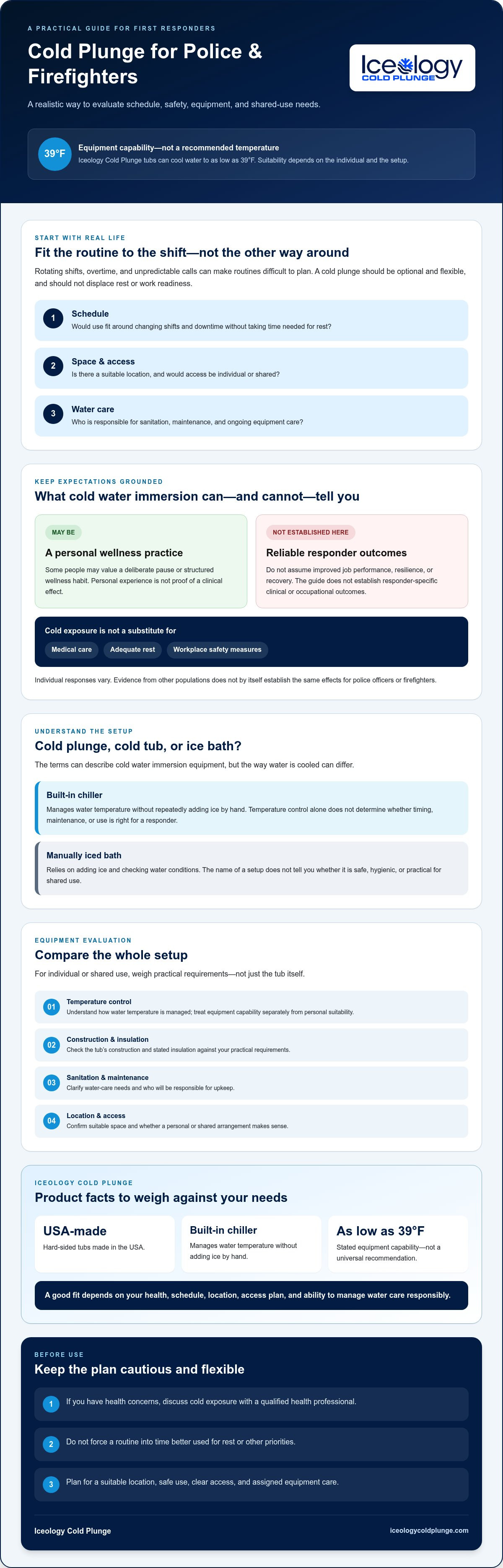
This guide covers what cold water immersion may offer, what it can’t reliably promise, and what to consider before use. You’ll also find equipment questions to ask when comparing tubs for personal or department use. Iceology Cold Plunge makes USA-made, hard-sided tubs with built-in chillers that can cool water to as low as 39°F. That is an equipment capability, not a recommended temperature for every user. The aim is to help you make a cautious, informed decision based on your health, schedule, and setup.
Key Takeaways
- Check whether a cold plunge tub for police and firefighters fits your schedule, space, and access needs before choosing equipment.
- Distinguish personal reports about cold water immersion from evidence of reliable clinical or occupational benefits.
- Compare temperature control, construction, insulation, sanitation, and maintenance requirements for individual or shared use.
- Plan for safe use, a suitable location, and clear responsibility for equipment care instead of relying on a one-size-fits-all routine.
- Assess how Iceology Cold Plunge’s hard-sided, USA-made tubs, built-in chiller, and stated insulation match your practical requirements.
Cold Plunge Tub for Police and Firefighters: What It Can and Cannot Do
Police officers and firefighters do physically demanding work, but shifts, call volume, and downtime vary. That can make a consistent personal wellness routine difficult to plan. A cold plunge may appeal as a structured activity, but it should be viewed realistically: cold exposure is a wellness practice, not a substitute for medical care, adequate rest, or workplace safety measures.
A cold plunge tub holds cold water for immersion. Unlike a bath cooled manually with bags of ice, a tub with a built-in chiller can manage water temperature without adding ice by hand. That may make temperature management more convenient for a shift-based routine. It does not, by itself, determine whether the timing, maintenance, or experience is right for a particular responder.
Why emergency responders are considering cold water immersion
Some responders may be interested in a deliberate pause or a structured wellness habit amid unpredictable work demands. Those are personal goals, not proof that cold water immersion improves job performance, resilience, or recovery. Individual responses vary, and findings from other populations shouldn’t automatically be applied to police officers or firefighters. To assess claims about responders, look for research that clearly identifies the participants, methods, and limitations. Without that context, occupational benefits shouldn’t be assumed.
Keep personal experience separate from evidence of a clinical effect. Someone may value how a practice feels, but that experience alone doesn’t establish a health outcome. If you have health concerns or questions about whether cold exposure is appropriate for you, discuss them with a qualified health professional.
Cold plunge, ice bath, and cold tub: what is the difference?
“Cold plunge” and “cold tub” commonly refer to equipment used for cold water immersion. “Ice bath” often describes the same basic activity, but can also mean a container cooled manually with ice. A built-in chiller manages water temperature without repeatedly adding ice; a manually iced bath relies on adding ice and checking the water conditions. Neither term tells you whether a setup is safe, hygienic, or practical for shared use.
Iceology Cold Plunge makes hard-sided tubs with built-in chillers that can cool water to as low as 39°F. This is the equipment’s stated capability, not a recommended temperature for every person. Suitability depends on the individual and the setup. For a closer look at the equipment distinction, see cold plunge tub versus ice bath.
For first responders, the useful question isn’t whether cold exposure guarantees a result. Consider whether a specific setup fits personal needs, can be managed responsibly, and complements rather than displaces the basics of health and safety.
Cold Water Immersion and Shift Work: Set Realistic Expectations
Rotating shifts, overtime, and unpredictable calls can make a personal wellness routine hard to schedule. A practice that feels manageable after one shift may not suit another. There’s no need to force cold exposure into a window that should be used for rest or other priorities. For a cold plunge tub for police and firefighters to fit real life, use should be optional, flexible, and compatible with work readiness.
Separate personal experience from demonstrated outcomes. Someone may find that cold water immersion feels like a focused pause, but that response doesn’t show that it reliably treats fatigue, injury, trauma, or a medical condition. Cold exposure should not replace medical care, sleep, or established safety practices.
What research can and cannot tell first responders
Research is relevant to this audience only when the study’s participants, setting, methods, and limitations are clear. Evidence from a general or athletic population doesn’t by itself establish an effect for police officers or firefighters working variable shifts. The information available for this guide doesn’t establish responder-specific clinical or occupational outcomes, so claims about improved job performance or recovery shouldn’t be treated as proven.
Evidence from other populations may offer context, but it can’t establish that cold water immersion produces the same effects for emergency responders. For a broader overview of the topic and how to interpret claims, read cold water immersion therapy research and practice.
Why individual suitability matters
Cold exposure can feel different from one person to another. A shift schedule adds another variable: comfort and readiness may change with the demands of the day. There’s no universal temperature, duration, or frequency to prescribe here. If you have health concerns, speak with a qualified clinician before trying cold exposure, and follow relevant workplace safety practices.
Make the decision around fit, not pressure. A routine should never leave you less prepared for work, displace needed rest, or conflict with established safety procedures. If you’re exploring equipment after considering those priorities, review Iceology Cold Plunge equipment as one option, not as medical care or a guarantee of a particular result.
How to Evaluate a Cold Plunge Tub for Individual or Shared Use
Assess a cold plunge tub for police and firefighters as equipment, not as a promise of recovery or better job performance. Start by deciding where it will be used and who will use it. A personal home setup may make access and care easier to manage directly. A shared department tub needs clear arrangements for access, cleaning, water care, and routine checks. A department purchase isn’t automatically the right choice: space, ongoing responsibilities, and intended users all matter.
Equipment criteria that matter in a demanding routine
Look beyond the headline feature. Hard-sided construction may suit a permanent setup, while insulation is relevant to how the tub is designed to retain cold. Iceology Cold Plunge tubs have hard-sided construction, stated efficient insulation, and built-in chillers that can cool water to as low as 39°F. That temperature is the equipment’s stated capability, not a setting every user needs or should choose. Review product documentation and use the premium cold plunge tub selection guide to compare broader buying criteria.
Use these questions to compare options and identify details to confirm with the manufacturer:
| Criteria | Questions to ask |
|---|---|
| Chiller | Is chilling built in, or does the setup rely on manually adding ice? |
| Temperature control | How is the water temperature monitored and adjusted? What range does the equipment support? |
| Construction | Is the tub’s construction suited to the intended location and frequency of use? |
| Insulation | What does the product documentation state about insulation? |
| Sanitation | Which water-care and sanitation methods are supported and verified for this tub? |
| Maintenance | What routine care, setup, electrical requirements, and checks does the manufacturer specify? |
Shared access, sanitation, and responsibility
For shared use, decide who manages cleaning, water care, access, and routine equipment checks before selecting a tub. Ask the manufacturer which sanitation methods are supported, then follow its verified instructions. Don’t assume an Ozone Sanitation System is included or compatible without confirmation. If responsibility is unclear, consistent care may be difficult regardless of the tub’s features.
For an individual setup, make the same checks on a personal scale. Confirm installation requirements, understand the maintenance routine, and consider whether the space and access fit your schedule. A practical choice is one whose documented features and care requirements suit the intended users and setting.
Plan a Cold Plunge Routine Around Shifts, Safety, and Maintenance
A workable plan starts with logistics, not a target temperature or promised result. For first responders, the right setup depends on who will use it, where it can be placed, how its care will be handled, and whether use fits around sleep and work responsibilities. Treat the routine as optional. It shouldn’t compete with rest, duties, or established recovery practices.
A practical readiness checklist for first responders
Before choosing a cold tub or establishing a routine, work through these decisions:
- Identify the intended user. Is this a personal home setup or shared access? Don’t assume a department-wide option suits every person.
- Confirm the location and access. Check that the proposed space is suitable and permitted, and clarify who can use the equipment and when.
- Assign responsibility. Name who owns or oversees the tub and who handles routine maintenance and water care. Shared access needs clear accountability.
- Review product documentation. Check the chosen tub’s instructions for setup, water care, and operating requirements before installation.
- Consider schedule fit. Think through how use would sit alongside variable shifts, sleep, duties, and existing recovery habits. If it feels like another obligation, reconsider the timing or whether the routine is practical.
Health questions deserve individual attention. If you have concerns about whether cold exposure is appropriate for you, consult a qualified clinician before starting. Don’t use a generic routine as a substitute for personalized medical guidance, and don’t let a wellness practice compromise work readiness or safety.
What to verify before setting up a cold tub
Confirm installation and maintenance details in the documentation for the product you’re considering. Check what the manufacturer specifies for the location, setup, water care, and operation. Don’t assume requirements based on another tub or a different kind of installation. If more than one person will use the tub, decide how access and care will be coordinated before it goes into use.
The cold plunge tub setup guide can help you organize questions for planning an installation. Use it alongside the selected product’s verified instructions, not as a replacement for those directions.
Once the intended users, location, responsibilities, and documentation checks are clear, you can compare equipment against actual needs. A careful plan leaves room to adapt around shift demands without prescribing a one-size-fits-all exposure schedule.
Choosing an Iceology Cold Plunge Tub for a First Responder Routine
After considering safety, scheduling, space, and maintenance, match equipment to how it will actually be used. Iceology Cold Plunge designs and manufactures hard-sided cold plunge tubs in the USA, with built-in chillers and stated efficient insulation. These are features to compare with your setup, not guarantees of recovery, better sleep, or improved performance.
Match the equipment to your actual use case
For an individual setup, consider the available space, intended use, and installation and operating requirements in the product documentation. A built-in chiller can manage water temperature without manually adding ice. The tub’s hard-sided construction and insulation are also practical factors to evaluate for your chosen location.
For department decision-makers, equipment fit is only part of the decision. Clarify who would own and maintain the tub, how access would work, and who would oversee water care. A shared setup needs a workable plan for ongoing responsibility, not just a suitable place to install equipment.
Iceology Cold Plunge’s built-in chiller can cool water to as low as 39°F. That figure describes a capability, not a recommended setting for every person. Consider the intended use and individual suitability rather than choosing the lowest available temperature by default. For more context on chiller considerations, see the built-in chiller cold plunge guide.
Explore Iceology Cold Plunge equipment
Iceology Cold Plunge is an equipment manufacturer, not a clinical provider or a provider of in-person cold plunge sessions. Its tubs may be worth considering if their verified specifications align with your space, routine, and maintenance plan. Before deciding, review the official product details and confirm which features are included, along with the setup and care requirements for the option you’re considering.
A cold plunge tub for police and firefighters should fit real operational needs without being treated as a medical solution. Compare product information carefully, and consult a qualified clinician if you have personal health questions about cold exposure.
Build a Routine That Fits Real First Responder Needs
For police officers and firefighters, a cold plunge routine should fit around variable shifts, sleep, duties, and individual needs. Cold water immersion may be a personal wellness practice, but it shouldn’t be treated as a proven way to address injury, fatigue, or job performance. Discuss health questions with a qualified clinician, and keep established safety practices and rest at the center of any plan.
Choosing a cold plunge tub for police and firefighters also means looking beyond wellness claims. Assess the available space, who will use and maintain the tub, and whether its documented setup and water-care requirements are manageable. For shared use, clear responsibility for access and upkeep matters as much as the equipment itself.
Iceology Cold Plunge makes USA-made, hard-sided tubs with built-in chillers that can cool water to as low as 39°F. The company also describes efficient insulation as a product attribute. These details can inform an equipment comparison, but the chiller’s lowest capability isn’t a recommended setting for everyone, and product features don’t guarantee health or recovery outcomes.
Explore Iceology Cold Plunge tubs to review the equipment and compare its documented features with your needs.
A thoughtful, flexible decision is a strong place to start. Choose a next step that supports your needs, schedule, and safety.
Frequently Asked Questions
Is a cold plunge tub useful for police officers and firefighters?
A cold plunge tub for police and firefighters may suit a personal wellness routine, but it isn’t a proven treatment for work-related strain or a guarantee of improved recovery or performance. Its value depends on personal preference, health considerations, and whether the setup fits the user’s schedule and responsibilities. Treat cold water immersion as optional, and don’t let it replace medical care, adequate rest, or workplace safety practices.
Can first responders use a cold plunge tub after a shift?
Some first responders may choose to use a cold plunge after a shift, but there’s no universal timing that suits everyone. Shift demands, fatigue, health, and personal comfort can vary, so don’t treat a post-shift plunge as a required recovery step. If you have health concerns, ask a qualified clinician whether cold exposure is appropriate for you. Rest and readiness for your next duties should remain priorities.
What temperature can an Iceology Cold Plunge tub reach?
Iceology Cold Plunge’s built-in chillers can cool water to as low as 39°F. That is the stated capability of the equipment, not a recommended setting for every user. Personal suitability varies, so don’t assume the lowest available temperature is appropriate. Review current product information and follow the manufacturer’s guidance for operating the tub. Consult a qualified clinician if you have health questions about cold exposure.
Does a cold plunge tub need ice?
An Iceology Cold Plunge tub’s built-in chiller can cool the water without manually adding ice for temperature control. This differs from a manually iced bath, where ice is added to cool the water. A chiller doesn’t remove the need to follow product instructions for setup, operation, or water care. Check the documentation for the specific tub you’re considering to understand its requirements and included features.
How should a shared cold tub be maintained at a fire station or police department?
Follow the tub manufacturer’s verified instructions for cleaning, water care, and routine checks. Before shared use begins, assign responsibility for maintenance and clarify how users will access the tub and follow its care process. Ask the manufacturer which sanitation methods are supported for the specific equipment, and don’t assume a particular system is included or compatible. Clear ownership of these tasks helps keep the setup manageable.
Is cold water immersion safe for everyone?
No. Cold water immersion isn’t suitable for everyone, and individual responses and health circumstances differ. If you have a medical condition, health concern, or uncertainty about cold exposure, speak with a qualified clinician before trying it. Don’t use general advice as a personal medical recommendation, and don’t continue treating immersion as appropriate if it conflicts with your health needs or established safety practices. Cold plunging isn’t a substitute for medical care.
Should a department buy a cold plunge tub for its team?
A department should weigh practical needs before deciding. Consider the intended users, available space, access arrangements, product requirements, and who will take responsibility for maintenance and water care. A shared purchase may not suit every department or individual, and personal reports don’t establish reliable occupational benefits. Review the manufacturer’s documentation and discuss relevant health questions with qualified clinicians. Base the decision on operational fit, not promises of performance or recovery.