
Cold Plunge to Improve Circulation: The Science of Vascular Resilience
Your vascular system isn't a static network of pipes; it's a dynamic, living engine that requires intentional stress to reach peak efficiency. Many athletes and wellness enthusiasts accept sluggish recovery or persistent inflammation as an unavoidable tax on their performance. You've likely experienced the frustration of cold hands and feet or the heavy fatigue that lingers after a long day. Using a cold plunge to improve circulation is the most effective way to reclaim control over your body's internal environment. It's a mechanical workout for your blood vessels that builds lasting vascular resilience.
A 2025 review in Life Sciences found that controlled cold exposure significantly reduces inflammation and enhances cardiovascular function. This article explores how regular immersion transforms your circulatory system into a high-performance recovery tool. We'll break down the science of vasoconstriction, the removal of metabolic waste, and the path to greater mental clarity. Discover how to optimize your physical state through the disciplined practice of cold therapy and professional-grade recovery protocols.
Key Takeaways
- Understand how the mammalian dive reflex triggers an immediate shunting of blood to vital organs for enhanced internal protection.
- Master the "vascular workout" by alternating between vasoconstriction and vasodilation to build long-term circulatory resilience.
- Learn how a cold plunge improve circulation by training your vascular walls to adapt to thermal stress and increase blood flow efficiency.
- Establish a high-performance protocol of 2-5 minutes at precise temperatures to ensure consistent physiological benefits.
- Discover why precision-engineered thermal management is critical for maintaining the specific temperatures required for vascular therapy.
The Science of Survival: How Cold Water Immersion Triggers Circulation
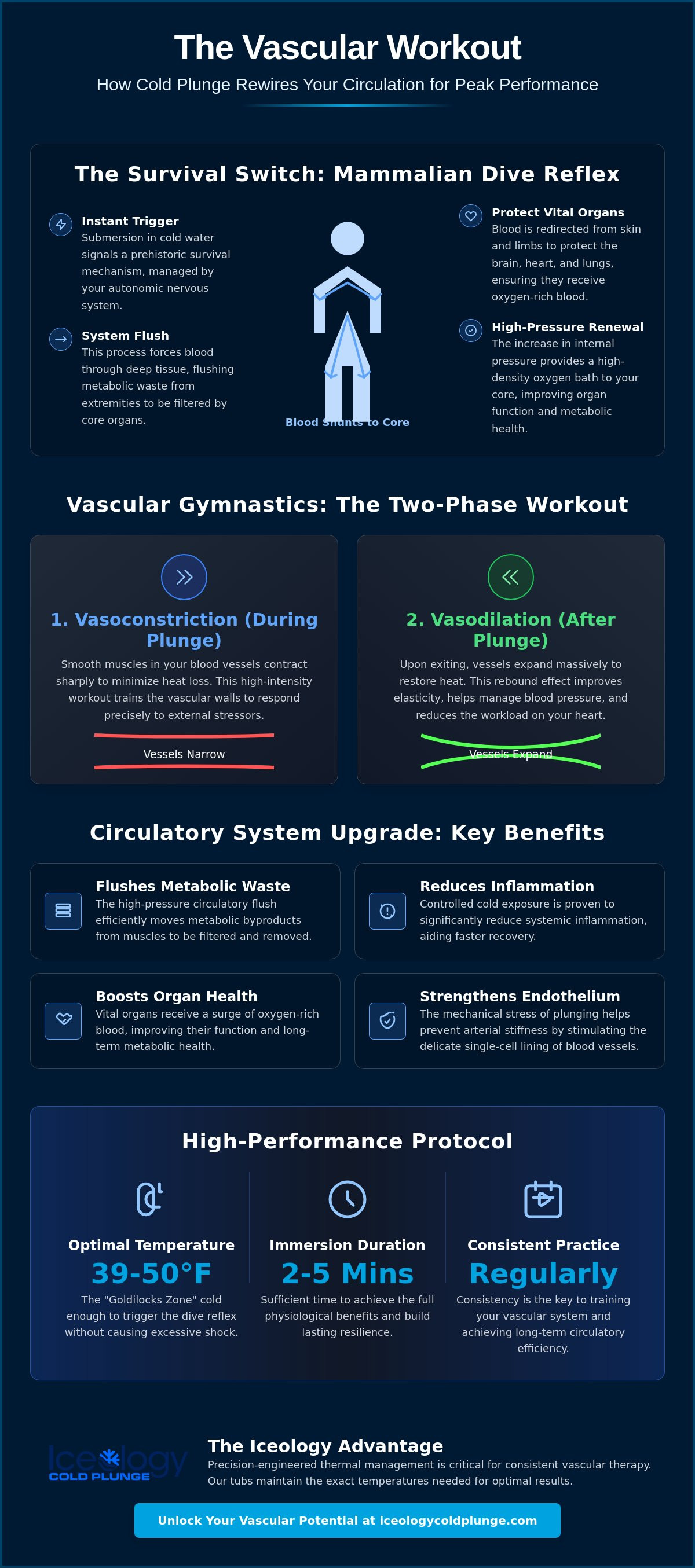
Your body is a master of adaptation. The moment you submerge, it initiates a prehistoric survival mechanism known as the mammalian dive reflex. This isn't a passive reaction; it's a sophisticated biological priority shift. To preserve life, your autonomic nervous system immediately redirects blood flow away from the skin and limbs toward your brain, heart, and lungs. This rapid redirection, managed by the sympathetic branch of the nervous system, creates a sudden increase in internal pressure. By using a cold plunge to improve circulation, you are essentially flushing your entire system. This process forces blood through deep tissue pathways that often remain stagnant during traditional exercise or sedentary routines.
This internal pressure change isn't just about survival; it's about renewal. As the blood is pushed toward the core, it carries metabolic waste products away from the extremities to be filtered by the liver and kidneys. The result is a massive flush of the circulatory system that promotes cellular health and reduces systemic inflammation. This mechanical movement of fluid is something that even the most intense cardiovascular workouts struggle to replicate with such precision.
The Core-to-Extremity Blood Shift
During the first 60 seconds of immersion, your body undergoes a massive fluid shift. The physiological effects of cold water immersion include a dramatic reduction in peripheral blood flow. As the heart works to manage this increased stroke volume, it pumps oxygen-rich blood more forcefully into your vital organs. This internal surge provides a high-density oxygen bath to your core, improving organ function and metabolic health far more efficiently than resting states ever could. It is a targeted, high-performance way to ensure your cold plunge improve circulation where it matters most.
Temperature Thresholds for Circulatory Activation
Precision is everything in recovery science. For the dive reflex to fully engage, the water must be cold enough to signal a survival threat without causing immediate shock. The goldilocks zone for this response typically sits between 39°F and 50°F. While a cool bath might feel refreshing, it lacks the thermal intensity required to trigger the profound shunting of blood. True cold water immersion demands a specific temperature threshold to ensure the vascular walls contract with enough force to drive the circulation benefits you seek. The shunting effect acts as the primary driver of cold-induced circulation by mechanically moving blood from the surface to the core.
Vasoconstriction and Vasodilation: The Vascular Workout
Think of your circulatory system as a complex network of highways. While traditional exercise works the "engine" of your heart, using a cold plunge to improve circulation focuses on the "roads" themselves. This process begins with vasoconstriction. As you submerge, the smooth muscles surrounding your blood vessels contract sharply to minimize heat loss and maintain thermal homeostasis. This contraction is a high-intensity workout for your vascular walls. By forcing these vessels to narrow, you're actively training the muscular structure of your circulatory system to respond with precision to external stressors.
The real magic happens when you exit the water. This phase, known as vasodilation, involves a massive expansion of the vessels as your body seeks to restore heat to the extremities. Researchers studying the cardiovascular responses to cold have noted that this rapid cycling between states acts as "vascular gymnastics." Regular practice of this cycle strengthens the vessels' ability to contract and relax. Over time, this improved elasticity helps your body manage blood pressure more effectively, reducing the workload on your heart during daily activities.
Strengthening the Endothelium
The endothelium is the delicate, single-cell lining of your blood vessels. It plays a critical role in nutrient delivery and waste removal. The mechanical stress of plunging stimulates this lining, improving its overall function and health. By subjecting the endothelium to these controlled cycles of pressure, you help prevent the arterial stiffness that often comes with aging or a sedentary lifestyle. Investing in a high-quality cold plunge tub allows you to perform this specialized training in a controlled, consistent environment.
The Rebound Effect: Post-Plunge Hyperemia
Once you step out of the cold, you'll experience a phenomenon called post-plunge hyperemia. This is a rush of warm, oxygenated blood flooding back into your skin and muscle tissue. This "fresh" blood delivery is packed with the nutrients necessary to accelerate the repair of micro-tears caused by intense training. It's why many users report an immediate reduction in muscle soreness. You'll recognize this success by the distinct "glow" on your skin; it's a visual indicator that your vasodilation is working at peak capacity to flush out toxins and revitalize your system. Using a cold plunge improve circulation protocols ensures that every cell in your body receives the oxygen it needs to thrive.
Beyond Blood: Secondary Circulatory Benefits of Regular Plunging
Circulatory health involves more than just the movement of blood through arteries and veins. It encompasses the entire fluid management system of your body. The lymphatic system acts as a secondary drainage network, collecting excess fluid and cellular waste. Because this system lacks a central pump like the heart, it relies heavily on external pressure and muscle contractions to function. When you use a cold plunge to improve circulation, you're simultaneously engaging this vital drainage network. The cold triggers involuntary muscle contractions, or micro-shivering, which physically pushes lymphatic fluid through its vessels. This process is essential for clearing metabolic waste products like lactic acid that accumulate during high-intensity training.
By facilitating this fluid turnover, you effectively reduce systemic inflammation. Stagnant fluid is often a breeding ground for inflammatory markers that slow down tissue repair. The rapid movement of blood and lymph ensures that these markers are filtered and removed before they can cause lasting discomfort. Regular plunging creates a cleaner internal environment, allowing your body to focus its energy on building resilience rather than managing chronic swelling.
Lymphatic Drainage and Detoxification
The efficacy of cold water immersion therapy stems from the combination of extreme temperature and hydrostatic pressure. As you submerge, the weight of the water exerts a gentle, even pressure across your entire body. This pressure assists the lymphatic valves in moving fluid toward the lymph nodes for filtration. By maintaining clear and active lymphatic pathways, you support a more robust immune response. A stagnant lymphatic system can lead to a buildup of toxins, but regular plunging ensures these fluids remain in constant motion, optimizing your body's natural detoxification processes.
Reducing Edema and Fluid Retention
Gravity often causes fluid to pool in the lower extremities, leading to swelling and a heavy feeling in the legs. Athletes frequently turn to cold therapy to reset their lower bodies after high-impact sessions. The cold-induced pressure forces this excess fluid out of the tissues and back into the central circulation. This reduction in edema not only improves comfort but also allows for better nutrient delivery to recovering muscles. Lymphatic clearing complements blood circulation to flush metabolic byproducts and significantly shorten total recovery time. By choosing to cold plunge improve circulation protocols, you address systemic inflammation at its source, ensuring that fluid turnover remains high and recovery remains efficient.
Optimizing Your Plunge for Maximum Circulatory Response
To achieve the best results, you must move beyond casual dipping and embrace a structured protocol. Establishing a baseline is the first step toward mastery. For most individuals, staying submerged for 2 to 5 minutes provides the optimal window for a cold plunge to improve circulation. This duration is long enough to trigger the full vasoconstrictive response without overtaxing your metabolic resources. Precision is the hallmark of elite recovery. Relying on inconsistent melting ice bags creates thermal fluctuations that confuse your vascular system. A dedicated system ensures you maintain a steady, precise temperature, which is vital for building long-term vascular resilience.
Start where you are. If you're new to cold therapy, begin with water around 50°F. As your body adapts, gradually lower the temperature by a few degrees each week. The elite 39°F range is an aspirational goal that offers the most intense vascular challenge. You can browse our high-performance cold plunge tubs to find a system that offers the granular temperature control needed for this progression. Consistent exposure at these specific thresholds is what transforms a simple soak into a biological upgrade.
The Contrast Therapy Protocol
Contrast therapy is the ultimate "vascular flush." By alternating between a sauna and a cold plunge, you force your blood vessels through rapid, repeated cycles of expansion and contraction. A common and effective ratio is 15 minutes of heat followed by 3 minutes of cold. This practice maximizes the cold plunge improve circulation benefits by using the heat to dilate vessels before the cold snaps them shut. It's a powerful way to accelerate the removal of metabolic waste and leave your body feeling revitalized. This rhythmic pulsing acts as a mechanical pump for your entire circulatory network.
Safety and Acclimatization
Safety is paramount when subjecting your heart to thermal stress. The initial "cold shock" often triggers a gasping reflex that can be jarring. You can manage this response through controlled box breathing: inhale for four seconds, hold for four, exhale for four, and hold for four. This technique calms the autonomic nervous system and allows for a graceful entry. Always enter the water slowly rather than jumping in to give your heart time to adjust. If you have pre-existing cardiovascular conditions, it's essential to consult with a physician before starting a routine. Listen to your body; the goal is disciplined improvement, not reckless endurance.
The Iceology Advantage: Precision-Engineered Vascular Health
To truly leverage a cold plunge to improve circulation, you need more than just cold water; you need absolute precision. A temporary ice bath or a flimsy inflatable tub often fails to provide the stable thermal environment required for deep physiological adaptation. Choosing a hard-sided, permanent fixture ensures that your body can rely on a consistent stimulus every single day. This is about more than just a quick chill. It's about a long-term investment in your vascular resilience. By treating your recovery equipment as a professional tool, you elevate your practice from a casual hobby to a disciplined lifestyle. Precision is the engine of results.
High-density polyurethane foam insulation plays a critical role in this process. It doesn't just keep the water cold; it protects the thermal integrity of the environment against external heat. This means your chiller doesn't have to work overtime to fight the ambient room temperature. The result is a more efficient system that maintains the exact degree you've selected. When your equipment performs with this level of reliability, you can focus entirely on the mental and physical work of the plunge itself.
USA-Made Durability for Lifetime Results
USA made cold plunge tubs represent the pinnacle of recovery engineering. American craftsmanship isn't just a label; it's a guarantee of material quality and structural integrity. Hard-sided construction eliminates the vibrations and instability found in portable alternatives, providing a focused and secure space for your recovery practice. This stability allows you to settle into the experience, making it easier to manage the initial cold shock and focus on the internal "vascular gymnastics" taking place within your vessels. Knowing your tub is built for longevity provides the peace of mind necessary to make cold therapy a permanent part of your wellness architecture.
Effortless Temperature Management
Consistency is the enemy of the "ice bag" method. When you manually add ice, the temperature fluctuates wildly, preventing you from hitting the specific thresholds needed for peak metabolic response. An integrated chiller maintains the "Goldilocks" temperature with surgical precision. For advanced practitioners, reaching the 39°F limit is essential for maximizing the shunting effect discussed in previous sections. Having a system that's "ready when you are" removes the friction from your routine, turning a difficult task into a seamless, daily habit. This level of control is why a dedicated cold plunge improve circulation protocol is so much more effective than sporadic cold showers. It ensures that every session delivers the maximum physiological payout for your effort.
Mastering Your Path to Vascular Resilience
Building a high-performance circulatory system requires more than just occasional effort; it demands a disciplined commitment to the right stimulus. By engaging in regular vascular gymnastics, you train your blood vessels to adapt and flush with elite efficiency. This process doesn't just improve blood flow; it optimizes your entire lymphatic network to remove metabolic waste and reduce persistent inflammation. Using a cold plunge to improve circulation transforms your body's internal environment into a resilient engine for recovery and health.
Precision is the final piece of the recovery puzzle. To achieve lasting results, you need a system that offers the reliability of professional engineering and the consistency of exact thermal management. Every session counts toward your long-term health and mental clarity. You've learned how the shunting of blood oxygenates your core and how hydrostatic pressure clears your lymph nodes. Now it's time to implement these scientific principles with equipment designed for peak results.
Elevate your recovery with an Iceology Cold Plunge tub today. Our systems are handcrafted in the USA and feature integrated cooling that reaches a precise 39°F. With premium polyurethane foam insulation for maximum efficiency, you can focus entirely on your performance. Take control of your physical state and step into a new standard of wellness.
Frequently Asked Questions
Does a cold plunge actually help circulation long-term?
Yes, regular immersion builds lasting vascular resilience by training the smooth muscles of your vessel walls to contract and dilate with greater efficiency. This repeated stimulation improves the overall elasticity of your circulatory system over time. A 2025 review in Life Sciences confirmed that controlled cold exposure enhances cardiovascular function and reduces inflammation, which are key markers for healthier aging and long-term vascular durability.
How many times a week should I cold plunge for better circulation?
Consistency is the primary driver of circulatory adaptation, so you should aim for three to five sessions per week. This frequency allows your body to experience the shunting of blood and subsequent flushing of the system without inducing chronic stress. For most practitioners, a total of 11 minutes of cold exposure spread across several days provides a sufficient stimulus to maintain and improve vascular tone.
Is a cold shower as effective as a cold plunge for blood flow?
Cold showers provide a minor stimulus, but they aren't as effective as a full-body cold plunge to improve circulation. Submersion provides hydrostatic pressure, which is essential for moving lymphatic fluid and ensuring an even shunting of blood to the core organs. Additionally, showers often fail to reach the consistent, low temperatures required to trigger the profound mammalian dive reflex needed for deep vascular training.
Can cold plunging help with cold hands and feet?
Regular plunging can help mitigate the symptoms of poor peripheral circulation by improving your body's vascular response. By intentionally stressing the vessels in your extremities, you train them to reopen more effectively after periods of constriction. This improved "rebound" effect, known as vasodilation, ensures that warm, oxygenated blood reaches your fingers and toes more efficiently during daily activities, reducing the frequency of persistent coldness.
What is the best temperature to improve circulation in a cold plunge?
The "goldilocks zone" for circulatory activation typically falls between 39°F and 50°F. Lower temperatures, specifically reaching toward the 39°F limit, provide a more intense vascular challenge for advanced users seeking maximum metabolic response. It's important to use a system with precise thermal management to ensure you stay within these specific thresholds, as temperatures above 60°F may not trigger the necessary physiological shunting for optimal results.
Is it safe to cold plunge if I have high blood pressure?
You must consult with a healthcare provider before starting a cold plunge routine if you have high blood pressure. The immediate vasoconstriction causes a rapid, temporary spike in blood pressure and heart rate as blood is shunted to your core. While this can eventually lead to better pressure management in healthy individuals, it can be dangerous for those with pre-existing cardiovascular conditions or uncontrolled hypertension without medical supervision.
How long after a workout should I plunge to help my circulation?
For athletes focused on muscle growth, research from late 2025 suggests waiting at least six to eight hours after strength training to plunge. Immediate immersion can hinder the inflammatory response necessary for hypertrophy. However, if your goal is pure recovery and metabolic waste removal, plunging shortly after high-impact cardio or on dedicated recovery days is an excellent way to cold plunge improve circulation and reduce muscle soreness.
Does cold plunging help with varicose veins?
Cold immersion can help manage the discomfort associated with varicose veins by inducing vasoconstriction and reducing localized swelling. The cold causes the veins to shrink, which can temporarily improve blood flow and reduce the heavy sensation often felt in the legs. While it isn't a cure for the underlying structural issue, the regular vascular workout strengthens the smooth muscle of the vessel walls, potentially slowing the progression of venous insufficiency.