
Cold Plunge Tub for Anti-Aging Clinics: A 2026 Buying Guide
What if the smartest anti-aging decision is to evaluate the equipment, not promise an outcome? Choosing a cold plunge tub for anti-aging clinics means looking at what cold-exposure research can support and what the tub needs to do reliably in a professional setting.
Interest in emerging research on cold exposure and cellular health is understandable. But evidence that it reverses aging biomarkers in humans remains limited. Responsible equipment decisions should be grounded in repeatability, not treatment claims. Temperature control, sanitation planning, cleaning routines, and frequent-use demands matter as much as whether a setup uses a dedicated tub or a cooler with a separate chiller.
This guide covers practical criteria for comparing clinic-ready cold plunge equipment, from cooling and water care to staff workflow. It also explains how Iceology Cold Plunge’s hard-sided tubs, built-in chilling systems, and efficient insulation can fit a clinic evaluating repeatable cold-water immersion. The goal is to help you choose equipment suited to your operating model while discussing Cold Water Therapy with care and credibility.
Key Takeaways
- Distinguish proposed biological mechanisms from demonstrated clinical benefits when discussing cold exposure and aging.
- Compare a cold plunge tub for anti-aging clinics by its cooling approach, temperature control, construction, and maintenance demands.
- Match equipment to your intended use, staff workflow, and available space before planning day-to-day operation.
- Consider how a dedicated hard-sided tub can support a clinic evaluating repeatable cold-water immersion.
Why Anti-Aging Clinics Are Considering a Cold Plunge Tub
Cold-water immersion can interest clients looking for new additions to a broader wellness routine. For clinics, that interest is a reason to assess whether the modality has a clear, responsible place alongside existing offerings and whether the facility can support its use consistently. It is not a basis for marketing rejuvenation.
A cold plunge tub for anti-aging clinics is equipment for immersion in cold water. The term Cryotherapy covers a wider range of cold-based applications. Describe the specific experience your clinic provides rather than implying that every form of cold exposure has the same purpose or supporting evidence.
What clients may expect from cold water therapy
Clients may be curious about cold exposure because they associate it with recovery, vitality, or general wellness. Acknowledge that interest without suggesting a plunge improves skin, prevents aging, or produces a predictable physical result. Curiosity is a reason to explain the offering clearly, not proof that it works as an anti-aging treatment.
Set expectations around the experience itself: a person enters cool water as part of the clinic’s defined wellness offering. The tub supports that activity; it does not establish a therapeutic effect on its own. Equipment supports delivery, not proof of anti-aging outcomes. Clear language helps staff describe what the service involves without making claims that exceed the evidence.
What a clinic needs before adding a cold tub
Start with the operating model, not the purchase. Define the intended users, how the tub would fit into a visit, and how much space and staff attention the experience requires. These decisions shape the equipment criteria and help show whether the clinic can manage routine use without disrupting other services.
- Map the client flow: Plan the route from arrival and changing to tub access and the transition back to the next appointment.
- Assign staff responsibilities: Decide who will oversee the experience, maintain the area, and follow the clinic’s written procedures.
- Assess facility capacity: Consider placement and the practical demands of repeated use, including cleaning and water-care routines.
Staff training and written operating procedures are part of implementation, not details to leave until after installation. Medical screening, suitability decisions, and treatment-related judgment belong within qualified clinical practice. Keep those decisions separate from the equipment purchase: the tub can support the clinic’s chosen process, but it cannot determine who should use it or what care is appropriate.
Once purpose and workflow are defined, compare equipment by how it cools, how it will be maintained, and whether its construction suits the planned frequency of use. That operational foundation makes it easier to evaluate research and equipment options deliberately.
What Cold-Exposure Research Can, and Cannot, Say About Anti-Aging
Cold-exposure research can offer clues about how the body responds to cold. A proposed biological mechanism, however, is not the same as a demonstrated clinical benefit. A mechanism describes a process that might help explain an effect; clinical evidence must show that an outcome occurs in people under defined conditions. That distinction matters when clinics consider cold-water immersion as part of a wellness offering.
How to interpret early cellular findings
Autophagy is the body’s cellular process for clearing and recycling damaged cell components. It is relevant to studies of cellular health, but a change in autophagy does not, by itself, show that people live longer or look younger. A reported March 2025 University of Ottawa study involved ten healthy young men who immersed in 14°C (57.2°F) water for one hour daily over seven days.
The study reported improved cellular resilience and autophagy. Its small, specific participant group and short exposure period limit how broadly the findings can be applied. They do not establish effects in older adults, clinic clients, or people with different health backgrounds. Nor do cellular measures prove visible skin changes, longer life, prevention of age-related disease, or reversal of aging.
How clinics can describe cold plunging responsibly
Precise wording keeps public claims aligned with what a study actually examined. Describe the activity as cold exposure or cold-water immersion, and distinguish a reported biological response from a proven benefit a client can expect. A tub provides the setting for immersion; it does not prove a treatment works or establish that it is appropriate for a particular person.
Early cellular findings are a research signal, not evidence that cold-water immersion reverses aging or delivers a guaranteed anti-aging result. Apply this standard to clinic materials, staff conversations, and service descriptions. Avoid presenting an Ice Bath as a way to treat disease, prevent aging, or guarantee rejuvenation. Clinicians should use their professional judgment for medical screening and treatment decisions.
For a clinic evaluating a cold plunge tub for anti-aging clinics, this evidence boundary also clarifies what equipment can and cannot do. A controlled, repeatable immersion environment may support a defined wellness experience, but equipment specifications do not establish clinical efficacy. Keep the questions separate: research evaluates outcomes, while equipment evaluation determines whether a setup suits the clinic’s intended use and routine.
That distinction supports measured messaging: explain what cold-water immersion involves, describe the research as preliminary where appropriate, and avoid turning cellular findings into promises about appearance or longevity. Clinics exploring equipment can review Iceology Cold Plunge tubs as a dedicated immersion setup.
How to Compare Cold Plunge Tubs for Anti-Aging Clinics
A clinic-ready comparison should focus on repeatability and workflow, not labels such as “premium” or “commercial.” Start with the water temperature your planned use calls for. Then compare how each setup cools, how it is built, and what staff must do to keep it ready for the next user. The right fit is the one that supports your operating model without adding avoidable friction.
Cooling system, temperature control, and insulation
A built-in chiller cools water between uses and can support a more controlled starting point for each planned immersion. Iceology Cold Plunge tubs have built-in chilling systems that can lower water temperature to 39°F. That is a product capability, not a target every clinic needs. Select temperature settings according to the clinic’s intended use and procedures. Efficient insulation is another practical factor because it helps limit heat transfer, but it should not be treated as a quantified energy-savings promise.
Dedicated hard-sided tub: Combines the bathing vessel and cooling system in a purpose-built setup. Compare temperature control, construction, footprint, and access for routine cleaning.
Cooler-based setup: A Grizzly Cooler-based configuration can be paired with separate components for cooling and water circulation. This component-based approach requires planning how the parts fit together and how staff will maintain the complete setup.
Tub with separate chiller: Keeps the cooling equipment distinct from the vessel. Consider where the chiller and connections will sit, how the system will be operated, and whether the arrangement suits the room and daily workflow. Active Aqua is another name clinics may encounter when comparing separate equipment components.
Construction, sanitation planning, and clinic workflow
Hard-sided construction can suit a clinic planning regular use, while temporary or inflatable formats may suit different settings. Compare the actual build and care requirements rather than assuming one format fits every facility. An Ozone Sanitation System is a separate water-care consideration, not a replacement for a complete sanitation plan or a feature to assume is included with every tub.
Before selecting a cold plunge tub for anti-aging clinics, map how users enter and exit, how staff will reach the tub for cleaning, and how much time they can allocate to turnover. Plan water care around the equipment manufacturer’s guidance and the clinic’s written procedures. A setup that fits the room but makes cleaning or user flow difficult may be a poor operational match.
- Cooling: Is the system suited to the intended temperature and repeated use?
- Construction and insulation: Does the vessel suit the clinic’s use pattern and maintenance routine?
- Space and turnover: Can staff access the tub and related equipment while keeping the surrounding area functional?
Iceology Cold Plunge’s hard-sided tubs combine built-in chilling, efficient insulation, and expert craftsmanship in a dedicated equipment option. View Iceology Cold Plunge tubs alongside other equipment as you compare options against your clinic’s practical criteria.
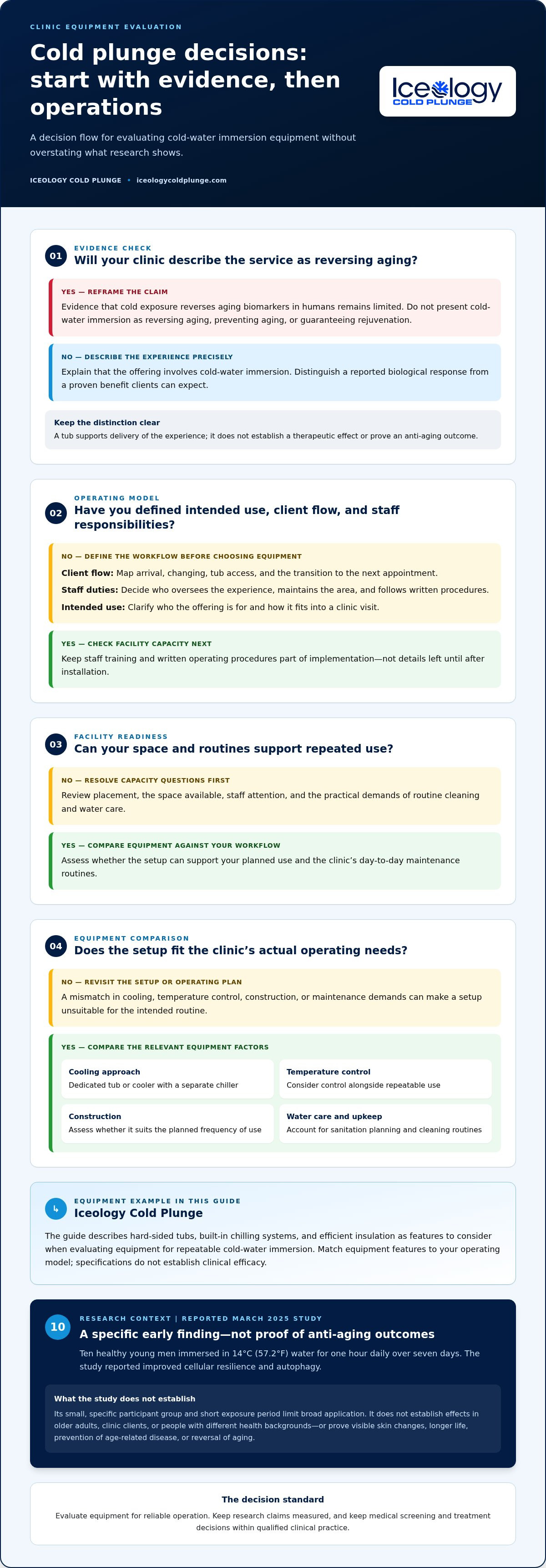
How to Plan Cold Plunge Tub Use in a Clinic
A smooth clinic experience starts before the tub arrives. Define the intended use, map how clients and staff will move through the space, then build operating and care procedures around the equipment. Keeping those decisions in sequence separates installation planning from clinical decisions about participant suitability and exposure.
Map the clinic’s use case and space
Estimate user flow and identify where immersion would sit in the client journey. For example, map the route from arrival to the plunge area and then to the next part of the visit. Include privacy, access, staff oversight, and a clear path for cleaning. A simple floor plan can reveal pinch points before equipment placement is finalized.
Assess the installation area separately. Consider the tub’s footprint, usable access around it, and where related equipment and cleaning supplies will be kept. Cold plunge tub setup guidance can help operators think through placement and installation. Use product-specific guidance for the equipment being installed, and plan the room so staff can reach the tub for routine care.
Create consistent operating and care procedures
Document who handles each routine task and how that work fits between client visits. Procedures should reflect the tub manufacturer’s guidance and the clinic’s operating model, rather than rely on memory or assumptions. Clear ownership helps staff keep the equipment ready and notice when a routine task has been missed.
- Assign equipment responsibilities. Identify who monitors water temperature, checks equipment operation, and records or communicates concerns.
- Define cleaning and water-care steps. Follow manufacturer instructions for tub care and accessories, alongside the clinic’s established procedures. Set the process and documentation method without assuming a universal cleaning schedule or sanitation requirement.
- Plan for turnover. Build cleaning and reset time into the room’s use sequence. Make sure staff can access the areas they need without interrupting the next client’s arrival.
- Keep clinical decisions separate. Participant screening, exposure protocols, and contraindications should remain under qualified clinical oversight. Equipment placement and installation planning support the environment; they do not determine a person’s suitability or replace clinical judgment.
Review the process after staff walk through it from setup to room reset. If a task has no clear owner, or a step depends on equipment access that the layout makes difficult, revise the workflow before routine use begins. The goal is a practical system staff can follow consistently, not a protocol built on guesswork.
Once use, space, and care procedures are mapped, assess whether a dedicated cold tub fits daily operations. Thoughtful planning gives the equipment a defined role while keeping participant protocols within the clinical team’s responsibility.
Why Iceology Cold Plunge Fits a Clinic Equipment Evaluation
After setting evidence-aware expectations and mapping operating needs, assess equipment against the clinic’s priorities. Iceology Cold Plunge makes hard-sided cold plunge tubs with built-in chilling systems and efficient insulation. Evaluate how the equipment fits the facility’s planned use, staff workflow, and client experience, rather than treating a product as a promise of rejuvenation.
Match the equipment to clinic priorities
Start with the practical details that shape daily operation: how staff will prepare the area, guide clients through the experience, and reset the space afterward. Consider whether the equipment format works with the clinic’s layout and planned level of use. These questions help operators judge fit without confusing product choice with evidence of a clinical or anti-aging effect.
Bring the people responsible for operations into the evaluation early. A clinic manager may focus on room flow, while staff responsible for routine care may identify access or reset considerations. Their input can show whether the proposed setup works in practice, not just on paper. Keep the assessment grounded in what the clinic intends to provide and the procedures its team can consistently follow.
Make an evidence-aware equipment decision
The final decision should reflect the clinic’s workflow, care planning, and desired client experience. Revisit who will oversee use, how the area will be maintained, and whether the equipment can fit into the facility’s established procedures. Product selection should support those decisions, not replace clinical judgment about participant suitability or exposure protocols.
For a broader framework to compare equipment, premium cold plunge tub selection guidance can help clinics organize their priorities. Apply those criteria to the use case and operating plan. The result is a more deliberate purchase decision, with clear boundaries between equipment capabilities and claims about outcomes.
A cold plunge tub for anti-aging clinics belongs in an evaluation built around practical fit and responsible communication. Iceology Cold Plunge offers cold plunge tubs and accessories for clinics considering cold-water immersion as part of their facility’s offering.
Make Your Next Equipment Decision with Confidence
Turn your clinic’s operating plan into a practical decision brief: define the experience you intend to support, the workflow your team can sustain, and the care procedures staff will follow. Then assess each option against those needs, keeping equipment capability separate from claims about anti-aging outcomes. A clear selection process helps your clinic move forward with purpose.
Use the criteria in this guide to evaluate a cold plunge tub for anti-aging clinics based on its role in your facility, not on promises of rejuvenation. A considered choice can help your team introduce cold-water immersion with clear expectations and a plan that fits day-to-day practice.
Move forward with care, clarity, and confidence.
Frequently Asked Questions
Is a cold plunge tub proven to reverse aging?
No. Current cold-exposure research does not establish that cold plunge tubs reverse or prevent aging, or reliably change skin appearance. Preliminary findings about cellular processes are not the same as demonstrated outcomes in clinic clients. Clinics should avoid guarantees and describe the service accurately as cold-water immersion. Before publishing claims or discussing clinical use, have qualified clinical leadership review the language and ensure it reflects the evidence and the clinic’s intended offering.
Can cold plunging improve skin health?
There is not established evidence here to promise lasting skin-health benefits from cold plunging. Interest in possible skin effects does not prove that immersion improves complexion, reduces wrinkles, or produces another reliable cosmetic outcome. A clinic can explain what a cold-water immersion experience involves and distinguish it from skincare treatment. Avoid describing the plunge as a substitute for a skincare plan or presenting emerging research as a proven result clients should expect.
What temperature can an Iceology Cold Plunge tub reach?
Iceology Cold Plunge tubs have built-in chilling systems that can lower water temperature to 39°F. That capability is not a recommended temperature for every person or clinic. Choose settings through the facility’s operating procedures and qualified clinical oversight. Consider how staff will monitor and communicate the selected temperature, and ensure participant assessment and exposure protocols guide use rather than inferring them from the equipment’s cooling capability.
How should an anti-aging clinic compare a cold plunge tub with a cooler-based setup?
Compare how each setup cools water, its construction and insulation, temperature management, water-care workflow, and fit with expected use. A cooler-based arrangement may involve separate components, while a dedicated hard-sided tub with a built-in chiller offers an integrated equipment format. Neither is automatically best for every clinic. Consider who will operate and care for the system, how it fits the facility, and how reliably it supports the planned workflow.
What should a clinic plan before installing a cold plunge tub?
Define intended use, location, user flow, staff oversight, cleaning responsibilities, and manufacturer-directed care before installation. Walk through the room as staff and clients would use it, noting access for routine cleaning and equipment monitoring. Keep placement and installation decisions separate from participant screening and exposure protocols, which belong under qualified clinical oversight. Use product-specific guidance for site planning rather than assuming electrical, plumbing, or regulatory requirements that may not apply.
What does Iceology Cold Plunge offer clinics?
Iceology Cold Plunge sells hard-sided cold plunge tubs and accessories online. Its tubs are made in the USA and feature built-in chilling systems that can lower water temperature to 39°F, along with efficient insulation and expert craftsmanship. Clinics can evaluate the equipment for use within their own facility and operating model. A purchase is for equipment, not a clinical service or treatment program, so plan separately for staff responsibilities, participant assessment, and any protocols established by the clinical team.