
Cold Plunge Tub for Off-Grid Living: How to Choose the Right Setup
The biggest off-grid cold-plunge decision isn’t the tub. It’s how you’ll keep the water cold without asking more of your power system than it can provide. Choosing a cold plunge tub for off-grid living means weighing that trade-off from the start, whether you’re considering ice, passive cooling, or a powered chiller.
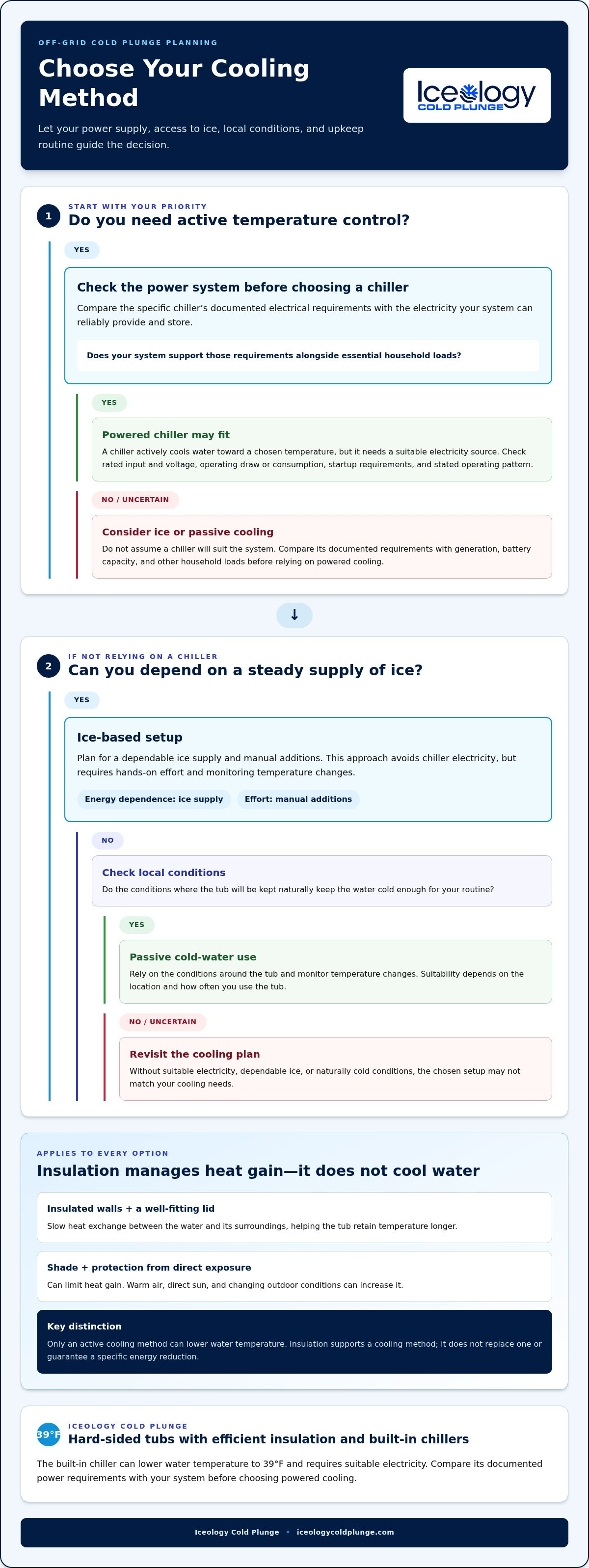
Before choosing, consider whether a chiller can run reliably on your power system and whether its upkeep fits your routine. Each approach involves a different balance of temperature control, electricity use, and hands-on effort. Insulation can slow heat gain, while a chiller actively cools water but needs a suitable electricity source. Iceology Cold Plunge makes hard-sided tubs with efficient insulation and built-in chillers that can lower water temperature to 39°F.
This guide compares ice-based, passive, and chiller-equipped setups, then covers the power, insulation, placement, and water considerations that shape everyday use. Use the practical criteria below to choose a durable cold plunge setup that fits your off-grid conditions and routine.
Key Takeaways
- Define how often you’ll plunge and how much hands-on upkeep fits your routine before choosing a cooling method.
- Compare ice, passive cold-water use, and powered chilling by energy dependence, temperature control, and setup effort.
- For a cold plunge tub for off-grid living, assess chiller electricity needs alongside essential household loads, not in isolation.
- Choose a sheltered, practical location and plan ahead for filling, draining, water care, and maintenance.
- Match your setup to your power capacity. Insulation can slow heat gain, but it doesn’t replace a cooling source.
What Makes a Cold Plunge Tub Practical for Off-Grid Living?
Off-grid readiness isn’t a feature a tub either has or lacks. It depends on how well the cooling method, available electricity, insulation, and upkeep fit the property and your routine. A setup for a full-time home may be more than a seasonal cabin needs. A powered chiller that works with a larger system may also exceed the capacity of a smaller one.
An off-grid-ready cold plunge is one whose cooling method, power demands, insulation, and upkeep fit the resources and routine of the place where it will be used. Use those factors to assess a cold plunge tub for off-grid living rather than assuming every property has the same energy supply or cooling needs. A chiller needs electricity; an ice-based approach requires a dependable ice supply and manual additions. Passive cold-water use depends on the conditions where the tub is kept.
The terms ice bath and cold-water immersion are often used for this practice. For an off-grid buyer, the practical question is whether the setup can provide water at a suitable temperature for your routine without competing with essential household needs.
Does an off-grid cold plunge need a chiller?
No. A chiller can actively cool water toward a chosen temperature when supplied with suitable electricity, reducing the need to add ice by hand. Without one, you’ll need a dependable way to source ice or conditions that keep the water cold, and you’ll need to monitor temperature changes. Neither approach is automatically better. Choose based on your electrical capacity, access to ice or naturally cold conditions, and how much hands-on effort you’re prepared to take on.
Which off-grid living situations change the decision?
A full-time off-grid home needs a plan for running the chiller alongside other regular electrical loads. A cabin with grid backup or a generator may offer more flexibility at certain times, but that doesn’t mean every chiller will suit every power setup. Compare the equipment’s requirements with the power source you intend to use before relying on powered cooling.
How often you use the tub and the conditions around it matter, too. For seasonal use, decide whether you’ll set up the tub only during visits or keep it ready between them. Sun exposure and placement can affect how quickly water warms, while frequent plunges may make active temperature control more useful. These factors help define what your setup needs to do, rather than pointing to one answer for everyone.
Iceology Cold Plunge makes hard-sided tubs with efficient insulation and integrated chilling for buyers who want controlled cooling in a durable tub. The built-in chiller requires suitable electricity. Consider insulation alongside your power supply, cooling preference, and routine when choosing a setup.
How Chillers, Insulation, and Power Shape Off-Grid Cold Plunging
A chiller removes heat from water; insulation slows heat from entering it again. The two functions support each other, but they aren’t interchangeable. Insulation helps retain a water temperature; only an active cooling method can lower it. For a cold plunge tub for off-grid living, this distinction is crucial: insulation can help stabilize water temperature, but it can’t replace electricity for a powered chiller.
Cooling demand depends on the conditions around the tub and how it’s used. Warm air, direct sun, and exposure to changing outdoor conditions can increase heat gain. The starting water temperature, how often the lid is removed, and how frequently the tub is used also affect the cooling task. Use your actual location and routine as planning inputs instead of relying on a generic estimate.
What does insulation contribute to an off-grid setup?
Insulated walls and a well-fitting lid slow heat exchange between the water and its surroundings. That can help the tub retain its temperature longer, but it doesn’t provide cooling or guarantee a specific reduction in energy use. Placement matters as well: shade and protection from direct exposure can limit heat gain. Treat insulation and location as ways to manage the cooling load, not eliminate it.
How should you assess power for a cold plunge chiller?
Start with the specific chiller’s documentation and compare its electrical requirements with your system’s capacity. Check the rated input and voltage, operating draw or consumption, startup requirements, and any stated operating pattern. Use the equipment’s specifications rather than a generic estimate for chillers.
Then compare those requirements with the energy your system can reliably provide and store. Account for generation, battery capacity, and other household loads, prioritizing essential needs over optional chiller use. If the documentation doesn’t specify the operating pattern or startup demand, don’t assume those details. They can affect whether your system can support the equipment.
- Match units: Compare equipment power and energy figures with the corresponding data for your power system.
- Allow for real conditions: Consider periods when generation or stored energy may be limited, alongside household demand.
- Plan for use: Assess the load against your intended plunge routine rather than assuming continuous or occasional operation.
Iceology Cold Plunge offers hard-sided tubs with efficient insulation and integrated chilling. Compare the product’s documented electrical requirements with your system data to assess the fit. The built-in chiller needs a suitable electricity source. Reviewing Iceology cold plunge tubs with that power plan in mind helps you weigh temperature control and insulated construction against your off-grid priorities.
Ice, Passive Cooling, or a Chiller: Compare Off-Grid Options
Each cooling approach shifts the demands of a cold plunge. Ice reduces reliance on electrical cooling but requires a reliable supply and repeated manual adjustments. Passive cooling depends on local conditions, while a chiller provides more direct temperature control at the cost of an electrical load. The right choice for a cold plunge tub for off-grid living depends on what your environment and routine can consistently support.
Dependable electricity favors a chiller for controlled temperatures; limited electrical access makes ice or passive cooling more practical when ice or cold water is reliably available. Use the comparison as a starting point, not a universal ranking.
| Approach | Energy dependence | Temperature control | Recurring effort | Setup complexity |
|---|---|---|---|---|
| Ice-based | Low electrical dependence for cooling; depends on access to ice. | Manual adjustment, with results varying as ice melts and water warms. | Obtain and add ice; check water temperature. | Simple equipment, but regular ice logistics. |
| Passive cold-water use | No powered cooling if relying on naturally cold water or conditions. | Depends on climate, water source, and exposure; limited direct control. | Monitor conditions and manage water as needed. | Can be simple, but depends on a suitable, accessible setup. |
| Powered chiller | Requires electricity suited to the equipment. | Active control toward a chosen temperature, within product capabilities. | Operate and maintain the equipment, and monitor the system. | Requires a tub, chiller, and adequate power planning. |
When can ice-based or passive cooling make more sense?
These methods can suit a site where ice is easy to obtain or conditions naturally keep water cold, particularly if electrical capacity is limited. They avoid relying on powered chilling, but still require effort: ice must be sourced and added, and the water temperature needs monitoring. Passive water temperatures can change with weather and exposure, so don’t assume they’ll stay consistent. A natural water source also shouldn’t be presumed safe, accessible, or reliably cold.
When does a chiller-equipped cold plunge fit better?
A chiller can suit regular use when you want more consistent temperature control and have electricity available for the equipment. That control comes with a power demand, so compare the chiller’s documented requirements with your system’s capacity and other loads. Performance depends on the specific product and conditions. Don’t assume every chiller can reach or maintain the same temperature.
Climate can change the balance. In colder conditions, passive cooling may help keep water cool, while a warmer or more exposed location can make active cooling more appealing. Access to ice, the consistency you want between plunges, and the electrical resources you can dedicate to the tub all matter. Choose the method that fits those practical limits, not simply the one that sounds most convenient.
Plan an Off-Grid Cold Plunge Setup Before You Buy
A cold plunge works best when you settle the practical details before installation. For a cold plunge tub for off-grid living, plan your routine, power, placement, water, and upkeep together. This helps you determine whether a chiller fits your available energy and whether the site supports filling, draining, and regular access.
Use this five-step checklist to turn those considerations into a buying plan:
- Define your routine. Decide how often you expect to plunge and how consistent you want the water temperature to be. Occasional use with flexible temperature expectations may call for a different approach than frequent use with a steady target.
- Map your power. Compare the chiller’s actual electrical specifications with your system’s generation and storage data. Separate essential household loads from optional chiller use, and account for periods of limited generation instead of planning around ideal conditions.
- Choose the location. Pick a level, stable surface that can support the filled tub, with convenient access for entry and upkeep. Consider the route from your home, weather exposure, shade, and whether the placement protects equipment from the elements.
- Plan water logistics. Identify how you’ll fill the tub and where water will go when it needs draining. Consider the distance to your water source, the practicalities of moving water, and how drainage fits the property.
- Prepare for maintenance. Decide how you’ll keep the water and equipment clean, where supplies will be stored, and how routine care fits your schedule. A setup that’s easy to reach and maintain is more likely to stay usable.
How do you match tub use to available power?
Start with your intended frequency and desired temperature consistency, then compare the equipment’s verified requirements with the energy your system can deliver and store. Include startup needs and the chiller’s operating pattern when they’re specified. If generation varies, plan for lower-output periods and prioritize essential household demand. Avoid general estimates: equipment documentation and your system data are the useful basis for a decision.
What should you plan for placement, water, and upkeep?
Walk through a typical plunge day in your mind. Can you reach the tub comfortably in changing weather? Is the surface stable, and is the location practical for filling, draining, and cleaning? Consider how exposure could affect the setup. Build a realistic routine around the tub’s water and components; a cold plunge maintenance guide can help organize those tasks, while a cold plunge tub setup guide can support broader home-installation planning.
Once your plan accounts for routine, energy, location, water, and upkeep, compare it with the tub’s documented features and requirements. This gives you a grounded way to choose a durable setup that suits your property and recovery goals.
Is an Iceology Cold Plunge Tub Right for Your Off-Grid Routine?
Iceology Cold Plunge makes hard-sided tubs with insulated construction and integrated chilling. These features bring durable construction and temperature control together, but the chiller still depends on your power system. The key question is whether dependable electricity is available for it without compromising your home’s essential needs.
That distinction matters when choosing a cold plunge tub for off-grid living. If your power plan can support the chiller, Iceology offers controlled cooling alongside efficient insulation. If your electrical supply is limited or variable, weigh the chiller’s demand against your routine before choosing an integrated setup. Base the decision on your actual power system and the equipment’s requirements.
What Iceology features matter most for remote use?
The hard-sided construction and efficient insulation are useful features for everyday durability and temperature retention. Insulation helps slow heat gain, but it doesn’t cool water or replace a suitable electricity source. Iceology tubs are made in the USA, with expert craftsmanship as part of the company’s focus. Their built-in chillers can lower water temperature to 39°F when suitably powered, giving you a specific cooling capability to compare with your intended use.
How can you make a confident purchase decision?
Bring the practical details together before deciding: reliable electricity, your preferred cooling approach, the tub’s insulation, water access, and a realistic maintenance routine. A setup that fits those conditions can support consistent use; a mismatch can make temperature control an ongoing power or upkeep challenge. Consider how often you’ll use the tub and whether your system can support the chiller when household energy demand is higher.
For broader buying considerations, a premium cold plunge selection guide can help you compare construction, features, and the role of a chiller. Weigh those considerations against your off-grid plan. Iceology is a strong fit if you want an insulated, hard-sided cold plunge with integrated chilling and have suitable electricity available. If your setup depends on limited or variable electrical access, make that constraint central to your decision.
When your power plan, water logistics, and maintenance routine align with the tub’s features, you can choose with greater confidence. Explore the Iceology option that fits your cold-water routine.
Make Your Off-Grid Plunge Plan Work for You
Before choosing a cold plunge tub for off-grid living, turn your power plan into a real-world decision tool. Note when energy is most available, which household needs take priority, and how much temperature consistency matters to your routine. Then choose the trade-off you can sustain: more hands-on cooling or a chiller that depends on suitable electricity. Setting a clear threshold for what your system can reliably support is more useful than planning around ideal conditions.
Iceology Cold Plunge tubs are made in the USA and feature expert craftsmanship, efficient insulation, and built-in chillers that can lower water temperature to 39°F. Compare those features with your needs and power plan rather than assuming any powered setup will suit an off-grid home. Planning ahead helps you choose a recovery space that feels intentional, durable, and manageable in daily life.
Choose a setup that supports your routine and respects the realities of your power supply. Explore Iceology Cold Plunge tubs to find a cold plunge that fits your plan.
With a plan built around your property, cold-water recovery can become a steady part of off-grid living.
Frequently Asked Questions
Can a cold plunge tub run on solar power?
Yes, a chiller can run on a solar-supported electrical system if the system supplies its verified power requirements. Solar generation alone doesn’t establish suitability: consider how much power is available when the chiller needs to operate, what storage is available, and which other loads are running. For example, a cloudy stretch may change available generation. Assess the chiller specifications and system design together rather than assuming a tub’s cooling features mean it’s solar-compatible.
Does an off-grid cold plunge tub need a battery?
No single battery arrangement applies to every off-grid cold plunge. A battery can provide stored electricity when generation isn’t available, but whether it can support a chiller depends on the equipment’s documented requirements and the property’s other electrical loads. Review the system’s usable storage and how it’s shared across household needs. Don’t choose a battery capacity based on a generic rule of thumb; match the system design to the specific equipment and intended use.
Will an insulated cold plunge stay cold without electricity?
Insulation can slow temperature change, but it can’t actively cool water or keep it at a guaranteed temperature indefinitely. The water temperature will depend on surrounding conditions and how the plunge is used. If you choose a non-powered setup, use a thermometer to track changes and decide when the water needs attention. This can work for a flexible routine, but it won’t provide the same active temperature adjustment as powered cooling.
Is an ice bath or a chiller better for off-grid living?
Neither is best for every property. Ice-based cooling can suit a routine with reliable ice access and a willingness to adjust the water by hand. A chiller can be a better match when the power system can support it and you value more direct temperature control. Consider an ordinary week: how easy it is to replenish ice, how often you plunge, and how much variation in water temperature you’ll accept.
How much electricity does a cold plunge chiller use off-grid?
There isn’t one reliable electricity figure for every chiller or setup. Consumption depends on the specific equipment and operating conditions, so use its documentation rather than a broad estimate. Look for the electrical input and any stated operating or startup requirements, then compare those details with your system’s generation and storage records. If the figures are unclear, avoid sizing the system from assumptions; an inaccurate estimate could leave too little energy for other loads.
Can a cold plunge tub stay outdoors at an off-grid home?
Outdoor placement can work if the location suits the tub, its equipment, and your upkeep routine. Follow the manufacturer’s placement guidance, especially for protecting a chiller from weather exposure. Before settling on a site, consider seasonal changes that could make access or maintenance harder, and make sure the drainage plan won’t create problems around the installation area. A sheltered, convenient position can make regular use more manageable across changing conditions.
What should I check before buying a cold plunge for a remote property?
First, write down how often you expect to use the tub and how much temperature variation you can accept. Then compare ice-based, passive, and chiller options against the resources available at the property. For a cold plunge tub for off-grid living, include a realistic power scenario, not just your best-generation days. Also consider how you’ll bring in water and supplies, access the tub for routine care, and manage things if your preferred cooling method is temporarily unavailable.