
Cold Plunge Tub Resale Value: What Determines What Yours Is Worth?
A cold plunge tub’s resale value depends on more than its original price. A well-kept unit with a chiller that works as expected and clear ownership records may be worth considering differently from a similar tub with uncertain maintenance or sanitation history. There’s no single universal figure for cold plunge tub resale value.
When comparing used tubs, look beyond appearance. The chiller, water-care setup, included accessories, cosmetic condition, and available service history all help build a clearer picture of a specific unit.
This guide explains the factors that affect resale value and gives you a consistent way to assess a used tub, including its cooling and sanitation components. It also explains how to compare a used tub with a new one. Iceology Cold Plunge tubs combine built-in chilling with efficient insulation, two documented features to consider as you weigh your options.
Key Takeaways
- Assess cold plunge tub resale value for the specific used unit, not as a fixed percentage of its original price.
- Compare condition, chiller operation, insulation, cleanliness, records, and included components using evidence you can verify.
- Separate documented details from seller statements, and note unanswered questions before deciding what a used tub is worth to you.
- Use a repeatable inspection process. If you’re preparing a tub for resale, document its condition and included components clearly.
- Compare a used tub’s verified condition with the documented features of a new one, including Iceology Cold Plunge’s US-made hard-sided construction and built-in chilling.
What Does Cold Plunge Tub Resale Value Actually Mean?
Resale value is what a buyer may be willing to pay for a particular used cold plunge tub, taking its condition, equipment, records, and the options available to that buyer into account. It’s an estimate for a specific unit and sale, not a guaranteed return based on what the tub cost new.
An ice bath’s purpose and features help explain what a buyer is evaluating, but they don’t establish its market price. For background on what an ice bath is, see Wikipedia’s overview. The tub’s current condition and evidence of how it functions are central to assessing a used unit.
Resale value versus original price and asking price
The original purchase amount is what the first owner paid. The asking price is what a seller hopes to receive. The completed sale price is what a buyer actually paid. These figures can differ, so an active listing doesn’t prove that a tub is worth the asking price or that buyers are willing to pay it.
For a more grounded estimate, record comparable listings and note the date, product type, condition, included components, and asking price. Keep completed-sale evidence separate from active listings. If you can’t verify a sale price, label it unknown rather than treating the listing as a confirmed transaction.
Why cold plunge resale estimates vary
Two tubs that look similar in photos may give buyers different levels of confidence. A clean, maintained unit with a chiller demonstrated in working order is different from one with uncertain operation or incomplete records. Included components matter too, but only when their presence and condition can be shown. Documentation helps connect a tub’s features and care history to the specific unit being sold.
Product type also affects which comparisons are fair. A hard-sided cold tub with an integrated system isn’t necessarily comparable to a basic tub paired with separate equipment. Buyer interest and listing timing may also affect the pool of potential buyers. To draw conclusions about demand, look for current, verifiable evidence rather than assuming similar interest across markets.
There’s no universal resale percentage to assume without evidence. Value depends on the specific tub and comparable, verifiable sales. Treat an estimate as a reasoned starting point, not a promise. Separate confirmed details from seller claims and unanswered questions, then compare like with like.
Which Factors Can Raise or Lower a Cold Plunge Tub’s Resale Value?
A used tub’s appeal depends on more than its appearance. Buyers want to know whether the shell is sound, the chiller operates as represented, and the included equipment matches the listing. These details can build confidence or raise questions, but no single feature guarantees a particular resale price. For a fair comparison, look for evidence of each feature and its current condition.
Condition, chiller performance, and visible wear
Inspect the tub’s surfaces, fittings, and seals for cracks, damage, staining, or signs of neglect. If possible, observe the chiller running and check whether the water temperature changes as expected. Note unusual noise, inconsistent cooling, or unresolved faults instead of assuming they’re minor. A buyer may need those issues evaluated before considering the unit fully operational.
Keep your observations factual. Distinguish what you saw during an inspection from what the seller reported. A short written record with clear photos and operating notes makes units easier to compare, without assigning an unsupported premium to a particular condition.
Insulation, sanitation, accessories, and records
Insulation can affect day-to-day ownership, but record its type or construction only when product documentation supports the claim. List accessories and sanitation components, such as an Ozone Sanitation System, based on what is actually present. Don’t assume a system works just because it’s included. Record its operating status separately.
Complete maintenance records help buyers assess risk by showing what’s been maintained, repaired, or left uncertain. Gather purchase documents and available maintenance or repair history. For Iceology Cold Plunge tubs, built-in chilling and efficient insulation are documented features to compare. The condition of an individual used tub still needs its own assessment.
Cleanliness is another visible sign of care. Check the tub and accessible components for residue, buildup, or signs that water maintenance may have been inconsistent. If you can’t resolve a concern through visual inspection or a basic operating check, record it as an open question rather than presenting it as a confirmed defect.
If a transaction is arranged through an online marketplace, the Federal Trade Commission’s guidance can help you assess a used cold plunge tub while considering seller and payment protections. Keep the equipment assessment separate from the transaction: a secure purchase process doesn’t show that a chiller works.
For a new-versus-used comparison, Iceology Cold Plunge’s hard-sided cold plunge tubs offer documented construction and built-in chilling to consider alongside a used unit’s verified condition. No feature guarantees resale value, but clear evidence makes a decision more informed.
How Should You Compare a Used Cold Plunge Tub with a New One?
Use the same questions to assess both options, then separate what you can verify from what you’ve been told. This puts cold plunge tub resale value in context without treating an asking price or an impressive feature list as proof of overall value.
A side-by-side checklist for used and new tubs
Use the table to record evidence, not just impressions. For each item, mark whether it’s documented, directly observed, reported by the seller, or still unknown.
| Comparison point | Used tub | New tub |
|---|---|---|
| Condition | Record visible wear or damage on the shell, fittings, and seals. Support observations with photos. | Review the product description and purchase terms. The unit hasn’t had prior ownership. |
| Chiller operation | Note whether operation was demonstrated and what you observed. Mark untested or inconsistent performance as unknown or unresolved. | Compare the stated chiller features with the product documentation and purchase terms. |
| Insulation evidence | Record construction details only when supported by product documents or other reliable evidence. | Use the manufacturer’s documented specifications rather than assumptions based on appearance. |
| Records | List available purchase, maintenance, and repair documents. Identify gaps in the history. | Keep product information and purchase documents together as a starting point for ownership records. |
| Included items | Write down each accessory or sanitation component present. Distinguish its presence from its working condition. | Compare the included items with the current purchase description. |
Iceology Cold Plunge manufactures hard-sided tubs in the United States with built-in chillers capable of cooling water to 39°F and efficient insulation. These documented features give you a baseline for comparison with a new unit, but they don’t predict what a specific used tub will resell for.
When a lower asking price may not mean better value
A lower asking price may come with unanswered questions about chiller function, past repairs, included components, or the unit’s history. Transport and setup may also affect your decision. Don’t assign a cost to those unknowns without information that applies to your situation.
Compare the used tub’s verified condition and remaining uncertainties with the new unit’s documented features and purchase terms. Mark unknowns plainly. They aren’t automatically defects, but they shouldn’t count as benefits either. The better fit depends on what you can confirm, what matters for your ownership needs, and how much uncertainty you’re comfortable accepting.
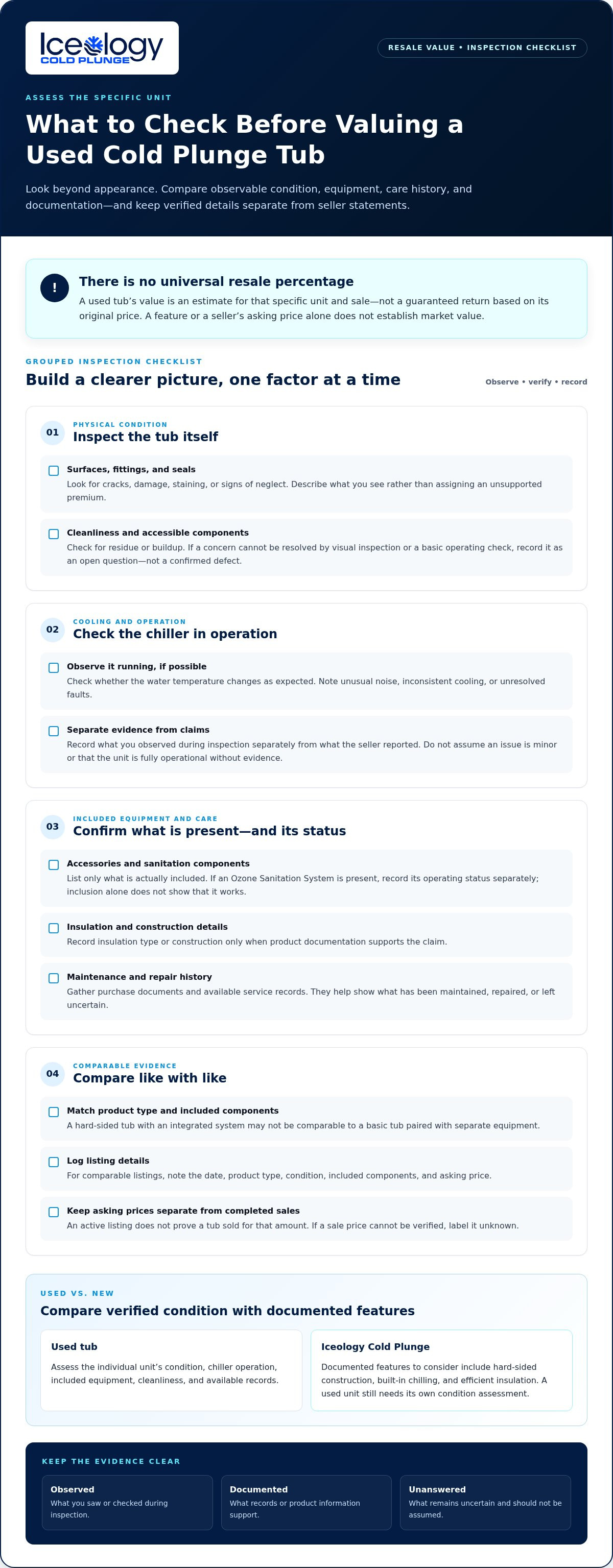
How Can You Assess a Cold Plunge Tub Before Buying or Reselling?
A consistent inspection helps you distinguish what’s known, what’s been reported, and what still needs evaluation. Follow the same sequence whether you’re preparing a tub for sale or considering a used unit. This gives you a clearer basis for discussing condition and cold plunge tub resale value.
Use a repeatable inspection sequence
Start by identifying the tub. Record its manufacturer and model from available paperwork or product labels, then gather purchase, maintenance, repair, and product documents. Inspect the tub and included equipment, test operation where possible, and write down what you observe. Keep seller statements separate from your own observations.
For the chiller, note whether it powers on and runs, whether you hear unusual noise, and what cooling behavior you observe. Don’t treat a brief test as proof of long-term performance. If something seems inconsistent or can’t be tested, record it as an open question for further evaluation.
Prepare a clear listing or review a seller’s claims
If you’re selling, describe known wear and operating issues plainly. Photograph the tub from several angles, along with the chiller, visible surfaces, fittings, and every component included in the sale. Gather available purchase records, repair notes, and product documentation. Accurate details help prospective buyers understand what’s included without relying on unsupported performance claims.
If you’re buying, compare the seller’s description with records and observable condition. Review relevant ownership or maintenance documents, while recognizing that a complete history may not be available. Treat an unverified feature as unverified, not as a confirmed benefit or defect.
Quick inspection checklist
- Identify: Note the manufacturer, model, and any identifying information available.
- Review: Gather purchase, maintenance, repair, and product records.
- Inspect: Look over visible surfaces, fittings, seals, cleanliness, and included components.
- Test: Observe chiller operation where possible. Record unusual sounds, inconsistent cooling, or anything that couldn’t be tested.
- Document: Photograph the unit and included items. Label each detail as observed, documented, seller-reported, or unknown.
This checklist won’t predict a final sale price, but it can make comparisons more disciplined. For a buyer, clear evidence separates documented features from assumptions. For a seller, precise records and honest photos give buyers a more useful view of the unit’s condition.
How Does Iceology Cold Plunge Fit into a Long-Term Value Decision?
A long-term decision should start with what you can establish today, not a promise about what the tub might sell for later. Consider your intended use, the unit’s condition, available records, and documented features. Then weigh those known factors against future uncertainty, including the possibility that buyer interest and resale outcomes may differ when you sell.
What a new Iceology Cold Plunge purchase lets buyers assess
Iceology Cold Plunge designs and manufactures premium hard-sided cold plunge tubs in the United States. The tubs feature built-in chillers capable of cooling water to 39°F and efficient insulation. These features matter first for everyday ownership: the chiller provides built-in cooling, while insulation supports the tub’s thermal design.
Buying new gives you a clear starting point for documenting the tub’s condition, product attributes, and ownership history. Keep purchase and maintenance records from the outset so those details are easier to establish later. Craftsmanship, construction, and known features don’t predict a future sale price. They’re useful facts for comparing options, not guarantees of cold plunge tub resale value.
Make a decision based on evidence, not resale promises
For a used tub, distinguish observed condition from seller statements. Review available maintenance and repair records, and record what you can confirm about the chiller, insulation, and included components. For a new tub, use its documented features and purchase information as your baseline. In either case, mark unanswered questions rather than treating them as established benefits or defects.
Finally, consider how the tub fits your routine and ownership priorities. Resale is only one part of the decision. A unit that meets your needs today may be a better fit than one chosen on the assumption that it will retain a particular value. Focus on the evidence in front of you and be clear about what remains uncertain.
Choose Your Cold Plunge with Confidence
A sound estimate of cold plunge tub resale value starts with evidence, not a standard percentage. Compare a specific tub’s condition, chiller operation, insulation, included components, and ownership records. Separate verified facts from seller statements and unanswered questions, then weigh a used unit against a new tub’s documented features and purchase terms.
Buying new gives you a clear starting point for tracking condition and ownership. Iceology Cold Plunge makes premium hard-sided tubs in the USA, with built-in chillers capable of cooling water to 39°F, efficient insulation, and expert craftsmanship. These are practical features to consider for everyday ownership, not promises about a future sale price.
With a consistent comparison and realistic expectations, you can make a decision grounded in what matters to you today. Choose with confidence and make your cold water routine your own.
Frequently Asked Questions
What is the resale value of a cold plunge tub?
There’s no universal resale value for every cold plunge tub. A realistic estimate depends on the specific unit’s condition, chiller operation, available records, included components, and evidence from comparable completed sales. Asking prices show what sellers hope to receive, not what buyers paid. Treat percentage-based estimates as unverified unless current, relevant market data supports them, and compare similar units rather than relying on a general rule.
Do cold plunge tubs hold their value?
Whether a tub holds value depends on its condition, functionality, documentation, and buyer demand when it’s listed. Clear records may help a buyer assess the unit, but they can’t guarantee a particular sale price. For a realistic view, compare evidence from similar completed sales where available. Don’t treat general claims about equipment depreciation as cold-plunge-specific facts unless relevant data supports them.
What affects the resale value of a cold plunge tub most?
Buyers may weigh the tub’s physical condition, chiller operation, maintenance history, included components, and clarity about its ownership and repair history. The importance of each factor varies by unit and buyer. Document what you can verify, such as visible condition or observed chiller operation, and separate it from seller statements. Don’t assign a fixed dollar premium to a feature without reliable market evidence.
Is it worth buying a used cold plunge tub?
A used tub may suit you if you can assess its condition and verify its operation, but the asking price alone doesn’t establish value. Consider the tub, chiller, records, included components, and unresolved concerns together. Compare these with a new tub’s documented features and purchase terms. Factor in repair or setup uncertainty based on your circumstances, without assuming a specific added cost or that used is always the better choice.
How can I check a used cold plunge tub before buying?
Review available purchase, maintenance, and repair records, then inspect visible surfaces, fittings, seals, cleanliness, and included components. Observe the chiller operating if possible, and note cooling concerns or unusual behavior. Compare the seller’s description with records and what you can see. Keep unknowns separate from confirmed facts, and write down unanswered questions before deciding. A missing record is uncertainty, not automatic proof of a defect.
Does a cold plunge chiller affect resale value?
A chiller can influence a buyer’s assessment because it provides the tub’s cooling function, but its effect can’t be expressed as a universal premium. Consider observed operation, available service history, and the tub’s overall condition. Record whether operation was demonstrated and note concerns such as inconsistent cooling. Verify feature and performance claims. A chiller doesn’t establish a higher resale value on its own.
How should I price a used cold plunge tub?
Start by recording the tub’s age, if known, condition, chiller operation, included components, and maintenance history. Then compare genuinely similar completed sales, not only active asking prices. Note differences between units and disclose known issues accurately. If comparable transaction evidence isn’t available, describe your estimate as uncertain. Avoid presenting an unsupported price or percentage as a reliable measure of cold plunge tub resale value.