
Cold Plunge Tub Setup: The Comprehensive Guide to Home Installation 2026
What if your ultimate recovery sanctuary became a source of structural stress rather than mental clarity? Most high performers recognize that a cold plunge is more than just a tub of water; it's a commitment to a disciplined lifestyle. Yet, the technical reality of a premium cold plunge tub setup often triggers valid concerns about floor integrity and complex electrical requirements. You want the transformative power of 50-degree water without the anxiety of potential moisture damage or the frustration of a cooling system struggling against South Florida humidity.
We believe that true recovery requires a "set it and forget it" environment where the focus remains entirely on your performance. This guide provides the professional blueprint you need to master your installation with precision and confidence. We'll cover essential structural load considerations, GFCI safety standards, and the thermal optimization strategies that keep your water crystal clear without constant maintenance. By following these professional protocols, you can build a seamless station that delivers peak results every single morning.
Key Takeaways
- Learn how to select the ideal location by balancing the convenience of an indoor station with the ventilation requirements necessary for humid climates.
- Protect your home's integrity by calculating the total structural load and installing a dedicated GFCI circuit to power your chiller safely.
- Master the technical aspects of a cold plunge tub setup, including how to secure leak-proof gaskets and manage water levels for a seamless experience.
- Achieve a "set it and forget it" maintenance routine by utilizing advanced sanitation systems like UV and ozone to reduce chemical reliance.
- Understand how premium materials and expert engineering ensure your recovery station remains energy-efficient even in intense heat.
Planning Your Cold Plunge Space: Location and Logistics
Choosing the right location for your cold plunge tub setup is the first step toward a sustainable recovery habit. It isn't just about where the tub physically fits; it's about how the environment supports the machinery and your mental state. A poorly planned space leads to moisture issues, excessive energy bills, or a routine that feels like a chore. Whether you envision an indoor sanctuary or an outdoor retreat, the logistics must be handled with engineering precision.
Luxury home designs often favor hard-sided tubs because they integrate seamlessly into high-end architecture. These units are engineered to be permanent fixtures that complement your home's aesthetic rather than detracting from it. You must ensure your chosen spot is near a standard water source for efficient maintenance. Filling and draining should be simple processes that don't interfere with your daily practice of cold-water immersion. In South Florida, the ambient air temperature can frequently exceed 90 degrees. This heat creates a significant thermal load that your chiller must overcome, making your choice of location a vital factor in long-term performance.
Indoor Setups: Flooring and Humidity Control
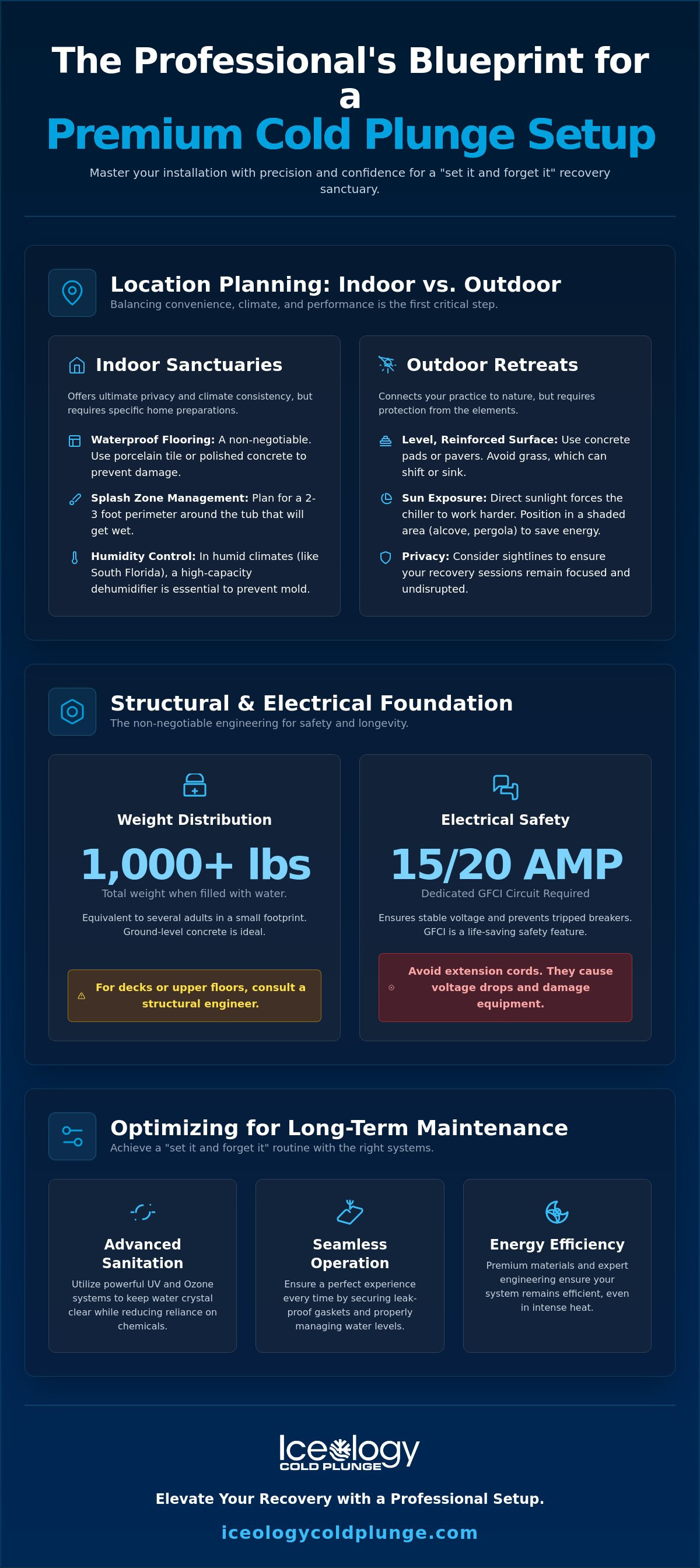
Indoor recovery rooms offer the ultimate in privacy and climate consistency. However, waterproof flooring like porcelain tile or polished concrete is a non-negotiable requirement for a professional cold plunge tub setup. Standard wood or carpet will fail quickly in the "splash zone," which typically extends two to three feet around the tub's perimeter. In Florida's humid climate, an indoor setup requires dedicated moisture management. A high-capacity dehumidifier prevents mold growth and protects your home's structural integrity, ensuring the air remains as crisp as the water. This proactive approach turns a simple room into a high-performance recovery lab.
Outdoor Setups: Privacy and Elements Protection
Placing your tub outdoors connects your recovery practice to the natural environment. You must select a level, reinforced surface to maintain structural safety; pavers or concrete pads are far superior to grass, which can shift or sink under the weight of a filled tub. Sun exposure is the most critical variable for outdoor performance. Direct sunlight forces the chiller to work harder, increasing energy costs and wear on internal components. Positioning your tub in a shaded alcove or under a pergola preserves the equipment's longevity while providing the privacy needed for a focused, undisrupted session.
Structural and Electrical Requirements for Premium Tubs
While the visual appeal of your recovery space matters, the structural and electrical foundations determine the longevity of your investment. A professional cold plunge tub setup isn't just about aesthetics; it's an engineering project that demands respect for physics and safety standards. You must ensure your floor can support the immense weight and your electrical system can handle the constant cooling load without failure. Handling these technical details upfront ensures your focus remains on the mental benefits of the water rather than the logistics of the equipment.
Weight Distribution and Floor Loading
A standard cold plunge can exceed 1,000 lbs when filled. This weight is equivalent to several grown adults standing in a very small footprint. For ground-level concrete pads, this is rarely an issue. However, if you plan an installation on a second-story balcony or a wooden deck, consulting with a structural engineer is a necessary precaution. They will evaluate the pounds per square foot (PSF) to ensure your home's framing is sufficient for the static load. To prevent damage to luxury finishes like marble or hardwood, always utilize specialized high-density mats that distribute the load and provide a moisture barrier for your premium cold tubs.
Powering Your Integrated Chiller System
Powering a high-performance chiller requires more than just an available outlet. These units need stable voltage to maintain the precise temperatures required for effective recovery. A dedicated 15-amp or 20-amp GFCI circuit is the industry standard for residential safety. This dedicated line ensures that other household appliances don't interfere with the chiller's draw, preventing tripped breakers during peak cooling cycles. Ground Fault Circuit Interrupters are life-saving components that immediately cut power if a current leak is detected near water. Avoid using extension cords at all costs. They often lead to voltage drops that strain the compressor, eventually shortening the lifespan of your equipment.
Finally, plan your cord management during the initial phase of your cold plunge tub setup. High-end installations look best when cables are routed through discreet channels or hidden behind the tub's frame. This maintains a clean, minimalist aesthetic while eliminating trip hazards in a wet environment. Precise planning here ensures your recovery station remains a place of calm rather than a cluttered utility zone.
Step-by-Step Chiller Installation and Initial Cooling
Once the structural and electrical foundations are secure, you can focus on the mechanical heart of your recovery station. This phase of your cold plunge tub setup transforms a static vessel into a precision-engineered cooling machine. It's a methodical process that rewards patience. Rushing the plumbing or ignoring the priming sequence can lead to equipment strain or minor leaks that disrupt your first session. By following a structured installation, you ensure your equipment operates at peak efficiency from the very first minute.
Plumbing Connections and Leak Prevention
Inspect every O-ring and seal before making your connections. These small rubber components are the primary defense against water damage and pressure loss. When attaching high-pressure chiller hoses, follow the "hand-tighten plus a quarter turn" rule. This creates a watertight seal without over-compressing the precision-fit gaskets, which can cause them to fail prematurely. If you notice a drip at a port during the initial fill, don't simply crank the fitting tighter. Unscrew the connection, check the alignment of the seal, and re-seat it carefully. This attention to detail ensures a reliable, "set it and forget it" experience for months to come.
Priming the Pump and Reaching 39 Degrees
Priming the system is the most critical step, yet many amateur guides overlook it. Air pockets trapped in the chiller loop can cause the pump to cavitate, which places unnecessary stress on the motor and reduces cooling performance. Before powering on the unit, ensure the tub is filled to the designated level. You must account for water displacement; the water level will rise significantly when you submerge. Leave at least 4 to 6 inches of space from the rim to prevent overflow during your session.
To purge the air, open the bleed valve or slightly loosen the return hose until a steady, bubble-free stream of water appears. Once the loop is filled with solid water, you can safely power on the chiller. A high-performance chiller should cool the water at a rate of approximately 5 to 7°C per hour. Depending on your initial tap water temperature, reaching a crisp 39°F may take several hours. Use the built-in controller or the dedicated mobile app to monitor this initial cycle. This calibration period is the perfect time to center your focus, preparing your mind for the disciplined practice of cold water therapy that follows. Your cold plunge tub setup is now a functional tool for total-body optimization.
Optimizing Your Setup for Long-Term Maintenance
Completing your cold plunge tub setup is only the beginning of your journey toward peak physical performance. To ensure your recovery station remains a sanctuary of clear water and consistent temperatures, you must transition from installation to optimization. A premium system is designed for longevity, but its performance depends on a few disciplined maintenance habits. By implementing a professional protocol, you protect your investment and ensure that every immersion is as pristine as the first.
Water Chemistry and Sanitation Protocols
Pristine water quality is essential for both your health and the durability of your equipment. While traditional pools rely heavily on harsh chemicals, a sophisticated cold plunge tub setup utilizes ozone or UV sanitation systems to neutralize contaminants naturally. These integrated technologies significantly reduce your chemical reliance, providing a more holistic immersion experience. You should still monitor pH levels weekly to protect the internal components of your chiller from corrosion or scale buildup. For high-use environments, checking and replacing sediment filters every few weeks ensures optimal water flow and prevents the motor from straining against debris. Using non-chlorine oxidizers after a session helps break down organic matter without the aggressive scent or skin irritation associated with standard chlorine.
The Role of Insulation in Energy Efficiency
In the intense heat of South Florida, insulation is the most critical factor in controlling operational costs. High-quality polyurethane foam insulation acts as a thermal barrier, trapping the cold inside the tub and reflecting ambient heat away. This efficiency reduces the "on-time" of your chiller, which directly extends the lifespan of the compressor and cooling unit. Research indicates that a well-insulated tub can be over ten times more energy-efficient than a poorly insulated alternative, saving you significant amounts on monthly utility bills.
The most important accessory for your cold plunge tub setup is a heavy-duty, insulated cover. Without it, your chiller must fight a losing battle against thermal gain from the air. A secure cover maintains your 39-degree target temperature even when the humidity is at its peak, ensuring your tub is always ready for your next session. If you are ready to elevate your daily routine with a system engineered for durability and efficiency, explore our collection of Cold Plunge Tubs today. Maintaining the exterior of your hard-sided tub with a simple wipe-down will preserve its premium finish, keeping your recovery space looking as sharp as your mental focus.
Elevating Your Recovery with an Iceology Professional Setup
Mastering your cold plunge tub setup is the final hurdle between your current routine and a state of peak performance. While the technical details of installation are vital, the quality of the equipment determines whether your recovery station remains a permanent asset or a temporary fixture. Choosing a professional system is an investment in your mental resilience and physical longevity. It's about more than just cold water; it's about the reliability of the engineering that keeps that water at a precise, therapeutic temperature every single day. When you prioritize craftsmanship, you remove the friction from your recovery process, allowing you to focus entirely on the transformative power of the ice.
Why American-Made Hard-Sided Tubs Win
Hard-sided tubs represent the pinnacle of recovery technology. Unlike inflatable options that are prone to leaks, punctures, and structural degradation, our USA-made builds offer unmatched durability. These vessels are engineered with precision to maintain a consistent 39-degree environment, even when the Florida sun is at its most intense. This thermal stability ensures that your body receives the full physiological benefits of the cold without the fluctuations common in lower-end systems. The aesthetic value is equally significant. A premium hard-sided tub serves as a sophisticated centerpiece that complements the high-end architecture found in Miami, Naples, and Palm Beach. You aren't just adding a utility; you're enhancing your home's luxury appeal with a station designed for a lifetime of disciplined use.
Getting Started with Iceology
We understand that your time is your most valuable resource. That's why we offer white-glove delivery options to ensure a completely hands-off cold plunge tub setup. Our team manages the heavy lifting and technical placement, allowing you to move straight to your first session without the stress of assembly. If you are still evaluating which model best fits your lifestyle, we invite you to explore our premium cold plunge tubs to see how our craftsmanship sets the standard for the industry. You'll also gain access to exclusive accessories designed specifically for our tubs, ensuring every component of your station works in perfect harmony.
Our Florida-based experts are ready to assist with custom installation consultations tailored specifically to your home's unique layout. We provide the guidance needed to navigate local climate challenges, ensuring your setup remains energy-efficient and effective year-round. By choosing a partner dedicated to the art of recovery, you ensure that your path to improvement is supported by the best tools available. Take control of your physical state and elevate your daily routine with a system built for those who refuse to settle for anything less than excellence.
Take Command of Your Performance Journey
Your path to total-body optimization starts with a foundation built on precision. By carefully planning your location, adhering to strict electrical safety standards, and mastering the technical nuances of your cold plunge tub setup, you transform a simple routine into a professional-grade recovery practice. You've learned how to mitigate humidity risks, manage structural loads, and maintain water clarity through advanced sanitation. These steps ensure that your focus remains where it belongs: on the mental and physical breakthrough that occurs the moment you hit the water.
We are here to support that journey with equipment engineered for the highest standards of durability. Our systems feature built-in chillers reaching 39°F and premium polyurethane foam insulation to maintain efficiency in any climate. Every unit is proudly made in the USA to ensure lasting quality for your home sanctuary. It's time to move beyond temporary solutions and invest in a station that works as hard as you do.
Design Your Ultimate Recovery Station with Iceology
Take the first step toward a more resilient version of yourself today. You have the knowledge; now it's time to build the environment you deserve.
Frequently Asked Questions
Do I need a special plumber to set up my cold plunge tub?
You don't need a professional plumber for a standard cold plunge tub setup. Most premium units are designed as self-contained systems that you fill using a standard garden hose and drain via a simple internal valve or external hose attachment. This plug and play design allows you to focus on your recovery routine without the need for permanent water lines or complex home renovations.
Can I set up my cold plunge tub on a wooden deck in Florida?
You can install a tub on a wooden deck, but you must verify the structural load capacity first. A filled tub plus a user often exceeds 1,000 lbs, which can strain standard residential decking. In Florida's climate, ensure the wood is properly treated and sealed to handle the inevitable splash zone and high humidity. Consulting a structural engineer is the safest way to prevent long term sagging or failure.
How much electricity does a cold plunge tub setup use per month?
Monthly electricity costs for a chiller system typically range between $15 and $60. Your actual expense depends on the local ambient temperature, the efficiency of your unit, and how well the tub is insulated. Utilizing high-quality polyurethane foam insulation significantly reduces the chiller's workload. This thermal efficiency keeps your water at target temperatures while minimizing the impact on your monthly utility bill.
What is the best temperature for a home cold plunge setup?
The optimal temperature for most users falls between 50°F and 59°F to achieve the physiological benefits of cold water therapy. Advanced practitioners often prefer lower settings, frequently targeting 39°F for maximum mental and physical challenge. Finding your personal sweet spot allows you to build a sustainable practice that pushes your boundaries without causing excessive physical distress during your daily sessions.
How often do I need to change the water in an insulated tub with a chiller?
With a proper filtration and sanitation system, you only need to change the water every three to six months. Integrated UV or ozone systems continuously neutralize contaminants, while sediment filters remove physical debris. This set it and forget it approach ensures crystal clear water and reduces the time spent on maintenance. It allows you to spend more time in the water and less time with a garden hose.
Can I keep my cold plunge setup outdoors in the Florida humidity?
Yes, you can keep your cold plunge tub setup outdoors in Florida if the unit is engineered for extreme environments. Hard-sided tubs with weather-resistant finishes and high-grade insulation are specifically designed to withstand intense humidity and heat. Placing the tub in a shaded area further protects the external components and reduces energy consumption, ensuring your recovery station remains a reliable tool throughout the year.
What electrical outlet do I need for an Iceology cold plunge?
Iceology systems require a standard 110V/120V outlet on a dedicated GFCI protected circuit. This safety feature is non-negotiable for water-adjacent electrical equipment. A dedicated 15-amp or 20-amp line ensures the chiller receives consistent voltage without interference from other household appliances. This stable power supply protects the internal electronics and ensures your water stays at the exact temperature you've selected for your session.
How long does it take for the setup to reach 39 degrees for the first time?
Reaching 39°F for the first time usually takes several hours, depending on your initial tap water temperature. A high-performance chiller typically cools water at a rate of 5 to 7°C per hour. If you start with 75-degree water, expect the initial cooling cycle to last most of the day. Once the target temperature is reached, the insulation and chiller work together to maintain that level with minimal energy usage.