
Cold Plunge Tub vs. Ice Bath: Which Is Best for Your Recovery in 2026?
Would you spend nearly ten hours every month just hauling bags of frozen water from the grocery store? For many dedicated athletes, the traditional ice bath has become a high-friction chore that often leads to inconsistent results and stagnant water. You understand the profound power of cold water immersion, yet the constant "ice run" and the struggle to maintain a precise hormetic temperature can derail even the most disciplined recovery routine. When evaluating a cold plunge tub vs ice bath, the choice often comes down to whether you want a temporary fix or a permanent, engineered solution for your daily performance.
We agree that recovery should be a seamless part of your lifestyle, not a logistical hurdle. In this guide, you'll discover the critical differences in cost, convenience, and physiological impact between manual setups and professional-grade equipment. We'll explore how precise thermal management and advanced filtration systems can transform your routine into a frictionless experience that supports peak performance. From sanitation standards to long-term durability, here is everything you need to know to optimize your recovery in 2026.
Key Takeaways
- Move beyond reactive cooling by understanding how automated thermal engineering replaces the manual labor of hauling and managing bagged ice.
- Discover why maintaining a consistent 39°F to 50°F therapeutic window is vital for triggering a true hormetic response and optimizing physical recovery.
- Analyze the total cost of ownership in the cold plunge tub vs ice bath debate to identify the exact point where an engineered unit pays for itself.
- Learn how advanced filtration and ozone sanitation provide a superior hygiene standard compared to the stagnant, dirty water found in traditional setups.
- Identify why high-quality, American-made construction ensures thermal efficiency and long-term durability even in challenging external climates.
Defining the Chill: What Really Separates a Cold Plunge from an Ice Bath?
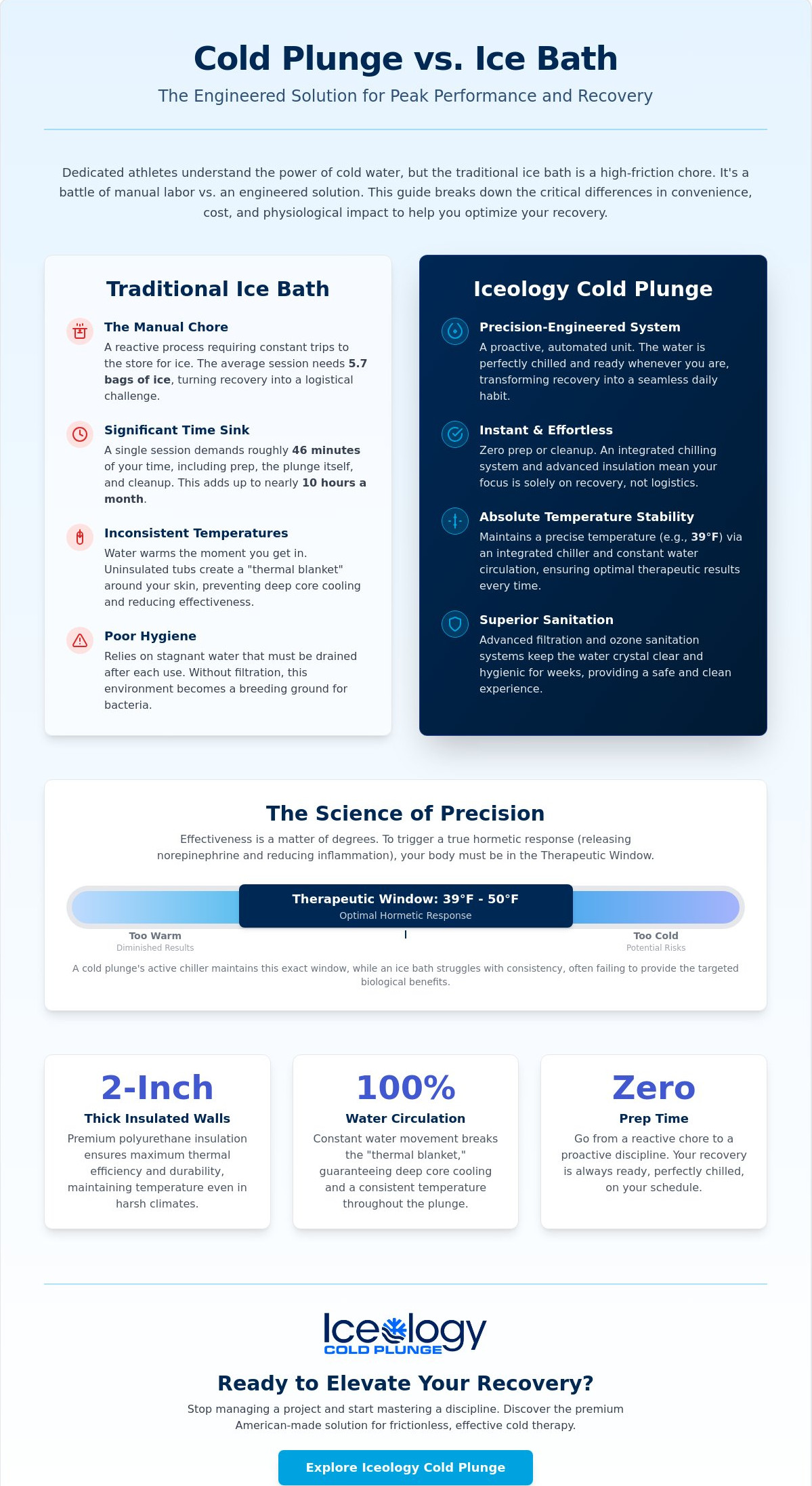
While many people use the terms interchangeably, the debate of cold plunge tub vs ice bath is actually a comparison between a manual chore and a precision instrument. An Ice bath is a reactive process. It relies on external variables and significant physical labor to achieve a temporary drop in temperature. Conversely, a cold plunge tub is a proactive, engineered system designed for thermal stability and daily integration. In the professional recovery world, the term "ice bath" is increasingly seen as a misnomer. True therapeutic results require a level of control that bags of ice simply cannot provide, making the distinction between a "tub" and a "plunge" vital for anyone serious about performance.
The Anatomy of a Manual Ice Bath
Setting up a traditional soak is more of an "event" than a routine. It starts with a trip to the store to purchase roughly 5.7 bags of ice, which is the average amount needed to lower a standard bathtub to an effective 47°F. This process is inherently inefficient. Standard bathtubs lack the insulation required to hold those temperatures; the water begins warming the moment you step in. Research suggests the total time commitment for a single session, including prep and cleanup, is approximately 46 minutes. This high-friction approach is the primary reason many recovery habits fail. You're left dealing with stagnant water and a fluctuating thermometer rather than focusing on your mental state.
The Engineering of a Premium Cold Plunge
A cold plunge tub removes the logistics from the equation by utilizing integrated chilling systems and advanced thermal management. These units are built to reach and maintain a precise 39°F regardless of the ambient temperature. The difference lies in the craftsmanship. Premium tubs often feature 2-inch thick polyurethane-injected walls that act as a thermal barrier. This prevents the "warm spots" that plague manual setups through a phenomenon called thermal stratification. This engineering transforms cold therapy into a plug-and-play habit. You don't have to monitor a thermometer or wait for ice to melt. Instead, the water is crystal clear and perfectly chilled whenever you're ready to step in. It is the intentional transition from managing a project to mastering a discipline.
The Science of Precision: Why Constant Temperature Matters for Recovery
The effectiveness of cold water immersion is not a matter of opinion; it is a matter of degrees. To trigger a true hormetic response, the body must enter what researchers call the "Therapeutic Window," which typically ranges from 39°F to 50°F. Within this range, the body experiences a significant release of norepinephrine and a reduction in systemic inflammation. When comparing a cold plunge tub vs ice bath, the primary scientific hurdle is maintaining this window. Without precision, you are simply sitting in cool water rather than engaging in a biological optimization protocol.
Why Ice Baths Struggle with Consistency
The physics of a manual ice bath work against your recovery goals. As soon as you submerge, your body heat begins to transfer into the surrounding water. In a standard uninsulated tub, this creates a phenomenon known as thermal stratification. This process forms a "thermal blanket" of slightly warmer water directly against your skin, which insulates you from the cold and prevents deep core cooling. Because there is no active circulation, the water temperature can climb several degrees in minutes, even if there is still ice floating on the surface. Guessing the temperature by the amount of ice used is an unreliable science. If the water settles at 55°F or 60°F, you lose the metabolic advantages that only occur at the lower end of the thermal spectrum.
The Chiller Advantage for Physiological Results
A dedicated cold plunge tub utilizes an integrated chiller to maintain a precise, set temperature throughout the entire session. This allows for targeted protocols that are impossible with manual setups. For example, a morning session set to a crisp 39°F is ideal for maximizing alertness and dopamine release, while a post-workout soak at 48°F may be better suited for managing acute inflammation without blunting muscle hypertrophy. Integrated chillers generate constant water movement to disrupt the thermal boundary layer, preventing your body heat from creating a protective warm blanket that stalls the cooling process. This active circulation ensures that every square inch of your skin is exposed to the exact temperature you programmed.
This level of precision removes the psychological barrier of "is it cold enough?" and replaces it with a reliable, repeatable discipline. Investing in a professionally engineered cold plunge ensures you never have to guess whether your water is actually cold enough to trigger the desired metabolic response. By eliminating thermal stratification and providing programmable control, these systems transform a chaotic experience into a sophisticated health tool designed for long-term performance gains.
Total Cost of Ownership: Analyzing the True Price of Ice vs. Electricity
When evaluating a cold plunge tub vs ice bath, most users focus on the initial purchase price while overlooking the recurring "Ice Tax." Maintaining a manual habit requires a consistent financial and physical investment that compounds over time. For a standard three-session-per-week routine, you're looking at roughly $204 per month in bagged ice alone. This doesn't account for the fuel used during the commute to the store or the environmental impact of the dozens of plastic bags discarded every week. By contrast, a high-quality tub functions much like a high-efficiency appliance, providing a permanent solution that eventually pays for itself through operational savings.
The Logistics of the "Ice Run"
The physical labor involved in the "ice run" is a significant deterrent to long-term consistency. Hauling 40 to 100 lbs of ice from a retail freezer to your vehicle, and then to your tub, transforms a recovery session into a strenuous chore. In climates like Miami or Tampa, the heat is an even greater adversary. High ambient temperatures and humidity cause ice to melt rapidly, often before the water even reaches the therapeutic window. This makes manual ice baths nearly impossible to sustain in the South Florida sun, where the thermal load on an uninsulated tub is extreme. You end up spending more time managing logistics than you do experiencing the benefits of the cold.
Operational Efficiency of a Cold Plunge Tub
Modern engineering has made the cold plunge tub electricity cost remarkably manageable, often ranging between $15 and $60 per month. This efficiency is driven by high-density polyurethane foam insulation, which traps the cold and reduces the workload on the chiller. Running a premium tub is comparable to the energy consumption of a standard residential refrigerator. Beyond the monthly utility bill, you must consider time as a currency. A manual setup demands about 46 minutes for preparation and cleanup. An engineered tub requires only a 10-second entry.
Industry data suggests the break-even point for a professional tub falls between 10 and 18 months for regular users. Over a year, this saves you nearly 120 hours of logistics. This allows you to focus entirely on the mental and physical benefits of the practice. USA-made hard-sided tubs also retain significant resale value, making them a durable asset rather than a disposable expense. Investing in quality equipment ensures that your recovery routine remains a frictionless, sustainable part of your lifestyle for years to come.
Hygiene and Longevity: Water Filtration vs. Stagnant Water
Comparing the hygiene of a cold plunge tub vs ice bath reveals a stark contrast in water quality and maintenance labor. Traditional setups rely on a "drain and refill" cycle that is both environmentally wasteful and physically exhausting. Without active treatment, water in a standard tub becomes a breeding ground for contaminants after just a few uses. This creates a significant psychological barrier. The dread of cleaning a dirty tub often leads to "plunge procrastination," where the friction of maintenance eventually outweighs the desire for recovery.
The Dirty Reality of Stock Tanks
Stagnant water is a magnet for biofilm, a slimy layer of bacteria that adheres to the surfaces of unchilled, uncirculated tubs. In high-humidity environments, this process accelerates rapidly. Manual ice baths lack the circulation necessary to prevent water from becoming murky and unhygienic. Scrubbing out a bathtub or stock tank after every session is a grueling chore that most users eventually abandon. Hard-sided, engineered tubs solve this by using non-porous materials that resist bacterial adhesion far better than the flexible plastics found in cheaper, inflatable alternatives. Longevity is not just about the frame; it's about the ability to keep the internal environment pristine for years.
Low-Maintenance Luxury with Iceology
Premium American-made units utilize a sophisticated, multi-stage approach to water purity. These systems often incorporate 20-micron filters to trap physical debris alongside advanced sanitation technologies like ozone generators. Ozone effectively neutralizes pathogens and breaks down organic matter without the harsh chemical smell associated with high doses of chlorine. This level of care aligns with the NSF/ANSI/CAN 50 standards for water treatment, ensuring your recovery environment is as healthy as the protocol itself. You're not just buying a tub; you're investing in a self-sustaining ecosystem that protects your skin and respiratory health.
This engineering supports an "Always Ready" philosophy. You don't have to plan your day around a cleaning schedule or a grocery store run. The water remains crystal clear and sanitized for months at a time, requiring only periodic filter changes and minimal testing. By removing the mess and the maintenance, you can focus entirely on the mental and physical benefits of the cold. Protecting your body shouldn't be an afterthought. Explore our high-performance cold plunge tubs to see how integrated filtration transforms a high-maintenance chore into a seamless daily ritual.
Elevating Your Recovery with Iceology: The Premium American-Made Solution
When the final decision of cold plunge tub vs ice bath is made, it often comes down to the reliability of the equipment. A manual setup is a temporary fix, but a professional-grade tub is a permanent addition to your performance toolkit. In high-heat regions like South Florida, the difference between a mass-produced import and American-made engineering becomes apparent the moment the sun hits the water. Iceology provides a solution that prioritizes thermal efficiency and structural integrity above all else.
Crafted for Performance and Longevity
High-grade materials are essential for equipment that must withstand the corrosive humidity of Miami and Fort Lauderdale. Many practitioners find that inflatable tubs feel like temporary solutions, often lacking the insulation required to hold a deep chill for more than a few minutes. Our hard-sided tubs utilize 2-inch thick polyurethane-injected walls to maintain a crisp 39°F even in the direct Florida heat. This precision allows you to focus on your breathing rather than worrying about a warming tub. Domestic support ensures that every component is backed by expert craftsmanship and a commitment to longevity. Iceology tubs serve as the ultimate premium cold plunge tub for serious practitioners.
Your Next Steps to Professional Recovery
Assessing your home for an outdoor cold plunge tub requires looking at both footprint and electrical access. Most setups only need a standard 110V outlet and a level surface like a patio or deck. When you analyze the long-term utility of a cold plunge tub vs ice bath, the ability to maintain a "ready" state 24/7 is the ultimate luxury. Investing in high-quality recovery tools today pays dividends in your long-term athletic performance and mental resilience. It's time to stop hauling ice and start mastering your environment. Experience the Iceology difference and shop our USA-made tubs today.
Mastering Your Recovery Environment
Choosing a permanent path for your wellness means moving beyond the logistical friction of manual labor. While the cold plunge tub vs ice bath debate often starts with upfront costs, the true value lies in the precision and consistency of your daily routine. By eliminating the ongoing "ice tax" and the risk of stagnant water, you reclaim your time and focus on the physiological results that matter. Professional-grade equipment ensures that your water is sanitized, circulated, and held at the exact temperature needed for a true hormetic response.
It's time to invest in a solution that matches your dedication to performance. Our units are made in the USA and feature integrated chillers capable of reaching a crisp 39°F. With high-density polyurethane foam insulation and local South Florida support, your equipment will withstand the elements while providing a seamless recovery experience. Upgrade your recovery with a premium, USA-made Iceology Cold Plunge today. Take control of your physical state and embrace the discipline of elite recovery.
Frequently Asked Questions
Is a cold plunge tub better than a regular ice bath?
A cold plunge tub is superior for those seeking a frictionless daily routine and precise temperature control. While a standard soak relies on manual labor and heavy bags of ice, an engineered system ensures the water is always at the desired temperature. This reliability removes the mental hurdle of preparation, allowing you to focus entirely on the recovery process rather than the logistics.
How much does it cost to run a cold plunge tub in Florida?
Operating a unit in Florida typically costs between $15 and $60 per month based on current energy rates. With the average U.S. residential electricity rate at 17.65¢/kWh as of June 2026, high-density insulation is critical for keeping these costs low. Efficient thermal management allows the chiller to run less frequently even in high humidity and heat.
Can I use a cold plunge tub without adding ice?
You don't need to add ice to an engineered cold plunge tub because the integrated chiller handles all the cooling. These systems are designed to pull heat from the water and maintain a set temperature indefinitely. This eliminates the need for grocery store runs and ensures your water is ready for immersion at any moment, day or night.
What is the ideal temperature for a cold plunge vs an ice bath?
The ideal therapeutic window for both methods is between 39°F and 50°F to trigger a true hormetic response. In a cold plunge tub vs ice bath scenario, the tub provides the advantage of maintaining this exact range without the rapid warming caused by body heat. Consistency within this window is what drives the metabolic and mental benefits you're looking for.
How often do I need to change the water in a cold plunge tub with a chiller?
Water in a filtered system only needs to be changed every three to six months depending on usage and sanitation protocols. Integrated ozone generators and UV systems significantly extend water life compared to the stagnant water in a manual tub, which usually needs changing every few days. Regular filter maintenance ensures the environment remains crystal clear and safe for daily use.
Is a hard-sided cold plunge more durable than an inflatable one?
Hard-sided tubs offer significantly more durability and better thermal retention than inflatable models. The 2-inch thick polyurethane-injected walls provide a structural integrity that flexible plastics cannot match. This construction ensures the unit remains a permanent fixture in your recovery space for years rather than a temporary solution that might puncture or degrade.
Can I keep my Iceology cold plunge tub outdoors in the Florida heat?
You can absolutely keep your Iceology tub outdoors in the Florida heat thanks to its industrial-grade insulation. The polyurethane-injected walls act as a powerful thermal barrier that prevents ambient heat from warming the water. This engineering allows the chiller to maintain 39°F even when the external temperature is soaring on a Miami afternoon.
How long should I stay in a 39-degree cold plunge?
Most practitioners find that two to five minutes is the optimal duration for a 39-degree immersion. This timeframe is sufficient to trigger norepinephrine release and metabolic benefits without overstressing your system. Always listen to your body's signals and consult with a health professional when establishing a new cold water therapy protocol.