
Hard Sided Cold Plunge Tub vs. Inflatables: The 2026 Comparison Guide
The "affordable" inflatable tub you bought to save money is likely the most expensive mistake in your recovery routine. While portable options offer a low barrier to entry, investing in a hard sided cold plunge tub is the difference between a temporary hobby and a lifelong discipline. You've likely felt the frustration of hauling forty pounds of ice from the grocery store or watching your water temperature climb back to 60 degrees before you've even finished your breathwork. It's a cycle of maintenance that drains your time and your bank account.
In this 2026 comparison guide, you'll discover why a permanent, insulated solution is the definitive choice for serious recovery. We'll show you how to achieve a consistent 39°F plunge without the constant overhead of high energy bills or structural failures. We'll break down the structural integrity, thermal density, and long-term value to help you transition from a leaky accessory to a professional-grade recovery station. This is about more than just cold water; it's about a precision-engineered tool that supports your peak performance every single day.
Key Takeaways
- Identify the engineering advantages of polyurethane-injected insulation that prevent thermal bridging and maximize cooling efficiency.
- Evaluate the hygiene benefits of rigid, non-porous materials compared to inflatable seams that are prone to bacterial growth and puncture damage.
- Discover how the upfront investment in a hard sided cold plunge tub pays for itself through lower electricity costs and higher long-term resale value.
- Calculate the true return on investment by analyzing the lifespan difference between a permanent recovery vessel and a temporary portable unit.
- Understand the technical specifications required to maintain a consistent 39°F temperature regardless of external ambient heat.
What is a Hard Sided Cold Plunge Tub and Why Does it Matter?
A hard sided cold plunge tub represents the pinnacle of home recovery infrastructure. Unlike inflatable pods that rely on internal air pressure to maintain their shape, these vessels are engineered with rigid, high-density materials such as rotomolded plastic, acrylic, or reinforced fiberglass. This structural foundation transforms the practice of cold-water immersion from a makeshift activity into a professional-grade ritual. It's the difference between a temporary, wobbling setup and a permanent recovery station that stays ready for you at a moment's notice.
The shift toward rigid-wall systems reflects a broader movement in the wellness community. We're moving away from manual, labor-intensive methods and toward automated, precision-controlled therapy. When your equipment is built to last, your routine becomes more resilient. You stop worrying about whether the tub will hold its shape or if the seams will leak, allowing you to focus entirely on the mental discipline required to master the cold.
The Anatomy of a Premium Recovery Tub
Structural rigidity is the hallmark of a high-quality hard sided cold plunge tub. When you step into the water, you need a stable environment that supports your body weight without shifting or sagging. This stability is achieved by integrating the plumbing and electrical components directly into or alongside a heavy-duty frame. This design choice protects the chiller's delicate internals from the elements and ensures a seamless flow of filtered, sanitized water. Investing in a rigid tub implies a serious, long-term commitment to your wellness. It’s an architectural addition to your home gym that signals recovery is no longer a hobby, but a core pillar of your lifestyle.
The Decline of the Manual Ice Bath
The days of the manual ice bath are fading for one primary reason: friction. Lugging forty pounds of ice from the grocery store every morning is a logistical nightmare that eventually kills consistency. It's an expensive, time-consuming habit that often results in fluctuating temperatures rather than a controlled environment. Transitioning to a cold plunge that doesn’t need ice removes every obstacle between you and your recovery. When the water sits at a precise, unwavering temperature, your body can achieve better physiological adaptation. Reliability is the key to progress; a dedicated chiller system ensures that 39°F means exactly 39°F every single time you submerge.
The Engineering of Insulation: Polyurethane Foam vs. Air
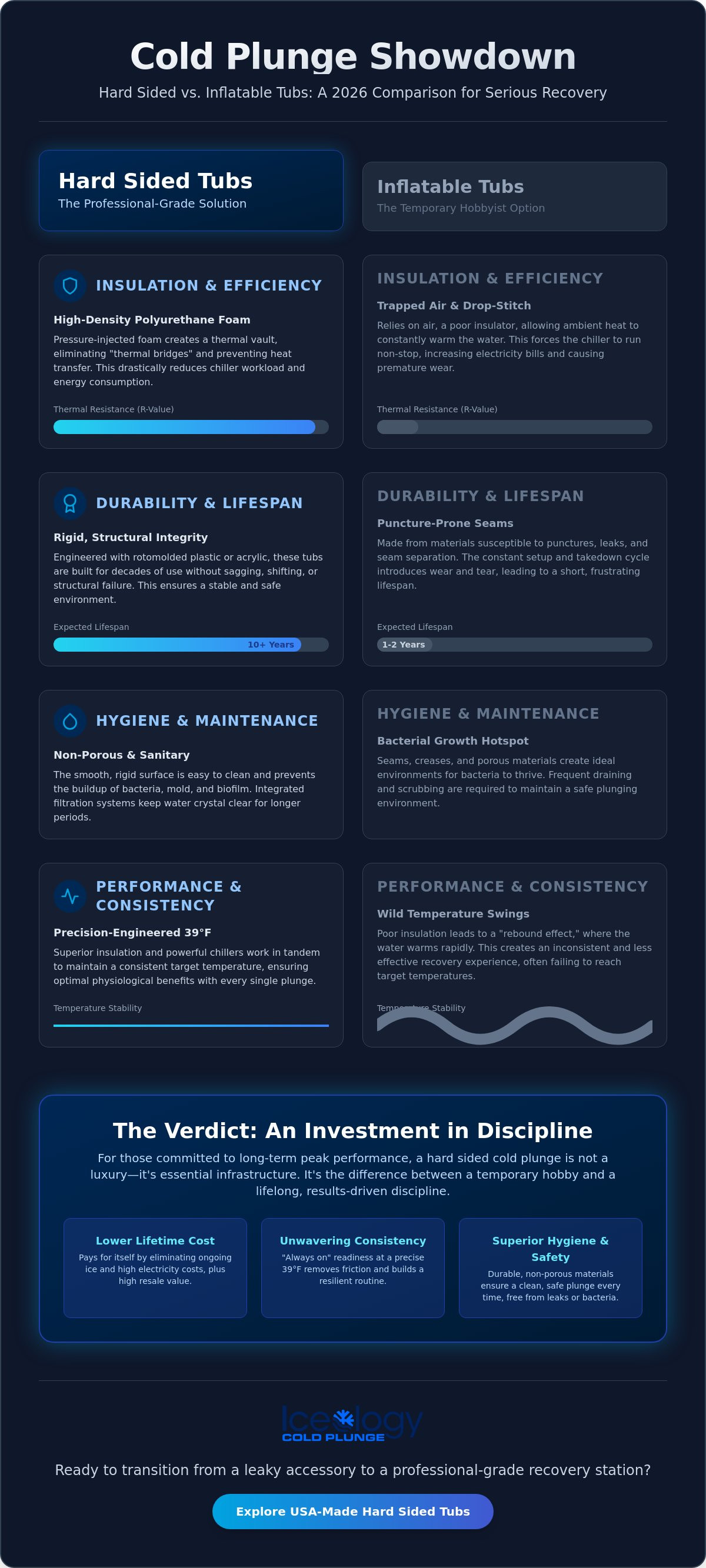
Insulation is the silent engine behind a high-performance recovery routine. While many focus on the chiller's horsepower, the true efficiency of a hard sided cold plunge tub lies in its ability to retain thermal energy. Most inflatable models rely on a thin layer of air or basic drop-stitch fabric for insulation. Air is a poor barrier against heat transfer. In contrast, premium rigid tubs utilize pressure-injected polyurethane foam. This material is the industry gold standard because it creates a high-density shield that prevents ambient heat from penetrating the water column.
The primary enemy of cold water is the "thermal bridge." This occurs when a conductive material allows heat to bypass insulation, warming your water from the outside in. Hard-sided construction eliminates these bridges by sealing the entire vessel in a continuous envelope of foam. This engineering choice is vital for maintaining a consistent 39°F environment, which is necessary to maximize the impact on your health. Without proper density, your chiller fights a losing battle against the environment.
Thermal Integrity and Temperature Stability
High-density foam acts as a thermal vault, keeping the cold in and the summer heat out. In uninsulated or air-filled tubs, you'll experience a "rebound" effect where the water temperature climbs several degrees within an hour of the chiller turning off. This instability forces the system to work harder than necessary. R-value is the specific measurement of a material’s resistance to conductive heat flow; the higher the R-value, the better your tub performs in extreme climates. If you want to ensure your water stays crisp without constant intervention, exploring engineered cold therapy solutions is the logical next step.
Chiller Lifespan and Efficiency
A tub with poor insulation is a chiller killer. When heat constantly leaks into the water, the chiller must run 24/7 to maintain your target temperature. This relentless workload leads to mechanical fatigue and premature component failure. By contrast, premium cold plunge tubs use thick foam walls to reduce the chiller's active runtime by up to 70%. This efficiency doesn't just protect the hardware; it significantly lowers your monthly electricity bills. Precision insulation ensures that you spend your money on the recovery itself, not the energy required to fight poor design.
Hard Sided vs. Inflatable Cold Plunges: A Critical Comparison
Choosing between a permanent fixture and a portable pod is often framed as a budget decision, but it's actually a question of product lifecycle. A hard sided cold plunge tub is an investment designed to anchor your wellness routine for a decade or more. In contrast, many inflatable models are essentially disposable. While they serve as a low-cost entry point, they often suffer from seam fatigue, valve leaks, or structural sagging within eighteen to twenty-four months. When you invest in a professional-grade vessel, you're eliminating the recurring cycle of purchasing, leaking, and disposing that plagues the inflatable market.
Hygiene is another area where rigid construction excels. Inflatable tubs are typically made from PVC or similar polymers that feature thousands of tiny seams and pores. These microscopic crevices can trap body oils and bacteria, making them difficult to fully sanitize even with regular water changes. A hard-sided tub utilizes non-porous surfaces like marine-grade acrylic or high-density rotomolded plastic. These materials allow for a deep, effective scrub that keeps your water crystal clear. The material science behind these high-quality tubs often references advanced Insulation Materials that provide both structural integrity and a superior barrier against microbial growth.
Aesthetics also play a significant role in your mental approach to recovery. There's a profound psychological difference between stepping into a plastic "bucket" and submerging yourself in a high-end, furniture-grade recovery station. A permanent tub complements the professional atmosphere of a home gym or patio; it invites you to use it. The hidden cost of an inflatable isn't just the price of a replacement unit; it's the friction of using equipment that feels temporary and uninviting.
Durability and Puncture Resistance
The vulnerability of air-filled walls is a major liability for serious athletes. Pets, yard debris, or even prolonged UV exposure can compromise the integrity of an inflatable tub. Hard-sided models are the only viable choice for outdoor installations where environmental factors are a constant threat. Opting for a USA made cold plunge tub ensures that the manufacturing standards meet rigorous durability requirements. These units don't just sit on your deck; they become a permanent part of your home's infrastructure, capable of withstanding high-traffic use without losing their shape or thermal efficiency.
Ease of Maintenance and Cleaning
Maintenance shouldn't feel like a second job. Hard-sided tubs are engineered with integrated filtration ports and drainage systems that make water management effortless. You won't have to deal with dangling hoses or external pumps that clutter your space. Because the walls are rigid, you can apply the necessary pressure to scrub the waterline without the tub collapsing or shifting. This ease of care creates a more inviting environment. When your equipment is easy to keep clean, you're more likely to maintain the daily discipline required to see real physiological results.
Calculating the Real Cost & ROI of Your Recovery Station
Understanding the true cost of ownership requires looking past the initial sticker price. While an inflatable seems cheaper at checkout, the operational reality often tells a different story of wasted capital. A hard sided cold plunge tub equipped with an integrated chiller eliminates the recurring expense and logistical burden of buying ice. For those who plunge daily, the cost of ice can range from $90 to over $300 per month. By contrast, a high-efficiency chiller system can save you over $1,380 annually starting in the third year of ownership. This makes the transition from manual ice baths to automated systems a matter of financial logic as much as physical recovery.
Beyond the monthly savings, premium equipment functions as a long-term asset rather than a disposable consumer good. Hard-sided vessels made from high-density materials maintain significant resale value, similar to high-end home gym equipment or professional kitchen appliances. Inflatables, conversely, have almost zero resale value once the warranty expires or the seams begin to show wear. When you calculate the "cost per plunge" over a five-year horizon, the durability of a rigid tub drastically outperforms the frequent replacement cycle of portable alternatives. You're paying for the peace of mind that your equipment will be ready whenever you are.
Energy Consumption Metrics
The efficiency of your recovery station depends heavily on the relationship between your chiller and your insulation. A standard 1/2 HP chiller is designed to maintain target temperatures with minimal effort, provided the vessel is properly sealed. Pressure-injected polyurethane foam is the critical factor here; it can reduce electricity costs by up to 40% by preventing ambient heat from warming the water. This insulation ensures the chiller only runs when necessary, even during peak summer months when ambient temperatures rise. If you're ready to optimize your setup for maximum efficiency, you can explore professional-grade tubs that prioritize thermal engineering.
Long-Term Reliability and Warranty
Choosing a permanent tub means investing in engineering longevity. These units are built to withstand the elements and high-traffic use, backed by the reliability of American-based customer support. Having access to a dedicated team for maintenance or technical questions is invaluable for high-ticket wellness equipment. This support infrastructure ensures your tub remains a functional part of your routine for years to come. You aren't just buying a product; you're securing a partner in your long-term health journey who understands the technical demands of consistent cold therapy.
The Iceology Difference: USA Made Hard Sided Excellence
Iceology stands at the intersection of functional engineering and holistic wellness. Every hard sided cold plunge tub we produce is a testament to the belief that your recovery equipment should be as disciplined as your training. By keeping our manufacturing within the United States, we maintain absolute control over the materials and assembly processes that define premium performance. This quality-first mindset is what separates a temporary solution from a lifelong recovery partner. We don't just build tubs; we craft precision instruments for those who view physical and mental optimization as a non-negotiable journey.
Our commitment to American craftsmanship means every component is vetted for durability and efficiency. We recognize that a recovery station is a significant investment in your health. Because of this, we prioritize artisanal construction over mass-market speed. This approach ensures that your vessel doesn't just function; it excels in the most demanding environments. When you choose an Iceology system, you're choosing a partner that has mastered the technical details so you can focus entirely on the transformative power of the cold.
Precision Engineering for Peak Performance
Our integrated chiller systems are designed for athletes who demand a consistent 39°F environment every single time they submerge. This isn't just a target number; it's the threshold where true physiological adaptation begins. We utilize expert craftsmanship to house these powerful chillers in a way that significantly reduces noise and vibration. This attention to detail protects the quiet, focused atmosphere necessary for the breathwork and mental fortitude that accompany cold therapy. Our thermal management strategy ensures that every watt of energy is utilized to maintain your ideal temperature, providing a professional-grade experience in the comfort of your home gym. For homeowners who want to achieve similar precision in their living spaces, you can discover Nice and Cool Inc. and their comprehensive guide to high-efficiency home cooling.
Your Journey to Total-Body Optimization
Reliability is the foundation of discipline. When your water is exactly 39°F every morning without fail, the mental barrier to entry disappears. A permanent, hard-sided station fosters the consistency required to see long-term changes in inflammation management and metabolic health. It transforms a simple dip into a ritual of calm determination. This journey toward peak performance starts with the right tools and a commitment to quality that lasts for decades. If you're ready to take full control of your recovery with a vessel built for excellence, you can View the Iceology Collection to find the perfect fit for your lifestyle.
Elevate Your Recovery Infrastructure
Choosing the right equipment is the final step in mastering your physiological state. We've explored how premium polyurethane foam insulation and rigid construction create a thermal vault that air-filled pods can't match. By investing in a hard sided cold plunge tub, you move beyond the cycle of frequent replacements and inconsistent temperatures. You're securing a permanent recovery station that delivers professional-grade results every time you submerge. This isn't just about cold water; it's about the precision engineering that supports your long-term health and discipline.
Iceology provides the ultimate solution for those who refuse to compromise on quality. Our tubs are proudly made in the USA. They feature integrated chillers that reach a crisp 39°F and high-density insulation that keeps your energy bills low. It's time to stop fighting with bags of ice and start focusing on your peak performance. You deserve a recovery tool that works as hard as you do.
Invest in Your Recovery: Shop Iceology USA-Made Tubs
Take the next step in your wellness journey with confidence. Your path to total-body optimization is waiting. We're here to ensure you have the finest craftsmanship supporting every breakthrough.
Common Questions About Hard-Sided Recovery
Is a hard-sided cold plunge tub better than an inflatable one?
Yes, it's the superior choice for users prioritizing thermal stability and long-term durability. While inflatables offer a lower entry price, they lack the high-density polyurethane insulation required to maintain 39°F efficiently in varying climates. Rigid walls provide a more stable, professional-grade experience that won't sag or leak over time. This makes the hard sided cold plunge tub the definitive choice for a permanent home recovery station that lasts for decades.
How much does it cost to run a hard-sided cold plunge tub each month?
Operating costs typically range between $20 and $60 per month for electricity, depending on your local rates and ambient temperature. This efficiency is driven by the quality of the insulation; high-density foam prevents the chiller from running constantly to fight heat gain. In contrast, uninsulated tubs or those using ice can cost significantly more in both energy and manual labor. Investing in a well-insulated model ensures your daily recovery remains economically sustainable.
Do I need a professional to install a hard-sided cold plunge?
Most modern units are designed for simple "plug and play" installation and don't require professional plumbing services. However, if you're looking to optimize your home's broader water systems or need expert residential maintenance, you can check out Miami 305 Plumbing for professional support. You typically only need a standard 110V or 120V dedicated outlet and a flat, level surface capable of supporting the weight of the water. This accessibility allows you to set up your recovery station in a garage, patio, or home gym without expensive contractor fees or complex renovations. It's built for immediate use.
Can I leave my hard-sided cold plunge tub outside year-round?
Yes, these tubs are engineered to withstand environmental exposure throughout every season. High-quality materials like rotomolded plastic and marine-grade components are UV-resistant and won't degrade under direct sunlight or freezing temperatures. A durable hard sided cold plunge tub remains functional in extreme weather, provided you follow standard maintenance protocols for the chiller system. This resilience makes it a permanent fixture of your outdoor wellness space regardless of the climate.
How long does a hard-sided cold plunge tub last compared to a pod?
A premium hard-sided tub is built to last 10 to 20 years with routine maintenance. Inflatable pods and budget "soft-sided" tubs often fail within 12 to 24 months due to seam fatigue, UV damage, or valve leaks. This massive difference in lifespan justifies the higher initial investment. You aren't just buying a tub; you're securing a long-term asset that won't need to be replaced every few seasons.
What is the best temperature for a hard-sided cold plunge tub?
Most recovery experts recommend a temperature range between 39°F and 50°F for optimal physiological benefits. Maintaining 39°F is often the target for advanced users looking to maximize metabolic and anti-inflammatory responses. Integrated chiller systems allow you to lock in these precise temperatures with ease. This consistency is vital for tracking your progress and ensuring your body adapts to the cold stimulus effectively every single morning.
Does a hard-sided tub require more maintenance than an ice bath?
It actually requires far less manual labor than a traditional ice bath. Integrated filtration and sanitation systems keep the water clean for weeks or months, whereas a basic tub without a chiller requires draining and refilling after just a few uses. You'll spend less time hauling ice and scrubbing porous surfaces. This automated approach allows you to focus entirely on the mental discipline of your recovery practice rather than maintenance chores.
Why is a USA-made cold plunge tub more expensive than imports?
Domestic manufacturing ensures higher quality control, ethically sourced labor, and superior materials like pressure-injected polyurethane foam. Imported models often cut costs by using thinner plastics or less efficient chillers that lead to higher electricity bills and shorter mechanical lifespans. By choosing a USA-made product, you're investing in engineering precision and reliable customer support. This ensures your recovery station remains a functional part of your lifestyle for years to come.