
How to Choose a Home Cold Plunge Tub: 2026 Guide
The most powerful chiller isn’t automatically the right choice. Choosing a home cold plunge starts with matching the equipment to your available space and routine, not simply selecting the model with the most features. A tub that fits your habits can make cold water therapy more practical. One that doesn’t may add friction before you even begin.
Setup, cooling, and upkeep can involve more than a product page suggests. This guide explains what to compare, how a built-in chiller differs from manually adding ice, and which home and product details to confirm before ordering. Use these checks to understand what everyday use may involve.
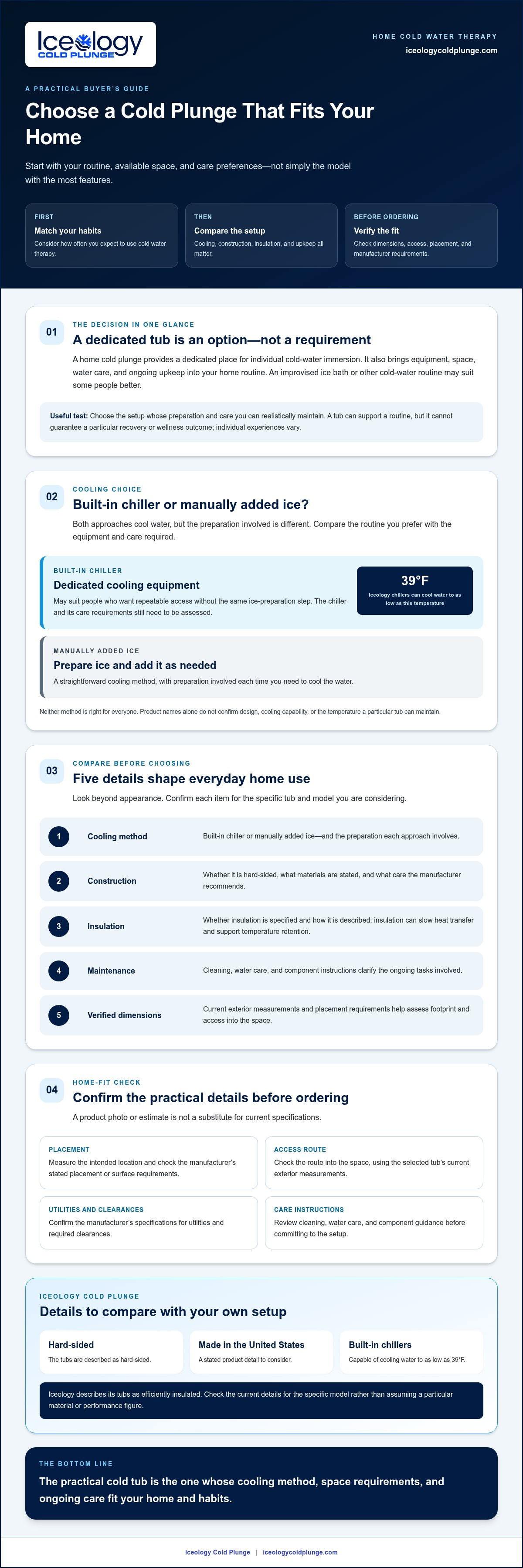
We’ll cover construction, insulation, cooling, sanitation, maintenance, placement, and installation questions. Iceology Cold Plunge offers hard-sided tubs made in the United States with built-in chillers that can cool water to as low as 39°F. Compare those details with the requirements of your own setup before choosing a tub.
Key Takeaways
- Match a cold tub to your routine and available space before comparing features. A dedicated plunge isn’t essential for every cold-water routine.
- Weigh a built-in chiller’s convenience and temperature control against the preparation involved in manually adding ice.
- Compare construction, insulation, maintenance needs, and verified dimensions to understand how a tub may fit into everyday home use.
- Before ordering, measure access and placement, then confirm the manufacturer’s specifications for utilities, clearances, and care.
- Iceology Cold Plunge offers hard-sided tubs made in the United States with built-in chillers that can cool water to as low as 39°F.
What Makes a Cold Plunge Tub a Practical Choice for Home Use?
A cold plunge tub is dedicated equipment for cold water immersion at home, designed to provide access to a cold-water routine without relying on a conventional swimming pool. Unlike a pool, which is built for recreation and typically holds a larger volume of water, a cold tub is intended for individual immersion. Designs and cooling systems vary, so the product name alone doesn’t tell you how a particular tub works or what temperature it can maintain.
Owning a tub differs from arranging occasional pool access or preparing an improvised ice bath. A home setup gives you a dedicated place to practice, but it also means considering space, equipment, water care, and upkeep. A tub can support a routine, but it can’t guarantee a particular recovery or wellness outcome. Individual experiences vary.
Cold plunge tub, ice bath, and cold tub: how are they related?
“Cold plunge,” “cold tub,” and “ice bath” can describe overlapping cold-water immersion experiences, though people may use the terms differently. An ice bath may be cooled by adding ice, while some tubs use a chiller. Neither term guarantees a particular design or cooling capability. For a general overview of the practice, see Ice bath.
When does a dedicated home tub make sense?
Start by considering how often you realistically expect to use cold water therapy. If you want repeatable access, a dedicated tub may reduce the preparation involved in sourcing and adding ice each time. A built-in chiller offers another way to cool the water, but you’ll still need to assess the equipment and its care requirements. If you’re weighing options, the premium cold plunge tub selection guide offers broader criteria to consider.
For home use, plan around the routine you’re likely to maintain, not an idealized schedule. Think about where the tub will go, how you’ll prepare and care for it, and whether you prefer manually adding ice or using a chiller. A dedicated tub isn’t necessary for everyone. The practical choice is the one whose setup and ongoing care fit your home and habits.
Which Cold Plunge Tub Features Matter Most in a Home?
Look beyond appearance. Compare how a tub cools water, what it’s made from, how it’s insulated, and what routine care it requires. These details shape daily use and help you assess whether the equipment suits your home. For dimensions, don’t rely on a product photo or estimate. Confirm the selected tub’s current specifications, including any stated placement or surface requirements.
| Feature | What to compare | Why it matters at home |
|---|---|---|
| Cooling method | Built-in chiller or manually added ice | Changes how water is cooled and how much preparation each use involves. |
| Construction | Hard-sided design and stated materials | Helps you understand the tub’s structure and what care the manufacturer recommends. |
| Insulation | Whether insulation is specified and how it is described | Insulation can slow heat transfer and support water temperature retention. |
| Maintenance | Cleaning, water care, and component instructions | Clarifies the ongoing tasks involved in keeping the tub ready for use. |
| Verified dimensions | Current exterior measurements and any stated placement requirements | Lets you check the footprint and route into the intended space before ordering. |
Built-in chiller or manually added ice: what should buyers compare?
Adding ice is a straightforward cooling method, but it means preparing ice and adding it as needed. A built-in chiller cools water through dedicated equipment and may suit people who want repeatable access without the same ice-preparation step. Neither approach is right for everyone. Compare the routine you prefer with the equipment and care involved. Iceology Cold Plunge tubs have built-in chillers capable of cooling water to as low as 39°F. For more detail on chiller considerations, read this guide to cold plunge tubs with chillers.
How do construction and insulation affect home use?
Hard-sided construction gives buyers a structural feature to evaluate, while insulation can slow heat transfer and support temperature retention. Iceology describes its tubs as efficiently insulated, but check the specific model’s current details rather than assuming a particular material or performance figure. Review the care instructions before committing, and compare the tub’s dimensions and surface requirements with the manufacturer’s specifications.
Cold water immersion also calls for care and attention to personal safety. Review the National Weather Service’s Cold Water Hazards and Safety before establishing a routine. For details about Iceology Cold Plunge equipment, visit the Iceology Cold Plunge website.
Is a Cold Plunge Tub Worth the Commitment Compared with an Ice Bath?
A dedicated cold plunge tub isn’t necessary for every cold-water routine. An improvised ice bath may be enough if you use cold water occasionally and don’t mind preparing it before each session. A dedicated tub requires more commitment: it takes up space and needs ongoing attention, but it can make access more repeatable. The central trade-off is convenience versus the commitment of dedicated equipment.
Compare the options against the routine you’ll actually maintain:
- Preparation: Manually adding ice means arranging it and preparing the water when you plan to use it. A chiller reduces reliance on that step, though the tub still needs appropriate care.
- Temperature control: Ice can cool water for an individual use. A built-in chiller offers an integrated way to cool the tub, but don’t assume a particular recovery time or operating requirement without checking the product specifications.
- Space: An ice bath may not require leaving dedicated equipment in place. A cold tub needs a suitable footprint and placement that works for your home.
- Ongoing care: Either approach requires attention to water and cleanliness. A dedicated tub also means following the manufacturer’s instructions for its components and maintenance.
These are equipment differences, not promises about health outcomes. A chiller, insulation, or other product feature describes how equipment is designed to function; it doesn’t guarantee faster recovery, reduced inflammation, or a particular result from cold water immersion. Individual experiences vary.
What does a built-in chiller change about the routine?
Integrated cooling can reduce the need to source and manually add ice each time, which may make repeat use more convenient for some households. Iceology Cold Plunge tubs have built-in chillers capable of cooling water to as low as 39°F. That figure describes the stated cooling capability, not how quickly a particular setup will reach a temperature or how much electricity it will use. For placement and installation planning, consult this guide to setting up a cold plunge tub at home.
Who may prefer to keep using an occasional ice bath?
If you expect to immerse in cold water infrequently or don’t have room to leave a tub in place, an occasional ice bath may be more practical. Consider whether regular access would genuinely support your routine and whether you’re prepared for the space and care a dedicated tub requires. There’s no need to buy equipment for a practice you may not sustain.
How Can You Check Whether a Cold Plunge Tub Fits Your Home?
A tub may fit its listed footprint but still be difficult to place if you haven’t checked the access route, supporting surface, or operating requirements. Before ordering, use the current specifications for the exact model to work through a practical checklist. Don’t assume dimensions, clearances, electrical needs, or setup requirements are the same across tubs.
What should you measure before ordering?
Start with the intended placement area, then measure the route the tub must travel to get there. Include doorways and other access points. Compare those measurements with the manufacturer’s confirmed product dimensions and any delivery or access guidance. Check the proposed surface and placement against the manufacturer’s instructions instead of assuming any spot is suitable.
Use this short checklist:
- Footprint: Confirm the tub’s current exterior dimensions and measure the space where it will sit.
- Access: Check doorways and the full route to the intended location against the product’s dimensions and handling guidance.
- Surface: Verify that the proposed placement meets the manufacturer’s stated requirements.
If dimensions or placement guidance aren’t clear, ask the seller for the specifications before committing. Checking in advance can help you avoid discovering an access or fit issue after purchase.
What should you confirm about operation and upkeep?
Setup needs vary by tub and home. Review the selected model’s electrical requirements, water-care directions, filtration details, and maintenance instructions. These are product-specific details, not safe assumptions. If a technical requirement is unclear, confirm it with the seller or a qualified professional before preparing the space or arranging installation.
Ask which accessories and maintenance components are available for the tub you’re considering and whether they’re relevant to its care routine. Iceology Cold Plunge offers accessories and maintenance components, but check current product information to confirm details for your selected model. For a fuller planning walkthrough, see the home cold plunge setup guide.
Make your decision only after the footprint, access route, surface, utilities, and care requirements are clear. If any detail remains unconfirmed, pause and get an answer rather than relying on a general product description.
How to Choose an Iceology Cold Plunge for Your Home
Choose by starting with your routine and home, then checking whether the tub’s confirmed features fit both. Before ordering, use this checklist to compare what matters for everyday use:
- Routine: Consider how regularly you expect to use a cold tub and whether a dedicated setup suits that habit.
- Space: Compare the intended location and access route with the selected tub’s current dimensions.
- Cooling approach: Decide whether a built-in chiller fits your preferences better than manually adding ice.
- Construction and insulation: Review the hard-sided design and insulation details provided for the model.
- Care and specifications: Read the maintenance instructions and confirm technical requirements before purchase.
Which confirmed Iceology features align with home use?
Iceology Cold Plunge designs and manufactures hard-sided tubs in the United States. Its tubs have built-in chillers that can cool water to as low as 39°F, offering an integrated cooling approach to consider for a home routine. That stated capability doesn’t specify how quickly a tub reaches a temperature, so check the current details for the exact model.
The company describes its insulation as efficient. Treat that as a product attribute, not a promise of specific energy or cost savings. Iceology also offers accessories and maintenance components; verify which items are available and compatible with the tub you’re considering.
What should you verify before placing an order?
Confirm the selected tub’s current dimensions, electrical requirements, and care directions directly with Iceology. Review delivery details and placement requirements using current product information rather than assumptions. If a specification is unclear, ask for clarification before finalizing your setup.
Check accessory compatibility, too. A component’s general purpose doesn’t confirm that it suits every model. Compare verified specifications with your measurements, preferred cooling approach, and willingness to follow the care routine. That final check grounds the decision in your actual home needs.
For a closer look at current tubs and product details, explore Iceology Cold Plunge. Use your home checklist as you review the available information, and choose only when the fit and requirements are clear.
Choose a Cold Plunge That Fits Your Routine
The right home cold plunge is the one that fits your habits and available space. Compare a built-in chiller with manually adding ice, then check the selected tub’s dimensions, setup requirements, and care instructions. Let the features serve your routine, not the other way around.
Iceology Cold Plunge makes hard-sided tubs in the United States with built-in chillers that can cool water to as low as 39°F. The company describes its insulation as efficient. These details are useful points of comparison, not promises of particular wellness outcomes. Review the specifications for the exact tub and make sure its features and requirements suit your space and intended routine.
Take the time to choose carefully. A setup that matches your home and habits can help make cold water therapy a more practical part of your routine.
Frequently Asked Questions
Can I use a cold plunge tub at home without adding ice?
Yes, if the tub has a built-in chiller. The chiller cools the water without relying on manually adding ice for each use. Not every cold tub has this feature, so check the specifications for the exact model before buying. Iceology Cold Plunge tubs include built-in chillers, while other tubs may use a different cooling approach. Follow the manufacturer’s operating and care instructions for your equipment.
What temperature can an Iceology Cold Plunge tub reach?
Iceology Cold Plunge tubs have built-in chillers that can cool water to as low as 39°F. This is the stated lowest temperature capability, not a promise about how quickly a particular setup will reach that temperature. Actual use depends on the equipment and its operating conditions. Review the current specifications and instructions for your selected tub, and choose a temperature appropriate for your personal circumstances.
Is a built-in chiller better than a manual ice bath for home use?
Neither option is better for everyone. A built-in chiller can reduce the need to source and add ice each time, while a manual ice bath avoids committing to a tub with integrated cooling equipment. Consider how often you expect to use cold water immersion, the preparation you’re comfortable with, available space, and the care involved. Compare the exact tub specifications before deciding which approach fits your routine.
How much space do I need for a cold plunge tub at home?
There isn’t one space requirement for every cold plunge tub. Check the selected model’s current exterior dimensions and any manufacturer-stated placement or clearance needs, then measure the intended footprint. Also measure doorways and the access route to the installation area. Confirm that the proposed surface meets the manufacturer’s instructions. Don’t estimate from photos or assume dimensions and clearance requirements are the same across models.
What should I check before installing a cold plunge tub at home?
Before installation, confirm the exact model’s dimensions, placement instructions, electrical requirements, water-care guidance, filtration details, and maintenance directions. Check the access route and proposed surface, too. Requirements vary by tub and home, so don’t rely on assumptions or specifications for another model. Ask the seller to clarify anything uncertain, and consult a qualified professional when you need help assessing technical or site-specific requirements.
Can a cold plunge tub be used indoors or outdoors?
That depends on the specific tub and its manufacturer’s placement instructions. Before choosing an indoor or outdoor location, check whether the selected model is suitable for that setting and confirm its electrical, surface, clearance, and care requirements. Don’t assume every cold plunge tub is designed for both environments. If the product information doesn’t clearly address your intended placement, ask the seller to confirm before ordering.
What maintenance does a home cold plunge tub require?
Maintenance varies by model and its water-care and filtration setup. Start with the manufacturer’s instructions for cleaning, water care, filters, and other components, and follow the recommended maintenance schedule. Iceology Cold Plunge offers accessories and maintenance components, but check current product information to confirm what’s available and compatible with your tub. Before purchasing, make sure you understand the ongoing care the exact model requires.