
How to Choose a Luxury Cold Plunge for a Refined Home
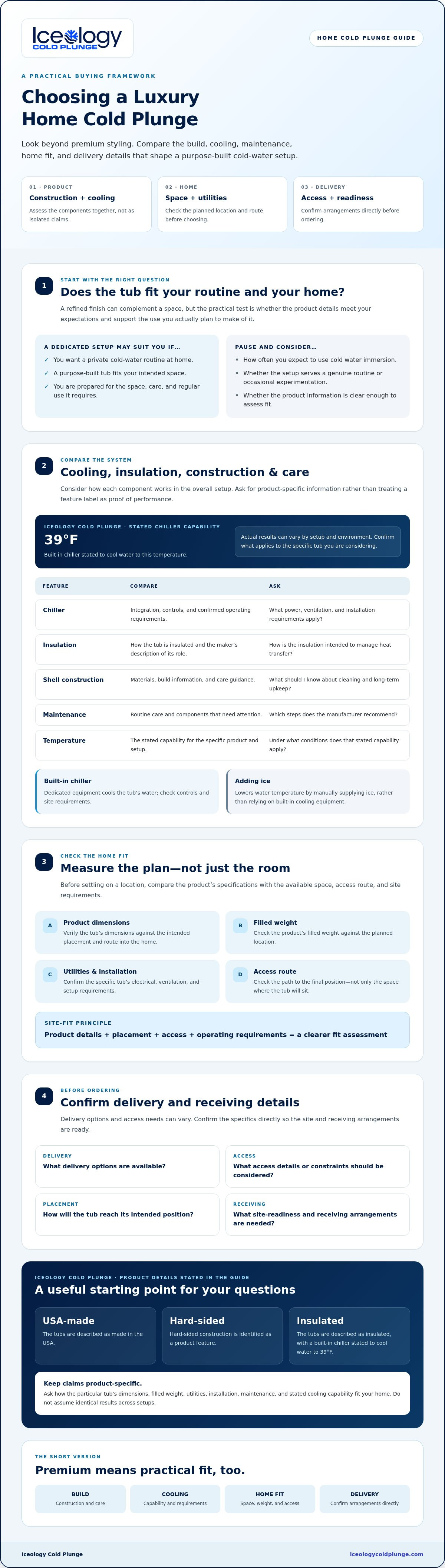
If you’re searching for a luxury cold plunge for high-end residential spaces, start with more than appearance. A premium tub needs to suit the space, its access route, your routine, and the site’s operating requirements. Construction, cooling, placement, and delivery details all matter.
It’s reasonable to expect a premium cold tub to feel refined and perform reliably, but features matter most when they meet practical needs. Compare hard-sided construction, insulation, and integrated cooling, then verify the tub’s dimensions, electrical requirements, and setup needs for its intended location. Iceology Cold Plunge tubs are made in the USA with hard-sided construction, efficient insulation, and a built-in chiller stated to cool water to 39°F.
This guide explains how to assess those features without relying on marketing claims alone. You’ll learn what to compare when evaluating cooling and maintenance, how to check whether a tub suits its planned placement, and which delivery and access details to confirm directly before ordering. Preparation can make the decision clearer and help ensure your cold plunge fits both your space and your routine.
Key Takeaways
- Choose a luxury cold plunge for your home by weighing practical fit and performance, not premium styling alone.
- Compare chiller capability, insulation, shell construction, and maintenance to see which features suit your cold water routine.
- Before choosing a location, verify product dimensions, filled weight, and utility requirements against your available space and access route.
- Confirm delivery options, access needs, placement, site readiness, and receiving arrangements directly before ordering.
- Iceology Cold Plunge tubs are USA-made, hard-sided, and insulated, with built-in chillers stated to cool water to 39°F. Ask how the specific product’s details fit your home.
What Makes a Luxury Cold Plunge Right for a Home?
A cold plunge feels premium when its design supports deliberate use, not simply because it looks striking. Consider whether the equipment suits the routine you want, whether the tub feels thoughtfully made, and whether it makes sense in the intended space. A refined finish can complement a room, but it shouldn’t replace clear product information or a practical reason to choose that tub.
A home cold plunge with an integrated chiller is a dedicated tub with built-in equipment designed to cool its water for cold-water immersion. It differs from an improvised ice bath because it uses dedicated cooling equipment rather than making ice the central means of chilling the water. That describes the setup, not a guaranteed health, safety, or performance outcome. Learn more about the terminology and context of sports therapy and ice baths.
Which features make a cold plunge feel premium?
Look for substance behind each feature. Hard-sided construction gives you a specific build type to ask about, while integrated cooling offers an alternative to a routine built around adding ice. Insulation is worth evaluating as part of the tub’s thermal design, and you can assess craftsmanship by reviewing the maker’s descriptions of how the product is made. Iceology Cold Plunge describes its tubs as hard-sided, insulated, and made with expert craftsmanship. Treat these as useful starting points for questions, not proof that every tub will suit every home.
Aesthetic appeal still matters. The practical test is whether the design complements the setting and the product’s functional details meet your expectations. Premium should mean a considered fit between design and use, not an automatic claim of superiority.
Who benefits from a dedicated home cold tub?
A dedicated tub may make sense if you expect to build a consistent, private cold-water routine and prefer a purpose-built setup at home. The practical benefit is having the equipment available when it fits your schedule. In return, a dedicated unit requires space, care, and a commitment to regular use.
If you’re curious but unsure how often you’ll use cold water immersion, pause before investing in a permanent setup. Consider what would make the practice sustainable and whether the tub would serve a genuine routine rather than occasional experimentation. An honest assessment can help you choose with intention, keep wellness goals personal, and avoid assuming guaranteed results.
How to Compare Cooling, Insulation, and Construction
Compare the components as a system, not as isolated headline features. A chiller’s stated temperature capability, the tub’s insulation and construction, and the care it requires all shape the ownership experience. Iceology Cold Plunge states that its built-in chiller can cool water to 39°F. Actual results can vary by setup and environment, so confirm what applies to the specific tub you’re considering.
An integrated chiller cools the tub’s water through built-in equipment, while adding ice relies on manually supplying ice to lower the water temperature.
| Feature | What to compare | Question to ask |
|---|---|---|
| Chiller | Integration, controls, and confirmed operating requirements | What power, ventilation, and installation requirements apply? |
| Insulation | How the tub is insulated and what the maker states about its role | How is insulation intended to manage heat transfer? |
| Shell construction | Materials, build quality, and care guidance | What should I know about cleaning and long-term upkeep? |
| Maintenance | Routine care and any components requiring attention | Which maintenance steps does the manufacturer recommend? |
| Temperature capability | The stated range or minimum for the specific setup | Under what conditions does the stated capability apply? |
What should buyers check in a built-in chiller?
Ask how the chiller connects to the tub, how its temperature is controlled, and which operating details the manufacturer confirms. Iceology states its built-in chiller can cool water to 39°F, but don’t assume every installation will reach that temperature identically. Before ordering, verify the specific product’s power needs, ventilation clearances, and installation requirements so you can assess whether the intended site is suitable.
Why do insulation and hard-sided construction matter?
Insulation helps manage heat transfer between the water and its surroundings. Without product-specific evidence, however, it shouldn’t be treated as a guarantee of particular energy savings or operating costs. Hard-sided construction is another concrete point to assess: ask about materials and care rather than assuming a particular lifespan. Iceology describes its tubs as hard-sided, efficiently insulated, and crafted with attention to quality. For more comparison guidance, read this premium cold plunge tub selection guide.
Use these questions to compare specifications, then review Iceology Cold Plunge tubs as one option. Confirm the product details and setup requirements that matter for your home before making a decision.
How to Judge Whether a Luxury Cold Plunge Fits Your Home
A tub can complement a carefully designed home and still be impractical if it can’t reach its intended location or meet the space’s operating needs. Before comparing finishes, map the full route from the delivery point to the planned placement. Include the path inside the home, not just the area where the cold tub will sit.
What should you measure before ordering?
Measure the destination area, doorways, corridor widths, turns, and thresholds along the access route. Then ask the seller for the specific tub’s confirmed dimensions and handling guidance. Photos can help you assess appearance, but they aren’t a substitute for measurements. Also request the filled weight and utility requirements. Consult qualified professionals if you need to assess floor support or electrical suitability.
- Placement: Is there enough room for the tub and access for routine care?
- Access: Can the unit pass through every doorway and turn on the route?
- Utilities: Do the chiller’s confirmed requirements suit the intended site?
- Weight: Has the filled weight been confirmed and reviewed for the location?
These checks turn uncertainty into clear questions. If a measurement or requirement is unknown, verify it before ordering rather than assuming the tub will fit based on a product photo or estimated size.
Which ownership questions belong in your comparison?
Consider how often you expect to use the tub and whether its ongoing care fits your routine. Ask the manufacturer for current cleaning and water-care guidance, along with details about maintenance components and available accessories. Don’t assume accessories are included. Even a visually seamless location should leave practical room to access the tub and follow its care instructions.
Separate design fit from operational fit. A tub may suit the room’s materials and layout but still require access, maintenance, or utility arrangements you haven’t planned for. Write down what’s confirmed and what still needs an answer. This makes it easier to compare products on the same basis and judge whether a premium unit is workable for your home.
For more planning considerations, review this home cold plunge setup guidance. You can also explore Iceology Cold Plunge tubs and confirm the dimensions, filled weight, electrical requirements, and setup details for the specific product before making a decision.
What to Confirm About Cold Plunge Delivery Before You Buy
A well-chosen cold plunge still needs a workable path into your home and a prepared place to operate. Confirm delivery and handling details directly with the seller before ordering. Don’t assume that listed dimensions, a delivery estimate, or a general product description explains what will happen at your address.
Before ordering, confirm delivery options, product dimensions, access and handling needs, final placement, site utilities, lead times, and receiving arrangements with the seller.
- Start with delivery: Ask which delivery options are currently available and what delivery includes.
- Check access: Share relevant details about the route and ask about any access limitations.
- Confirm placement: Verify whether on-site placement is available rather than assuming it is part of delivery.
- Prepare the site: Compare the planned location and utilities with verified product documentation.
- Plan to receive the unit: Confirm current lead times and receiving requirements before placing an order.
Which delivery details should you verify with the seller?
Ask how the unit arrives, what handling is included, and whether delivery extends to the intended placement area. Confirm current lead times, receiving arrangements, and any access restrictions directly with the seller. For a hard-sided cold plunge, provide accurate details about the route and request the product’s confirmed dimensions and handling guidance. Don’t rely on assumptions about freight or delivery practices, since arrangements can vary.
How can you prepare the installation area?
Choose a proposed location, then compare its access route and utility requirements with current documentation for the specific tub. Resolve questions about electrical needs, drainage, floor support, or placement with the seller or qualified professionals as appropriate. These answers help distinguish a space that looks suitable from one that’s ready for the unit and its operation.
Keep a short list of items that remain unconfirmed, such as whether the unit can pass through a turn or what site preparation is needed. Review this guide to cold plunge installation planning as you organize those questions. Then verify delivery options and access details directly with Iceology Cold Plunge before you order.
Why Consider an Iceology Cold Plunge for Your Home?
Iceology Cold Plunge may suit buyers who value USA-made, hard-sided construction, efficient insulation, and an integrated chiller. These are concrete features to weigh against your space, routine, and expectations. They don’t replace checking the specific tub’s dimensions, setup requirements, care guidance, and delivery arrangements.
How do Iceology’s confirmed features map to buyer priorities?
USA manufacturing and expert craftsmanship may appeal if provenance and build quality matter to your decision. Hard-sided construction gives you a defined shell type to evaluate, while efficient insulation is relevant to how the tub is designed to manage heat transfer. Iceology states its built-in chiller can cool water to 39°F. Treat that as the company’s stated capability, not a guarantee that every tub will reach the same temperature in every environment. For more context on chiller considerations, read the cold plunge tub with chiller guide.
An integrated chiller is intended to provide controlled cold water without relying solely on manually adding ice. Before choosing, ask which operating details apply to the tub and confirm its power and installation requirements. The right fit depends on how those confirmed details align with your home, not on the feature list alone.
What are the next steps before choosing?
Use a short verification list before ordering. Request current product information and compare it with the intended location and your plans for regular care.
- Dimensions and weight: Confirm the tub’s measurements and filled weight, then check the access route and placement area.
- Utilities: Verify electrical and any other site requirements for the specific tub.
- Care: Review current cleaning and water-care instructions, and ask which maintenance components or accessories are available.
- Delivery: Confirm current delivery options, handling arrangements, receiving requirements, and access considerations directly with Iceology.
These answers let you compare verified product details with your home’s actual constraints. If an item remains unclear, get clarification before ordering instead of relying on assumptions. A thoughtful choice should feel considered both in the room and in everyday use.
Choose a Cold Plunge That Fits Your Home and Routine
The right luxury cold plunge for Fisher Island homes should work beyond the product photos. Compare construction, cooling, insulation, and care, then verify dimensions, utilities, access, placement, and delivery arrangements before ordering. These practical checks help you choose based on your home and intended routine, not premium language alone.
Iceology Cold Plunge offers USA-made, hard-sided tubs with built-in chillers, efficient insulation, and expert craftsmanship. The stated cooling capability reaches 39°F, though results can vary by setup and environment. Confirm the specific tub’s requirements and delivery details directly so you know how its features fit your space.
Resolve open questions before making your choice. A considered purchase can make cold water therapy feel like a more natural part of your home routine.
With clear information and a plan that suits your home, you can move forward with confidence.
Frequently Asked Questions
Can a cold plunge with a built-in chiller be used without adding ice?
Yes. A built-in chiller cools the water, so you don’t have to rely on adding ice as your regular cooling method. Iceology Cold Plunge tubs include built-in chillers, with a stated cooling capability down to 39°F. Check the specific tub’s operating guidance and requirements before use. The actual temperature achieved may vary by setup and environment, so don’t assume every installation will perform identically.
How cold can an Iceology cold plunge get?
Iceology states that its built-in chiller can cool water to 39°F. This is the company’s stated capability, not a guarantee that every tub will reach or maintain that temperature under all conditions. Before choosing, confirm the temperature information and operating requirements for the specific product. Consider how the tub will be set up and follow the manufacturer’s guidance for operation and cold-water use.
How do I know whether a luxury cold plunge will fit my home?
Compare the tub’s confirmed dimensions with both the intended placement area and the full route it must travel, including doors, corridors, turns, and thresholds. Ask the seller for handling guidance rather than estimating size from photos. Also obtain the filled weight and utility requirements. Check that there’s practical access for routine care, and consult qualified professionals if you need help assessing floor support or site suitability.
What should I ask about cold plunge delivery before ordering?
Ask what delivery includes, how the unit arrives, and whether placement at the intended location is available. Confirm current lead times, receiving arrangements, handling details, and access limitations directly with the seller. Share relevant information about the route, then verify the tub’s dimensions and handling guidance. Delivery methods and terms can vary, so get the current details for your order before purchasing.
Does insulation make a cold plunge more energy efficient?
Insulation helps manage heat transfer between the water and its surroundings, making it a relevant feature to compare. However, insulation alone doesn’t establish how much energy a particular tub will use or save. Ask the manufacturer what insulation is used and what performance information is available for the specific product. Avoid relying on broad efficiency language without supporting details, and consider the tub’s confirmed operating requirements as part of your comparison.
Is a hard-sided cold plunge worth considering for home use?
A hard-sided cold plunge is worth considering if you want a dedicated tub and can accommodate its placement, access, and care requirements. Construction is one factor in evaluating durability, but hard-sided design by itself doesn’t guarantee a particular lifespan. Review the materials, cleaning guidance, dimensions, and filled weight for the specific tub. Then compare those details with your available space and how often you plan to use it.
What should I confirm before installing a cold plunge tub?
Confirm the product’s dimensions, filled weight, electrical requirements, and any placement or drainage needs using current documentation. Check the access route and make sure the planned location can accommodate the tub and routine maintenance. Ask the seller about setup requirements and resolve questions about electrical work, floor support, or drainage with qualified professionals where appropriate. Verify delivery and handling arrangements before ordering so the site is ready when the tub arrives.