
How to Choose the Right Size Cold Plunge Tub for Your Space and Routine
What if a cold plunge tub that looks spacious on paper feels cramped once you get in, or a tub that seems like a perfect fit won’t make it through the doorway? Choosing a tub is about more than its exterior footprint or capacity label. Knowing how to choose the right size cold plunge tub starts with the person using it, the space available, and how cold water therapy will fit into your routine.
It’s easy to compare listed dimensions and miss the details that shape a comfortable plunge. Usable interior space, body position, room to get in and out, and access for setup all matter. A compact tub may suit a solo routine, while a larger option takes up more space and calls for more planning.
Use a fit-first approach: decide who will use the tub and how, measure the destination and the route into it, then compare interior fit, water volume, and setup needs. With those details in hand, you can weigh options such as Iceology Cold Plunge’s hard-sided tubs with built-in chilling systems for your home setup.
Key Takeaways
- Start with the primary user and routine, then decide whether solo, occasional shared, or regular multi-user use should shape your choice.
- Compare seated posture and body measurements with usable interior dimensions, not exterior measurements alone.
- Choose a compact or larger tub based on comfort and actual use needs. Extra space helps only when it serves a purpose.
- Measure the placement area, approach space, and access route, including room for integrated equipment.
- Compare shortlisted tubs using consistent criteria: user fit, interior dimensions, exterior footprint, access, and specifications.
Start With Who Will Use the Cold Plunge Tub and How
Start with the person who will use the tub most, the routine they want to build, and the space available for installation. A tub for one person taking regular plunges has different priorities from one used by several household members in rotation. Define the use case before comparing capacity labels. Water volume tells you how much water a tub holds, not whether its shape and interior will feel comfortable to a particular person.
The right size balances personal fit, everyday function, and practical placement. Think beyond how many people may use the tub. Consider how often they’ll use it, whether they’ll take turns, and what position feels natural during cold-water immersion. A larger tub may make sense for regular shared use, but its extra footprint is worthwhile only if it meets a real need and fits the intended location.
How many people will use the cold plunge?
Decide whether there’s one primary user, occasional users sharing the tub at different times, or several regular users with different body sizes and comfort preferences. Occasional shared use may call for flexibility. Regular use by multiple people makes interior space and household planning more important. Shared use doesn’t necessarily mean everyone will plunge at once, so base your choice on how the tub will fit your actual routine.
What does a comfortable fit mean?
Picture your preferred seated posture. Consider how you’ll position your legs, where your shoulders will sit, and how you want the water to cover your body. Compare those needs with the tub’s usable interior dimensions and shape. Exterior measurements show how much space the tub occupies; they don’t tell you how much room you’ll have inside. Use the manufacturer’s specifications rather than assuming a capacity label indicates comfort.
Two tubs with similar water volumes can feel different if their interiors vary in length, width, depth, contours, or entry design. A taller user may prioritize legroom and immersion depth, while another may care more about shoulder room or ease of entry. These details affect how easily you can settle into a relaxed position and get out without awkward movement.
Make a short profile before moving on to measurements:
- Primary user: Who’ll use the tub most, and are there other regular users?
- Routine: Will use be frequent, occasional, or shared in rotation?
- Comfort: What seated posture, legroom, shoulder room, and immersion experience matter most?
- Space: What footprint can the destination accommodate?
With those priorities defined, you can compare tubs on a consistent basis. This is the practical starting point for choosing a cold plunge tub without letting a capacity label make the decision for you.
Measure Your Body and Compare Usable Cold Plunge Tub Dimensions
Once you know who’ll use the tub, compare that person’s proportions and comfort preferences with the space inside it. Record the user’s height and preferred seated position, review each tub’s interior dimensions, then consider its shape and entry. This makes the comparison a practical fit check rather than a guess based on capacity.
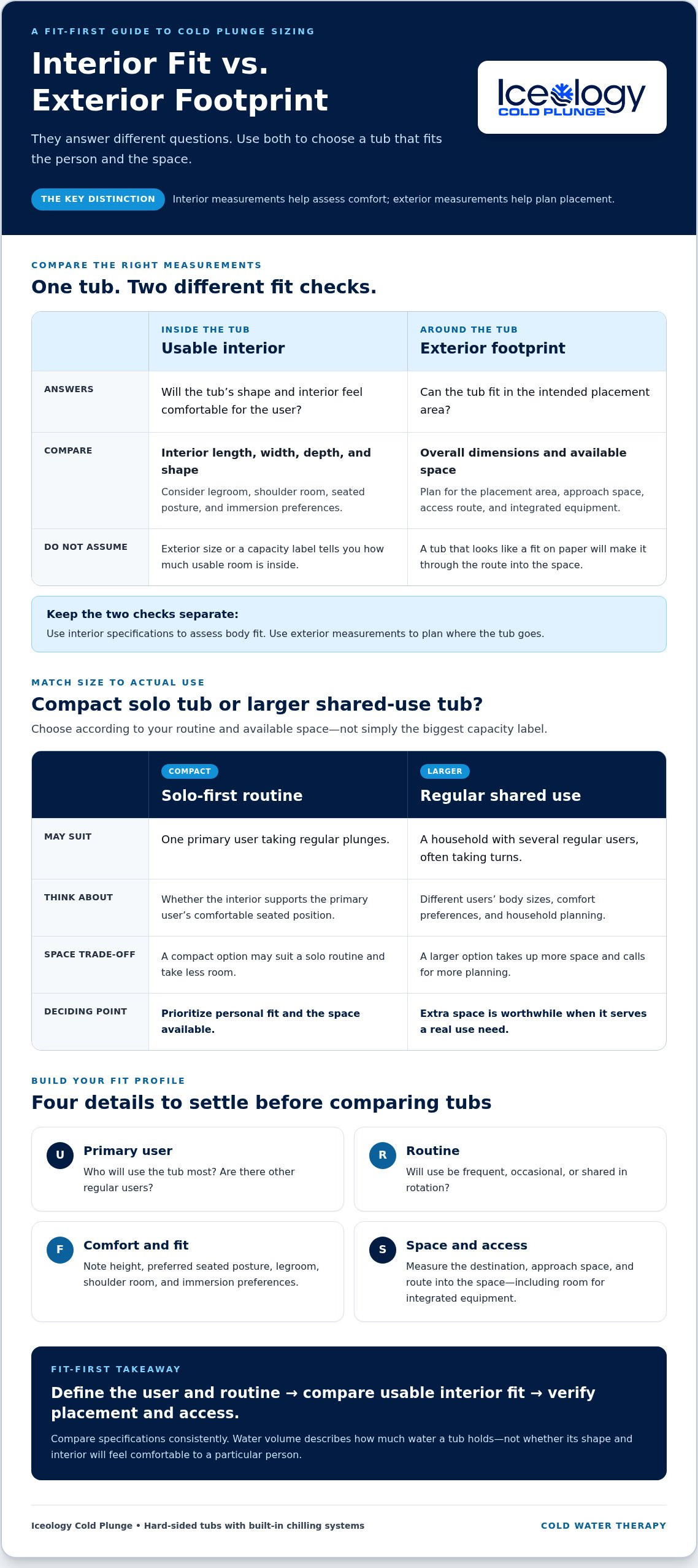
Interior dimensions help you assess how the tub may fit your body; exterior dimensions help you plan the space it occupies. Both matter, but they answer different questions. Keep them separate as you compare models, and check whether each measurement refers to the inside or outside of the tub.
Which body measurements matter when choosing a tub?
Start with the primary user’s height and preferred seated posture. Think about how much legroom feels comfortable, whether they prefer to sit upright or draw their knees in, and how much shoulder room they want. Tub length affects leg positioning, width influences space across the shoulders and torso, and depth shapes the available immersion experience. Comfort depends on how these dimensions work together, not on any one measurement alone.
How should you compare the dimensions listed by manufacturers?
Compare interior length, width, depth, and shape using the tub’s stated specifications. Check measurement labels carefully: exterior dimensions include the shell and don’t show usable interior room. Use overall dimensions to plan placement, not as proof of interior comfort. For a broader buying framework, see Iceology’s premium cold plunge tub buying guide.
Then picture your body in the tub’s actual interior. A rounded end, sloped wall, molded seat, or narrow entry can change where your legs rest and how easily you settle in, even when two tubs have similar listed measurements. Consider shape alongside dimensions, and assess whether the entry allows you to get in and out comfortably and with control.
- Measure the user: Note height and preferred seated position.
- Check interior measurements: Compare length, width, and depth with comfort preferences.
- Review shape and entry: Consider legroom, shoulder room, and ease of access.
- Separate inside from outside: Use interior figures to assess fit and exterior figures to plan placement.
Iceology Cold Plunge makes hard-sided tubs with built-in chilling systems. Explore Iceology Cold Plunge tubs alongside your fit notes, then use the same measurements to assess your space.
Choose Between a Compact Solo Tub and a Larger Shared-Use Tub
A compact tub may be the better match for a solo-first routine, while a larger tub may suit a household where several people use it regularly, often in rotation. The deciding factor isn’t which option sounds more substantial. It’s whether extra interior room justifies the footprint and meets a genuine comfort or use need.
Use this comparison to clarify the trade-offs before narrowing your choices. These categories describe common priorities, not fixed dimensions or capacity rules.
| Consideration | Compact solo tub | Larger shared-use tub |
|---|---|---|
| Intended users | One primary user, with occasional use by others | Several regular users, typically taking turns |
| Space demand | Prioritizes a more manageable placement footprint | Needs more room for the tub and its setup |
| Comfort priorities | A good match between one user’s body and usable interior space | Interior room that accommodates the needs of different users |
| Trade-off | Less extra space, so the primary user’s fit matters | More room may mean a larger footprint and different setup needs |
When does a compact cold plunge make sense?
Choose a compact option when one person will use the tub most and a smaller footprint better suits the planned location. This keeps the setup aligned with a clear routine instead of making room for space that rarely gets used. Compact shouldn’t mean cramped, though. Compare usable interior measurements with the primary user’s comfort needs before deciding that a tub will work in your room.
When is a larger tub worth considering?
A larger tub is worth considering when repeated household use makes additional interior room valuable and the placement can accommodate it. Shared use often means taking turns, so consider whose proportions and comfort preferences the interior should serve. Don’t assume a higher capacity label guarantees a better fit. Shape and usable dimensions still matter.
Water volume and equipment requirements vary by tub design, so don’t use size categories to predict them. Review the specifications for each model and consider the complete setup, not just the basin. The largest tub isn’t automatically the most comfortable or practical choice. If its extra room doesn’t support your routine, it may take up more space than you need.
To choose the right size cold plunge tub, weigh user needs, placement, and setup together. Iceology Cold Plunge designs hard-sided tubs with built-in chilling systems for a considered home setup. Explore Iceology Cold Plunge tubs as you compare options against your intended use.
Check Placement, Access, and Setup Before Settling on a Size
A tub can suit your body and routine but still be the wrong choice if it can’t reach its intended location or leaves too little room for setup. Check the destination and route before settling on a model. This accounts for the practical steps of bringing the tub in, positioning it, and using it day to day.
How do you measure the location and delivery route?
Start with the final placement area. Compare its usable dimensions with the tub’s exterior measurements, then account for room to approach and access the tub. Measure the route from the entry point to the destination, including doorways, narrow turns, thresholds, and other tight spots. A tub may fit the room but be difficult to move through the route.
Next, think through the tub’s position in use. Leave practical access for filling, draining, and routine care, and make sure the integrated equipment won’t be boxed in by walls or nearby objects. A simple sketch of the destination, with the tub footprint and access areas marked, can help you spot space constraints before choosing. Iceology’s cold plunge tub setup guide offers further guidance for planning a home installation.
- Measure the clear placement area and compare it with the tub’s exterior dimensions.
- Check the full access route, including doorways, turns, and thresholds.
- Plan space for approaching the tub and accessing its equipment and routine-care points.
What should you consider about water volume and equipment?
Water volume affects the filled setup, and a larger volume can also increase the demands placed on the chilling system. Those needs depend on the tub design and equipment, so don’t infer them from a “compact” or “large” label. Review the specifications for the specific tub and its integrated equipment. Iceology Cold Plunge tubs have built-in chilling systems, so include equipment placement in your footprint plan.
Filled weight depends on both the tub and the water it holds. Don’t estimate it from exterior dimensions. Use the tub weight and water-volume specifications for the model you’re considering when assessing its intended location. For more on how chilling equipment fits into a home setup, read the cold plunge tub with chiller guide.
With the route, footprint, access, and setup needs mapped out, you can judge whether a size works in practice, not just on paper.
Use a Fit-First Checklist to Choose Your Cold Plunge Tub
You’ve considered who’ll use the tub, how its interior may fit, and whether the setup works in your space. Now compare your shortlisted options against the same practical criteria. This makes it easier to decide based on fit and function, not just a capacity label or a compact footprint.
What to confirm before making your final size choice
Review the manufacturer’s specifications for each tub, keeping interior measurements separate from exterior ones. Interior dimensions help you assess comfort; exterior dimensions help you plan placement. Then make sure the tub and its equipment can reach the intended location and fit with enough access for routine use.
- User fit: Does the tub’s shape and usable interior suit the primary user’s proportions and preferred seated position?
- Interior dimensions: Have you compared the stated interior length, width, and depth?
- Exterior footprint: Does the tub fit the destination while leaving practical space around it?
- Access: Can it move along the route into the space, and can you reach it comfortably once installed?
- Specifications: Have you reviewed the tub’s stated water volume and weight, including filled weight?
Use the same checklist for every option. Base your comparison on stated dimensions and specifications rather than estimates drawn from a category label. The practical answer to how to choose the right size cold plunge tub is to balance personal fit with placement and setup details.
How Iceology Cold Plunge fits a considered setup
After applying the fit-first framework, consider construction and chilling alongside size. Iceology Cold Plunge designs hard-sided cold plunge tubs with built-in chillers, efficient insulation, and expert craftsmanship. Its tubs are made in the USA, and the chillers can lower water temperature to as low as 39 °F. The right choice still depends on how a tub’s dimensions and specifications match your needs.
Choose with clarity: a well-sized tub should suit its primary user, work with the intended routine, and fit the space and access route. Let those practical criteria guide your final comparison.
Choose a Tub That Fits Your Routine
The right cold plunge isn’t automatically the biggest or the one with the most impressive capacity label. It’s the tub that feels comfortable for its primary user, suits the way it’ll be used, and fits the destination with room for access and equipment. Compare usable interior dimensions separately from the exterior footprint, then base your final choice on the tub’s specifications.
A fit-first process makes choosing a cold plunge tub a practical decision, not a guess. Start with the user, check the interior, measure the space and access route, and review water volume and filled-weight details before settling on a model.
For a considered home setup, Iceology Cold Plunge offers hard-sided tubs made in the USA, with built-in chilling systems and efficient insulation. Explore the range once you’ve established the fit and setup requirements that matter to you.
With the right preparation, you can choose a tub that fits your space and make cold water therapy a comfortable part of your routine.
Frequently Asked Questions
How do I know what size cold plunge tub I need?
Choose a tub by matching its usable interior to the primary user, routine, and available space. To decide how to choose the right size cold plunge tub, note the user’s height and preferred seated posture, then compare those needs with the interior length, width, and depth. Separately, check the exterior footprint, access route, and room for equipment. Capacity describes how much water a tub holds, but it doesn’t establish whether the tub will feel comfortable.
Is a larger cold plunge tub always better?
No. A larger tub is a better fit only when its extra interior room serves a real use need and the space can accommodate it. For a solo routine, additional room may add footprint without improving comfort. For a household with several regular users, more interior space may offer useful flexibility. Compare dimensions and shape with actual user needs rather than assuming the biggest option is the most practical.
Can two people use a single-person cold plunge tub?
It depends on the tub’s usable interior and the body sizes and comfort preferences of both users. A “single-person” label doesn’t show whether two people can fit comfortably, so don’t treat it as a promise of simultaneous use. Compare the manufacturer’s interior measurements with the space each person needs. If the tub is for shared use, consider whether taking turns better suits the routine and available room.
What measurements should I check before buying a cold plunge tub?
Check the tub’s interior length, width, and depth to assess comfort, then its exterior length, width, and height to plan placement. Measure the destination and the route into it, including doorways, turns, and thresholds. Leave practical access around the tub and its integrated equipment. Review the manufacturer’s stated water volume and tub weight, plus filled weight, to make a sound plan for the location.
Does a deeper cold plunge tub work for every user?
No. Depth alone doesn’t determine comfort or suitability. The right depth depends on the individual’s proportions, preferred seated position, desired immersion experience, and the tub’s interior shape. Compare interior depth with other usable dimensions, including width and length. Consider how the user will get in, settle into a comfortable position, and exit. A deeper design isn’t automatically a better fit for everyone.
Does a larger cold plunge tub need a more powerful chiller?
Not necessarily. Water volume and tub design affect chilling demands, so size labels alone can’t determine the right chiller. Compare the tub’s stated water volume with the chiller’s specifications, and account for factors such as insulation and intended use. Iceology Cold Plunge tubs have built-in chilling systems and efficient insulation. Review the specifications for the tub and chiller combination instead of assuming a larger tub always needs more powerful equipment.