
Inflatable vs Hard Shell Cold Plunge: The 2026 Florida Buyer’s Guide
You might think a portable inflatable tub is the most convenient way to start your recovery journey, but in the Sunshine State, that "easy" setup often becomes an expensive liability. Choosing between an inflatable vs hard shell cold plunge Florida residents can actually rely on means looking beyond the initial price tag. It's understandable to want a quick solution for those humid 95-degree afternoons when the heat feels inescapable. You want the mental clarity and physical reset that only a true cold soak provides, but you're likely worried about skyrocketing electric bills or finding a layer of mildew on your equipment by next month.
This guide will show you why the Florida climate demands a specific type of cold plunge and how to choose a tub that survives the heat while staying at a crisp 39°F. We'll explore why high-efficiency polyurethane foam insulation and USA-made craftsmanship are the keys to maintaining deep-chill temperatures while protecting your investment from intense UV rays and coastal salt air. You'll discover how the right materials transform a simple soak into a reliable, low-maintenance ritual that withstands the most demanding environmental conditions.
Key Takeaways
- Learn why Florida's intense UV index and high humidity cause vinyl inflatables to degrade far faster than professional-grade hard shells.
- Understand the thermal efficiency differences in an inflatable vs hard shell cold plunge Florida comparison, specifically how specialized insulation maintains a 39°F chill in 95°F heat.
- Discover the structural advantages of USA-made rigid composites that resist salt air and sun damage for long-term outdoor use.
- Identify the specific maintenance strategies required in high-humidity environments to prevent biofilm growth on your equipment.
- See how integrated chillers and high-density foam reduce electricity costs by fighting the Florida sun more effectively than air-filled walls.
The Florida Challenge: Why Your Cold Plunge Environment Matters
Florida isn't just a state. It is a high-stakes stress test for outdoor equipment. When you're researching the inflatable vs hard shell cold plunge Florida market, the state's heat and humidity must be your primary considerations. On one side, you have inflatable units made from air-filled vinyl or PVC. These are often chosen for their lower entry price and portability. On the other side, rigid hard shell tubs utilize engineered composite materials and high-density insulation. While both might look functional in a showroom, the tropical reality of the Sunshine State quickly separates temporary accessories from long-term recovery infrastructure.
To achieve the physiological benefits of cold water immersion, you need a tub that reliably maintains a temperature of 39°F. In Florida, where ambient temperatures often hover above 80°F even at night, this requires immense thermal resistance. This is where R-value, the measure of a material's ability to resist heat flow, becomes the most critical metric for any buyer. Without high-quality insulation, your chiller isn't just cooling water. It is fighting the entire Florida atmosphere to maintain a therapeutic baseline.
Heat vs. Cold: The Battle for Temperature
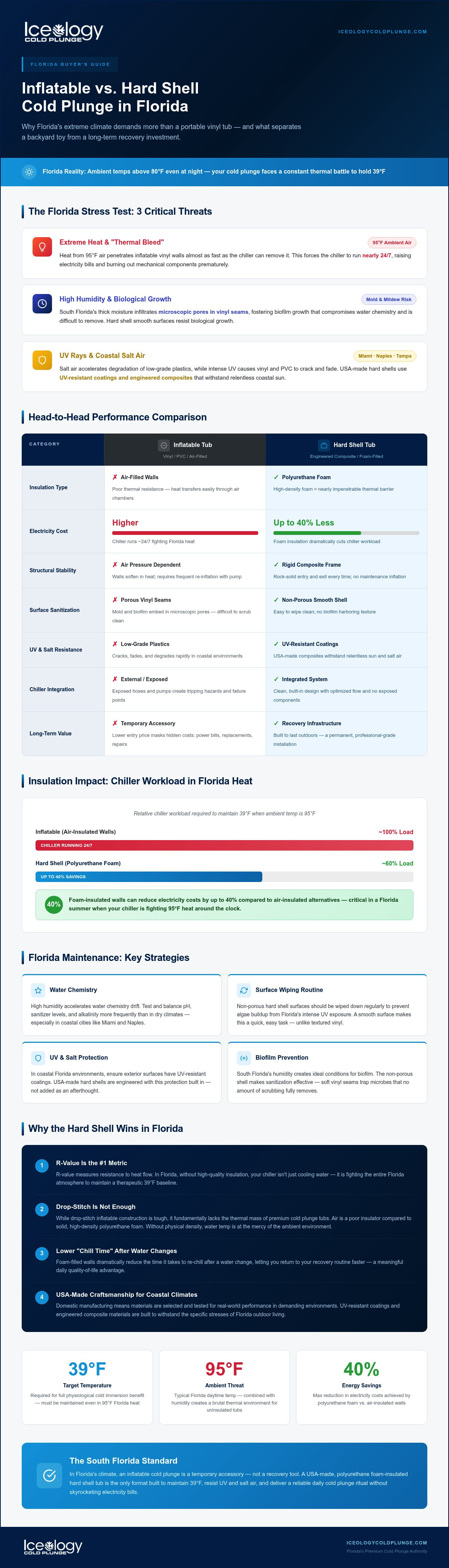
Ambient heat is a constant predator in Florida. Inflatable tubs rely on air-filled walls, which offer minimal thermal protection. This leads to "thermal bleed," where heat from the 95°F air penetrates the water almost as fast as your chiller can remove it. For an outdoor setup in Tampa or Orlando, an uninsulated inflatable forces your chiller to run nearly 24/7. This doesn't just lead to higher electricity bills. It shortens the lifespan of the mechanical components through constant overwork. Hard shell tubs with polyurethane foam insulation create a true thermal barrier. They keep the cold in and the Florida sun out, ensuring peak efficiency.
Humidity and Biological Growth
The South Florida air is thick with moisture. It creates a perfect breeding ground for mold and mildew. Soft-sided materials like vinyl are porous on a microscopic level. Over time, humidity gets trapped in the seams and textures of an inflatable tub. This leads to biological growth that is difficult to scrub away and can compromise your water chemistry. In contrast, the smooth, non-porous surfaces of a hard shell tub are designed for easy sanitization. For those in coastal cities like Naples or Miami, salt air also accelerates the degradation of low-grade plastics. A USA-made hard shell tub uses UV-resistant coatings to ensure the structure doesn't crack or fade under the relentless coastal sun.
Inflatable vs. Hard Shell: A Performance Comparison
Structural integrity defines the user experience. When evaluating the inflatable vs hard shell cold plunge Florida market, you're choosing between a temporary air-filled vessel and a permanent piece of recovery infrastructure. Inflatables rely entirely on internal air pressure to maintain their shape. In the intense Florida heat, air expands and contracts, which often leads to a softening of the tub walls and requires frequent topping off with a manual pump. Hard shell tubs utilize engineered frames and rigid composite materials. They provide a stable, rock-solid entry and exit every time you use them.
Many manufacturers promote "drop-stitch" technology as a revolutionary solution for rigidity. While this construction is undeniably tough for an inflatable, it fundamentally lacks the thermal mass found in a premium cold plunge tub. Air is a poor insulator compared to solid, high-density materials. Without physical density, your water temperature is at the mercy of the ambient environment. For a Florida homeowner, this means the difference between a tub that feels like a backyard toy and one that feels like a professional-grade tool.
Insulation: Air vs. Polyurethane Foam
Polyurethane foam insulation is the gold standard for thermal retention in the recovery industry. Unlike air-filled walls that allow heat to transfer easily, high-density foam creates a nearly impenetrable barrier. This efficiency is measurable. Foam-filled walls can reduce electricity costs by up to 40% compared to air-insulated alternatives. This is particularly relevant during a Florida summer when your chiller must fight 95°F humidity to keep water at a crisp 39°F. Furthermore, the "chill time" after a water change is significantly lower in a hard shell tub, allowing you to return to your routine faster.
The Chiller Integration Gap
Inflatable setups almost always rely on external chillers connected by a series of exposed hoses and pumps. These create potential tripping hazards on your patio and provide multiple points of failure for leaks. Choosing a cold plunge tub with chiller that is fully integrated into the housing provides a streamlined, self-contained system. Integrated systems are protected from the elements and designed to maintain a precise 39°F with minimal mechanical strain. It's a cleaner look that functions with far greater reliability.
Beyond performance, aesthetics play a vital role in your home environment. A permanent hard shell tub doesn't just function better; it elevates the design of a luxury Florida patio. It looks intentional and sophisticated, whereas an inflatable often looks like an afterthought. If you're ready to commit to a daily practice, exploring a permanent cold tub solution ensures your recovery space remains as beautiful as it is effective.
Durability and Longevity in the Sunshine State
Florida’s environment is a relentless adversary for outdoor equipment. The intense UV index doesn't just fade colors; it physically restructures the polymers in soft plastics. When comparing an inflatable vs hard shell cold plunge Florida residents often find that inflatable vinyl or PVC units become brittle within 18 to 24 months of direct sun exposure. Micro-cracks form in the material, leading to slow air leaks and structural failure. Professional hard shell tubs are engineered with UV-stabilized coatings and marine-grade finishes designed to withstand the same conditions as a high-end boat or outdoor spa.
Beyond the sun, the "Puncture Risk" is a daily reality for inflatable owners. Whether it is a stray palm frond, a sharp patio tool, or a household pet, a single puncture can render an air-filled tub useless. Repairing these units is often a temporary fix that never restores the original structural integrity. Choosing USA made cold plunge tubs ensures you are investing in a product built with high-quality, rigid materials that are immune to punctures and environmental fatigue. It is the difference between purchasing a disposable accessory and investing in permanent recovery infrastructure.
Weathering the Storm: Hurricane and Wind Resistance
Weight is a safety feature in Florida. An empty inflatable tub is essentially a large, lightweight kite during a high-wind event or a summer thunderstorm. These units can easily be tossed across a yard, causing damage to your home or the tub itself. A hard shell unit, particularly when filled with water, provides a stable and heavy fixture that stays exactly where you place it. While you should always follow local safety protocols during major storms, the physical presence of a rigid tub offers a level of security that air-filled alternatives simply cannot match.
Resale Value and Warranty
The financial side of the inflatable vs hard shell cold plunge Florida debate often comes down to long-term value. Inflatables have almost zero resale value once they've been used for a season in the heat. They are perceived as temporary items. Premium hard shell tubs maintain their value because they are built to last a decade or more. Most inflatable manufacturers offer a limited one-year warranty, reflecting the expected lifespan of the materials. In contrast, a hard-sided unit represents a commitment to quality. A "Made in USA" tag isn't just about pride; it is a signal that the manufacturer stands behind the craftsmanship for the long haul.
Florida Maintenance Guide: Keeping Your Plunge Pristine
Maintaining a cold plunge in the humid South Florida climate isn't just about water clarity. It's about preventing a biological takeover. In high-humidity environments, a consistent weekly maintenance routine is essential to keep your recovery tool safe and inviting. One of the most significant differences in the inflatable vs hard shell cold plunge Florida debate is how the interior surfaces interact with bacteria. Inflatable tubs often feature textured vinyl and numerous welded seams. These microscopic crevices trap skin cells and oils, creating a perfect environment for biofilm and algae to take root. Hard shell tubs provide smooth, non-porous surfaces that are inherently easier to sanitize and less likely to feel "slimy" after a few days of use.
A high-quality, insulated cover is your first line of defense against the Florida elements. It does more than just maintain temperature. It acts as a physical barrier against the state's aggressive insect population and falling debris from palm trees. Effective protection starts during the initial cold plunge tub setup, where choosing a location with minimal debris can save hours of cleaning later. By integrating filtration and physical protection, you ensure your water stays as crisp as the day you filled it.
Filtration and Water Chemistry
Warm Florida air acts like an incubator for bacteria in standing water. If your water isn't moving, it's growing something. Professional-grade hard shell units utilize 24/7 circulation systems that pass water through advanced filtration and ozone or UV treatment. This constant movement is vital for maintaining a 39°F sanctuary. While chemicals are necessary, you should maintain safe levels to preserve both the tub liner and the mechanical seals of your chiller. Over-chlorinating can be just as damaging as neglecting the water entirely, especially for soft-sided materials that can bleach or degrade under chemical stress.
Cleaning the Exterior
If you live in a coastal city like Miami or Naples, salt spray is a constant factor. It can settle on your equipment and cause corrosion if left unchecked. Pollen and blowing sand also present challenges for outdoor setups. A simple, regular rinse of the exterior with fresh water prevents salt buildup and keeps the finish looking new. Protecting the chiller unit from blowing dust ensures the fans and heat exchangers remain efficient. A quick fresh-water rinse once a week extends the life of your American-made tub and keeps it performing at peak levels despite the salty air.
If you're tired of fighting mold and want a system that works with you, explore our high-performance cold tubs designed specifically for the Florida lifestyle.
Conclusion: Why Iceology is the South Florida Standard
The decision between an inflatable vs hard shell cold plunge Florida residents face ultimately depends on the intended use. Inflatables serve as a functional choice for those who travel frequently or need a temporary, portable setup. They offer a low-barrier entry into the world of cold water immersion. However, for the dedicated athlete or wellness enthusiast in the Sunshine State, a hard shell tub is the only viable choice for a permanent home recovery station. Florida’s climate is too demanding for air-filled vinyl to remain a reliable long-term solution. It's the difference between a seasonal accessory and a foundational piece of health infrastructure.
To get the most out of your recovery, you need consistency. This means having a tub that stays at a precise 39°F even when the heat index climbs into the triple digits. High-efficiency polyurethane foam insulation makes this possible by creating a thermal shield that air-filled walls simply cannot match. By choosing a system designed for high-ambient temperatures, you protect your time, your energy budget, and your physical results. You're not just buying a tub. You're securing a reliable path to peak performance that won't degrade under the intense Florida sun.
The Iceology Difference
Iceology stands apart by focusing on the technical precision required for elite recovery. Our integrated chillers are engineered to maintain that critical 39°F threshold with quiet efficiency. We don't rely on external hoses or flimsy connections that are prone to leaking in high humidity. Instead, we emphasize "Made in USA" craftsmanship and premium, marine-grade materials that resist the corrosive effects of salt air. For those living in Miami, Tampa, or Orlando, we offer local expertise and support that national, mass-market brands can't provide. We understand the specific challenges of a South Florida installation because we build for this environment every day.
Take the Next Step in Recovery
Your recovery journey deserves a tool that matches your level of commitment. Don't let your progress be sidelined by equipment that cracks in the sun or struggles to keep its chill. It's time to elevate your daily routine with a system designed for the unique demands of the Florida lifestyle. We invite you to view our current selection of professional-grade, hard-sided tubs. If you have questions about which setup is right for your patio or home gym, our team is available for a personalized consultation to ensure your installation is a success.
Explore Iceology Hard-Sided Cold Plunge Tubs
Secure Your Daily Reset in the Sunshine State
Investing in your recovery shouldn't feel like a gamble against the elements. While the choice between an inflatable vs hard shell cold plunge Florida residents face involves different price points, the long-term value of a rigid system is undeniable. You need a tool that stands up to 95°F afternoons without compromising your results. By prioritizing high-efficiency polyurethane foam insulation, you ensure your water stays at a crisp 39°F while keeping energy costs manageable. It's about building a sustainable ritual that fits your lifestyle.
Our tubs are proudly manufactured in the USA, providing the structural integrity needed to withstand intense UV exposure and high humidity. You deserve a professional-grade solution that remains pristine and functional for years to come. Don't settle for temporary equipment that struggles to maintain its chill in the tropical heat. Take control of your physical and mental well-being with a system built for peak performance.
Upgrade to a Premium Hard-Sided Cold Plunge Today and discover the difference of true craftsmanship. Your path to optimized recovery starts with the right foundation.
Frequently Asked Questions
Do inflatable cold plunges work well in Florida heat?
Inflatable units generally struggle to maintain therapeutic temperatures when ambient heat exceeds 80°F. Because air is a poor insulator, heat penetrates the thin vinyl walls quickly, forcing the chiller to run constantly. This overwork can lead to premature mechanical failure and higher energy consumption compared to insulated alternatives.
How much electricity does a hard-shell cold plunge use in Florida?
Hard-shell tubs are significantly more energy-efficient than inflatables because they utilize high-density polyurethane foam insulation. This thermal barrier prevents the Florida sun from warming the water, allowing the chiller to maintain 39°F with minimal cycles. While exact consumption varies by location, users often see a 40% reduction in energy usage over air-filled models.
Can I leave my hard-shell cold plunge outside in the Florida sun?
Yes, professional hard-sided tubs are engineered for permanent outdoor placement. They feature UV-stabilized materials and marine-grade finishes that resist the cracking and fading common with PVC or vinyl products. This durability makes them a superior choice for patios in Miami, Tampa, or Orlando.
Why is polyurethane foam better than air for insulation?
Polyurethane foam provides a much higher R-value, which is the measure of thermal resistance. While air-filled "drop-stitch" walls offer structural rigidity, they don't have the density required to block heat transfer. Foam insulation creates a physical seal that traps the cold inside, ensuring your water stays at peak therapeutic levels despite the humidity.
How do I prevent mold in my cold plunge in South Florida?
Consistent water circulation and smooth interior surfaces are the best defenses against biological growth. When comparing an inflatable vs hard shell cold plunge Florida humidity demands non-porous materials that don't trap skin cells or oils. Weekly fresh-water rinses of the exterior and maintaining proper water chemistry will keep your environment pristine.
Is it worth upgrading from an inflatable to a hard-shell cold plunge?
Upgrading is a wise investment for anyone committed to a long-term recovery practice. Hard-shell units provide better temperature precision, lower maintenance requirements, and a significantly longer lifespan. It's the difference between a temporary backyard accessory and a reliable piece of health infrastructure that holds its value over time.
What is the best temperature for a cold plunge in a warm climate?
Maintaining a temperature of 39°F is widely considered the gold standard for triggering the most effective physiological responses. In a warm climate, achieving this requires a powerful, integrated chiller and high-quality insulation. Many entry-level units struggle to reach this depth of cold when the Florida sun is at its peak.
Are Iceology cold plunge tubs made in the USA?
Every Iceology tub is proudly manufactured in the USA. This commitment to domestic craftsmanship ensures that we use the highest quality materials and provide reliable support for our customers. Local production also allows for faster delivery and more personalized service for residents across the state.