
Is a Cold Plunge a Good Investment for Your Health? What the Evidence Says
What if a cold plunge’s value depends less on how cold the water gets and more on whether the habit fits your health and daily life? If you’re asking, “is a cold plunge a good investment for my health,” it’s sensible to look beyond bold wellness claims. Cold water immersion may help ease post-exercise soreness, but evidence for broader benefits is still developing, and the initial cold response can put stress on the body.
A cold plunge is more likely to feel worthwhile when its potential benefits align with your goals, it’s suitable for your health, and you can use it consistently. Consider the upfront commitment and routine, too. A home tub can make controlled cold water more convenient, but convenience alone doesn’t guarantee a health outcome.
This guide reviews what research suggests about recovery and other commonly claimed benefits, where uncertainty remains, and what to consider for safety, including when to speak with a healthcare professional before starting. You’ll also find practical ways to assess the everyday commitment of home use and learn where Iceology Cold Plunge fits if you decide a dedicated cold tub suits your routine.
Key Takeaways
- Define what “worth it” means for your goals, health, routine, and likelihood of sustained use before weighing the investment.
- Separate potential short-term recovery benefits from broader wellness claims where evidence remains uncertain.
- Don’t treat intense cold as proof of benefit. Consider personal health risks, especially cardiovascular concerns, before starting.
- Compare cold plunging with habits that already support your goals, then reassess whether it’s helping.
- Ask yourself, “is a cold plunge a good investment for my health?” A home tub can make controlled cold water more convenient, but convenience alone doesn’t guarantee results.
Is a Cold Plunge a Good Health Investment? Define What ‘Worth It’ Means
A cold plunge can be a worthwhile health investment, but not simply because it feels intense or has become popular. A more useful measure is whether the practice supports a specific goal, is appropriate for your health, fits your routine, and offers enough personal value to sustain over time. The answer to “is a cold plunge a good investment for my health” depends on these factors, not on a universal promise of results.
Cold-water immersion has a history of use in sports recovery and wellness, while its effectiveness remains a subject of discussion. The Ice bath overview offers general context on the practice and its uses. A wellness practice isn’t the same as a proven treatment, and cold exposure shouldn’t replace medical care or advice from a qualified healthcare professional.
What health outcome are you hoping to support?
Start with one primary goal. You might be exploring cold plunging for post-exercise recovery, or hoping it will support mood, stress management, or general wellness. These are different aims, and evidence for one possible outcome doesn’t establish benefits for another. Wanting a particular effect is understandable, but it doesn’t prove cold exposure will deliver it.
Be specific about what you hope to notice. For recovery, that might mean how you feel after training. For a broader wellness goal, it could be whether the routine feels sustainable and contributes to your sense of well-being. Clear expectations make it easier to distinguish a personally useful habit from a compelling sensation.
What counts as a worthwhile investment?
Look beyond the equipment itself. Consider whether you can use a cold tub consistently, feel comfortable enough to maintain the practice, and make room for the time and upkeep it requires. A home setup with controlled water temperature can make access more convenient. Iceology Cold Plunge tubs have built-in chillers capable of lowering water temperature to 39°F. That’s a practical feature, not evidence of a health outcome.
Then define what meaningful progress would look like for you and how you’ll judge it without assuming every good feeling is a medical benefit. Enjoying the experience may be valuable in its own right, but enjoyment alone doesn’t establish that it improves health. Weigh expected personal value against safety, routine fit, and realistic expectations. If those pieces don’t align, the investment may not suit your needs, even if cold plunging works well for someone else.
What Does the Evidence Say About Cold Plunging and Health?
Cold plunging is discussed as both a recovery tool and a wider wellness practice, but those claims don’t all have the same evidentiary footing. Separate possible short-term effects from outcomes that remain uncertain. Evidence for one goal shouldn’t be treated as proof of a different benefit when deciding, “is a cold plunge a good investment for my health?”
Cold plunging, exercise recovery, and soreness
Potential: Mayo Clinic Health System discusses cold-water immersion as a way some people may support recovery after exercise and ease soreness. That can make it relevant to people considering recovery routines, but it doesn’t establish that everyone will experience the same effect.
Less soreness also doesn’t prove better long-term health or improved athletic performance. Those are separate outcomes, and a temporary change in how you feel after training can’t establish them. For a deeper look, explore the article’s discussion of scientific cold plunge benefits and consider each claimed outcome on its own evidence.
Mood, stress, sleep, and other wellness claims
Uncertain: People report feeling more alert or refreshed after cold exposure, and mood, stress, sleep, and immune support are also discussed as possible benefits. A short-lived sensation isn’t proof of lasting mental-health improvement, however. Harvard Health characterizes evidence for purported cold-plunge benefits as limited, so broader wellness claims deserve cautious expectations.
Personal testimonials describe individual experiences, but they can’t show that the same effect is reliable for others or that cold exposure caused it. People differ, and a personal story doesn’t provide the comparison needed to separate the effects of cold water from other changes in someone’s routine.
Potential benefits are not proven treatment outcomes
Practical conclusion: Cold-water immersion may have a role in some post-exercise recovery routines, while many broader health claims need stronger evidence. Neither reported benefits nor an intense cold sensation establishes a treatment effect. Cold plunging shouldn’t be treated as a substitute for medical care.
Weigh the evidence alongside safety. Cold exposure can place stress on the cardiovascular system. The University of Utah Health article on harmful health impacts of cold plunging discusses potential risks, including changes in heart rate and blood pressure. That context matters when judging whether possible benefits justify trying the practice.
If the evidence and your circumstances support exploring cold immersion, Iceology Cold Plunge offers hard-sided home tubs designed to provide convenient access to controlled cold water. That convenience can make a routine easier to maintain, but it doesn’t guarantee health benefits or results.
Could Cold Plunging Be Risky or Not Worth It for You?
The shock of cold water can feel powerful, but that sensation isn’t proof of a health benefit. Pushing through discomfort doesn’t make a plunge more effective. Cold exposure can trigger a strong response in the body, so consider safety alongside possible value. A practice that feels invigorating to one person may be unsuitable or difficult to sustain for another.
Who should take extra care before cold exposure?
Harvard Health highlights concerns for people with cardiovascular disease and heart rhythm abnormalities. Cold exposure can place stress on the cardiovascular system, so if you have a heart-related condition or another relevant health concern, discuss your individual situation with a qualified clinician before trying it. There isn’t a universal safety clearance that applies to everyone. A clinician can help you weigh your health history and goals without assuming cold plunging is appropriate for you.
This guidance isn’t a reason to exaggerate the danger for every healthy adult. It’s a reminder that risk depends on the person, and that a wellness routine shouldn’t replace medical advice or care.
What are the practical drawbacks of a cold-plunge routine?
Consider the ordinary demands, not just the time in the water. Cold exposure may be uncomfortable, and an ambitious routine can be hard to maintain once the novelty fades. A home tub also takes household space and requires ongoing attention to water care. Convenient access can reduce some friction, but it doesn’t remove the need for prudent use or make the practice right for every household.
Before committing, picture the routine on a busy or low-energy day. Is it realistic to use the tub consistently and care for it over time? If you’re planning a home setup, a guide to setting up a cold plunge tub can help you think through practical details such as placement and upkeep. These considerations are part of whether the habit is sustainable, not just installation decisions.
So, is a cold plunge a good investment for my health? It may fit if the potential benefit aligns with a clear goal, your health circumstances support trying it, and the routine feels manageable. If safety is uncertain, discomfort outweighs the value, or upkeep is unlikely to fit your life, it may not be worthwhile for you. A measured decision accounts for possible benefits and real limits without treating either as certain.
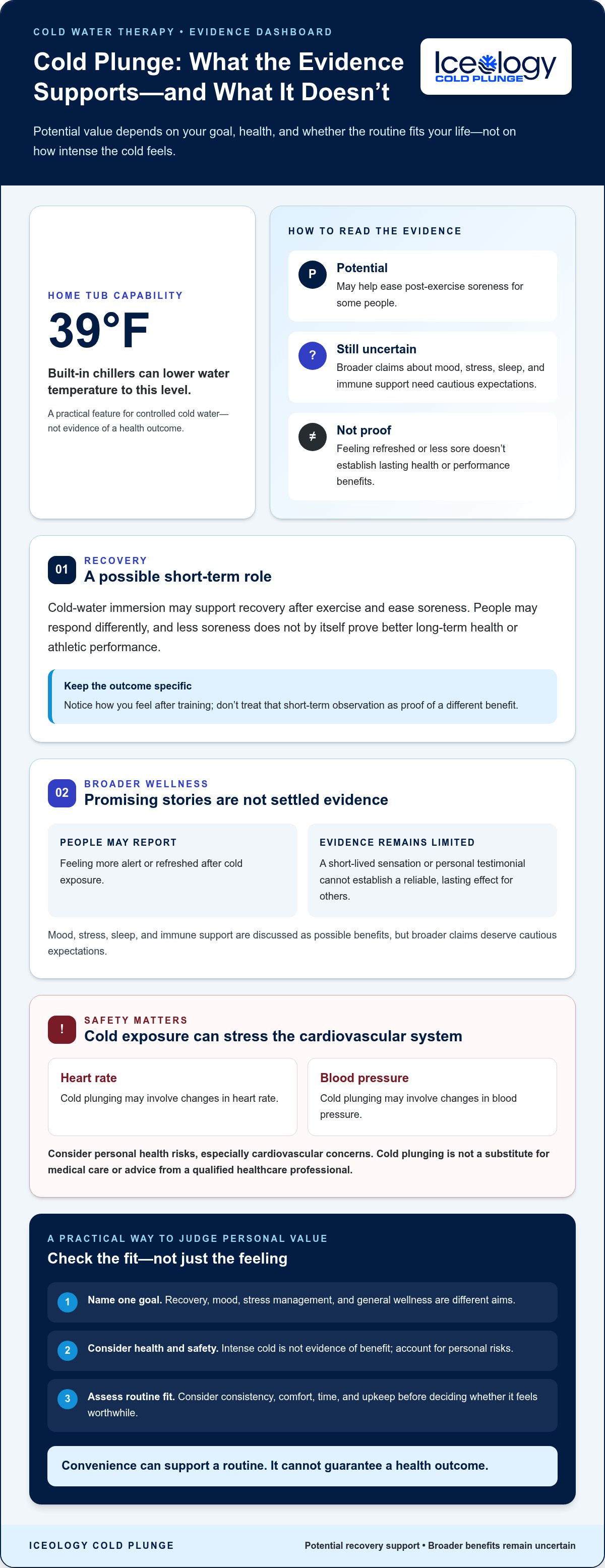
How to Decide Whether a Cold Plunge Fits Your Health Goals
Start with your reason for considering cold water, then assess whether the practice is safe and sustainable for you. Use this framework to weigh potential value against the commitment before choosing a home cold tub.
- Name your goal. What outcome are you hoping to support, and why does it matter? Interest in post-exercise recovery is different from expecting lasting changes in mood, stress, or mental performance. A guide to cold plunging for recovery and resilience can help you explore the recovery angle, but keep each hoped-for outcome distinct.
- Consider health suitability. If you have a cardiovascular condition, another health concern, or uncertainty about how cold exposure may affect you, discuss your situation with a qualified clinician. Don’t treat general wellness information as personal medical clearance.
- Picture the routine. Think beyond the first plunge. Would you be comfortable returning to it regularly, and can you manage the space and water care? A routine that feels too demanding or unpleasant may be difficult to sustain.
- Compare alternatives for the same goal. For recovery, consider how cold plunging fits alongside your current training and recovery habits. For broader wellness, reflect on established habits such as regular physical activity, adequate sleep, and stress-management practices. These aren’t interchangeable or automatically better for every person. Compare options that directly match your goal.
- Set a way to reassess. Decide what meaningful progress would look like and when you’ll review whether the practice is worth continuing. Notice both perceived value and practical burden. If the expected benefit doesn’t materialize or the routine doesn’t suit you, reconsider rather than assuming you need to push harder.
So, is a cold plunge a good investment for my health? It may make sense when you have a specific goal, appropriate health guidance, realistic expectations, and a routine you can maintain. Equipment can make controlled cold water more accessible, but it can’t guarantee motivation, consistency, or health outcomes. Iceology Cold Plunge tubs are a home-use option for people who have weighed those factors and want convenient access to cold water.
Make a Measured Next Step with a Home Cold Plunge
A home cold plunge may suit you if you have a clear goal, have considered whether cold exposure is appropriate for your health, and can realistically maintain the routine. Equipment can make controlled cold water more accessible, but convenience doesn’t prove a health benefit or guarantee a result. It changes how easily a cold plunge can fit into daily life.
That distinction is central to deciding whether a cold plunge is a good investment for my health. Think of the tub as equipment that supports a practice, not a treatment in itself. If you’re unsure whether cold exposure is suitable for you, get individualized guidance from a qualified clinician before starting.
What built-in chilling changes about home access
A built-in chiller cools water to a controlled temperature without requiring you to add ice each time. Iceology Cold Plunge tubs are made in the USA and have built-in chillers capable of lowering water temperature to 39°F. That’s a product capability, not a recommended temperature for every person or a promise of a particular health outcome.
If you’re comparing home setups, a guide to cold plunge tubs with built-in chillers can help explain how this equipment feature affects access and routine. Pair that practical information with your needs, available space, and approach to water care.
Choose a routine with realistic expectations
Start with a prudent approach rather than chasing the coldest or most intense experience. Follow appropriate health guidance, pay attention to how you feel, and stop if the experience concerns you. You might record your goal, how comfortable the routine feels, and what you notice afterward. Those notes can help you reflect on personal fit, but they aren’t clinical evidence that cold plunging caused a health change.
Over time, reassess. Is the routine manageable? Does it seem to support the specific goal you chose, without displacing other habits or care that matter to your health? Consistent access may reduce friction, while insulation and a built-in chiller can support a repeatable home setup. Neither can create motivation, ensure regular use, or guarantee results.
If a home cold plunge aligns with your goals and circumstances, explore Iceology Cold Plunge as an equipment option. Take the next step at your own pace, with expectations grounded in both the evidence and your experience.
Make Your Next Step a Thoughtful One
A cold plunge may be worth considering when it supports a clear personal goal, fits your health needs, and feels realistic to use over time. Evidence for some recovery effects is more promising than broader wellness claims, so keep expectations specific and grounded. Asking “is a cold plunge a good investment for my health” means weighing potential value alongside safety, consistency, and the practical demands of a home routine.
If those considerations point toward a home tub, equipment can make controlled cold water more convenient, but it can’t guarantee health benefits or results. Iceology Cold Plunge designs and manufactures tubs in the USA, with built-in chillers capable of lowering water temperature to 39°F. Efficient insulation and expert craftsmanship support a considered home setup.
Choose at your own pace, guided by your goals and appropriate health advice. A measured routine is a stronger place to begin than chasing the most intense plunge.
Frequently Asked Questions
Is a cold plunge actually good for your health?
Cold plunging may support some goals, but it isn’t a proven treatment or a guaranteed route to better health. Evidence is more suggestive for short-term exercise recovery and soreness than for broader claims about mood, immunity, or general wellness. Ask yourself: is a cold plunge a good investment for my health? The answer depends on your goals, personal suitability, expectations, and whether the routine feels worthwhile over time.
Can cold plunging improve workout recovery?
It may help some people manage post-exercise soreness, according to the cautious discussion from Mayo Clinic Health System. But less soreness doesn’t necessarily mean improved long-term health or athletic performance, and individual responses can differ. Consider how cold immersion fits your training goals and broader recovery habits. If your priority is building muscle, discuss the timing of cold plunges around strength training with a qualified professional.
Is a cold plunge safe for everyone?
No. Cold exposure can place stress on the cardiovascular system, and people with cardiovascular disease or heart rhythm abnormalities should take particular care. If you have a health condition or aren’t sure whether cold immersion is appropriate for you, get individualized guidance from a qualified clinician before starting. General advice can’t provide personal medical clearance, and a cold plunge shouldn’t replace medical care.
Can a cold plunge replace other recovery or wellness habits?
No. A cold plunge is best considered a possible addition to a routine, not a substitute for established habits that support your goals. For example, exercise recovery still involves managing training and rest, while general wellness may include regular activity, adequate sleep, and stress management. The right mix depends on your needs. Cold immersion shouldn’t displace medical care or habits that are already helping you.
How often should you cold plunge for health benefits?
There isn’t one frequency established as right for everyone or every health goal. Research findings can’t automatically be turned into a personal schedule, and more frequent or intense exposure doesn’t guarantee greater benefit. Consider your comfort, health circumstances, and reason for plunging. If you have a relevant condition, ask a qualified clinician for individualized advice before establishing a routine.
Is a cold plunge tub worth buying for home use?
It may be worthwhile if cold immersion suits your goals and health needs, and you expect to use and maintain the tub consistently. A home setup can make controlled cold water more accessible, but convenience doesn’t prove a health benefit or ensure results. Iceology Cold Plunge tubs are made in the USA and have built-in chillers capable of lowering water temperature to 39°F.
What should you consider before investing in a cold plunge?
Start with one clear goal, then consider health guidance, comfort, household space, water care, and how the routine would fit into your life. Weigh potential benefits against the time and effort of regular use, and decide what meaningful progress would look like to you. Iceology Cold Plunge emphasizes efficient insulation and expert craftsmanship, practical features to consider when evaluating a home tub, not promises of medical results.