
Natural Water Treatment for Cold Plunge: A Practical Guide
Clear-looking water isn’t necessarily ready for your next immersion. Natural water treatment for cold plunge can feel confusing when filters, sanitizers, and conditioners are discussed as if they do the same job. Concerns about chemicals, odors, and upkeep can make it tempting to look for one simple fix.
The key is to treat water care as a system. Filtration captures particles, circulation moves water through the equipment, and sanitation helps address microorganisms. A lower-chemical approach still needs a consistent routine, because no single component does every job. Knowing what each part does makes it easier to choose equipment and build practical habits.
This guide explains how water-care components differ, compares approaches such as ozone and UV-C, and outlines steps for keeping plunge water clear and cared for. It also explains why treatment equipment is separate from chilling performance. An Iceology Cold Plunge tub provides a dedicated setup for immersion, while your water-care routine should suit the equipment and its instructions.
Key Takeaways
- Natural water treatment for cold plunge describes a lower-chemical approach, not a guarantee of chemical-free or risk-free water.
- Compare filtration, ozone, UV-C, and hydrogen peroxide by what each does, what attention it needs, and where its limitations matter.
- Build a repeatable care routine around observation, debris removal, filter upkeep, appropriate testing, and your system’s instructions.
- Choose a cold tub with accessible components and a realistic care plan; chilling performance alone doesn’t establish sanitation.
What Natural Water Treatment for Cold Plunge Actually Means
“Natural” can sound like a simple promise: clean water without chemicals or complications. In cold-plunge care, however, the term is used inconsistently. It may describe an approach that reduces reliance on conventional sanitizers, or a system that uses methods such as ozone or ultraviolet light. The label alone doesn’t explain what a system treats or whether its water is suitable for use.
Natural cold-plunge water treatment is a lower-chemical approach to managing particles and microorganisms through suitable equipment and regular care, not a guarantee of chemical-free or risk-free water. Think of it as a layered process: remove physical debris, use an appropriate sanitation plan, and maintain the equipment. General water purification methods help explain how treatment approaches differ, but the instructions for your plunge system determine how its components should be operated.
Does natural treatment mean chemical-free water?
Not necessarily. “Natural” isn’t a precise technical description, so evaluate the method rather than relying on the label. Filtration captures particles; sanitation addresses microorganisms; water balancing manages properties that affect treatment and the bathing environment. These functions are related, but they aren’t interchangeable. A filter alone doesn’t establish sanitation, and a sanitizer doesn’t remove every visible contaminant.
Methods also have different operating conditions and limitations. No single approach should be treated as universally effective or inherently risk-free. For example, equipment that treats water as it passes through may not provide ongoing protection in the tub after new contaminants enter. The appropriate combination depends on the equipment, how the plunge is used, and its care instructions.
Why cold-plunge water still needs routine care
Each immersion can introduce sweat, skin oils, lotions, hair, and other organic material. Even when the water looks clear, unseen microorganisms or dissolved substances may still be present. Clarity is a useful observation, not a sanitation test; appearance alone can’t establish water quality.
Cold water doesn’t replace a sanitation plan. Temperature control and water treatment serve different purposes, so a chiller’s ability to cool water doesn’t confirm that it’s hygienically maintained. Build care into the routine: rinse before entering, remove debris when you notice it, and follow the instructions for your filtration and sanitation equipment.
For a dedicated setup, plan water care alongside the tub, circulation, and chilling equipment. Iceology Cold Plunge tubs have built-in chillers capable of cooling water to 39°F, but chilling performance is distinct from sanitation. Understanding each component helps you choose a practical routine and maintain it consistently.
How Cold-Plunge Filtration and Natural Sanitation Methods Work
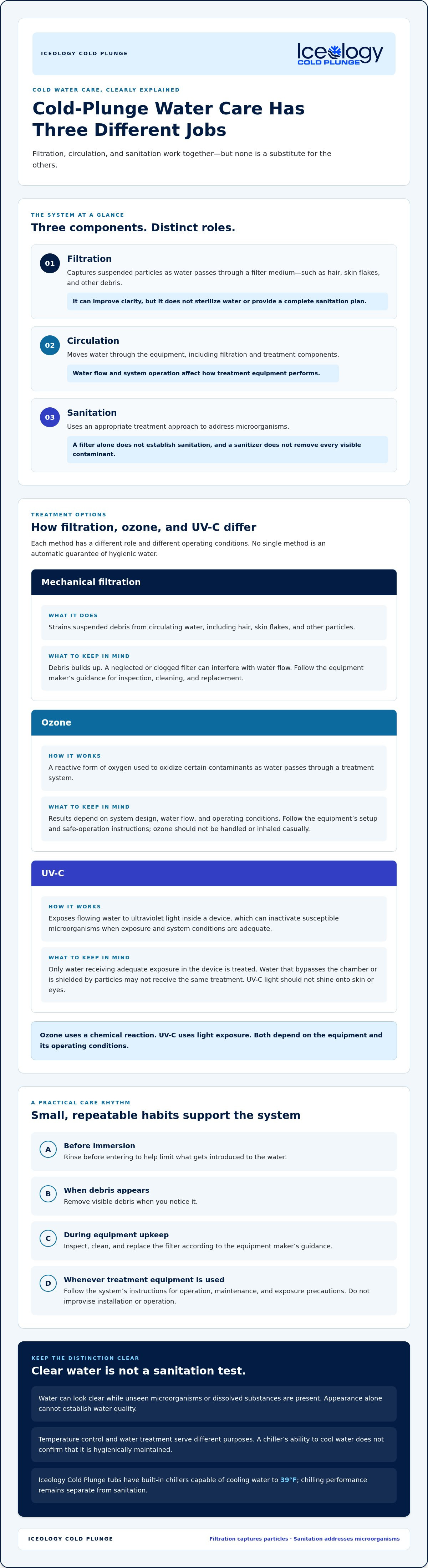
A cold-plunge water system relies on distinct components, not one all-purpose device. A filter strains particles from circulating water, while sanitation methods target microorganisms. Ozone and UV-C use different processes, and each depends on how the equipment is designed and operated.
Filtration removes particles from cold-plunge water; disinfection targets microorganisms, so one function shouldn’t be mistaken for the other. This distinction helps you assess natural water treatment for cold plunge and set realistic expectations for each component.
What a filter can and cannot do
Mechanical filters capture suspended debris as water flows through a filter medium. That may include hair, skin flakes, and other particles that would otherwise remain in circulation. A filter can improve clarity, but it doesn’t sterilize water or provide a complete sanitation plan.
Performance also depends on upkeep. Debris builds up in the filter, and a neglected or clogged component can interfere with water flow. Follow the equipment maker’s guidance for inspection, cleaning, and replacement rather than relying on a universal schedule. Clear water can still require sanitation.
How ozone and UV treatment differ
Ozone is a reactive form of oxygen used to oxidize certain contaminants as water passes through a treatment system. UV-C treatment exposes flowing water to ultraviolet light inside a device, which can inactivate susceptible microorganisms when exposure and system conditions are adequate. Neither method is an automatic, stand-alone guarantee of hygienic water.
They work differently: ozone relies on a chemical reaction, while UV-C relies on light exposure. In both cases, results depend on system design, water flow, and operating conditions. UV light treats only water that receives adequate exposure within the device; water that bypasses the treatment chamber or is shielded by particles may not receive the same treatment. Ozone systems also require attention to their specific setup and safe operation.
Use each system according to its manufacturer’s instructions, including guidance on maintenance and exposure precautions. Ozone should not be handled or inhaled casually, and UV-C light should not shine onto skin or eyes. An enclosed, properly operated system helps manage exposure, but precautions depend on the equipment. Don’t improvise installation or operation.
For a complete care plan, consider how circulation, filtration, and sanitation work together, then follow the instructions for your equipment. A dedicated cold tub can make regular immersion more practical. Explore Iceology Cold Plunge tubs as you compare setups for your routine, keeping treatment equipment and chilling performance as separate considerations.
Natural Cold-Plunge Water Treatment Options Compared
“Natural” is best understood as a preference, not a technical guarantee. Some owners want to reduce reliance on conventional sanitizers; others prioritize equipment-based treatment. Compare methods by their function, required upkeep, and compatibility with your tub and circulation setup. No single option handles every part of water care.
Filtration, ozone, and UV-C side by side
The options below do different jobs. A filter captures physical particles, while ozone and UV-C treat water moving through equipment. A complete plan may use more than one approach, guided by the system’s instructions.
| Method | Primary function | Ongoing attention | Limitations and compatibility |
|---|---|---|---|
| Mechanical filtration | Captures suspended debris from circulating water. | Inspect and maintain the filter according to its instructions. | Doesn’t replace sanitation. The filter must suit the system’s flow and configuration. |
| Ozone | Oxidizes certain contaminants as water passes through treatment equipment. | Follow the system’s operating, maintenance, and exposure guidance. | Performance depends on equipment design and operation; don’t assume it leaves ongoing protection in the tub. |
| UV-C | Uses ultraviolet light to treat water flowing through a device. | Maintain and operate the unit as its manufacturer directs. | Only water receiving suitable exposure in the device is treated; system design and flow matter. |
| Hydrogen peroxide | Used in some water-care approaches as an oxidizing treatment. | Follow product-specific instructions and any required water testing. | Suitability depends on the treatment product, water-care plan, and compatibility with tub and equipment materials. |
These methods aren’t interchangeable. Ozone and UV-C rely on different processes and system conditions, while a filter removes particles. Combining equipment can address different needs, but it doesn’t automatically establish that water is appropriately treated. Check that components are compatible with the tub, plumbing, pump, and one another, and use each according to its manufacturer’s guidance.
When a peroxide-based approach is considered
Hydrogen peroxide is discussed as an alternative in some residential cold-plunge water-care approaches. Consider it only as part of a defined product and care plan, not as a generic household shortcut. Appropriate use depends on product instructions and the setup; there’s no universal concentration or schedule that fits every plunge. Avoid mixing treatments or improvising a dose, since compatibility and safe operation depend on the specific products and equipment.
“Natural” doesn’t mean harmless, maintenance-free, or chemical-free. Vinegar shouldn’t be treated as a sanitizer for plunge water, and clear appearance alone can’t verify sanitation. For natural water treatment for cold plunge, choose methods based on their purpose and limitations, then follow a consistent plan suited to your equipment.
How to Build a Practical Cold-Plunge Water-Care Routine
Good water care is a repeatable process, not a one-time setup task. The exact steps depend on your tub and treatment equipment, so use the manufacturers’ instructions as your baseline. This routine for natural water treatment for cold plunge separates what you can observe from what you need to measure, helping you respond consistently without assuming clear water is sanitary.
A repeatable sequence for everyday water care
Work through these steps in order, adapting them to your equipment guidance:
- Inspect the water. Look for floating debris, unusual cloudiness, changes in color, or visible buildup around the tub and waterline. This visual check can flag changes, but it doesn’t measure sanitizer levels or confirm water quality.
- Remove visible debris. Use a suitable skimmer or other equipment intended for your setup. Rinsing before immersion can also help limit the sweat, oils, and personal-care products entering the water.
- Check filtration and circulation. Look for signs that water is moving through the system as intended. Inspect, clean, or service the filter according to its maker’s instructions; don’t guess at a universal replacement schedule.
- Test when the care plan calls for it. Observation and testing are different. Use the appropriate test method for your sanitizer or water-care system, and follow its instructions for interpreting results and taking action. There’s no single testing frequency that applies to every setup.
- Record maintenance and results. Note filter care, testing, treatment adjustments, and water changes. A simple log can reveal recurring patterns, such as clarity changes after heavier use or issues that return after maintenance.
Consistency matters more than relying on memory. A brief record makes it easier to spot what changed and whether a routine adjustment helped.
When to refresh water or reassess treatment
Persistent odor, visible buildup, recurring cloudiness, or skin and eye irritation are reasons to pause and reassess the water-care plan. These signs aren’t a diagnosis and don’t identify a single cause. Check the system’s instructions, review recent test results where applicable, and inspect the filter and circulation equipment. If the problem persists, don’t treat appearance or smell as proof that the water is safe to use.
Water replacement needs vary with use, system design, and maintenance, so don’t rely on a fixed interval as a rule for every plunge. Follow product guidance and assess the condition of the water and equipment. If recurring issues remain after routine care, refreshing the water and reviewing the treatment approach may be appropriate.
A dedicated cold tub can make a regular immersion routine easier to organize, but water care remains a separate part of the setup. Consider how filtration, sanitation, maintenance access, and chilling fit together before choosing equipment. For a cold tub designed for immersion, explore Iceology Cold Plunge tubs.
Choosing a Cold Tub That Supports Consistent Water Care
A dependable plunge setup should make both temperature management and routine maintenance practical. Before choosing a tub, think beyond how cold the water can get. Consider how you’ll circulate and treat the water, inspect the equipment, clean or service filters, and keep up with the care plan. Natural water treatment for cold plunge works best when the setup supports the habits it requires.
What to consider in a cold-plunge setup
Insulation and a built-in chiller support temperature control. They help create a consistent cold-water experience, but neither feature establishes sanitation. Plan the water-care system separately, including how water circulates and which filtration or sanitation approach fits your use and the equipment instructions.
Access matters, too. Filters and treatment components need inspection and maintenance, so consider whether you can reach them comfortably and follow the manufacturer’s guidance. A setup that makes basic upkeep awkward can make consistency harder. Before settling on equipment, map out the routine: where you’ll check the system, how you’ll handle cleaning, and how testing or water changes fit into your schedule.
Keep the plan realistic. A more involved treatment system may call for specific operating steps, while any setup still needs attentive care. Match the equipment to the routine you’re prepared to follow, rather than assuming a particular technology removes the need for regular maintenance.
A considered next step with Iceology Cold Plunge
Iceology Cold Plunge designs and manufactures hard-sided cold-plunge tubs in the United States. Its tubs feature efficient insulation and built-in chillers, providing a dedicated foundation for regular cold-water immersion. Those features support temperature management; filtration and sanitation remain separate parts of a water-care plan. Chilling equipment alone doesn’t treat the water.
As you compare setups, consider the full routine alongside the tub itself: temperature control, maintenance access, and the treatment equipment you plan to use. A thoughtful choice can make it easier to maintain a dependable immersion habit while keeping up with the care the water requires. Explore Iceology Cold Plunge tubs.
Make Water Care Part of Your Next Step
A cold-plunge routine is easier to sustain when the setup and its care fit naturally into your day. As you plan your next step, consider not only the immersion itself, but how you’ll approach natural water treatment for cold plunge over time. Choose a routine you can maintain, using equipment guidance and habits that suit your space and schedule.
That steady approach can turn water care from an occasional worry into a familiar part of your cold-water therapy routine. Keep refining the setup around what helps you stay consistent, and make maintenance part of the plan from the start.
Frequently Asked Questions
Can natural water treatment keep cold-plunge water sanitary?
It can be part of a water-care plan, but the word “natural” alone can’t tell you whether the water is properly treated. Choose a method based on its purpose and the instructions for your specific system. An equipment-based approach may need a separate way to monitor water conditions. Identify the system’s components and operating requirements before relying on it.
Is filtration enough to treat cold-plunge water?
No. A filter can capture debris, but it doesn’t establish that microorganisms are controlled. If the water looks clear yet your system has no sanitation plan, don’t treat appearance as proof of hygienic conditions. Review the tub and equipment instructions to determine which additional care steps apply. Inspect the filter as directed, since accumulated debris or restricted flow can affect system operation.
How does ozone sanitation work in a cold plunge?
Ozone systems introduce ozone into water-treatment equipment, where it reacts with certain contaminants as water circulates. The result depends on the generator, plumbing, water flow, and operating conditions, so an ozone label alone doesn’t establish how a particular setup performs. Follow the system maker’s instructions for operation and exposure precautions. Don’t assume an ozone unit removes the need for monitoring or other care.
Can UV-C treat cold-plunge water without chemicals?
UV-C can treat water as it passes through a device, without adding a chemical sanitizer through that process. But that doesn’t mean the entire plunge remains protected between passes or after new material enters. The unit’s design, flow, and maintenance affect operation. Use the manufacturer’s guidance to understand its role in your setup, and don’t equate “no added chemical” with a complete water-care plan.
What should I do if my cold-plunge water smells bad?
Pause use while you investigate a persistent or unusual odor. Check for debris, buildup, filter issues, and changes in circulation, then review relevant water-test results and your treatment system’s instructions. An odor isn’t a reliable diagnosis of the cause, and adding more treatment without checking the system can create new problems. If the smell remains, reassess the plan and consider replacing the water according to equipment guidance.
How often should I test cold-plunge water?
There isn’t one testing frequency that fits every plunge. The right interval depends on the sanitation method, product instructions, water use, and whether your system calls for measurable water parameters. Set a routine from those directions, and test sooner if the water changes or the system signals an issue. Keep a simple log of results and maintenance; it can help reveal recurring patterns that visual checks won’t show.
Can I use vinegar to clean or sanitize a cold plunge?
Don’t use vinegar as a sanitizer for plunge water. For cleaning the tub or components, use only products and procedures compatible with their materials and approved by the manufacturer. A household cleaner that seems mild can still affect surfaces, seals, or treatment equipment. When cleaning an empty tub, follow product instructions for dilution, rinsing, and restarting the system rather than improvising a mixture.