
The Best Cold Plunge That Doesn't Need Ice: A 2026 Comparison Guide
How much of your morning is spent hauling 40-pound bags of ice just to get five minutes of focus? Investing in a cold plunge that doesn't need ice isn't just about convenience; it's about reclaiming your time and mastering your environment. Most of us started with a basic tub and a freezer full of plastic bags. It's a rite of passage that quickly becomes a logistical chore. Between the inconsistent water temperatures and the constant physical hassle, the friction of the routine can often derail your discipline.
You deserve a recovery system that's ready exactly when you are. We'll show you why chiller-based systems outperform traditional baths in both hygiene and performance. This 2026 comparison guide breaks down the essential features of ice-free systems, from thermal management to advanced filtration. By the end, you'll know exactly how to choose a professional-grade tool that turns your recovery from a daily struggle into a seamless, high-performance ritual.
Key Takeaways
- Understand why eliminating the "ice chore" removes the mental friction that often derails a consistent recovery habit.
- Discover how a cold plunge that doesn't need ice uses integrated thermal management to provide the exact temperature precision required for optimal results.
- Learn to evaluate essential build quality factors, including durable hard-sided materials and quiet chiller operation, to ensure your investment lasts for years.
- Explore the advantages of professional-grade systems that maintain consistent sub-40-degree temperatures for maximum physiological impact.
The End of the Ice Bag Era: Why Ice-Free Cold Plunges are the Future
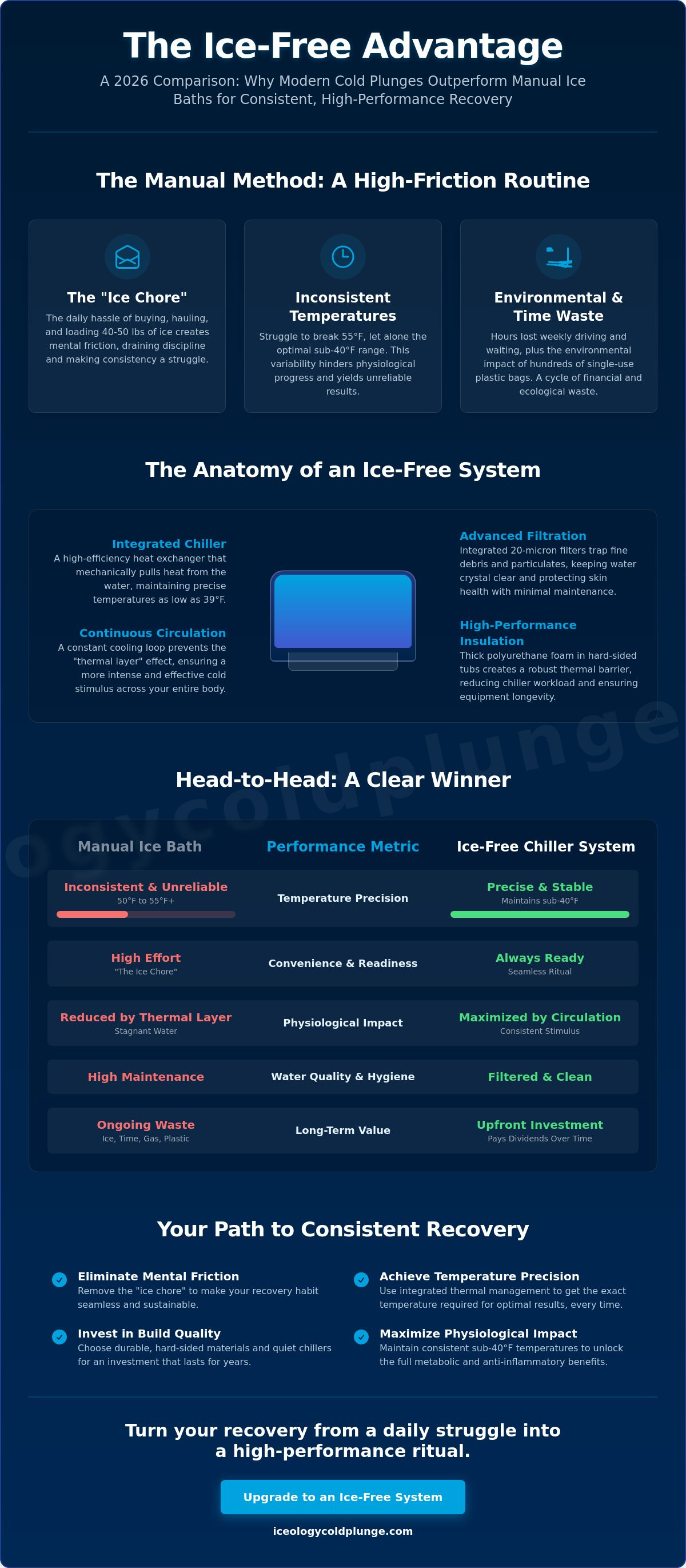
Discipline is a finite resource. When you rely on a manual setup, every session begins with a series of logistical hurdles that drain your mental energy before you even touch the water. You have to check the freezer, drive to the store, and haul heavy bags of ice just to reach a baseline temperature. This "ice chore" creates a significant psychological barrier. It transforms a recovery practice into a labor-intensive project. Over time, this friction is what causes most people to abandon their routine. Switching to a cold plunge that doesn't need ice removes these obstacles entirely. It replaces a high-friction event with a seamless, always-ready resource.
Beyond the mental effort, manual baths are notoriously inconsistent. One day you might achieve 50°F; the next, you struggle to break 55°F because the ambient air is warmer or the ice melted too quickly. This variability hinders your physiological progress. Professional cold-water immersion requires precision to trigger specific metabolic and anti-inflammatory responses. Without a chiller, you are essentially guessing at your recovery. A dedicated system provides the thermal stability needed to turn a random soak into a calculated health protocol.
The Hidden Costs of Manual Ice Baths
For a dedicated individual plunging four times per week, the logistics of manual cooling are staggering. You might need 40 to 50 pounds of ice per session just to reach 50°F. This creates a cycle of financial waste and environmental impact from hundreds of single-use plastic bags. There is also the invisible cost of time. Between driving to the store and waiting for the water to cool, you could lose hours every week. Most manual tubs simply cannot sustain the therapeutic 39°F threshold that professional-grade chillers maintain with ease. The investment in a permanent system pays dividends in recovered time and reduced waste.
Consistency: The Key to Cold Water Immersion Results
True transformation happens through repetition. When you have a permanent, ice-free setup, you eliminate the variables that prevent daily practice. A cold plunge that doesn't need ice is ready at 5:00 AM without a second thought. This "always-on" capability allows you to focus entirely on your mental and physical state rather than the equipment. By maintaining a steady, precise temperature, you ensure that every session provides the exact stimulus your body needs for peak performance. This stability turns a sporadic habit into a pillar of your lifestyle.
The Anatomy of an Ice-Free System: How It Works
An ice-free cold plunge is a self-cooling, filtered recovery system designed to maintain precise temperatures without manual intervention. At the heart of this setup is the integrated chiller, which functions as a high-efficiency heat exchanger. Instead of cooling the water through dilution with ice, the chiller pulls heat out of the water and exhausts it into the surrounding air. This mechanical process allows for a cold plunge that doesn't need ice to reach temperatures as low as 39°F and stay there indefinitely. It's a closed-loop system that prioritizes thermal stability and user convenience.
Circulation is the second pillar of this engineered environment. In a traditional manual bath, your body heat creates a "thermal layer" of warmer water directly against your skin, which can reduce the effectiveness of the cold stimulus. Modern systems use a continuous cooling loop to circulate water through the chiller and back into the tub. This constant movement prevents thermal layering and ensures that every inch of the water remains at your target temperature. By keeping the water in motion, the system provides a more intense and effective recovery experience than stagnant ice water.
Chiller Technology vs. Insulation Efficiency
Many reviews focus solely on chiller horsepower, but a powerful motor is wasted on a tub with poor insulation. High-performance models utilize thick polyurethane foam to create a robust thermal barrier against ambient heat. This is where hard-sided construction truly outperforms inflatable alternatives. Inflatable tubs often suffer from "thermal leaks," forcing the chiller to work harder and run longer to maintain cold temperatures. A well-insulated, hard-sided tub retains its chill with minimal energy, reducing the workload on the compressor and ensuring the longevity of your equipment. When you invest in a premium cold plunge tub, you're buying an engineered ecosystem where the tub's structure is just as important as the chiller's power.
Water Quality and Maintenance
Maintaining a cold plunge that doesn't need ice is significantly easier than managing a standard tub. Integrated 20-micron filters trap fine debris and particulates, which protects your skin health and keeps the water crystal clear. To supplement mechanical filtration, many systems include ozone sanitation. Ozone is a powerful natural oxidizer that breaks down organic contaminants without the need for the harsh chemical smells associated with chlorine or bromine. This "set it and forget it" approach means your water stays fresh for months rather than days. It transforms maintenance from a daily chore into a simple, monthly check-up.
Built-In Chillers vs. Manual Ice Baths: A Comparative Analysis
Comparing a manual ice bath to a dedicated recovery system is like comparing a handheld fan to central air conditioning. One is a temporary fix; the other is a controlled environment. When you dump 50 pounds of ice into a tub, you're initiating a race against the clock. The water temperature drops rapidly but begins to climb the moment you step in. In contrast, a cold plunge that doesn't need ice uses a mechanical chiller to maintain a steady state. It provides the thermal precision required for serious athletes who need to know exactly what stimulus they're providing to their central nervous system.
Operational effort is where the two methods diverge most sharply. A manual setup requires a 30-minute preparation window involving store runs and heavy lifting. A chiller-based system requires roughly 30 seconds of interaction: just lift the lid and step in. This difference in friction determines whether you'll actually use the tool on a cold Tuesday morning. Long-term durability also factors into the equation. While budget plastic liners or inflatable tubs may last a season, hard-sided, USA-made equipment is built for a decade of performance. These premium structures withstand environmental stressors and repeated thermal cycling far better than their entry-level counterparts.
The ROI of Ice-Free Technology
While the initial investment in a cold plunge that doesn't need ice is higher, the break-even point arrives surprisingly quickly for frequent users. Consider the cumulative cost of several bags of ice per session, multiple times a week. Over a year, those small transactions compound into a significant recurring expense. High-quality insulation ensures that electricity costs remain minimal, often amounting to just pennies per day to keep the water at your preferred temperature. Additionally, premium equipment retains substantial resale value. Unlike a used plastic tub, a well-maintained, hard-sided system is a tangible asset that holds its worth in the secondary wellness market.
Performance Metrics: Reaching the 39-Degree Mark
Reaching the 39°F threshold is the gold standard for advanced cold therapy. At this temperature, the body undergoes a profound physiological shift that 50°F water simply cannot replicate. Achieving sub-40 temperatures with ice alone is nearly impossible in most climates; the volume of ice required would leave little room for the person in the tub. Precise cooling allows you to follow specific recovery protocols with confidence. You can dial in the exact degree that works for your inflammation levels and metabolic goals, ensuring your recovery is based on data rather than guesswork.
Selection Criteria: What to Look for in a Permanent Setup
Choosing a permanent recovery tool is about more than just cooling water. It's about engineering a space that supports your discipline. When you evaluate a cold plunge that doesn't need ice, the first consideration should be the structural integrity of the tub itself. Hard-sided construction is the gold standard for longevity. While inflatable options offer portability, they lack the structural rigidity and thermal mass required for a decade of daily use. A rigid tub provides a stable, premium feel that encourages you to commit to the practice. It feels like a piece of professional equipment rather than a temporary fitness trend.
Ergonomics and size are equally critical, especially for tall athletes. Effective cold therapy requires full immersion, ensuring the water covers the shoulders and reaches the base of the neck to stimulate the vagus nerve. Look for designs that prioritize interior volume without a massive exterior footprint. Additionally, consider the origin of the components. American-made parts ensure that if a sensor or pump needs attention years down the road, you can source replacements easily. Serviceability is the difference between a lifetime tool and a disposable appliance. You want a partner in your wellness journey, not a logistical headache.
Insulation: The Unsung Hero of Cold Plunging
High-density polyurethane foam is superior to simple air-gap insulation. This material creates a dense thermal barrier that prevents the unit from "sweating" in humid environments. If you plan an indoor installation, condensation can damage flooring and promote mold. Proper insulation keeps the cold inside the tub, which significantly reduces the run-time of your chiller. By maintaining the target temperature with less effort, you extend the lifespan of the compressor and keep your energy consumption low. It's an invisible feature that pays dividends in equipment longevity.
Design and Aesthetics for the Home
A professional recovery station should enhance your environment rather than clutter it. Premium finishes and "all-in-one" designs hide the complexity of hoses, pumps, and wires within a sleek cabinet. This creates a clean aesthetic that fits naturally into a home gym or a high-end patio. When your equipment looks like a masterfully crafted piece of furniture, it fosters a sense of pride and ownership. Investing in a cold plunge that doesn't need ice means choosing a system that integrates seamlessly into your daily life. You can explore professional-grade cold plunge tubs that balance this industrial power with refined home design.
The Iceology Advantage: Premium USA-Made Recovery
Choosing a recovery tool is a significant commitment to your long-term health. While many options exist, the distinction lies in the engineering and the origin of the craftsmanship. Every Iceology unit is a testament to USA-made quality, where meticulous attention to detail ensures that your equipment performs at its peak every single day. Opting for a cold plunge that doesn't need ice is the first step toward a consistent routine, but choosing a system built with domestic quality control ensures that your investment remains a reliable partner for years to come. We believe that professional-grade results require professional-grade tools.
Performance is measured by the ability to reach and hold the most challenging temperatures. Iceology systems are engineered for sub-40 degree performance, capable of maintaining a steady 39°F even in demanding environments. This precision is made possible by our high-density polyurethane foam insulation. This feature provides a superior thermal barrier, which allows the chiller to operate with maximum energy efficiency. By keeping the cold in and the ambient heat out, the system reduces the workload on the compressor, ensuring a quieter experience and a longer equipment lifespan. It's a feature-first design that translates directly into lower operating costs and higher performance.
Engineered for Performance and Longevity
Durability is non-negotiable for a permanent recovery station. Our hard-sided tubs are designed to withstand diverse climates, from humid indoor gyms to exposed outdoor patios. Unlike mass-produced imports, Iceology products benefit from domestic manufacturing, which means expert support and replacement parts are always within reach. This "quality-first" mindset caters to those who value reliability as much as the recovery itself. When you choose a system built with industrial-strength components, you're eliminating the mechanical variables that could interrupt your disciplined practice. You focus on the plunge; we've mastered the machinery.
Taking the Next Step in Your Recovery Journey
The transition from occasional ice baths to a professional-grade station is a transformative moment in any wellness routine. Your journey from a beginner to a peak performer is supported by a setup process that is as seamless as the plunge itself. We've simplified the integration of our systems so you can spend less time on assembly and more time on optimization. You can further customize your experience with premium accessories designed to enhance hygiene and comfort. If you are ready to ditch the ice and elevate your recovery to a professional standard, it's time to invest in a permanent solution. Explore Iceology Cold Plunge Tubs today and discover the power of precision-engineered cold therapy.
Elevate Your Recovery Standards
Transitioning to a professional recovery setup is about more than just convenience; it's about removing every barrier between you and your peak performance. By mastering the variables of temperature and sanitation, you transform a sporadic habit into a disciplined pillar of health. Investing in a cold plunge that doesn't need ice is the ultimate commitment to your physical and mental resilience. You no longer have to settle for the inconsistent results of manual cooling or the logistical drain of constant prep work.
Iceology systems are proudly Made in the USA and engineered to provide a precise 39°F environment for maximum physiological impact. Our high-density polyurethane foam ensures that your system operates with peak efficiency, keeping your water at the exact threshold you need with minimal energy draw. It's time to focus on your results rather than your equipment. Take control of your daily routine with a tool built for longevity and precision. Upgrade to an Iceology Cold Plunge: The Ultimate Ice-Free Experience and start your journey toward total-body optimization today.
Common Questions About Ice-Free Recovery
How does a cold plunge stay cold without ice?
A chiller-based system functions as a high-efficiency heat exchanger to maintain low temperatures. It pulls heat out of the water and exhausts it into the surrounding air while continuously circulating the liquid through a cooling loop. This mechanical process creates a closed-loop environment that stays at your target temperature indefinitely without manual intervention.
Is it expensive to run a cold plunge chiller all day?
Operating costs are remarkably low, often amounting to just pennies per day. High-density polyurethane foam creates a robust thermal barrier that prevents heat from entering the tub. This efficiency means the chiller only runs occasionally to maintain the temperature, which is significantly cheaper than the recurring cost of purchasing hundreds of pounds of ice every month.
Can an ice-free cold plunge stay outdoors in the summer?
Yes, professional-grade systems are engineered to handle high ambient temperatures. A cold plunge that doesn't need ice relies on its insulation and chiller power to combat summer heat. Placing the unit in a shaded area or under a cover will further improve its efficiency and reduce the workload on the compressor during peak afternoon hours.
How often do I need to change the water in a chiller-based system?
You typically only need to change the water every three to six months. Integrated 20-micron filters and ozone sanitation systems work together to remove debris and oxidize organic contaminants. This advanced filtration keeps the water crystal clear and safe for much longer than a basic tub, which usually requires draining after just a few uses.
What is the best temperature for a cold plunge that doesn't use ice?
Most experts recommend a temperature range between 39°F and 59°F for effective recovery. While beginners might start near 50°F, advanced users often target the 39°F threshold to maximize the metabolic and anti-inflammatory benefits. Using a cold plunge that doesn't need ice allows you to maintain these precise sub-40-degree levels with total consistency.
Do I need a special electrical outlet for a cold plunge chiller?
Most standard home chillers are designed to run on a dedicated 110V or 120V circuit, which is the standard household outlet in the United States. It's essential to use a GFCI-protected outlet to ensure safety near water. You should always verify the specific amperage requirements of your unit to confirm your home's wiring is sufficient for the load.
How long does it take for a chiller to cool the water initially?
Initial cooling typically takes between 8 and 15 hours depending on your starting water temperature and the chiller's horsepower. For a 112.5-gallon tub, the system works steadily to pull the temperature down to your desired setting. Once the water is cold, the insulation ensures it stays that way with very little additional energy usage.
Is a hard-sided cold plunge better than an inflatable one?
Hard-sided tubs are superior for permanent home setups because they offer better durability and thermal retention. Inflatable models are convenient for travel, but they lack the thick polyurethane foam insulation found in rigid systems. Better insulation means your chiller runs less often, which saves on electricity and extends the overall lifespan of the cooling unit.