
Best Water for Florida Cold Plunge Tubs: 2026 Guide
In the Sunshine State, your cold plunge tub isn't just fighting your mental limits; it's in a constant battle against the most aggressive humidity and hard water in the country. You've likely felt the frustration of stepping out for a morning soak only to find lukewarm water or a hint of slippery biofilm on the liner. It's a common struggle for Florida residents who deal with relentless heat and mineral-heavy tap water that can quickly turn a premium recovery tool into a maintenance headache.
Finding the best water for cold plunge tub Florida environments requires more than just a garden hose and a prayer. This 2026 guide reveals the professional blueprint for keeping your water pristine and consistently 39°F, even when the humidity is soaring. We'll explore how to manage local mineral scaling, why high-efficiency insulation is your best defense against the sun, and the low-effort sanitization routines that guarantee crystal clear results for weeks. You'll learn how to transform your setup into a high-performance ecosystem that supports your wellness goals without the constant upkeep.
Key Takeaways
- Understand how Florida's extreme humidity drives biofilm development and how to proactively manage biological pressure in your tub.
- Compare salt-based sanitization against traditional sources to identify the best water for cold plunge tub Florida residents can use for long-term clarity.
- Implement a streamlined daily maintenance routine that prevents hard water scaling and keeps your recovery environment pristine.
- Learn why integrated chillers and high-density insulation are the only reliable ways to hit 39°F when ambient temperatures soar.
- Explore the durability benefits of hard-sided construction for resisting the corrosive effects of Florida's coastal salt air and UV exposure.
Why Florida's Climate Dictates Your Cold Plunge Water Choice
Florida isn't just hot; it's a biological incubator. Ambient temperatures frequently exceeding 90°F drastically shorten the shelf life of untreated water. Standing water in high humidity invites rapid algae colonization and sticky biofilm. Finding the best water for cold plunge tub Florida owners starts with understanding how these environmental pressures interact with your equipment. Your water choice directly impacts how hard your chiller must work and how often you'll be forced to scrub the interior of your tub. Without a strategic approach, the tropical climate can quickly compromise both your water clarity and your mechanical components.
The Thermal Challenge of the Sunshine State
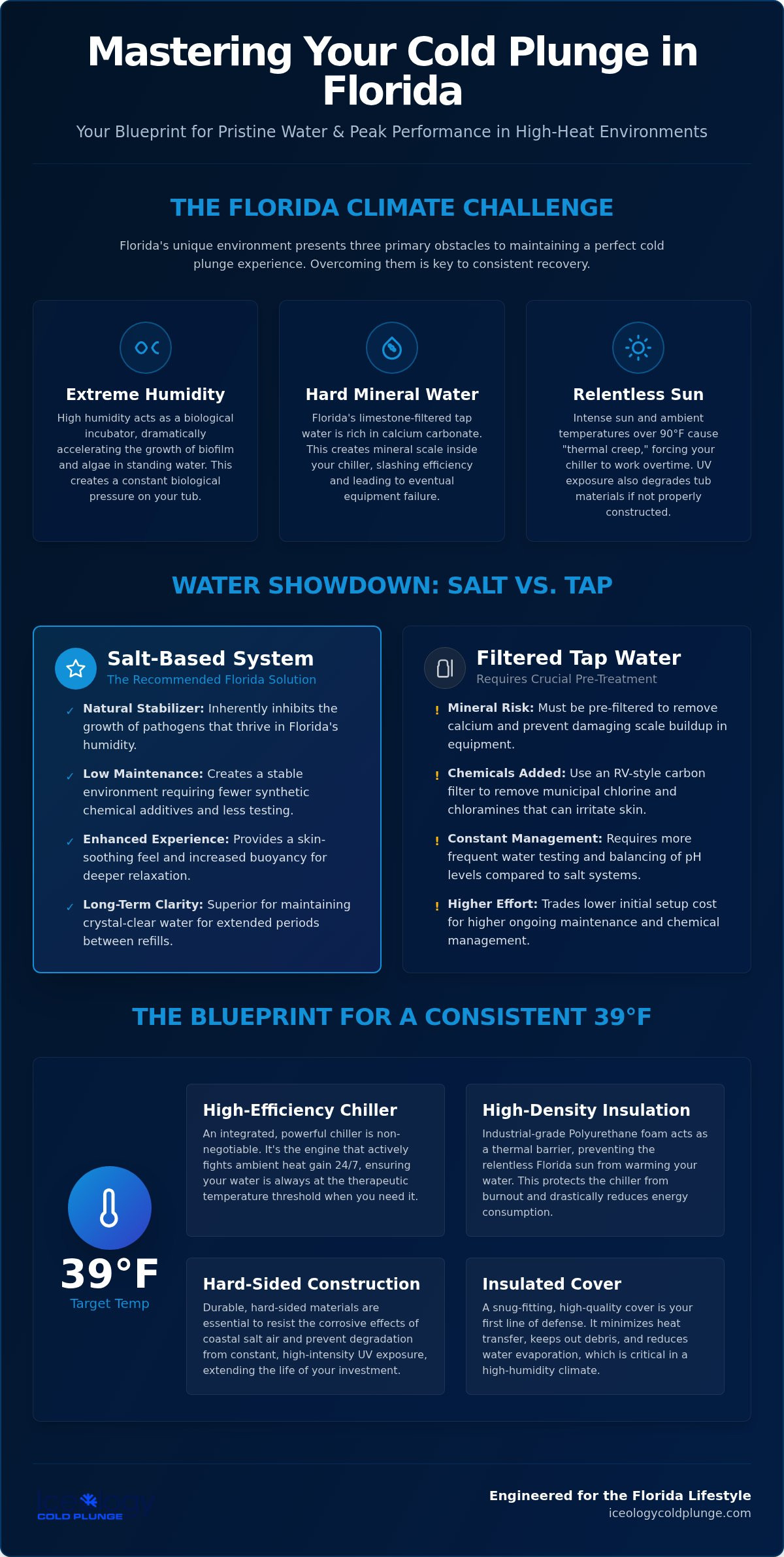
In Miami or Orlando, the sun is relentless. Without industrial-grade insulation, your tub suffers from thermal creep. This occurs when ambient heat penetrates the tub walls, forcing your chiller to work overtime. Passive cooling fails in these conditions because the heat transfer happens too fast for ice alone to keep up. To reach the therapeutic threshold of 39°F to 45°F, you need a system that fights the Florida sun 24/7. Polyurethane foam insulation in an Iceology Cold Plunge tub acts as a thermal barrier. It preserves your cold while protecting the motor from burnout, ensuring your recovery session is ready whenever you are. This level of thermal protection is essential for maintaining a consistent, icy environment that resists the external heat load.
Mineral Content and Your Equipment
Florida tap water is unique. It's filtered through limestone, which leaves it packed with calcium carbonate. While safe to drink, this hard water is a silent killer for cold plunge equipment. As water cycles through your chiller, minerals precipitate and form scale. These deposits act as an insulator on the internal coils. This slashes cooling efficiency and eventually causes pump failure. Raw tap water isn't the best water for cold plunge tub Florida setups because it trades short-term convenience for long-term mechanical breakdown. Pre-filtering your water or using specific conditioners ensures your chiller remains at peak performance for years; it's a small step that prevents costly repairs.
The combination of biological pressure from humidity and mechanical pressure from hard water makes water management a top priority. By addressing these Florida-specific factors, you can maintain a crystal-clear environment that feels as refreshing as it looks. A proactive approach to water quality doesn't just improve the experience; it extends the life of your entire cold water therapy system, allowing you to focus on your recovery rather than your maintenance checklist.
Salt Water vs. Tap Water: Which is Best for Florida Plungers?
Florida plungers face a choice between the easy access of the garden hose and the resilience of a salt-based system. While tap water is the standard starting point, salt water provides a distinct edge in high-stress environments like Naples or Tampa. Finding the best water for cold plunge tub Florida residents can actually keep clear involves weighing initial setup time against daily chemical management. Your decision here determines the texture of the water and how long you can go between full refills. It's a balance of convenience versus long-term stability.
The Case for Salt Water in Florida
While salt water is an excellent choice for your tub, those living in coastal regions may also be interested in other ways to treat seawater; for instance, QuenchSea offers an innovative solution for turning seawater into clean drinking water in emergency or off-grid situations.
Salt is more than a preference; it's a stabilizer. In the heavy humidity of the Gulf Coast, salt water naturally inhibits the growth of pathogens that thrive in warmer standing pools. It creates a stable environment that requires fewer synthetic additives to remain hygienic. Many users find the increased buoyancy aids in mental relaxation by creating a weightless sensation during immersion. Iceology Cold Plunge systems are engineered with materials that handle salt-based maintenance without corrosion. This allows you to enjoy skin-soothing mineral benefits while using a sanitization method that is naturally tougher on biological growth. If you want to spend more time recovering and less time testing, salt is often the superior path for cold tubs in the South.
Using Filtered Tap Water
If you stick with tap water, you must address the chemical additives used by municipal plants. Filling your tub directly introduces high levels of chlorine and chloramines that can dry out your skin or cause a lingering chemical odor. Using an RV-style sediment and carbon pre-filter is a non-negotiable step for the Florida user. This removes the majority of suspended solids and harsh chemicals before they enter your tub, preventing that initial cloudiness. It's a simple, low-cost way to improve your baseline water quality before your first soak.
Managing the pH balance is the next priority. Florida's municipal water is notoriously alkaline, often testing at a pH of 8.0 or higher. High pH levels make most sanitizers far less effective and encourage the mineral issues that plague local plumbing. You'll need to monitor your levels weekly and use a pH Down agent to stay in the 7.2 to 7.6 range. While tap water is easier to source, it demands more frequent chemical adjustments to stay safe and clear. Consistent monitoring ensures your sanitizer works as intended without irritating your eyes or skin.
Maintaining Water Clarity in High Humidity and Heat
Humidity acts as a biological catalyst. In the Florida heat, your water isn't just sitting; it's reacting to the environment. Maintaining the best water for cold plunge tub Florida owners requires a disciplined, proactive approach to sanitation. High humidity accelerates the growth of biofilm on the tub walls, which can quickly turn a pristine soak into a murky experience. A simple three-step daily check is your best defense: visually inspect the clarity, skim any surface debris, and verify your sanitizer levels. This routine takes less than two minutes but saves hours of deep cleaning later.
Sanitization Without the 'Pool Smell'
Sanitization choices matter deeply when your tub is exposed to intense UV rays. Traditional chlorine is often ineffective in Florida because sunlight breaks down the chemical bonds almost instantly. This leaves your water vulnerable to algae even if you've recently added chemicals. Sirona Simply Sanitizer is a superior biguanide-based alternative that remains stable under high heat and UV exposure. It provides a clean environment without the harsh odors associated with public pools. Using non-chlorine oxidizers is equally important. These agents shock the water to break down organic matter like sweat and skin oils that filters alone cannot remove. This keeps the water feeling thin and crisp rather than heavy or oily.
Advanced Filtration Strategies
Standard filters often struggle with the fine particulates that thrive in humid climates. A 50-micron pleated filter is the Florida standard for a reason. It's dense enough to catch microscopic debris while allowing for the high flow rates required by integrated chillers. When plunging daily in high humidity, you should rinse your filter every seven days and replace it every month. Don't overlook the chiller's internal strainers. These secondary screens catch larger debris that might bypass the primary filter, preventing clogs that slash cooling efficiency. If your water develops a persistent musty odor or a slippery feel on the liner, your chemistry has likely reached its limit. This indicates a high level of total dissolved solids; a full drain and refill is the only way to reset the ecosystem for peak performance. Aim to refresh your water every 12 to 16 weeks to ensure your recovery sessions remain hygienic and effective.
Thermal Management: Keeping Your Water at 39°F
Maintaining the best water for cold plunge tub Florida environments is a constant struggle against the laws of thermodynamics. When the heat index in Tampa or Jacksonville climbs past 100°F, your water temperature becomes the primary indicator of its safety and clarity. Warm water is the fuel for the biological growth we've discussed; as the temperature rises, so does the speed at which algae and bacteria colonize. Hard-sided units with integrated polyurethane foam are the only viable defense against this level of heat gain. Inflatables lack the thermal mass and R-value needed to resist the Florida sun, often leading to rapid temperature spikes that render your sanitizers ineffective and your water murky.
Insulation as a Water Quality Tool
Stable temperatures are the foundation of a low-maintenance recovery routine. When your water stays at a consistent 39°F, biological activity slows to a crawl, allowing your filtration system to work more efficiently. The high-density polyurethane foam used in Iceology Cold Plunge tubs acts as a structural insulator that locks the cold in and the humidity out. This isn't just about comfort; it's about mechanical longevity. By maintaining a tight thermal seal, you reduce the workload on your chiller. A motor that doesn't have to cycle constantly to combat ambient heat will last significantly longer and consume less energy. It's a quality-first approach to thermal management that protects both your water and your electricity bill during the long Florida summer.
Placement and Protection
Where you place your tub is just as important as how it's built. Direct Florida UV rays can penetrate even thick covers if they are not specifically designed with high-R-value materials. Shading your tub under a lanai or pergola significantly reduces the thermal load on the chiller, which is essential for hitting that 39°F target during an August afternoon. A high-quality insulated lid is equally critical because most cooling loss occurs at the water's surface through evaporation. This lid acts as a thermal gasket, preserving the icy environment even when the air outside is stagnant and heavy. For a deeper look at optimizing your installation for the local climate, our Cold Plunge Tub Setup Guide provides the specific layout strategies needed for the Southeast.
Achieving peak performance in a tropical climate requires a system that was engineered with these specific stressors in mind. Explore our range of Cold Plunge Tubs to see how we've combined high-level engineering with premium insulation to create the ultimate recovery solution for the Florida heat. By investing in a unit that manages its own thermal state, you ensure that your water remains crisp, clear, and ready for your next session without the need for constant troubleshooting.
The Iceology Solution: Built for the Florida Lifestyle
Florida's environment is the ultimate test of engineering. Between the corrosive salt air of Miami and the relentless thermal pressure in Tampa, standard equipment often falters. Iceology was founded to solve these specific geographic challenges. We provide a system where the best water for cold plunge tub Florida enthusiasts can use remains at a consistent 39°F; regardless of the heat index. Our integrated chillers aren't just an add-on; they're a core component designed to handle the high biological and mineral demands of the Southeast. By focusing on thermal precision, we've created a recovery tool that works with the climate rather than against it.
American Craftsmanship for Local Reliability
Durability in the Sunshine State requires more than just heavy materials. It requires a deep understanding of how UV rays and high-TDS water impact long-term performance. Our hard-sided tubs are constructed with high-grade materials that resist the fading and structural breakdown common in temporary solutions. Every unit is a testament to Cold Plunge Tub Made in USA quality, ensuring that your investment is protected by rigorous manufacturing standards. These systems are specifically built to process the limestone-heavy water found across Florida hubs, utilizing robust filtration and cooling coils that resist mineral scaling. You don't just get a tub; you get a resilient piece of recovery technology that stands up to the coastal elements.
Next Steps for Your Florida Recovery Oasis
Choosing the right setup depends on your specific location and usage goals. A resident in Jacksonville might prioritize different insulation factors than someone in the tropical humidity of the Keys. We offer local expertise and support across major Florida regions to help you navigate these choices. Our team understands the best water for cold plunge tub Florida residents need for their specific city's tap water profile. This local knowledge ensures your sanitization routine and thermal management strategies are optimized from day one.
It's time to take control of your physical and mental state with a system that doesn't compromise on performance. Whether you're looking for a sleek addition to your home gym or a rugged outdoor installation, we provide the tools to help you reach peak performance. Join the community of elite Florida plungers who have traded lukewarm, high-maintenance tubs for the Iceology standard. Contact us today for a custom quote and begin the journey toward a more disciplined, energized version of yourself.
Elevate Your Recovery with Florida-Ready Performance
Mastering your cold water environment in the Sunshine State is a balance of thermal management and chemical precision. By choosing the best water for cold plunge tub Florida setups and pairing it with high-density polyurethane insulation, you can ensure your soak remains crystal clear and refreshingly cold. Integrated chillers solve the problem of 90°F days, while USA-made craftsmanship protects against the unique biological pressures of high humidity. Trusted by athletes from Miami and Tampa to Orlando, our systems are built to withstand the elements so you can focus entirely on your mental and physical optimization.
Taking the leap into consistent cold water therapy shouldn't mean a constant battle with algae or lukewarm temperatures. With the right filtration strategy and a hard-sided tub designed for durability, your recovery oasis becomes a reliable partner in your wellness journey. It's about more than just equipment; it's about creating a sustainable practice that fits your lifestyle. Ready to transform your routine? Shop Florida-Ready Cold Plunge Tubs and experience the difference of a system engineered for the tropics. Take control of your recovery today and step into the clarity you deserve.
Frequently Asked Questions
Can I use tap water in my Florida cold plunge?
Yes, but you should always use an RV-style sediment filter during the filling process. Florida tap water is naturally heavy in limestone and minerals that can cause scaling on your equipment. A pre-filter removes calcium and chlorine before they enter your tub. This protect your skin from irritation and prevents mineral buildup on your chiller coils. Starting with filtered water is a foundational step in maintaining the best water for cold plunge tub Florida setups.
How often should I change the water in my cold plunge tub in Florida?
You should refresh your water every 12 to 16 weeks depending on your usage frequency. In the high humidity of Miami or Tampa, organic matter builds up faster than in drier climates. If you notice a musty odor or a persistent slippery film on the liner, it's time for a reset. Regular filter cleanings and proper sanitization can extend this window; however, a full drain ensures the total dissolved solids stay within a healthy range.
Is salt water better than chlorine for cold plunges in hot climates?
Salt water is generally superior for hot climates because it remains more stable than chlorine under intense UV exposure. Chlorine evaporates quickly in the Florida sun, leaving your tub vulnerable to rapid algae growth. Salt acts as a natural biological buffer and provides skin-soothing benefits that many athletes prefer. It's an excellent choice for the best water for cold plunge tub Florida environments where consistent sanitization is a constant challenge.
Do I need a water softener for my cold plunge if I live in Florida?
You don't necessarily need a full home softener, but a dedicated inline filter is highly recommended. Florida's water is notoriously hard, which leads to calcium carbonate buildup inside your chiller. An inline carbon and sediment filter effectively reduces these minerals during the filling process. This simple addition prevents mechanical efficiency loss and keeps your water feeling crisp rather than heavy or abrasive on your skin during your daily recovery sessions.
How do I prevent algae growth in my outdoor cold plunge?
Prevention starts with a combination of high-grade sanitizers and physical protection. Use a non-chlorine oxidizer to break down organic contaminants like sweat and skin oils that fuel biological growth. Keep your tub covered with an insulated lid whenever it's not in use to block sunlight. Maintaining a consistent temperature below 45°F also creates a hostile environment for algae, making your chiller your most effective tool for keeping the water crystal clear.
What is the best temperature for a cold plunge in the Florida summer?
Most users find that 39°F to 45°F provides the ideal therapeutic benefit during the intense summer heat. While some beginners start at 50°F, the extreme ambient temperatures in Florida make a colder setting feel more refreshing. Our integrated chillers are designed to hit and hold 39°F even when the heat index climbs. This temperature range ensures a significant contrast to the outside environment, triggering the desired metabolic and recovery responses you need.
Will the Florida humidity damage my cold plunge chiller?
High humidity won't damage a properly engineered chiller, but it does require better ventilation for peak performance. Moisture in the air makes it harder for the chiller to shed heat. Ensure your unit has at least 12 to 18 inches of clearance on all sides to allow for adequate airflow. Our USA-made systems feature components designed for outdoor longevity, but keeping the area around the fan clear of debris is essential for maintaining efficiency.
How much does it cost to run a cold plunge chiller in Florida?
Operating costs vary based on your local utility rates and the quality of your tub's insulation. Hard-sided tubs with polyurethane foam are significantly more efficient than uninsulated options. Because these tubs hold their temperature so effectively, the chiller only runs periodically to maintain the set point. While we don't quote exact dollar amounts, users with high-efficiency insulation report that the daily impact on their power bill is comparable to a small household appliance.