
Choose a cold plunge tub by capacity and outdoor placement
Cold water is used to support recovery and wellness, with 50-59°F commonly recommended for a plunge. If you’re choosing a cold plunge tub for a pet-friendly household, capacity is only part of the decision: outdoor durability and a placement that keeps pets away from the water matter too. Beginners can start with a 1-2-minute plunge and gradually build to 3-5 minutes as their tolerance improves.
The right setup should suit your space, routine, and household. This guide explains why people use cold water and how to approach plunge duration, then compares the practical considerations behind tub capacity, outdoor placement, durability, prices, and promotions. You’ll also find a decision guide to help narrow the options, including ways to think about access and placement when pets share your home. The aim is a considered choice that fits your recovery goals without overlooking the details that make daily use manageable.
Key Takeaways
- Match tub capacity to the people who’ll use it and the space available, rather than choosing by gallons alone.
- Compare outdoor placement needs, including a stable surface, convenient access, and a setup that helps keep pets away from the water.
- Understand how a built-in chiller supports more consistent temperature control and what to consider when comparing chiller and heater features.
- Assess cold-water use in context: temperature, gradual exposure, and your recovery routine all shape the experience.
- Compare product offers by what’s included and how promotions affect the overall purchase, then use the decision guide to narrow your options.
How long should I stay in the cold plunge?
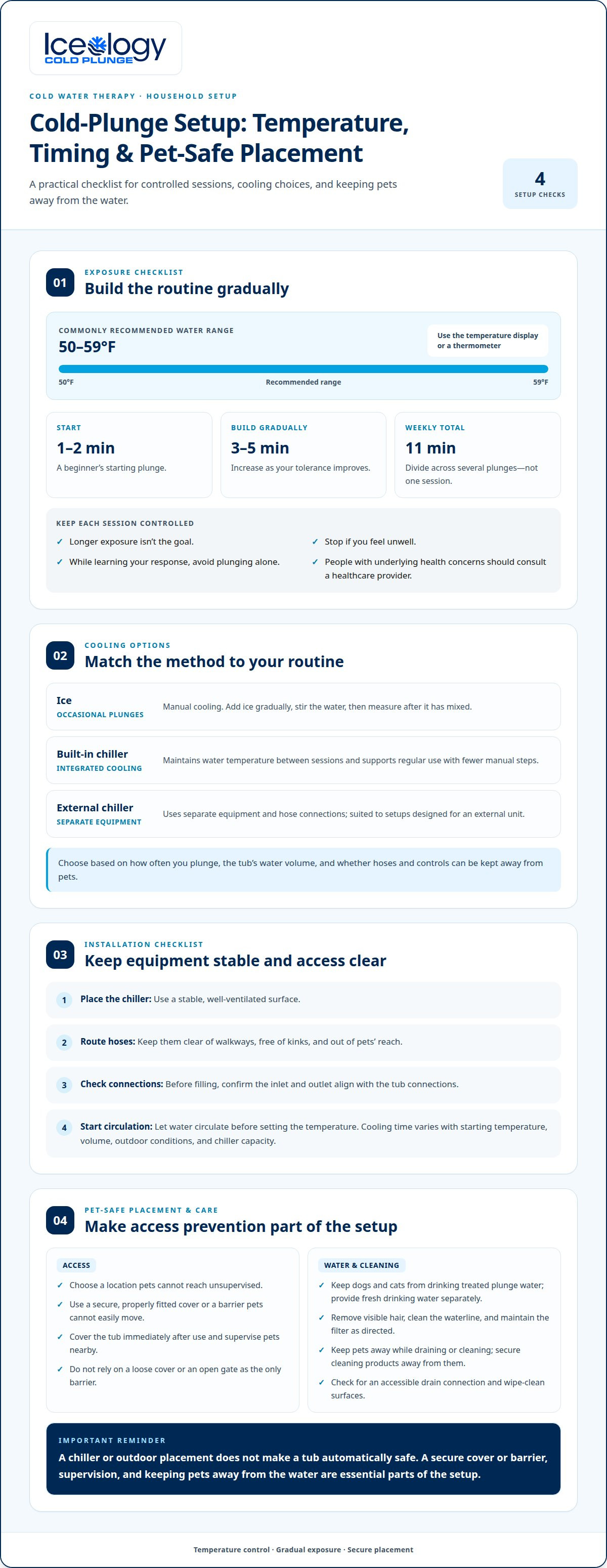
Beginners should start with a 1-2-minute plunge, then gradually build to 3-5 minutes as tolerance improves. A weekly total of 11 minutes can be divided across several plunges rather than attempted in one session. Keep each session controlled; longer exposure isn’t the goal. Stop if you feel unwell, and avoid plunging alone if you’re still learning your response to cold water.
A chiller maintains water temperature between sessions, while ice can cool water for occasional use. For frequent plunges, a built-in or external chiller offers more consistent temperature with less manual effort. A cold plunge tub for a pet-friendly household also needs a safe setup: temperature control supports your routine, but it doesn’t replace preventing pets from reaching the water.
During setup, place the chiller on a stable, well-ventilated surface and keep hoses clear of walkways. Connect the hoses according to the equipment instructions, keeping them free of kinks and out of reach of pets. Before filling, confirm that the inlet and outlet align with the tub connections. After startup, allow water to circulate before setting the temperature.
Cooling time varies with starting water temperature, water volume, outdoor conditions, and chiller capacity. A larger tub or warmer starting water generally takes longer to cool than a smaller volume starting closer to the target. Use the temperature display rather than estimating by touch. With ice cooling, add ice gradually and stir the water before measuring, so one cold patch doesn’t mislead you.
For dogs and cats, choose a setup they cannot access unsupervised, with a stable installation and a secure cover when the tub is not in use. A chiller or outdoor placement does not make a tub automatically safe. Use a properly fitted cover or a barrier pets cannot easily move, and supervise pets near the tub.
Choose a tub with a secure cover or lockable lid if pets can reach its location. Cover it immediately after use, and don’t rely on a loose cover or an open gate as the only barrier. Which model has a locking feature depends on its specific design, so compare the stated cover and closure features rather than assuming all tubs include them.
Drain and cleaning access matter around pets because fur, dirt, and splashes can collect near the tub. Look for an accessible drain connection and surfaces that can be wiped clean; keep pets away while draining or cleaning. “Pet-safe” materials depend on the exact materials and finishes, so choose products that clearly identify their construction and follow their care instructions.
| Cooling option | Temperature control | Best fit |
|---|---|---|
| Ice | Manual; measure after mixing | Occasional plunges |
| Built-in chiller | Integrated cooling | Regular use with fewer manual steps |
| External chiller | Separate equipment and hose connections | Setups designed for an external unit |
Choose based on how often you plunge, the tub’s water volume, and whether you can keep hoses and controls away from pets.
Why use cold water?
People use cold-water immersion as part of a recovery or wellness routine, but the experience depends on temperature, exposure, and personal health. A commonly recommended range for cold-plunge water is 50-59°F. That gives you a practical reference point when comparing temperature settings, rather than treating “colder” as automatically better. The right setting is one you can approach gradually and manage consistently.
Temperature control also shapes how predictable each plunge feels. A tub with a built-in chiller can maintain cold water between sessions, while ice requires adding and mixing more manually. With either method, use a thermometer or the tub’s display to check the water before entering. Measure after the water circulates or the ice has melted enough to mix evenly.
For a new routine, begin at the warmer end of the 50-59°F range, then adjust only as your comfort and experience allow. Change one variable at a time: keep the temperature steady while building familiarity, rather than lowering the setting and extending exposure together. Cold water should feel controlled, not like a test of endurance. Leave the tub if you feel unwell.
Pet hair and dander can get into open water and collect around the waterline or filtration components. Keep pets away from the tub, remove visible debris, and maintain the filter as directed. A cover between sessions helps keep fur and outdoor debris out of the water.
In a pet-friendly home, use a consistent cleaning routine: remove visible hair, clean the waterline, and maintain the filter as directed for your tub. Follow the equipment’s stated water-treatment instructions, since sanitizer requirements depend on the system. Keep cleaning products secured away from dogs and cats, and don’t mix treatments unless the product instructions allow it.
Dogs and cats shouldn’t drink plunge water treated with chlorine, bromine, or another sanitizer. Keep the water inaccessible, including when the tub is drained or being cleaned, and provide pets with fresh drinking water in a separate bowl.
Cold water can pose risks to pets through accidental access, falling in, prolonged exposure, or drinking treated water. Use a secure cover or barrier, supervise pets near the tub, and don’t assume an animal can safely get out unaided. People with underlying health conditions or concerns should consult a healthcare provider before cold-plunge use.
Cold-water immersion may suit a structured recovery routine, but it isn’t a substitute for medical care. For a controlled setup, explore a temperature-controlled recovery routine and keep the tub separate from pets’ access and drinking water.
Outdoor durability and placement
An outdoor plunge setup has to work with the site, not just the weather. Before choosing a location, identify direct sun, wind exposure, rain runoff, nearby trees, and the route from the house. For example, a shaded, level patio may reduce exposure to falling leaves while keeping the tub accessible for regular use. Check the tub’s care instructions for outdoor suitability and maintenance requirements.
Start with the ground. A filled tub places substantial weight on its supporting surface, so choose a stable, level location and account for the tub, water, and user together. A deck, balcony, or raised platform needs particular attention because its capacity can’t be judged by appearance alone. If the structure’s load limits are unclear, get a qualified assessment before installation.
Next, plan the chiller and power arrangement. Keep the chiller on a stable surface with its ventilation area unobstructed, and route hoses without tight bends or trip hazards. Follow the equipment’s electrical and clearance instructions. Avoid placing connections where rainwater collects or where a dog could chew, pull, or paw at cables. Outdoor placement should make routine access possible without compromising the setup.
Weather exposure affects the care your setup needs. Sunlight, windblown debris, falling branches, and temperature swings can affect the tub and surrounding equipment. A fitted cover helps keep leaves and pet hair out between sessions, but does not replace a secure barrier. Protect the chiller from weather when the tub is outdoors, and protect the unit from freezing conditions to prevent freeze damage.
Plan drainage before filling. Choose a location where routine draining won’t send water toward a doorway, foundation, or pet area. Keep the drain outlet accessible, and route the hose to the intended drainage point without crossing a main walkway. After cleaning, remove standing water so pets don’t lick it or track it indoors.
For pet safety, combine physical separation with a secure cover. Place the tub behind a closed gate or somewhere pets cannot enter unsupervised, and secure the cover whenever the tub is not in use. A cover alone may shift or be disturbed, so don’t treat it as the only safeguard. Keep nearby steps, stools, and furniture away from the tub’s edge.
- Surface: Choose a level, stable base and assess raised structures.
- Equipment: Keep hoses, cables, and ventilation areas clear.
- Exposure: Account for sun, debris, rain runoff, and seasonal conditions.
- Pets: Use a barrier and secured cover, then supervise outdoor access.
For an outdoor cold-plunge setup, prioritize safe access, protected equipment, and a location that supports drainage and cleaning. Choose a site that suits the structure’s load capacity, power layout, weather exposure, and pet barriers. For homeowners integrating their setup into a broader patio or wellness space, design studios like CRÉER offer inspiration for how handcrafted concrete elements, such as custom bathtubs and basins, can blend durability with functional outdoor living.
Product prices and promotions
Compare cold plunge tubs by the complete purchase, not a headline discount. Consider the tub’s capacity, cooling equipment, included accessories, delivery terms, and placement needs. For a pet-owning household, a secure cover or barrier may matter more than an accessory that doesn’t support your routine. Separate useful features from extras that add little to your setup.
Start with the listed tub configuration. Record whether the offer includes a chiller, cover, sanitation components, or other accessories, then compare like with like. A tub sold with an included component cannot be compared directly with a base configuration that requires a separate purchase. Note the product name and configuration beside each offer so a promotion doesn’t obscure what’s actually included.
Next, review the checkout total and its terms. Check whether delivery, placement, or other charges are included, and whether a discount applies automatically or requires a code. Read the promotion’s start and end dates, eligible configurations, exclusions, and return conditions before deciding. These details can change the effective value even when two offers advertise similar savings.
For outdoor use, account for the setup surrounding the tub. A promotion doesn’t reduce the need for a suitable support surface, appropriate drainage, safe electrical connections, or a pet barrier. For example, a lower-priced configuration may still require separate accessories or site preparation. Compare those requirements alongside the product rather than treating the advertised offer as the entire project cost.
- Included equipment: List the chiller, cover, filtration, and accessories shown in each configuration.
- Promotion terms: Note eligible products, discount conditions, dates, and exclusions.
- Delivery: Compare stated delivery and placement arrangements at checkout.
- Pet-ready setup: Include the cover, access barrier, and cleaning supplies your household needs.
Accessories can support water care and maintenance, but choose them according to your needs. Iceology offers a Sirona™ Maintenance Kit, filters, and other accessories. Check each item’s purpose and compatibility with the tub, and choose products that address a practical need rather than treating every extra as essential.
To make a fair comparison, use the same checklist for every tub: configuration, included equipment, listed price, shipping terms, setup needs, and pet-safety measures. Then rank those factors by importance. A household planning outdoor placement may prioritize a protected chiller and secure pet access over optional accessories. The clearest choice is the one whose features and terms suit your intended use.
Tub size and capacity
Capacity is a useful starting point, but gallons alone don’t show whether a tub fits your body or available space. Product listings include examples of 75-, 90-, 105-, and 116-gallon capacities. Treat those figures as distinct options, not as a direct measure of comfort. Interior length, width, depth, and your preferred sitting position all affect how a tub feels in use.
Check the stated dimensions alongside capacity. These are separate specifications, not a combined limit. Compare the tub’s dimensions with the people who will use it and the available space.
Capacity also affects site planning. A larger water volume adds weight when filled, so consider the complete setup, including the tub and user, before choosing a deck or raised surface. Measure the intended footprint, then leave room for entry, exit, cover removal, and maintenance access. For outdoor placement, account for the chiller and hose route as well.
| Capacity example | What to compare | Useful consideration |
|---|---|---|
| 75 gallons | Interior dimensions and user fit | Confirm the usable space suits your posture. |
| 90 gallons | Bundle contents and footprint | Check whether included accessories fit your needs. |
| 105 gallons | Water volume and site capacity | Account for the filled setup when planning placement. |
| 116 gallons | Dimensions, access, and drainage | Allow room for entry and routine care. |
For a household with pets, capacity isn’t a pet-safety feature. A larger tub still needs a secure cover and a barrier that prevents unsupervised access. Include these measures in your space plan, along with clearance to open the cover and reach the drain. Keep pet routes separate from hoses and equipment.
Use this practical sequence: measure the available footprint, compare the tub’s external and interior dimensions, review the stated user-fit limits, then assess the filled setup’s support and access needs. For example, a 105-gallon option may suit your intended use only if the measured area also accommodates safe entry, equipment, and pet separation. Choose by fit and site readiness, not capacity alone.
Iceology Cold Plunge
Iceology Cold Plunge helps you connect capacity, placement, and temperature control with a setup that fits your routine and household. Its Cold Plunge Tubs are made in the USA and feature built-in chillers that can lower water temperature to as low as 39°F. That gives you an integrated cooling option to consider alongside the outdoor space, access barriers, and pet-safe routines discussed above.
Explore the available Cold Plunge Tubs, Accessories, Ice Baths, and Cold Tubs in light of how you’ll use and maintain your setup. A clear sense of your space and priorities can guide a more practical choice.
For help considering your cold-plunge needs, contact Iceology Cold Plunge.
Make your next choice with intention
Turn your research into a simple household plan before choosing a tub. Write down who will use it, where the setup will fit, and how you’ll keep it safe around pets. That plan can help separate essential features from extras and guide a decision that supports regular use. A cold plunge tub for a pet-friendly household should suit the people using it and the way your home functions, not just look right on a product page.
Iceology Cold Plunge offers cold plunge tubs and accessories for cold-water routines. Consider how you’ll use and maintain your setup, then bring your household priorities into the decision. A practical choice starts with knowing what matters most to you.
Choose with care, set up your routine thoughtfully, and move forward with confidence.
Frequently Asked Questions
Do I need a chiller or can I just use ice?
An integrated chiller is practical for regular plunges, and the Grizzly 450 cools water with no ice needed. Its chiller reaches 39°F and regulates between 39°F and 41°F. Don’t add ice to this system; ice can damage components and void the warranty. A chiller also provides powered temperature control, so consider how consistently you want to maintain cold water when choosing your setup.
Is an Ice Bath Worth It?
An ice bath may suit a recovery or wellness routine you can maintain. Consider whether you’ll use it consistently, have suitable space, and can manage water care and safe access. It’s a personal choice, not a requirement for recovery. If you have an underlying health condition or concerns about cold exposure, speak with a healthcare provider before starting.
Is it safe to use every day?
Daily plunging isn’t automatically suitable for everyone. Cold exposure can feel demanding, so base frequency on how you respond, not on a fixed daily target. Keep sessions controlled and stop if you feel unwell. People with underlying health conditions or concerns should consult a healthcare provider before using a plunge tub. A repeatable routine should leave room for rest and should never become a test of endurance.
What are the typical prices, dimensions, and operating costs of cold plunge tubs for home use?
Compare the current listed product price and selected accessories rather than assuming dimensions indicate cost. For the Grizzly 450, the footprint is 77 inches long by 40 inches deep, with 10 inches of back clearance needed. Its interior measures 46.5 inches long at the top, 41.5 inches at the bottom, 31.5 inches wide, and 22 inches high. Operating costs depend on electricity use and local rates.
What electrical, placement, and drainage precautions apply to outdoor cold plunge tubs?
The Grizzly 450 uses a standard 110V outlet and draws up to 7A; a dedicated breaker with GFCI is recommended. Its chiller is approved for indoor use, so outdoor placement requires protection from weather and the elements. Keep the unit protected from freeze damage, and don’t run it in below-freezing ambient temperatures. Plan drainage toward a suitable outlet, away from walkways and pet areas.
Which cold plunge tubs are easiest to drain, clean, and maintain around pets?
Keep the drain accessible and tub surfaces easy to wipe clean. Keep pets away while draining or cleaning, remove visible hair, clean the waterline, and maintain the filter as directed.