
Choosing a cold plunge tub for a recording studio
A recording studio can make room for cold immersion, but choosing a tub is only half the decision. A cold plunge tub for a recording studio gives users a dedicated space for a cold-water routine, while the setup also needs to account for condensation, humidity, and sensitive equipment. The right choice balances both.
Cold water appeals to people seeking a focused recovery or wellness routine between demanding work blocks. In a studio, however, moisture needs careful attention. A cold tub in a warm room can affect the surrounding environment, so placement and ventilation matter as much as the model.
This guide covers why a studio might use cold water, how to manage condensation and humidity, and what to consider when comparing tubs. It also explains how to assess upfront and ongoing costs alongside the room’s practical constraints.
Use these considerations to weigh tub size, cooling method, and studio conditions before choosing a setup. The aim is a practical decision that supports a consistent routine while keeping the recording space functional.
Key Takeaways
- Compare chilled tubs with ice-based setups by considering how each approach fits your studio’s routine and operating needs.
- Use conservative temperature and session guidance to shape a cold-water practice, especially for beginners.
- Plan tub placement with condensation, humidity, ventilation, and nearby recording equipment in mind.
- Compare models by footprint, water capacity, cooling approach, and the overall costs that matter for your space.
- For a studio setup, consider how a cold plunge can support regular use while fitting the room’s practical constraints.
What Is a Cold Plunge?
A cold plunge is a tub used for cold-water immersion, with water cooled by ice or a chiller. A cold plunge tub for a recording studio also needs to fit the room, its equipment, and its operating routine.
Integrated Chillers and Filtration
A tub with an integrated chiller cools and circulates water, so no ice is needed. Filtration helps remove particles as water moves through the system, but it does not replace water care. Consider how the tub, chiller, and filtration work together, and whether the insulation suits the planned location. Materials and construction also affect cleaning and handling.
Temperature Range and Chiller Specifications
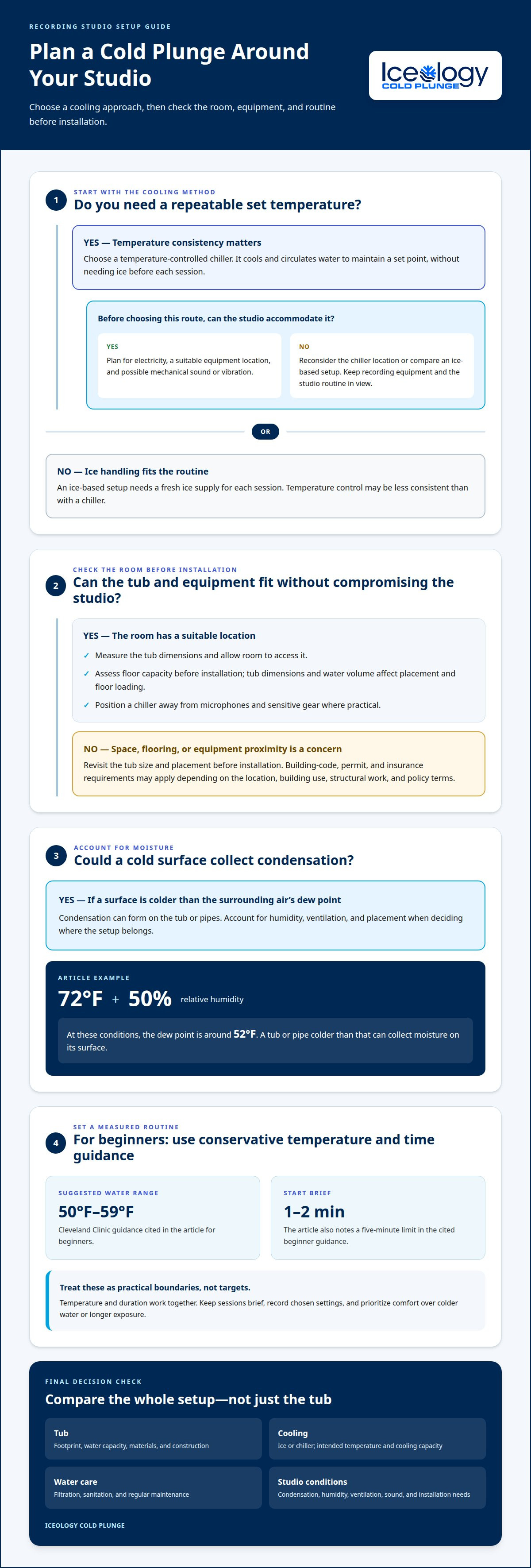
Choose a chiller based on the intended water temperature, tub capacity, and how consistently the water needs to stay cool. A larger water volume takes more cooling capacity than a smaller one, while room temperature and insulation affect heat gain. Cleveland Clinic suggests beginners keep plunge water between 50°F and 59°F and limit sessions to five minutes. Compare temperature controls, circulation, and operating sound with the studio’s routine.
An automatic chiller regulates water temperature without requiring ice before each session. It cools and circulates the water to maintain its set point, making a repeated routine easier to manage. Filtration and regular maintenance still matter. Check the equipment’s location and sound so it does not disrupt recording sessions.
An ice-based setup requires a fresh supply for each session, and temperature control may be less consistent. A temperature-controlled chiller avoids repeated ice handling and maintains a set point, but needs electricity and a suitable location. It may also produce sound or vibration, so position it away from microphones and sensitive gear where practical.
Tub dimensions and water volume affect placement and floor loading. Measure the space, allow room to access the tub, and assess the floor’s capacity before installation.
Building-code, permit, and insurance requirements may apply to an indoor installation. They depend on the location, building use, structural work, and policy terms, so account for them when planning the setup.
Chillers can make mechanical noise or transmit vibration through nearby surfaces, which may be noticeable during a quiet take. Placing the unit away from microphones, reducing vibration, and scheduling use between sessions can help. To compare the full cost of a cold plunge tub for a recording studio, consider the tub, chiller, filtration, and installation needs together.
Why use cold water?
Cold-water immersion is used as a wellness practice and post-workout recovery routine. Its effects depend on the temperature, session length, and the person using it.
Water Temperature and Session Length
For beginners, Cleveland Clinic suggests keeping water between 50°F and 59°F and starting with one-to-two-minute sessions. It also advises limiting sessions to five minutes. These are practical upper boundaries, not targets every user needs to reach. A manageable temperature and brief exposure make it easier to build a measured routine.
Research summarized in a 2025 review examined immersions in water around 45°F to 59°F, lasting from 30 seconds to about 15 minutes. Another finding suggests adults can divide 11 minutes of cold-water immersion per week across several plunges. Those figures describe varied protocols, not a single prescription. Temperature and duration should be considered together, rather than treating colder water or longer sessions as automatically better.
Potential Benefits of Cold-Water Plunging
Cold-water therapy may appeal to people seeking a deliberate transition between work and recovery. After a workout, immersion can provide a distinct cold stimulus and a structured pause. A 2025 systematic review pooled 11 studies and 3,177 participants, but outcomes and protocols varied. The evidence should not be read as proof that every person will experience the same result.
The review reported significant stress reduction 12 hours after immersion, but no measurable reduction immediately afterward or at one hour. That timing matters: a plunge may not create an instant sense of calm. Cold exposure can also feel intense, so comfort and safe practice matter more than chasing a dramatic response. People with heart conditions, high blood pressure, diabetes, poor circulation, or peripheral neuropathy, and pregnant people, should consult a healthcare provider before plunging.
Clean water supports repeat use. A filter captures particles as water circulates, while sanitation is a separate treatment process. Filtration alone does not replace sanitation or routine water care. Follow the equipment’s maintenance instructions, keep a consistent cleaning schedule, and respond to visible debris or changes in water clarity.
Ozone is one water-treatment method used in some systems. It supports water treatment, while filtration captures particles; neither eliminates the need for maintenance. Follow the system instructions for filter checks, surface cleaning, and water care. In a shared studio, assign upkeep responsibilities clearly so the routine stays consistent.
For a studio schedule, start with the recommended beginner range, keep sessions brief, and record the chosen settings. That makes it easier to notice how temperature and duration affect comfort without turning cold-water exposure into a contest.
Condensation and humidity control
A cold tub changes the moisture conditions around it, so plan for the room as well as the water. Condensation forms when a surface is colder than the surrounding air’s dew point. For example, at 72°F and 50 percent relative humidity, the dew point is around 52°F. A tub or pipe colder than that can collect moisture on its surface.
This matters in a recording studio, where moisture near microphones, cables, instruments, and acoustic materials is unwelcome. A cold plunge used for recovery or mental reset should sit where condensation can be noticed and managed, away from sensitive gear. Keep the surrounding floor clear, dry any visible moisture promptly, and avoid placing equipment where drips could reach electrical components.
Room temperature and relative humidity together determine the dew point. Managing humidity can reduce condensation risk, while warmer room air can raise the dew point. Pay attention to cold surfaces, the tub cover, plumbing, and nearby floor. Insulation can reduce heat transfer and help limit moisture on exterior surfaces, but it does not replace managing room humidity.
Measure conditions near the tub, not just across the studio. A humidity monitor gives a useful reference as room conditions shift during a recording day. Compare its readings with the tub’s water temperature; a chiller capable of cooling water to 39°F can create a wide temperature gap in a warm room. That difference helps explain why condensation may appear even when the rest of the studio feels comfortable.
Remote monitoring can simplify routine management, but features vary by system. If the controls support remote temperature monitoring, use readings to see whether the water stays near its set point between sessions. Remote control, when available, can also help operators adjust settings without entering a quiet recording space. Don’t assume every system includes an app, alerts, or scheduling.
Scheduling helps when the tub and studio share a working day. Plan immersion between takes, then allow time to dry the area before recording resumes. Assign who checks the water temperature, who wipes nearby surfaces, and when to use the room’s ventilation. This routine makes cold-water recovery part of the studio workflow without disrupting equipment or concentration.
Temperature control should support the intended routine, not create unnecessary moisture or noise. Set a consistent target, monitor room humidity, and adjust the room environment when condensation appears. For an American studio, local climate and seasonal changes can affect indoor humidity, so repeat the same observations as conditions change. This gives the team a practical basis for maintaining a comfortable space around cold-water immersion.
Cold-plunge models and prices
For a recording studio, compare models by cooling method, footprint, maintenance, and fit with the room’s wellness routine. The purchase price is only part of the decision; equipment and installation needs also affect the overall budget.
Tub Model Comparisons
Inflatable tubs are portable, but they require manual setup and ice if they lack a chiller. Stock tanks provide a simple, rigid vessel, while users manage cooling and water care separately. Chiller-equipped tubs automate temperature control and often combine circulation with filtration. Compare the daily attention each needs, its footprint, and whether its operation suits recording sessions.
A chiller-equipped model reduces repeated ice handling, while an ice-based setup avoids powered cooling equipment. Neither option eliminates water maintenance. For a studio, the practical choice depends on available space, sound sensitivity, and how consistently the tub will support recovery or practice.
Cold Plunge Tub Prices
Costs vary with construction, insulation, capacity, cooling equipment, filtration, and included accessories. A basic vessel and a complete chiller-equipped system are different purchases, even if both provide cold-water immersion. Installation and the room’s electrical or moisture-management needs can also affect the total project budget.
Compare complete configurations rather than judging tubs by the vessel alone. Include the chiller, filtration, water-care supplies, delivery, and installation needs in your assessment. This shows which model matches the intended routine and whether added equipment changes the total investment. Compare listed prices and included features, since a single model category does not define the cost.
Studio Tub Sizing
Measure the tub’s full footprint, then include the space needed for entry, maintenance, and access to its equipment. One example plunge measures about 77 by 31.5 inches and holds 105 gallons. Keep 30 to 36 inches of clear floor on the entry side, so users can get in and out without blocking a walkway or studio workflow.
Capacity affects both the space a tub occupies and the amount of water the chiller must cool. A smaller vessel may suit a compact room, while a larger tub needs more floor area and planning. Account for the chiller’s location, access paths, and nearby microphones or recording equipment before deciding where the tub belongs.
For a direct comparison, note each model’s dimensions, capacity, cooling method, filtration, and included equipment. Then check those details against the studio layout and intended frequency of use. This helps distinguish a basic vessel from a complete setup for a consistent cold-water routine.
Commercial cold plunge solutions for gyms and studios
Commercial use adds shared access, cleaning routines, and scheduling to the equipment decision. A dedicated plunge area works best when its operating plan fits both user flow and the studio schedule.
Start with expected use. A private recording studio may have one or two regular users, while a gym may serve people throughout the day. Those settings place different demands on access, water care, and downtime. A commercial-use example has been planned around 80-100 people per day, illustrating why high-throughput sites must consider more than the tub itself.
For a shared tub, define what happens after each user. The routine should cover entry-area cleanliness, water condition, and responsibility for scheduled maintenance. Filtration removes particles, while sanitation and water care remain separate needs. Clear assignments help prevent upkeep from being overlooked during busy studio or gym hours.
Choose equipment that matches the pattern of use. Automatic temperature control reduces the hands-on work of adding ice, while a simpler ice bath requires more preparation. Consider how quickly the system can return to its desired temperature between users, how it fits the room, and whether its sound suits recording periods. Don’t assume every model is designed for continuous, high-volume use.
Plan user flow around the tub. A gym might schedule immersion outside peak traffic, while a recording studio can reserve use between sessions. Keep the entry area accessible and separate wet movement from microphones, cables, and other sensitive equipment. A written schedule can also assign who checks the water and resets the area after use.
Cold exposure is an intense physical stimulus, so shared access calls for clear guidance. Post the chosen temperature and session limits where users can see them before use. Cleveland Clinic advises beginners to start with one to two minutes and limit sessions to five minutes. A consistent response plan also helps staff know how to pause use if someone feels unwell.
Premium equipment is useful only when its capacity and operating requirements suit the site. Compare the tub, chiller, filtration, sanitation approach, and maintenance routine as one system. Weigh those needs against floor space, noise tolerance, user volume, and recording schedules. A practical commercial setup is one that remains manageable for its actual users.
Iceology Cold Plunge
Iceology Cold Plunge offers a practical next step for studios weighing cooling, space, and routine needs. Its Cold Plunge Tubs feature built-in chillers that can lower water temperature to as low as 39°F, giving studios a temperature-controlled option to consider alongside ice baths and cold tubs. Accessories can also be part of the setup, depending on the space and intended use.
Before choosing, bring together the key decisions: where the tub will sit, how the room will manage moisture, and how users will fit cold-water immersion into studio schedules. These considerations help identify a setup that suits the room and its daily use.
Contact Iceology Cold Plunge to discuss your studio’s cold-plunge needs.
Shape a Recovery Routine That Fits Your Studio
Choosing a cold plunge tub for a recording studio can make recovery part of the studio’s creative rhythm. Treat the setup as part of the room’s workflow, not an isolated wellness purchase. The right choice is practical to use without competing with the work happening nearby.
Before moving forward, consider how cold-water use fits into a typical studio day. Who will use the tub? When can it fit naturally between recording blocks? Which room conditions need to stay comfortable for focused work? Answering these questions turns equipment considerations into a clear plan for daily use.
Iceology Cold Plunge offers Cold Plunge Tubs, Accessories, and Ice Baths for people considering cold-water immersion. Those options provide a starting point for thinking about the kind of setup that suits your studio and intended routine.
Small, thoughtful decisions can make recovery a more natural part of creative life. Keep the studio’s needs at the center, then explore Iceology Cold Plunge’s tub and accessories to plan your setup.
Frequently Asked Questions
Do I need a chiller, or can I just use ice?
You can cool a basic tub with ice, but a chiller maintains water temperature without repeated ice runs. Iceology’s Model 450 needs no ice. Don’t add ice to this system, since it can damage components and void the warranty. For that model, use the powered chiller as designed and follow its water-care instructions rather than treating ice as a backup cooling method.
How cold should I make my ice bath?
For beginners, Cleveland Clinic suggests water between 50°F and 59°F, starting with one-to-two-minute sessions and limiting exposure to five minutes. For example, start at the warmer end of that range and keep the first session brief. A colder setting isn’t automatically a better choice. Pay attention to how you feel, and leave the water if you feel unwell.
How much does a cold plunge tub cost in the US?
That price applies to this model, not the overall US market. Equipment and installation needs differ between setups, so compare what each configuration includes. Accessories are available separately, with prices varying by item.
What electrical outlet and power requirements do cold plunge tubs have?
Requirements depend on the tub and chiller. The Iceology Model 450 operates on a standard 110V outlet and draws up to 7A; a dedicated breaker with GFCI is recommended. Have a qualified electrician assess the studio circuit and outlet location, particularly if other equipment shares the circuit. Keep electrical connections positioned to reduce exposure to splashes or leaks.
How do you prevent humidity, condensation, and water damage from an indoor cold plunge?
Keep the tub away from recording equipment, watch for moisture on nearby surfaces, and dry spills promptly. A room humidity monitor can help reveal changes during the workday. Keep cables and microphones clear of the wet area, and maintain airflow so moisture doesn’t linger. If condensation repeatedly forms, adjust the room conditions or tub placement before it affects floors, acoustic materials, or equipment.
What drainage, plumbing, and waterproofing are needed for a cold plunge tub?
Needs depend on the tub and room. The Iceology Model 450 requires no plumbing for setup, but water still needs a controlled path during draining and maintenance. Protect the floor from spills, keep the route to the drain clear, and avoid directing water toward electrical equipment. For a permanent installation, plan how water will be removed and how the floor will be protected before filling the tub.
What ventilation and temperature requirements apply to a cold plunge tub in a studio?
Manage room moisture and air movement around the tub, and monitor conditions as the studio’s temperature changes. The Iceology Model 450 is approved for indoor use; its chiller regulates water between 39°F and 41°F. That water temperature doesn’t set the room’s ventilation requirements. Keep the chiller’s placement and operating conditions consistent with its instructions, and prevent moisture from accumulating near recording equipment.
What are the health risks and safe-use guidelines for cold plunging?
Cold immersion can be strenuous, so beginners should start with brief sessions and moderate water temperatures. Cleveland Clinic suggests starting with one to two minutes and limiting sessions to five minutes. People with heart conditions, high blood pressure, diabetes, poor circulation, or peripheral neuropathy, and pregnant people, should consult a healthcare provider before plunging. Stop if you feel unwell, and don’t treat longer exposure as a measure of success.