
Choosing a Cold Plunge Tub for Your Winter Park Home
A cold plunge is worth considering when you want a consistent, ready-at-home way to practice cold-water immersion. Choosing a tub for your home starts with deciding whether you want a system that manages water temperature without fresh ice for every session; built-in chillers can lower water to 39°F.
Convenience matters, but the right choice also depends on where the tub will go, how you’ll maintain clean water, and how much space you can dedicate to it. A simple ice bath and a chiller-powered tub differ in setup, temperature control, and ongoing care.
This guide explains what to compare when choosing an at-home tub, including cooling, filtration, sanitation, space, and ongoing costs. You’ll learn how an ice bath differs from a chiller-powered tub and which practical details can help you choose a setup that fits your home and routine.
Key Takeaways
- Compare ice-based baths with chiller-powered tubs to decide how much temperature control and hands-on upkeep suit your routine.
- Plan for regular filter cleaning and replacement, plus water changes, to keep a plunge system properly maintained.
- Match a tub’s capacity and footprint to your available space and the people who will use it.
- Choose an at-home immersion routine that starts gradually, and consider your health needs before plunging.
- Explore Iceology Cold Plunge’s cold tubs, ice baths, and accessories when you’re ready to choose equipment for home use.
Why A Cold Plunge Tub?
Compare sellers by reviewing product specifications, delivery estimates, and written return policies together. Most cold plunge units ship within 3-5 business days, but the delivery estimate and return conditions vary by offer. Before choosing, compare the tub’s cooling method and capacity, then read the terms that explain delivery and returns.
Building codes and HOA rules can affect where you install a tub. Review applicable local requirements and community documents before choosing a location, especially for outdoor placement or changes involving electrical service and drainage. Doing this early can help you select a site that works for your home.
The total cost depends on the tub, cooling system, delivery, and any installation work. Compare the complete setup rather than focusing on the tub alone. Delivery and installation needs may depend on the configuration, access to the intended location, and preparation required at home. Review the terms of any discount, too.
Start with the kind of immersion you want. An ice bath needs added ice, while a chiller-powered tub cools and regulates the water with its equipment. That affects preparation: an ice bath requires replenishing ice, while a chiller manages the temperature. Consider which approach best fits the routine you can maintain.
Next, compare capacity and fit. A portable oval tub listing gives a capacity of 175 gallons; a foldable soaking bath listing describes eight layers and a 90-gallon capacity. These are individual product specifications, not universal sizing standards.
Compare practical details as well as appearance: dimensions, temperature control, filter access, and care instructions. Measure the installation area and the route into it, then compare those measurements with the tub’s listed dimensions. This can help identify fit or access problems before delivery.
For recovery and wellness, choose a setup that supports a repeatable routine. A simpler ice bath may suit occasional use, while a chiller-powered system may appeal if controlled temperature is a priority. Review specifications, maintenance needs, and delivery and return terms together. No single feature determines the best choice; the deciding factors are how the tub fits your home and how you plan to use it.
Chillers, heaters, filtration, and sanitation
A chiller cools and circulates water, helping maintain a chosen temperature without adding ice for each session. One listed cold plunge chiller is rated at 2/3 horsepower and cools water to 39°F. Chiller-powered tubs generally offer more precise temperature regulation than ice baths, while actual performance depends on the system and conditions around the tub.
A heater warms water, while a chiller cools it. Before selecting a unit, decide whether your routine calls for cold-only immersion or broader temperature flexibility. Compare the equipment’s stated capabilities and controls. A heater does not replace a chiller when your goal is cold water.
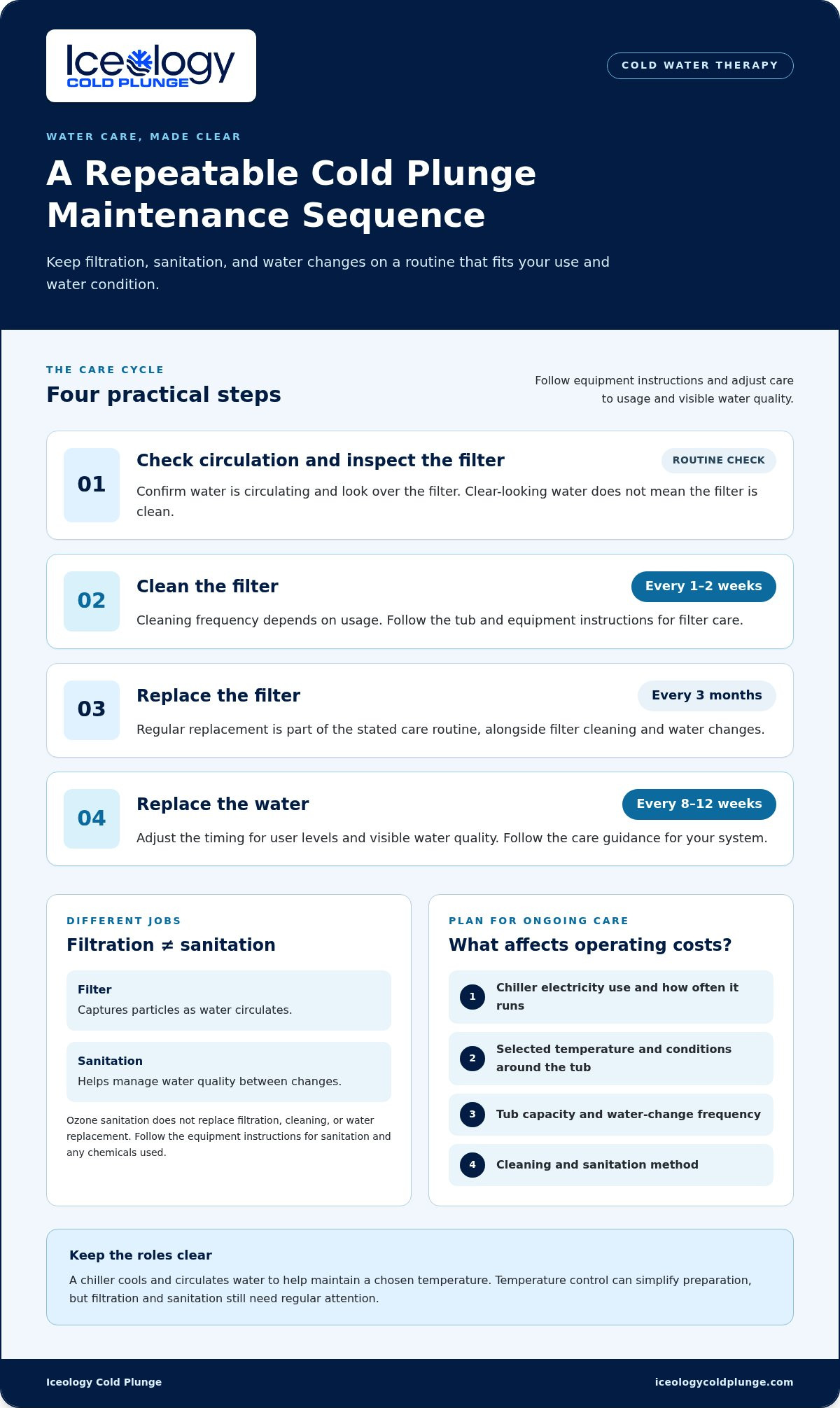
Filtration and sanitation play different roles in water care. A filter captures particles as water circulates; sanitation helps manage water quality between changes. Follow the tub and equipment instructions for sanitation and any chemicals used. Clear-looking water does not mean the filter is clean, and sanitation systems may use different processes.
Use a repeatable maintenance sequence. Check circulation and inspect the filter, clean it every 1-2 weeks depending on usage, and replace it every 3 months. Replace water every 8-12 weeks, adjusting for user levels and visible water quality. Regular care helps keep the system functioning as intended and makes changes in water condition easier to notice.
Ozone sanitation is another feature found in some cold-plunge equipment. It does not replace filtration, cleaning, or water replacement. Review the equipment instructions to understand how the ozone system works with the filter, and follow the specified care routine. Each component has a distinct role.
When looking to buy a cold plunge tub, ongoing operating costs depend on the chiller’s electricity use, how often it runs, the selected temperature, and conditions around the tub. Water expenses depend on tub capacity and replacement frequency; cleaning and sanitation costs vary with the maintenance method and products used. Consider these factors together when comparing systems, rather than judging ownership by purchase cost alone.
For a practical comparison, note each system’s cooling capability, filter-care schedule, water-change guidance, and sanitation requirements. Then consider which routine you can maintain consistently. Chiller control can simplify temperature preparation, but filtration and sanitation still need regular attention.
Ongoing costs depend on chiller electricity use and run time, the selected temperature, tub capacity, water-change frequency, and the cleaning and sanitation method. The stated care routine includes cleaning the filter every 1-2 weeks depending on usage, replacing it every 3 months, and changing the water every 8-12 weeks, with adjustments for use and water quality.
Cold plunge tub and system options
Begin with the location, then compare tub dimensions against the room or outdoor space. One listed model measures 67 inches long, 31.5 inches wide, and 24 inches high, with a 75-gallon capacity. Use a product’s exterior measurements to plan its footprint, and allow workable access around the tub for entering, exiting, and routine care.
Electrical, plumbing, space, and drainage needs depend on the tub and chiller. Compare the product’s electrical requirements with the available connection, plan how you’ll add and drain water, and measure the tub’s footprint and access space before choosing a location.
Plan for more than the tub’s dimensions. Map the route from the delivery point to the installation area, including doorways, turns, and thresholds. Mark where the chiller and other components will sit. A layout that fits the tub but blocks equipment access can make cleaning and maintenance difficult.
Cooling systems differ in how their equipment is arranged. An integrated chiller keeps the cooling system with the tub; a separate setup needs a suitable nearby position for its components. Review placement and connection instructions, and make sure the layout leaves room to access the filter.
Outdoor placement needs attention to the tub’s stated operating conditions and the specific exposure at home. Some market listings describe weather-resistant materials above 35°F. Treat that as a product-specific condition, not a blanket guarantee for every tub or component. Check how rain, sun, and nearby surfaces may affect the chosen site.
- For indoor placement: Measure the route and final footprint, then account for nearby equipment and service access.
- For outdoor placement: Compare the location’s conditions with the tub’s stated material and use guidance.
- For system layout: Plan connections, water handling, and access before setting the tub in place.
Temperature settings are another comparison point. Listings describe cold plunge tubs with settings as low as 37°F, but a listed minimum does not explain how a system reaches or maintains that temperature in every setup. Compare the stated controls and operating guidance, then choose a range suited to your intended use.
Before ordering, make a simple site plan. Note the tub dimensions, access route, equipment position, available electrical connection, and water entry and drain points. Compare the plan with the product instructions and your home’s layout. This helps you choose a configuration that fits and supports a manageable routine.
Cold plunge tub recommendations and prices
The right home-delivery option depends on your space, intended routine, and preferred cooling method. If you plan to buy a cold plunge tub in Winter Park, compare chiller-equipped systems with ice baths, then assess capacity, temperature control, sanitation, and setup needs together. Choose a system that fits your home and habits, not just one that looks appealing in a product image.
Price depends on the tub’s construction and capacity, cooling equipment, filtration, and included accessories. Delivery and installation can also affect the total. Compare the full cost of each setup rather than treating the tub alone as the complete purchase.
Use three practical profiles to narrow your options. A compact setup prioritizes a smaller footprint and straightforward placement. A frequent-use system may prioritize integrated cooling and convenient filter access. For shared use, pay close attention to usable capacity and how comfortably each person fits. These are decision profiles, not specific product models.
- For temperature control: Compare chiller systems with ice baths that require ice preparation for each session.
- For placement: Match the tub’s dimensions and filled footprint to its intended location.
- For maintenance: Compare filter access, cleaning steps, sanitation, and water-care guidance.
Read delivery terms closely. Compare the stated delivery estimate, how arrival is handled, and whether delivery includes moving the tub to its intended location. A large tub also needs a suitable route through doorways and around corners. Measure the path before ordering, and allow space for equipment beside or behind the tub.
A discount can look compelling, but compare its terms and the components included. Check whether accessories are part of the package and whether delivery or installation is listed separately. When deciding where to buy a cold plunge tub in Winter Park, evaluate the full setup and written terms, not just the discount.
A comparison sheet can keep your decision grounded. Record each option’s capacity, footprint, cooling method, temperature range, filtration, sanitation, delivery terms, and return conditions. Using the same categories for every option reveals trade-offs. A system with integrated cooling may suit frequent use, while a simpler ice bath may fit occasional immersion and limited space.
Make your final choice around the routine you can sustain. If avoiding ice preparation matters, focus on chiller-based cooling. If simplicity matters more, consider the preparation and water-care needs of an ice bath. A good choice balances convenience, fit, maintenance, and the complete delivered setup.
The section offers decision profiles rather than named models: consider a compact setup for limited space, a chiller-equipped system for frequent use, or a larger-capacity tub for shared use. Compare dimensions, cooling, maintenance, and delivery terms to find the best fit for your home.
The total depends on construction, capacity, cooling equipment, filtration, accessories, and delivery and installation arrangements. Compare the complete setup, including any separately listed delivery or installation charges.
At-home cold immersion
At home, cold-water immersion works best as a deliberate routine, not a test of endurance. General guidance recommends staying in cold water for 5-15 minutes, while beginners can start with dips of 30 seconds. Treat those as different starting points, not a target everyone must reach. Water temperature, comfort, and experience all affect how the exposure feels, so begin conservatively and leave the water if you feel unwell.
Consistency matters more than pushing through a single long session. Research associated with Susanna Søberg suggests a total of 11 minutes of weekly submersion, divided across several plunges, for health benefits. That weekly figure can help structure a routine, but it doesn’t replace individual judgment. Track how each session feels and adjust gradually rather than increasing time and cold exposure at once.
Health considerations come first. People with heart conditions are advised to seek medical advice before cold-water plunging. Children under 18 should avoid ice bathing. For other users, plan each session so entering and exiting feels controlled, and avoid treating discomfort or intense shivering as a measure of success.
For post-workout recovery after intense training, an ice bath can be tried within 30 minutes to two hours after exercise. That timing is an option, not a requirement for every workout. Consider the training session and your own response; cold immersion is one recovery practice, not a substitute for rest or other recovery habits.
Use a simple routine to make sessions more manageable:
- Before immersion: Set the water temperature, prepare a dry towel, and clear the exit area.
- For a first session: Start with 30 seconds, then exit and notice how you feel.
- For regular practice: Track session length and frequency, keeping the weekly 11-minute suggestion in view.
Materials and setup also shape the experience. An insulated tub can help limit heat exchange, while a stable entry point makes getting in and out easier. Keep a towel and dry clothing nearby, and follow the tub’s cleaning and water-care instructions between sessions. A clean, prepared space reduces distractions and helps you focus on controlled breathing and a calm exit.
Build a repeatable practice around your comfort and schedule. For example, divide weekly immersion into shorter sessions rather than attempting one prolonged plunge. Keep each session purposeful, leave enough time to warm up afterward, and record your response. If you’re choosing equipment for regular cold-water immersion, compare tubs based on fit, temperature control, and the care routine you can maintain.
Iceology Cold Plunge: Cold Plunge Tubs
Iceology Cold Plunge offers at-home tubs for people ready to make cold-water immersion part of their routine. The Grizzly 450 is a hard-sided model with 450-quart capacity and two-inch polyurethane foam insulation, helping you compare its size and construction with your available space and intended use.
Iceology Cold Plunge offers hard-sided Cold Plunge Tubs, Ice Baths, and Accessories for a home setup. Compare the tub’s capacity, placement, and care needs with the routine you want to build, so your equipment suits your home and wellness goals.
Explore Iceology Cold Plunge’s at-home options to see which setup fits your plans.
Make Your Home Routine a Reality
Choosing a cold plunge is also an opportunity to create a wellness practice that fits daily life. Consider where the tub will go, who will use it, and how cold-water immersion can fit into your routine. These decisions can turn an appealing idea into a setup you use consistently.
If you’re ready to buy a cold plunge tub in Winter Park, explore Iceology Cold Plunge’s hard-sided tubs, accessories, and ice baths for at-home use. Consider your available space and intended routine, then choose the setup that suits your home.
Your next step is simple: choose a setup that fits, prepare the space, and build a cold-water routine at your own pace.
Frequently Asked Questions
Is an Ice Bath Worth It?
An ice bath may suit your recovery or wellness routine if its benefits justify the space and upkeep. Before deciding, identify your main goal, how often you expect to use it, and whether the setup will be convenient to maintain. A clear purpose can help you decide whether it fits your lifestyle.
Why use cold water?
People choose cold water immersion to add a deliberate cold-exposure practice to their wellness or recovery routine. Iceology Cold Plunge says its products aim to support circulation, reduce inflammation, and support mental and physical performance. These are intended benefits, not guaranteed outcomes. Consider what you hope to gain and whether cold immersion complements your existing habits, rather than treating it as a replacement for them.
What are the differences between chiller-equipped, inflatable, and DIY cold plunge tubs?
A chiller-equipped tub uses cooling equipment to manage water temperature. Inflatable tubs use flexible construction, while DIY setups involve selecting and assembling a container and any supporting equipment yourself. Compare setup complexity, durability needs, and responsibility for maintaining the system. Iceology Cold Plunge sells hard-sided tubs with integrated chilling systems; it doesn’t sell inflatable plunges or equipment rental.
What safety risks and recommended water temperatures apply to home cold plunges?
There is no single water temperature that suits everyone, so use the tub’s controls and follow its operating guidance. Start at a setting you can tolerate, enter carefully, and end the session if you feel unwell or unusually distressed. Don’t treat a lower temperature or longer session as a measure of success. Keep the surrounding area clear and use a stable way to get in and out.
What are the best cold plunge tubs available for home delivery to Winter Park?
Compare a chiller-powered tub for more precise temperature control with ice-based options such as the 175-gallon portable oval tub or 90-gallon foldable bath. Check capacity, dimensions, maintenance needs, and delivery terms; most listed units ship within 3-5 business days.
Do Winter Park building codes or HOA rules restrict installing a cold plunge tub?
Building codes and HOA rules can affect where you install a tub. Review applicable local requirements and community documents before choosing a location, especially for outdoor placement or changes involving electrical service and drainage.
How much do cold plunge tubs cost, including delivery and installation in Winter Park?
When you decide to buy a cold plunge tub in Winter Park, pricing typically ranges widely depending on whether you choose a simple ice-bath setup or a premium chiller-equipped model. Delivery and standard professional installation costs vary based on your specific neighborhood and site accessibility, so it is best to request a customized quote to understand total expenses.
Which cold plunge tubs offer the best value, warranty, and customer reviews?
The store states that all its cold plunges include a standard 1-Year warranty, with upgraded warranties of 2-3 years. The available information does not establish which tub offers the best overall value or customer reviews.