
Cold Plunge Before or After Workout: How Timing, Temperature, and Duration Fit Your Goals
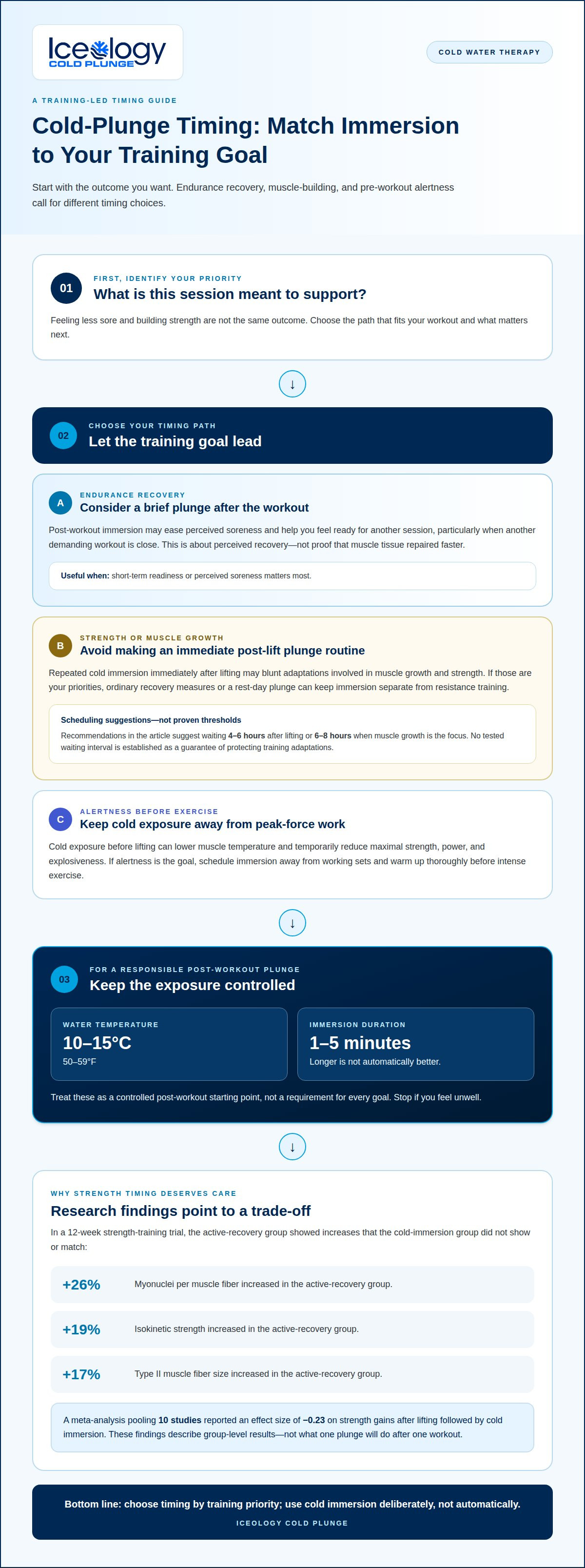
The best time for a cold plunge depends on your training goal, not simply how hard you worked. After endurance exercise, cold immersion may ease perceived soreness and help you feel ready for another session. After strength training, an immediate plunge may work against muscle-building adaptations. To decide on a cold plunge before or after workout sessions, start by identifying your priority.
It’s understandable to want one simple rule for timing, temperature, and duration. A practical starting point is to reserve post-workout plunges for endurance recovery, and avoid making immediate cold immersion a regular part of strength-training days if building muscle is the goal. Cold-plunge protocols commonly use water around 50–59°F, while responsible post-workout immersion may last one to five minutes.
This guide explains how timing differs for endurance training, strength work, and pre-workout alertness, and how temperature and duration fit each goal. The aim is a measured approach that supports your training, rather than adding cold exposure without a clear purpose.
Key Takeaways
- Match cold immersion to your training priority: recovery after endurance work and muscle-building adaptations may call for different timing.
- If strength or muscle growth is your focus, consider keeping cold exposure separate from your lifting session.
- Choose water temperature and immersion duration with your workout goal in mind rather than assuming colder or longer is better.
- Cold plunges may affect perceived soreness differently after high-intensity and eccentric exercise.
- A well-controlled Cold Plunge Tub can make it easier to set a consistent temperature for your routine.
1. Why Cold Plunge?
Cold water immersion can make recovery feel easier, especially when soreness or readiness for another session matters. A 2012 Cochrane review found that immersion reduced perceived muscle soreness for up to four days after exercise. That describes how sore people felt, not proof that muscle tissue repaired faster. The distinction matters: feeling ready to train and building strength are related, but they aren’t the same outcome.
For endurance athletes, a post-workout plunge may help manage perceived fatigue and prepare for exercise again the next day. It can be useful when another demanding session is close and short-term readiness is the priority. The trade-off is different after resistance training. Repeated cold water immersion immediately after lifting may blunt adaptations involved in muscle growth and strength, so a routine that suits a runner may not suit someone prioritizing hypertrophy.
One 12-week strength-training trial illustrates the concern: myonuclei per muscle fiber increased by 26% in the active-recovery group, while the cold-immersion group didn’t show that increase. The finding doesn’t mean one plunge erases a workout. It does support treating frequent post-lifting immersion cautiously when muscle adaptation is the main goal. Consider the type of training, the next session, and whether immediate soreness relief outweighs that longer-term priority.
What are the risks of cold plunging after exercise? Cold immersion can raise blood pressure and disrupt heart rate, potentially worsening existing health issues. People with cardiovascular or blood-pressure problems should be especially cautious, since cold exposure may aggravate those concerns.
Temperature and time both shape the experience. A responsible post-workout approach is water between 10 and 15 degrees Celsius for one to five minutes. Longer isn’t automatically better: the goal is a controlled exposure, not enduring discomfort. Stop if you feel unwell, and don’t treat the four-day soreness finding as a reason to extend immersion. The right duration depends on the purpose, your tolerance, and how the session fits your training.
Cold water isn’t the only recovery tool. A balanced meal, adequate fluids, rest, gentle stretching, and a proper cool-down can support recovery without immersion. After a strength session focused on muscle growth, for example, prioritize a cool-down and food instead of an immediate plunge. After endurance work, brief cold immersion may be more relevant if perceived soreness or next-day readiness is your priority.
Use cold immersion with a clear purpose. If strength is your focus, avoid frequent plunges immediately after lifting to protect training adaptations. For endurance recovery, weigh possible soreness relief against how your body responds. Consider your water temperature, exposure time, and type of exercise so each session is a deliberate choice.
2. Cold plunge timing for muscle growth and strength
For muscle growth, timing matters as much as the plunge itself. Cold immersion immediately after lifting may interfere with signals that help muscles adapt to resistance training. That doesn’t make cold exposure incompatible with strength goals; it means your priority should guide when you use it. A post-lifting plunge may ease perceived soreness, but feeling less sore doesn’t mean muscle growth improved. Choose a cold plunge before or after workout sessions based on whether immediate relief or long-term strength gains matter more.
A 12-week strength-training trial found a 19% increase in isokinetic strength in the active-recovery group, while the cold-water-immersion group didn’t show that increase. Type II muscle fiber size rose by 17% in the active-recovery group, with no comparable increase in the immersion group. These results describe group differences over a training block, not what one plunge will do after one lifting session.
Other findings point in the same direction. A meta-analysis pooling ten studies reported an effect size of −0.23 on strength gains after lifting followed by cold immersion. A 2026 network analysis considered 87 studies and concluded that plain rest beats cold water for resistance training. Together, these findings make frequent, immediate post-lifting plunges a poor default when strength or muscle growth is the priority.
There isn’t a tested waiting interval that guarantees protection of training adaptations. One recommendation is to wait 4–6 hours after lifting, while another advises people focused on muscle growth to wait 6-8 hours. Treat these as practical scheduling suggestions, not proven thresholds. Keeping immersion for a rest day is another way to separate cold exposure from resistance training.
Cold exposure before lifting also deserves thought. It can lower muscle temperature and temporarily reduce maximal strength, power, and explosiveness. A plunge immediately before heavy squats, for example, may be a poor fit when the session depends on peak force and coordination. If alertness is your goal, schedule cold exposure away from your working sets and warm up thoroughly before intense exercise.
Use your training calendar to make the choice practical. If today’s session prioritizes progressive lifting, finish with ordinary recovery measures and place your plunge on a rest day. If you immerse after lifting for a specific short-term reason, avoid making it automatic after every session. Track how the timing fits your training instead of using soreness alone to judge muscle progress. A cold plunge before or after workout sessions should support your training plan.
Consistent temperature control can support a planned routine. A Cold Plunge Tub with a built-in chiller can lower water temperature to as low as 39 °F, making it easier to schedule cold exposure away from lifting sessions.
3. Typical cold plunge temperature and duration
For a post-workout plunge, a practical starting point is water at 50–59°F for one to five minutes. That range fits a responsible, brief cold-water immersion rather than a test of endurance. Temperature and duration work together: colder water can feel more intense, so extending time isn’t automatically a better recovery strategy. An ice bath should serve a clear purpose, such as managing perceived soreness after endurance exercise.
Cold-plunge protocols differ because studies examine different goals, including soreness, readiness, and performance. A pooled analysis of recovery research placed the recommended temperature for soreness relief at 52–59°F and duration at 11–15 minutes. That longer protocol is not the only approach. For a short post-workout session, the one-to-five-minute range offers a more conservative reference, especially when cold immersion is new.
Let the workout guide your timing. After endurance exercise, brief immersion may help with perceived soreness when another training day follows soon. After resistance training, consider the effect on muscle adaptation: repeated immediate plunges may interfere with strength and growth signals. A shorter plunge doesn’t remove that timing concern, so choose a rest-day session when muscle growth is the priority.
Temperature affects the session’s intensity, while duration determines how long the body experiences that cold. Begin at the warmer end of the 50–59°F range and keep the first session brief. If the cold feels overwhelming or you feel unwell, end the immersion. Don’t extend a session just to chase inflammation relief; a colder bath or longer exposure isn’t a substitute for rest, fluids, and a balanced recovery routine.
For a consistent routine, keep a simple journal. Record the water temperature, immersion time, workout type, and how you feel the next day. For example, note whether a short plunge after a long run changes perceived soreness or readiness the following morning. Compare similar training days rather than judging the effect from one session. This can help you see whether cold water supports recovery without disrupting training adaptation.
Keep the goal specific. A brief ice bath may suit an endurance athlete prioritizing next-day readiness, while someone focused on lifting may place cold exposure on a rest day. The same temperature can feel different depending on duration and personal tolerance, so change one variable at a time. A measured approach protects the mental focus of the routine and keeps cold immersion connected to fitness, not discomfort for its own sake.
4. Cold plunges after high-intensity versus eccentric exercise
Exercise type can change how useful cold immersion feels. A systematic review found that cold water immersion after high-intensity workouts reduced perceived muscle soreness more effectively than immersion after eccentric workouts. High-intensity intervals, such as repeated hard cycling efforts, and eccentric work, such as controlled lowering during a squat, place different demands on the body. The finding compares soreness relief, not every measure of recovery or training adaptation.
Your training goal can guide the choice after a workout. If a demanding interval session leaves you sore and another workout is close, cold immersion may help manage perceived fatigue. After eccentric-focused strength training, such as slow lowering repetitions, the same approach may offer less soreness relief. Cold exposure shouldn’t replace sleep, fluids, or a gradual cool-down, especially when muscle growth is central to your program.
Before exercise, cold-water immersion has a different trade-off. Lowering muscle temperature can temporarily reduce maximal strength, power, and explosiveness. That may matter before a heavy deadlift, sprint, or jump session, where rapid force production and coordination are important. A plunge immediately before those efforts is therefore a poor fit for performance, even if the cold initially feels energizing.
Some people use cold exposure before exercise for alertness or mood. Cold immersion can raise norepinephrine and dopamine, which may increase alertness, focus, and energy. Those effects don’t guarantee better exercise performance. If mental readiness is your reason, separate the plunge from demanding work, then warm up thoroughly to prepare for the session.
A practical sequence matters. After a pre-workout plunge, allow 10–15 minutes of light movement before the first working set, and warm up thoroughly before heavy exertion. For example, someone planning explosive lifts can use easy movement and progressive warm-up sets to prepare rather than moving straight from cold water to maximal effort. If stiffness or restricted movement remains, postpone intense exercise.
Choose timing based on the session’s main demand. For high-intensity endurance work, a brief post-workout plunge may suit a short-term soreness or readiness goal. For eccentric strength training, consider whether immediate relief matters more than preserving the body’s normal adaptation response. For heavy or explosive exercise, keep cold exposure away from your warm-up and working sets.
Cold-water therapy is a tool, not a required finish to every workout. Track exercise type, plunge timing, and how you feel at the next session across comparable training days. A runner might note soreness after intervals, while a lifter records whether cold exposure affects warm-up quality. Comparing similar sessions helps make immersion a deliberate part of fitness, rather than an automatic response to exertion.
5. Typical cold plunge water temperatures
Cold-plunge temperatures vary across research protocols, so one number doesn’t define every session. Commonly reported ranges include 50–59°F, 50–60°F, 39–56°F, and 39–55°F. That spread reflects different study methods and goals, not a reason to chase the coldest possible water. For a practical starting point, focus on a moderate temperature and a brief immersion, then match the routine to your training.
For soreness relief, a pooled analysis placed the recommended water temperature at 52–59°F. Endurance-performance and competition-recovery protocols commonly use 50–59°F. The overlap gives athletes a useful reference, but temperature alone doesn’t determine the effect. Immersion duration, workout type, and the next training session also matter. A runner recovering between sports sessions may choose differently from someone protecting strength gains.
Colder options appear in the broader range. Research temperatures can reach 39°F, but a lower setting isn’t automatically more effective for every goal. Choose a temperature you can tolerate while following a deliberate plan. For example, someone new to morning immersion can begin toward the warmer end of the common range, rather than starting at its coldest edge. This keeps the session manageable without treating discomfort as a measure of success.
A classic immersion study used water at 57°F. That single study temperature is a reference point, not a universal prescription. Before comparing protocols, consider whether the goal is perceived soreness relief, endurance readiness, or another outcome. A sports team prioritizing recovery before another event may value a repeatable protocol; an individual lifting for muscle growth may prioritize keeping cold exposure away from training.
Consistent temperature control also makes comparisons more useful. If a plunge feels different from one session to the next, record the displayed temperature, immersion time, time of day, and exercise type. Compare similar endurance workouts, for instance, rather than judging a morning plunge against a session after strength training. A simple journal can help distinguish temperature effects from differences in workload or recovery time.
Your circulation and sensation of cold can change as your body adjusts during immersion, so don’t treat a particular temperature as permission to stay in longer. Keep exposure controlled, get out if you feel unwell, and avoid changing temperature and duration abruptly at the same time. The key is to choose a tolerable temperature and let your training goal determine whether cold immersion belongs in your routine.
Iceology Cold Plunge
Iceology Cold Plunge offers cold plunge tubs, ice baths, cold tubs, and accessories for a home cold-water routine. Once you’ve matched plunge timing to your training goal, a dedicated tub with a built-in chiller lets you immerse without adding ice. Keep your plan aligned with your workout: endurance recovery and strength training may call for different timing.
Plan how cold immersion fits your training schedule, including the temperature and duration you intend to use. A consistent setup can make it easier to follow your plan and observe how immersion fits your exercise routine.
Contact Iceology Cold Plunge to discuss your cold-plunge routine.
Build a Routine Around Your Training
Let your training priorities set the rhythm. A cold plunge before or after a workout can be part of a deliberate routine, rather than an automatic finish to every session. Decide what you want cold exposure to support, then keep that purpose in view as your schedule changes.
Iceology Cold Plunge offers cold plunge tubs, accessories, and ice baths for people building a cold-water routine at home. Choose a setup that fits your training habits and the way you want to use immersion. A consistent setup can make the routine easier to maintain.
Choose with intention, let your training goals lead, and build a sustainable recovery practice.
Frequently Asked Questions
Why Cold Plunge?
A cold plunge can be useful when you have a specific recovery or alertness goal. For example, a small 2023 study found that participants who spent five minutes in 20°C water reported feeling more active, attentive, and inspired afterward. That kind of reported feeling may appeal before a demanding day, while post-exercise immersion may help manage perceived soreness. Choose a purpose first, then fit the plunge around your training.
Does this also apply to endurance training?
Endurance athletes may use cold immersion after a hard session when short-term recovery and readiness for another workout matter. A typical competition-recovery protocol is 2–5 minutes at 50–59°F. For example, a runner with a demanding session the next day may prioritize perceived fatigue relief. That choice differs from a strength-focused routine, where frequent immediate post-lifting plunges can conflict with muscle adaptation goals.
How long should I wait after strength training?
There’s no tested waiting period that establishes a precise cutoff. One practical suggestion is to wait 4–6 hours after lifting, while guidance for people prioritizing muscle growth suggests 6-8 hours. Treat those intervals as scheduling estimates, not guarantees. If your day makes that separation difficult, placing cold immersion on a non-lifting day keeps it away from the immediate recovery period.
How should you schedule it?
Start by putting your most important training session on the calendar, then fit cold exposure around it. If strength training is the priority, for example, reserve plunging for a rest day or a time well separated from lifting. If endurance recovery is your focus, schedule immersion after a demanding session when readiness matters. Keep a brief journal of workout type, timing, and next-day soreness to spot patterns.
What if you lift in the evening?
If you lift at 6 p.m., a 6 a.m. plunge creates a 12-hour gap before training. That separates cold exposure from the immediate post-lifting period, though it doesn’t establish a proven cutoff for muscle adaptation. Use a thorough warm-up before lifting, especially if you feel stiff. If morning cold affects your movement or session quality, move the plunge to a rest day.
How does cold plunging before exercise affect strength and performance?
Cold exposure before exercise can temporarily lower muscle temperature, which may reduce maximal strength, power, or explosiveness. That matters most before work such as sprinting, jumping, or heavy lifting. If you plunge for alertness, allow 10–15 minutes of light movement before your first working set, then complete a thorough warm-up. Don’t let a more alert feeling substitute for preparing your muscles and coordination.
Does cold plunging after a workout reduce muscle growth or strength gains?
Repeated cold immersion immediately after resistance training may interfere with adaptations that support muscle growth and strength. The concern is making post-lifting plunges a frequent habit, not that one session erases progress. If building muscle is your priority, use other recovery habits after lifting and place cold immersion away from those workouts. Track strength and training consistency instead of judging progress by soreness alone.
How long should you wait after strength training before a cold plunge?
For muscle-growth goals, a 6-8-hour gap is a suggested way to separate immersion from lifting, but research hasn’t established it as a definitive threshold. A rest-day plunge creates clearer separation if your schedule allows. If you train in the evening, for example, plan immersion the next day rather than immediately after the session. Keep your choice consistent enough to assess how it fits your training routine.