
Cold Plunge for Creative Professionals: Is It Right for You
A cold plunge can create a deliberate pause in an overloaded day, but it isn’t a cure for burnout. A cold plunge for creative professionals to avoid burnout may suit someone seeking a structured reset, provided it complements sleep, time away from work, and other recovery needs rather than replacing them.
Creative work can demand sustained focus and emotional energy, so it’s understandable to seek a clear boundary between work and rest. Cold exposure may feel stimulating, but an intense session can also feel like another demand when you’re already depleted.
This article helps you weigh whether cold plunging suits your situation, how to approach it cautiously, and how to make room for recovery afterward. It also covers what to track, which safety concerns matter, and when cold exposure is better left out of your routine.
Key Takeaways
- Consider whether cold exposure fits your current health and energy needs before adding it to a recovery routine.
- Acclimate gradually with brief sessions instead of treating colder water or longer exposure as a goal.
- Make room for sleep, nourishment, time away from work, and a calm transition after a plunge.
- Track mood, sleep, and mental clarity to see how the practice affects you over time.
- Keep safety central: avoid plunging alone, and leave the water if you feel lightheaded or unusually uncomfortable.
Should You Cold Plunge?
Cold plunging can worsen anxiety or cardiovascular risks for some people, and evidence doesn’t establish it as a treatment for anxiety, depression, or sleep problems. A home plunge’s total cost depends on the tub, setup, and ongoing energy and water-treatment needs, so consider those expenses together.
Health Conditions and Cold-Plunge Risks
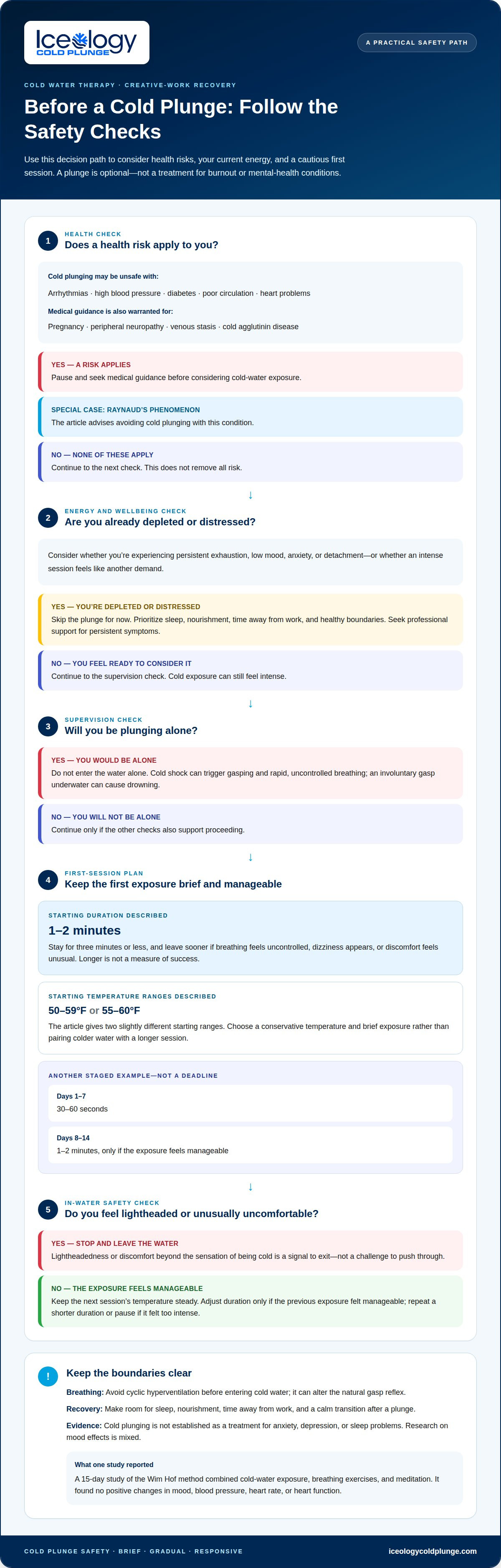
Some health conditions can make cold-water exposure riskier, so your health history matters before starting. Cold plunging may be unsafe with arrhythmias, high blood pressure, diabetes, poor circulation, or heart problems. Pregnancy, peripheral neuropathy, venous stasis, and cold agglutinin disease also warrant medical guidance before exposure.
Raynaud’s phenomenon deserves particular caution: Dartmouth Health vascular surgeon Richard Powell advises people with the condition to avoid cold plunging. If you have persistent exhaustion, low mood, anxiety, or detachment, seek professional support rather than treating a plunge as the answer. Cold exposure isn’t a substitute for mental-health care.
Assess the purpose, too. Cold plunging may feel stimulating, but that sensation doesn’t establish lasting health benefits or resolve the causes of stress. If you’re already depleted, an intense session can add another physical demand. Prioritize the factors that support recovery, including sleep, nourishment, time away from work, and healthy boundaries.
Cold Shock and Cardiovascular Effects
Cold shock is the body’s immediate response to sudden cold exposure. It can trigger gasping and rapid, uncontrolled breathing, and an involuntary gasp underwater can cause drowning. Dartmouth Health sports medicine director Neal Goldenberg advises against cold plunging alone.
Cold water also constricts blood vessels, raises blood pressure, and makes the heart work harder. The sudden change can raise heart rate and breathing rate, which is especially concerning for people with underlying cardiovascular conditions. For anyone with heart disease or circulation problems, this added strain is a reason to seek medical advice before considering immersion.
Avoid breathwork involving cyclic hyperventilation before entering cold water, as it can alter the natural gasp reflex. If you feel lightheaded or experience discomfort beyond the sensation of being cold, leave the water. These are practical safety signals, not challenges to push through for a longer session.
Mood Effects and Mental Health Evidence
Cold exposure may affect mood by prompting changes in dopamine, epinephrine, and endorphins, but research on these effects is mixed. A temporary lift in alertness may feel useful during a demanding creative day. It doesn’t show that cold plunging treats anxiety or depression, or that the effect will last after a session.
Human evidence remains limited: randomized trials haven’t established cold plunges as an effective treatment for anxiety or depressive disorders. A study of the Wim Hof method combined cold-water exposure, breathing exercises, and meditation for 15 days. It found no positive changes in mood, blood pressure, heart rate, or heart function.
Use your own response as a reason to pause, not as a diagnosis. If a session increases distress, disrupts sleep, or adds pressure to an already overloaded routine, it may not suit your needs. Persistent mood symptoms or exhaustion call for professional support; cold exposure remains an optional wellness practice.
Beginner duration and gradual acclimation
For your first cold-water session, keep exposure brief and manageable. A gradual response matters more than proving your endurance or extending each session.
Starting with Brief Sessions
A short first immersion lets you observe your physical response without treating discomfort as a target. Beginners can start with one or two minutes, then leave sooner if breathing feels uncontrolled, dizziness appears, or discomfort feels unusual. Dartmouth Health sports medicine director Neal Goldenberg advises staying in for three minutes or less. A longer session isn’t a measure of success.
Temperature affects how quickly cold water feels intense. A beginner range described for plunging is 50 to 59 degrees Fahrenheit; another suggested starting point is 55 to 60 degrees Fahrenheit. Since these ranges differ slightly, choose a conservative temperature and brief exposure rather than combining colder water with a longer session. Keep the first attempt simple, without adding exercise or other stressors.
Gradual Acclimation
Gradual acclimation means increasing exposure in small increments as your response allows. One challenge-based progression uses 30 to 60 seconds during days 1 through 7, then one to two minutes during days 8 through 14. These are staged examples, not deadlines. If a session feels too intense, repeat a shorter duration or pause instead of advancing automatically.
Use a simple progression rather than changing several variables at once:
- Begin with water in the 50 to 59 degrees Fahrenheit range and a brief immersion.
- Keep the next session’s temperature steady while adjusting duration only if the previous exposure felt manageable.
- Notice breathing, balance, and how you feel after exiting, not just how long you stayed.
- Stop the session if you become lightheaded or feel discomfort beyond cold.
Cold exposure can trigger rapid breathing, so enter carefully and focus on controlled breathing rather than forcing a physical challenge. Avoid cyclic hyperventilation before immersion because it can alter the natural gasp reflex. Don’t use a daily streak or colder setting as proof of progress. A shorter session that fits comfortably into your routine is more practical than one that creates dread or adds stress.
Keep the routine consistent enough to assess, but flexible enough to respond to your body. If you’re considering a home setup for controlled sessions, cold plunge tubs can make water temperature part of the routine rather than an improvised variable.
Making time for recovery after a plunge
A plunge can mark a pause in a demanding workday, but recovery depends on more than immersion. Make room for rest and practical routines before adding cold exposure.
Recovery Foundations for Burnout
Everyday supports such as sleep, nourishing food, movement, time away from work, and clear boundaries address depletion more directly than cold therapy. A five-minute mindfulness meditation can offer a brief reset when creative work feels overwhelming. Cold exposure may complement these habits, but it doesn’t replace them or resolve the pressures causing burnout.
Consider a creative professional finishing a deadline-heavy day: a plunge might mark the transition from work, but it cannot restore missed sleep or create sustainable boundaries. Exercise can support a balanced routine, while mindfulness offers a quieter pause without cold immersion. If plunging feels like another task to prepare for, skip it and protect time for the recovery basics instead.
Plunge Frequency and Recovery Time
Frequency is how often cold exposure fits into a routine; recovery time is the space needed afterward. Beginners are advised to plunge once or twice a week, rather than treating daily sessions as a requirement. There’s no single recovery interval that suits everyone. Leave enough time to feel settled and warm before returning to demanding work or another strenuous activity.
After immersion, make the transition deliberate: dry off, change into warm clothes, then sit quietly or take a walk. These steps create a buffer before opening email or returning to a high-pressure task. Feeling temporarily more awake doesn’t mean an exhausted person no longer needs rest. Don’t let a session crowd out sleep, meals, or time away from work.
Cold therapy has long been used in athletics to help manage inflammation and soreness. Cold water constricts blood vessels and can reduce swelling and nerve activity, which may ease discomfort after exercise. Short-term relief, however, isn’t the same as improved long-term muscle recovery. Consider your training and the purpose of immersion before combining the two.
Timing matters for strength goals. Cold exposure immediately after strength or hypertrophy training may interfere with muscle-building adaptations; plunging within four hours of a muscle-building workout may also affect gains. If building strength is your priority, separate cold immersion from that session rather than using it automatically after every workout.
Use your response as a practical guide, not a performance score. If a plunge leaves you depleted or disrupts your evening routine, reduce its role or pause it. A brief, intentional break is useful only when it supports recovery; sleep, nourishment, movement, and boundaries remain the stronger foundation for addressing burnout.
Tracking mood, sleep, and mental clarity
Track how you feel around each session instead of judging a plunge by temperature alone. For a cold plunge for creative professionals to avoid burnout, the useful question is whether the practice supports your routine on ordinary workdays, not just whether you feel alert immediately afterward.
Use a Simple, Consistent Record
Before and after immersion, note your mood, energy, and mental clarity in plain language. For example, record “tense before, alert afterward” rather than assigning a score that makes the session feel like a test. Add the water temperature, session timing, and any unusual stress or poor sleep. These details help you interpret the experience in context.
Use the same few prompts each time. A notebook or basic phone note is enough. Compare similar days, such as a plunge before focused work and a non-plunge day with comparable demands. Don’t change temperature, duration, and timing together; otherwise, it’s harder to tell which part of the routine may have affected your mood or attention.
Interpret Mood and Focus Carefully
Some people feel more alert after cold exposure, which may make the transition into creative work feel sharper. That immediate response doesn’t establish lasting mental benefits. Cold exposure can also feel stressful, so note whether alertness came with calm focus or agitation. “More awake, but distracted” gives a clearer picture than simply marking the session as successful.
According to Dartmouth Health, studies haven’t established a well-supported link between cold plunging and better sleep. Track sleep separately instead of assuming an evening plunge improves rest. Note whether you settled easily, woke during the night, or felt rested the next morning. A change after one session may also reflect workload, bedtime, or other parts of your day.
Look for Patterns, Not Streaks
Review your notes after several sessions and compare them with days without immersion. Look for repeatable patterns: perhaps a morning session feels energizing, while a late session makes it harder to wind down. Changing fewer variables makes observations easier to interpret. If mood or sleep repeatedly worsens, pause the practice instead of chasing colder water or longer exposure.
- Record mood, energy, focus, sleep, temperature, and session timing.
- Note context, such as a deadline, difficult meeting, or restful night.
- Keep cold exposure optional; a missed session shouldn’t create more pressure.
Assessing a cold plunge for creative professionals to avoid burnout means considering how it fits your actual work and recovery needs. If it feels stimulating but leaves your sleep unsettled, it may not suit your routine. Keep tracking practical, protect habits that support wellbeing, and treat cold water as an optional wellness practice, not a measure of mental health.
Cold plunge safety and medical precautions
Cold-water safety depends on temperature, exposure time, breathing, and health history. Use a conservative setup, avoid plunging alone, and treat warning signs as reasons to exit, not challenges to overcome.
Beginner guidance places water between 50 and 59 degrees Fahrenheit. Dartmouth Health sports medicine director Neal Goldenberg advises keeping plunge water at least 50 degrees and staying immersed for three minutes or less. These limits help keep an early session controlled. Colder water increases the body’s cold response, so don’t combine a lower temperature with a longer exposure.
Cold shock can trigger gasping and rapid, uncontrolled breathing. This can cause dizziness or fainting, and an involuntary gasp underwater can lead to drowning. Have another person present, enter carefully, and avoid cyclic hyperventilation before immersion because it can alter the natural gasp reflex. Breathe steadily; don’t force a technique that makes you feel lightheaded.
Cold exposure can constrict blood vessels, raise blood pressure, and make the heart work harder. People with cardiovascular problems face particular risks. Cold plunging may also be unsafe with arrhythmias, high blood pressure, diabetes, heart problems, or poor circulation. Pregnancy, peripheral neuropathy, venous stasis, and cold agglutinin disease are additional reasons to discuss the practice with a healthcare provider before starting.
Raynaud’s phenomenon calls for specific caution. Dartmouth Health vascular surgeon Richard Powell advises people with Raynaud’s to avoid cold plunging. A history of cold-related symptoms matters, too: numbness or unusual discomfort can make it harder to judge how your body is responding. Leave the water if you feel lightheaded or uncomfortable beyond the expected sensation of cold.
After exiting, dry off promptly and put on warm clothes to help your body warm back up. Don’t treat shivering, dizziness, or uncontrolled breathing as signs of a productive session. If an acute symptom occurs, stop the exposure and focus on getting safely out of the water. These steps matter more than extending immersion for a perceived physical or mental health benefit.
Cold plunging is not a substitute for medicine or mental-health care. Persistent exhaustion, anxiety, low mood, or detachment deserve professional support rather than progressively colder sessions. A safe routine puts health first: choose a moderate temperature, keep exposure brief, avoid solo plunges, and stop when your body signals distress.
Iceology Cold Plunge
Iceology Cold Plunge offers home equipment for people who want to make cold exposure part of a considered wellness routine. Its Cold Plunge Tubs are made in the USA and feature built-in chillers that can lower water temperature to 39 degrees Fahrenheit. That capability supports temperature control, but it doesn’t mean beginners should start at the coldest setting. Follow a gradual approach, prioritize safety, and treat immersion as optional support, not a burnout treatment.
Choose a setup that fits your space and intended routine, with accessories, Ice Baths, and Cold Tubs also available. If you’re weighing whether home cold exposure suits your recovery goals, contact Iceology Cold Plunge to discuss your needs.
Build a Recovery Routine That Fits Your Creative Work
Let your next step be a deliberate experiment in how recovery fits your working life. A cold plunge for creative professionals to avoid burnout should support sustainable habits, not become another performance target. Choose a routine that leaves room for focused work, downtime, and the flexibility to pause when your needs change.
For a home setup, Iceology Cold Plunge offers cold plunge tubs and accessories for cold-water immersion. A tub can provide a practical setting for an optional wellness practice, not a substitute for addressing burnout or seeking care when you need it.
Explore Iceology Cold Plunge tubs and accessories online, and choose an approach that feels considered, not pressured.
Steady, thoughtful recovery can create more room for the creative work that matters to you.
Frequently Asked Questions
Are Ice Baths Dangerous?
Ice baths can be dangerous when sudden cold exposure triggers breathing changes or strains the heart. Risk depends on health history, water temperature, exposure time, and whether someone is present to help. For example, dizziness during immersion can become an emergency if a person is alone. Treat cold water as a physical stressor, not a test of willpower, and stop if symptoms develop.
What Happens After 30 Days?
After 30 days, your experience may reveal whether cold plunging fits your routine, but there’s no established outcome everyone should expect. Track how you feel during ordinary workdays, including focus, energy, and sleep, rather than relying on a streak or a dramatic change. Reports of improved alertness or stress tolerance don’t establish that cold plunging treats burnout or produces lasting benefits for every person.
What are the potential benefits of cold plunges for stress, mood, focus, and burnout?
Cold plunges may feel stimulating and provide a short, deliberate pause, which some people find helpful during a demanding day. Cold exposure can affect hormones associated with alertness and mood, but evidence is mixed. It isn’t an established treatment for anxiety, depression, or burnout. A creative professional might use a brief session as a transition ritual while still addressing workload, rest, and boundaries.
What does scientific research say about cold-water immersion and creativity or cognitive performance?
Scientific evidence hasn’t established that cold-water immersion improves creativity. Small studies have examined related outcomes: a five-minute cold-water dip was associated with increased alertness and attentiveness in a study of 33 adults. Another small study found young adults completed math problems more quickly after immersing a hand in cold water for three minutes. These findings don’t prove better creative performance or lasting cognitive gains.
What are the health risks and contraindications of cold plunges?
Cold plunging can raise heart rate and blood pressure, constrict blood vessels, and trigger rapid breathing. People with arrhythmias, heart disease, high blood pressure, diabetes, poor circulation, or Raynaud’s phenomenon face particular concerns. Pregnancy and certain circulation or nerve conditions also warrant medical advice before immersion. Avoid plunging alone, and don’t enter cold water after breathwork involving cyclic hyperventilation.
How cold should a cold plunge be, and how long should a beginner stay in?
A beginner can start with water between 50 and 59 degrees Fahrenheit and limit immersion to one or two minutes. Dartmouth Health sports medicine director Neal Goldenberg advises water at least 50 degrees and a session of three minutes or less. These are conservative boundaries, not targets to push toward. Exit sooner if breathing feels uncontrolled, you become lightheaded, or discomfort goes beyond feeling cold.
What is a safe step-by-step cold plunge routine for beginners?
Start with a health review, moderate water temperature, and another person nearby. Enter calmly without pre-plunge hyperventilation, keep the first immersion brief, and leave immediately if dizziness or unusual discomfort appears. Afterward, dry off, change into warm clothes, and allow time to settle before returning to work. Don’t increase duration and lower temperature in the same session; adjust gradually and only if earlier exposure felt manageable.
What do U.S. health and safety experts recommend about cold-water immersion?
Dartmouth Health sports medicine director Neal Goldenberg advises staying immersed for three minutes or less, keeping water at least 50 degrees, and not plunging alone. Dartmouth vascular surgeon Richard Powell advises people with Raynaud’s phenomenon to avoid plunging. A Mayo Clinic sports medicine specialist has described temporary bathtub immersion at 50 to 60 degrees Fahrenheit as likely posing little risk of adverse effects. Personal health risks still matter.