
Cold plunge for dopamine reset: What the research shows
A dopamine spike isn't a reset. Some controlled studies have found that cold exposure may raise dopamine to 2-3 times baseline, but a cold plunge for dopamine reset isn't a proven way to permanently change brain chemistry. Cold plunging also isn't a replacement for therapy or medication.
The appeal is understandable: cold-water immersion can feel energizing, and some people notice a lift in mood or alertness afterward. Those immediate sensations, however, are not evidence that cold plunging treats a mental health condition or produces lasting change.
Here, you’ll learn what research says about dopamine, mood, and stress resilience, where evidence is promising, and where it remains limited. We’ll also explain what cold plunging can and can’t do alongside professional mental health care.
Key Takeaways
- Separate the body’s immediate response to cold from claims about lasting changes in mood or brain chemistry.
- Learn how cold immersion can affect temperature, heart rate, and blood pressure, and why those responses matter for safety.
- Compare mood findings across study designs and follow-up periods to understand where benefits appear limited or short-lived.
- Explore how repeated cold exposure may relate to stress resilience without treating it as a stand-alone mental health intervention.
- See how a cold plunge tub can support a consistent immersion routine while keeping expectations grounded in the evidence.
Is cold plunging a replacement for therapy or medication?
No. Cold plunging may create a brief shift in alertness or mood, but it isn't an established substitute for depression treatment, prescribed medication, or therapy. A randomized trial enrolled 92 adults with mild-to-moderate depression who were receiving outpatient therapy. Its findings cannot establish that cold plunging alone treats depression or supports changing a care plan. Keep prescribed treatment decisions separate from a cold-water routine.
For beginners, start around 55-59°F and limit the first plunge to 1-2 minutes. Use short sessions, keep breathing steady rather than holding your breath, and have someone present until you know how your body responds. If that temperature or duration feels overwhelming, exit the water; building exposure gradually matters more than pushing through.
Cold water prompts immediate cardiovascular and temperature responses. Below 47°F, immersion may initially raise heart rate and blood pressure; cold exposure can increase systolic and diastolic blood pressure by as much as 20-40 mmHg. These changes help explain why a plunge can feel intense, especially when the water is extremely cold or entry is sudden. A calm, gradual entry gives you a chance to notice your response.
Body cooling also depends on exposure conditions, not just the reading on a thermometer. In a study of 10 men, immersion in 14°C (59°F) water lowered rectal temperature from 37.3°C to 35.6°C. That result illustrates why a set temperature cannot guarantee the same response for every person. Water temperature, immersion time, and an individual's reaction all matter; don't treat a longer session as automatically more effective.
Supervision is a practical safeguard, not a test of willpower. Don’t plunge alone until you understand how your body reacts. Cold-water immersion can involve ventricular arrhythmias, linked to simultaneous sympathetic and parasympathetic activation during the dive response. People with heart disease should speak with a doctor before plunging. If you feel faint, confused, or unable to control your breathing, leave the water and seek help.
Dopamine timing has a narrower answer: available findings don't establish that plunging at a particular time of day produces a different dopamine effect. They also don't set a body-temperature threshold that predicts an individual's dopamine response. Body temperature can fall during immersion, as the 10-man study demonstrates, but that measured cooling isn't evidence of a dopamine reset or depression treatment. Treat cold immersion as a wellness practice, not a replacement for mental health care.
Cold exposure and anxiety or stress resilience
Cold exposure triggers a nervous-system response that may coincide with shifts in mood and stress signals. Studies measure different effects, so their findings don’t establish a single outcome for anxiety.
Short-Term Mood Responses
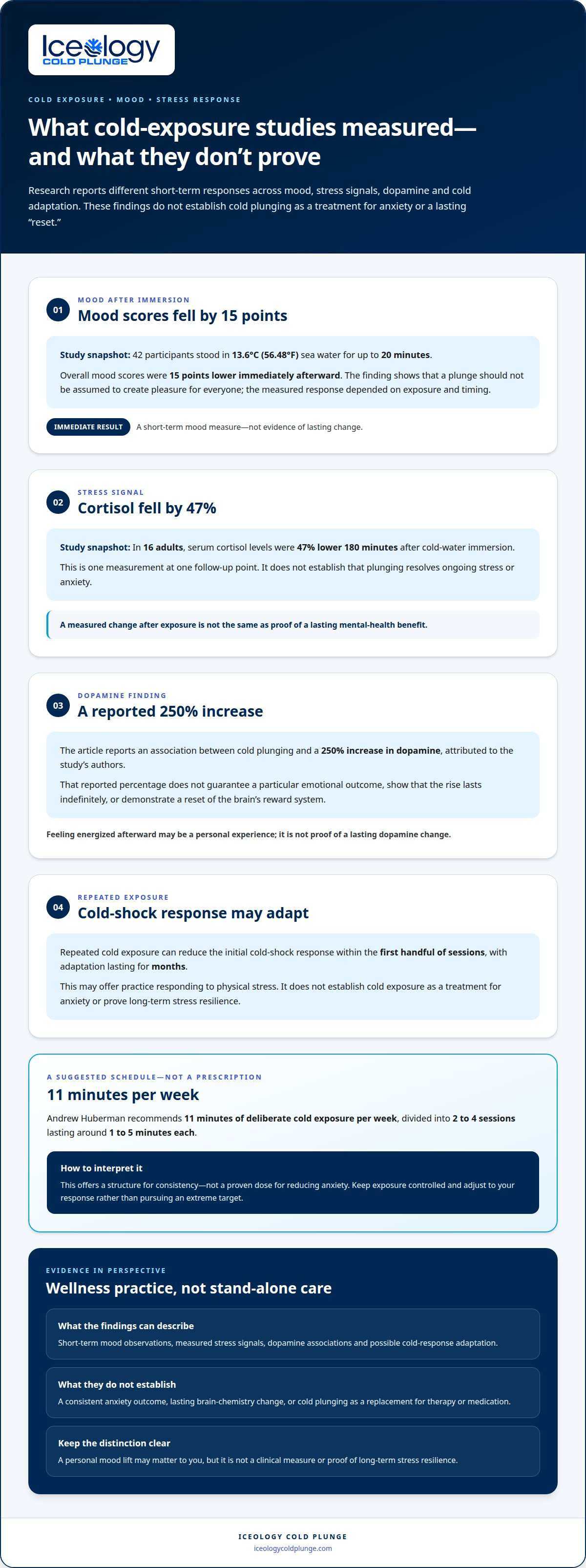
A short-term mood response is a temporary change in how someone feels after cold exposure. In a study of 42 participants standing in 13.6°C (56.48°F) sea water for up to 20 minutes, overall mood scores decreased by 15 points immediately afterward. That result shows why a plunge shouldn’t be assumed to create pleasure for everyone. The measured feeling depended on the exposure and timing.
Nervous System Responses to Cold
Cold exposure shifts the nervous system into a heightened state of alertness. The body releases norepinephrine and dopamine, which may help explain why some people feel energized afterward. Repeated exposure can also reduce the initial cold-shock response within the first handful of sessions, with adaptation lasting for months. This may provide practice responding to physical stress, but it doesn’t establish a treatment for anxiety.
Dopamine Changes After Exposure
Dopamine is a signaling chemical involved in motivation and reward, and cold exposure may affect its levels. Cold plunging is associated with a 250% increase in dopamine, which can affect mood and produce feelings of pleasure and satisfaction, according to the study’s authors. The reported percentage describes an association, not a guaranteed emotional outcome. It doesn’t show that the rise lasts indefinitely or resets the brain’s reward system.
Weekly Cold-Exposure Recommendations
A weekly cold-exposure recommendation is a suggested schedule, not a universal prescription. Andrew Huberman recommends 11 minutes of deliberate cold exposure per week, divided into 2 to 4 sessions lasting around 1 to 5 minutes each. This offers a practical structure for consistency, not a proven dose for reducing anxiety. Keep exposure controlled and adjust your routine to your response rather than pursuing an extreme target.
Study results also vary by measurement and timing. In a study of 16 adults, serum cortisol levels fell by 47% 180 minutes after cold-water immersion. That result describes one measurement after exposure; it doesn’t establish that plunging resolves ongoing stress. Track your own response across sessions, while treating cold exposure as a wellness practice rather than a stand-alone solution for anxiety.
For a dedicated setting to plan immersion sessions, consider a cold plunge tub. Use changes in mood as personal observations, not clinical measures. A calmer feeling after one session may matter to you, but it can’t establish long-term stress resilience or treatment of an anxiety condition.
How Does a Cold Plunge Improve Mental Health?
Cold immersion may influence how people feel, but evidence for clinical mental-health benefits remains limited. Its most appropriate role is as a possible wellness practice alongside established care.
Cold Plunging Alongside Mental Health Care
Using cold plunging alongside mental-health care means treating it as an additional routine, not a replacement for therapy or medication. Feeling energized after immersion doesn’t show that depression or anxiety has been treated. Keep prescribed care in place, and discuss treatment changes with the clinician managing it. Cold exposure may fit into a personal wellness routine, but it cannot provide a diagnosis or individualized mental-health treatment.
Evidence for Mental Health Effects
Evidence for mental-health effects includes measured mood changes, not proof of treatment. The authors of a 2025 meta-analysis reviewed eleven randomized trials and concluded that mental-health benefits weren’t substantiated at the level of clinical claims. In a Dutch trial, 3,018 adults finished daily showers cold for a month. A small mental-wellbeing improvement appeared at 30 days, then had faded by 90 days.
Those results help set expectations: an early change in feeling isn’t necessarily durable. A study of 33 healthy adults found that five-minute cold immersion was followed by reports of greater alertness, attentiveness, and inspiration, alongside less distress and nervousness. These participants were healthy adults, so their responses don’t establish effects for people experiencing diagnosed depression or other mental-health conditions.
Stress Adaptation and Mental Health
Stress adaptation is the body’s adjustment to a controlled challenge, which can make repeated exposure feel more manageable. The cold-shock response reportedly shrinks within the first handful of plunge sessions, and that adaptation lasts for months. This can provide a structured way to notice your reactions and practice steady breathing. It doesn’t prove that cold exposure prevents anxiety or changes the course of a mental-health condition.
Consider health conditions before immersion. Cold-water exposure can trigger ventricular arrhythmias through simultaneous sympathetic and parasympathetic activation during the dive response. People with heart disease should speak with a doctor before plunging. This risk is separate from mood effects: feeling calm afterward doesn’t show that the cardiovascular response was safe for a particular person.
For comparison, the Dutch trial used cold showers rather than immersion. Its daily-shower design produced a small wellbeing difference at 30 days, but that effect had faded by 90 days. That timeline illustrates why duration of benefit matters as much as an immediate post-exposure feeling. It also cautions against treating a brief mood lift as evidence of lasting mental-health improvement.
If appropriate, use cold exposure as one part of a broader routine. Track whether your mood or stress response changes, while keeping mental-health care anchored in treatment that addresses your needs. Studies measured different outcomes, populations, and follow-up periods, so their findings don’t support a single clinical promise.
What does the research say about the benefits of cold plunging?
Studies examine cold-water immersion, showers, swimming, and cryotherapy, but these methods aren’t interchangeable. The exposure method and measured outcome shape what each finding can tell you.
Dopamine and Noradrenaline Changes
Dopamine and noradrenaline changes are chemical responses measured during or after cold exposure. Cold plunging is associated with a 530% increase in noradrenaline, which increases arousal and cognitive function, according to the study’s authors. This reported change may help explain why a plunge can feel stimulating, but it doesn’t by itself demonstrate a clinical mental-health benefit.
In a study of 10 men, immersion in 14°C (59°F) water for up to 1 hour increased plasma peripheral norepinephrine and dopamine each fivefold during immersion. That finding came from specific conditions and participants. It isn’t a personal forecast or a standard session target. The measurement describes a physiological response, not proof of lasting mood improvement or recovery.
Cold Plunges Compared With Other Dopamine Supports
When comparing cold plunges with other ways of supporting dopamine, consider the activity and outcome studied rather than assuming equal effects. Exercise can also produce a positive mental state; some people describe a similar feeling after a long run and cold immersion. That comparison doesn’t establish that cold exposure replaces exercise or provides the same broader health benefits.
Research also uses distinct cold-exposure methods. A cryotherapy trial involved 10 sessions of 3 minutes each across two weeks. The treatment group experienced −110°C to −135°C, while the control group received −50°C. Those are chamber conditions, not plunge-water temperatures. Interpret a routine within the method actually studied, especially when comparing immersion, showers, swimming, and cryotherapy.
The Meaning and Evidence for a Dopamine Reset
“Dopamine reset” is a popular phrase for a hoped-for change in reward or motivation, not an established outcome of plunging. Some controlled studies have found dopamine may rise to 2-3 times baseline after cold exposure, but a temporary increase doesn’t establish that the brain has reset. This distinction helps separate a measurable response from a lasting change in everyday motivation or behavior.
Other measurements show why context matters. In a study, 33 participants sitting in 20°C (68°F) water for 5 minutes had positive affect increase and negative affect decrease by about 5 points each immediately afterward. Those conditions and mood scores describe that study, not every plunge. An immediate shift doesn’t establish a dopamine reset or a treatment effect.
Cold plunging and dopamine
Dopamine is part of the physiological response researchers examine during cold exposure. Understanding what that response can and can’t show helps distinguish a momentary shift from claims about lasting wellness or a complete brain reset.
Cold immersion creates a strong physical stimulus, and studies associate it with changes in dopamine. That link may help explain why someone feels more alert or energized after entering cold water. But a noticeable feeling is a personal experience, not a direct measure of brain chemistry. It doesn’t show that dopamine has been restored, balanced, or permanently changed.
“Reset” can make a temporary response sound like a lasting change in the brain. The evidence discussed here concerns changes associated with exposure, not proof of a reset process. Distinguish between an acute response during or after immersion and a sustained change in everyday motivation, mood, or behavior. The first doesn’t establish the second.
Exercise offers a useful comparison, but it isn’t a simple substitute or equivalent. A long run and cold immersion can both feel mentally activating to some people, yet their physical demands differ. Exercise involves sustained movement; immersion creates a cold stressor. The dopamine response alone doesn’t establish which activity is better or whether one produces the same recovery or wellness effects as the other.
Inflammation and dopamine are separate questions. Cold-water therapy is used after intense workouts to address muscle soreness and support recovery, but that use doesn’t demonstrate a dopamine mechanism. If you’re considering immersion for wellness, track practical outcomes, such as how you feel afterward and whether the routine fits your day. Those observations describe personal experience, not clinical proof.
Keep the claim narrow: cold exposure is associated with dopamine changes, while “dopamine reset” implies more than the findings establish. Don’t treat a temporary burst of alertness as evidence that a mental-health condition has improved. Pair any wellness routine with appropriate care, and judge cold immersion by realistic aims, comfort, and consistency, not a promise to reset brain chemistry.
A cold plunge tub can make a deliberate immersion routine easier to structure at home.
Iceology Cold Plunge: Cold Plunge Tubs
Iceology Cold Plunge offers Cold Plunge Tubs for people who want a dedicated setup for cold-water immersion at home. Their built-in chillers can lower water temperature to as low as 39 °F, giving you control over the water’s temperature as you shape a routine around comfort and personal wellness. The tubs are made in the USA.
A consistent setup can make it easier to approach immersion deliberately, but a tub isn’t a dopamine treatment or a replacement for mental-health care. Use cold plunging as a wellness practice, with realistic expectations about what research supports. Ice Baths, Cold Tubs, and Accessories are also available for cold-water routines.
For details about Iceology Cold Plunge’s offerings, visit iceologycoldplunge.com.
Build a Routine Around Your Real Goals
Before adding cold immersion, decide what you want the routine to support: a focused pause, a recovery ritual, or a steadier wellness practice. If a cold plunge for a dopamine reset interests you, treat it as a personal experiment, not a promised brain change. Notice how you feel before and afterward, and consider whether the practice fits comfortably into your wider routine.
Context can make your observations more useful. Note whether sleep, exercise, or a stressful day shapes your experience, and look for patterns rather than judging the practice by one session. Wellness doesn’t need to become another performance target. Choose a practical purpose, keep mental-health care separate from wellness experiments, and let your next step reflect what supports your overall wellbeing.
Thoughtful routines start with curiosity and develop through choices that feel sustainable. Keep moving toward practices that help you feel grounded and well.
Frequently Asked Questions
What Happens to the Body During Cold Exposure?
Cold exposure can raise heart rate and blood pressure, particularly in water below 47°F. Cold exposure can increase systolic and diastolic blood pressure by as much as 20-40 mmHg. The response is one reason to treat immersion as a physical stressor, not just a mood practice. Start in a temperature and duration you can manage, and leave the water if you feel unwell or cannot control your breathing.
Cold Plunge And Dopamine: How Are They Related?
Cold exposure is associated with higher dopamine, a chemical involved in motivation and reward. Some controlled studies have found levels may reach 2-3 times baseline, but that finding doesn’t show a permanent change or a “reset.” A post-plunge feeling of alertness is also not a direct measurement of dopamine. Treat the reported increase as a biological response, not proof that cold plunging treats depression or replaces care.
How does one get started?
Start with a controlled setup, brief exposure, and another person nearby until you know how you respond. A cold shower can offer a gentler introduction before full immersion. Keep your breathing steady, and end the exposure if you feel faint, confused, or unable to breathe calmly. Don’t plunge alone while you’re still learning how your body reacts. People with heart disease should speak with a doctor before cold plunging.
How long and what temperature should you begin?
A suggested starting point is water at 55-59°F for 1-2 minutes. Choose the warmer end if that makes a calm, controlled entry more manageable; don’t chase a colder reading to prove the session worked. The aim is a repeatable introduction, not maximum intensity. End the plunge sooner if your body’s response feels difficult to manage, then build exposure gradually rather than extending time abruptly.
How long until it stops being miserable?
There isn’t a set number of sessions when cold becomes comfortable. The first 30 seconds are often described as the hardest, and the cold-shock response can shrink within the first handful of sessions. That adaptation has been reported to hold for months, but it doesn’t mean every plunge will feel easy. Use a manageable temperature and brief exposure while noticing whether your breathing and composure become steadier over time.
How long do dopamine effects from a cold plunge last?
Research doesn’t establish a precise duration for dopamine changes after a typical plunge. One reported study measured increased dopamine during immersion, while the heightened state after a cold plunge can last for hours. These are different observations: feeling energized for longer doesn’t prove dopamine remains elevated for the same period. Notice how you feel after a session, but don’t use that sensation as a measure of brain chemistry.
What cold-water temperature and immersion duration have been studied for dopamine effects?
One study of 10 men examined immersion in 14°C (59°F) water for up to 1 hour and reported a fivefold rise in plasma dopamine during immersion. That protocol was a specific study condition, not a recommended beginner session or evidence that longer exposure is better. It also doesn’t establish what happens to dopamine after a shorter, everyday plunge at a different temperature.
How often should you cold plunge, and is daily immersion safe?
A consistent routine may suit some people, but it doesn’t guarantee that daily immersion is safe for every person. Your response, water temperature, and session duration matter. Don’t plunge alone until you know how your body reacts. Cold immersion can involve ventricular arrhythmias, and people with heart disease should speak with a doctor before plunging. Keep the schedule controlled rather than treating daily exposure as necessary.