
Cold plunge for Key Biscayne homes: comparing costs and controls
The right cold plunge for a home is one that holds a practical temperature of 50 to 59 degrees Fahrenheit, rather than chasing the coldest possible setting. Below around 50 degrees Fahrenheit, most recovery goals have diminishing returns, so dependable temperature control matters more than extreme chill.
Choosing the best cold plunge for residential spaces means looking beyond how cold the water gets. Compare how the chiller and controls work, what routine operation involves, and how to approach sessions safely.
This guide compares the main options for chilling and temperature control from Iceology Cold Plunge, explains running-cost considerations, and covers session guidance, potential benefits, and health risks. By the end, you’ll have a clearer way to weigh convenience and control against the demands of regular cold immersion at home.
Key Takeaways
- Check how the chilling system maintains temperature in its intended setting, and account for the electrical circuit it requires.
- Plan water maintenance before choosing a setup: without integrated filtration or compatible sanitation, weekly water changes are advised.
- Ease into cold immersion with short sessions and increase duration gradually rather than treating colder water as automatically better.
- Weigh potential recovery benefits against cold shock and other risks, especially for people with cardiovascular conditions, Raynaud's disease, or pregnancy.
Cold-plunge maintenance and running costs
Compare cooling, water care, and placement requirements, not just the tub itself.
Materials and Insulation
A tub’s material and insulation affect how it handles heat and routine cleaning. Insulation limits heat transfer and can reduce the chiller’s workload, while a smooth interior is easier to wipe down and inspect. Assess the shell, cover, and insulation as a complete setup: the shell alone doesn’t show how well the tub retains cold.
Also plan for the filled weight. A 200-gallon tub weighs well over 1,600 pounds when full, so the supporting surface and route into the home matter. Measure the intended footprint, access path, and drainage area before delivery. These checks help assess patios, balconies, and compact indoor spaces.
Water Maintenance and pH
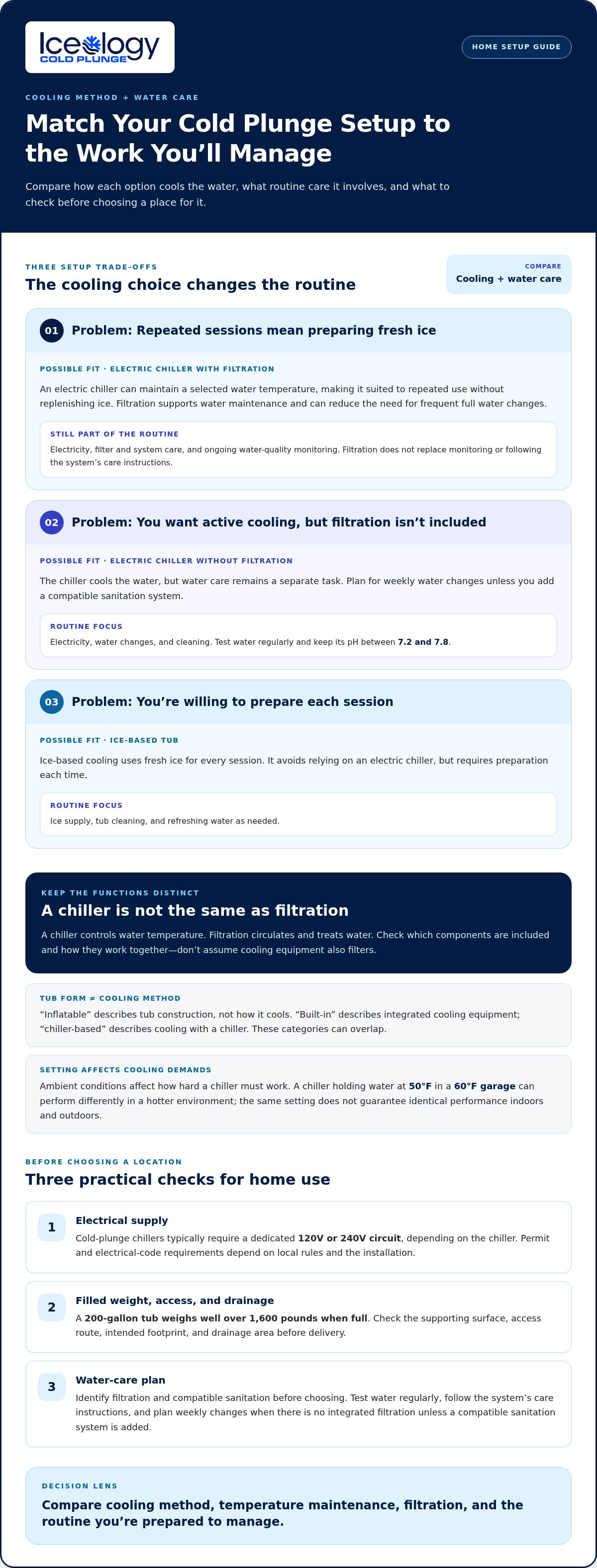
Water care distinguishes a tub with integrated filtration from one without it. Without integrated filtration, plan weekly water changes unless you add a compatible sanitation system. Test the water regularly and keep its pH between 7.2 and 7.8, a range that supports routine water management.
Plan for water care from the outset. Keep testing supplies nearby, follow the system’s care instructions, and note when water is changed. Filtration can reduce the need for frequent full changes, but you still need to monitor water quality. A cleanable cover also helps keep debris out of an outdoor tub.
Tub and Installation Costs
Installation costs depend on the tub and the work required at home, including access, placement, electrical supply, and site preparation. Compare recurring effort as well as purchase and installation budgets.
For electrical planning, cold-plunge chillers typically require a dedicated 120V or 240V circuit, depending on the chiller. That circuit detail doesn’t establish permit requirements; those depend on the applicable jurisdiction and installation.
| Setup | Running costs | Water care | Maintenance focus |
|---|---|---|---|
| Electric chiller with filtration | Electricity | Monitor and maintain water | Filter and system care |
| Electric chiller without filtration | Electricity | Plan weekly water changes | Water changes and cleaning |
| Ice-based tub | Ice for every session | Refresh water as needed | Ice supply and tub cleaning |
Choose a setup based on the temperature control and water maintenance you’re prepared to manage.
Permit and electrical-code requirements depend on local rules and the installation; a dedicated 120V or 240V circuit may be required, depending on the chiller. HOA and condo restrictions vary by property, so review the applicable governing documents before placing an outdoor tub.
Cold plunge tubs vary in footprint, electrical requirements, and capacity. Check each model’s dimensions and capacity against your available space, support for the filled weight, and electrical requirements before deciding.
Integrated chilling and temperature control
Cooling method determines how much attention a plunge needs between sessions. Compare temperature consistency, the indoor or outdoor setting, and the work involved in preparing each use. The best cold plunge for your home is the one that fits your routine and space.
Electric Chillers and Ice-Based Cooling
An electric chiller cools water and can maintain a selected temperature; ice-based cooling requires fresh ice for each session. A chiller suits repeated use without replenishing ice, while an ice setup requires preparation each time.
Consider the plunge’s location, too. A chiller holding water at 50 degrees in a 60-degree garage can perform differently in a hotter environment. Ambient conditions affect how hard cooling equipment must work, so the same setting may not mean identical performance indoors and outdoors.
Chiller and Filtration Systems
A chiller maintains the water temperature, while filtration circulates and treats the water. These are separate functions: one controls temperature, the other supports water care. Compare both rather than assuming a chiller also filters.
Before choosing, identify the included components and how they work together. An electric chiller paired with filtration, for example, reduces hands-on temperature management while supporting water maintenance. Filtration doesn’t replace monitoring water quality or following the system’s care instructions.
Built-In, Inflatable, and Chiller-Based Tubs
“Built-in” describes cooling equipment integrated into a tub’s setup; “chiller-based” describes a system that uses a chiller to cool the water. “Inflatable” describes the tub’s construction, not its cooling method. These categories can overlap, so compare the cooling mechanism separately from the tub’s material and form.
For a home setup, weigh installation effort, temperature control, and placement. An inflatable tub may offer portability, while a chiller-based setup provides active cooling. Check how each option reaches and maintains its selected temperature instead of relying on its category name.
Compare configurations in this order: identify the cooling method, check whether it maintains a set temperature, then review filtration. A built-in chiller means cooling is integrated, but it doesn’t establish the filtration method or guarantee the same performance in every environment.
For an outdoor installation, consider sun exposure and the surrounding air temperature alongside the chiller’s operating setup. For an indoor location, assess available space and how the equipment fits the room. A garage at 60 degrees and a hotter setting can place different demands on the same temperature target.
To choose a plunge that suits your routine, compare the cooling method, temperature maintenance, and filtration arrangement. If you’re considering integrated cooling, explore cold plunge tub options as one example.
Recommended cold-plunge temperature and session duration
For most people, a practical cold-plunge range is 50 to 59 degrees Fahrenheit. Compare temperature settings and session guidance together: a displayed target matters only if it reflects the water’s actual temperature.
Cold-water immersion depends on the actual water temperature, not just the control setting. Check the water with a reliable thermometer before entering, and record the reading for each session. This helps you tell whether the plunge temperature is consistent between uses.
Consider the full range of available temperature settings, then select a target within the practical range. A colder setting isn’t automatically better: below around 50 degrees Fahrenheit, most recovery goals have diminishing returns. For a home with different users, adjustable temperature controls make it easier to choose a suitable target without treating one setting as right for everyone.
Beginners should start with two to three minutes at 55 to 58 degrees Fahrenheit, then increase duration gradually. Keep the first sessions brief and pay attention to how your body responds. If the water is colder than planned, don’t assume the same session length remains appropriate. Recheck the temperature before entering and adjust the session plan to match it.
Session guidance should connect minutes to temperature rather than offer a duration without context. For example, a beginner starting at 55 to 58 degrees Fahrenheit can use two to three minutes as a starting point, then build gradually. More intense cold changes the experience, so chasing the lowest setting can make a routine harder without adding value for most recovery goals.
Look for controls that clearly set and display the target water temperature. Distinguish the selected setting from a separate thermometer reading, particularly after the plunge has been unused. Indoor or outdoor conditions can affect the setup, so check the water before each session.
Use this simple sequence: set a target within 50 to 59 degrees Fahrenheit, confirm the water temperature, and choose a short session suited to your experience. Beginners can start at 55 to 58 degrees Fahrenheit for two to three minutes. Increase duration gradually, and don’t use a colder setting as a substitute for a measured, consistent routine.
Cold plunge benefits and potential risks
Cold immersion is a demanding practice, not a race to reach the lowest setting. Studies cited in the research have documented norepinephrine increases of 200 to 300 percent after exposure. That measured response is not a promise of a particular recovery, mood, or performance outcome. Treat it as one reported physiological response, and judge your routine by how you feel and recover.
Session length matters alongside temperature. Two to ten minutes of cold immersion is generally sufficient to generate the described benefits, so longer exposure isn’t automatically more useful. For a practical example, someone using water within the recommended 50 to 59 degrees Fahrenheit range can prioritize a controlled, repeatable session over extending time in colder water.
Know the risk threshold before entering. Cold-plunge temperatures below 40 degrees Fahrenheit increase risks, including cold shock, hyperventilation, and cardiac stress. These responses can make breathing and heart strain harder to manage. Avoid treating an extreme setting as a performance target; choose a temperature and duration you can approach calmly and consistently.
Some health conditions call for medical guidance before cold immersion. People with cardiovascular conditions, Raynaud’s disease, or pregnancy should consult a physician before using a plunge. Have this conversation before the first session, and share the planned water temperature and session approach so the physician can consider the specific exposure.
Follow a deliberate routine. Before each session, confirm the water temperature, set a planned duration, and enter without rushing. Leave the water if breathing becomes difficult or you feel unwell. Don’t extend the session to match someone else’s tolerance. The same attention to actual water temperature applies to indoor and garden plunges.
For a household, agree on a consistent approach instead of assuming every user should follow one target. A beginner’s plan can start with two to three minutes at 55 to 58 degrees Fahrenheit, then increase duration gradually. Keep the recorded temperature and session length together; that makes it easier to notice how different settings affect each person.
Cold immersion can be a structured wellness practice when temperature, duration, and personal health considerations are taken seriously. Use the 40-degree risk threshold as a reason to avoid chasing extreme cold, and seek medical guidance before immersion when cardiovascular conditions, Raynaud’s disease, or pregnancy apply. The goal is controlled exposure, not endurance.
How much do cold plunge tubs and installation cost?
Budget separately for the tub, site work, and ongoing operation. The total depends on equipment configuration, delivery access, electrical preparation, and placement. Compare each component rather than treating the tub’s purchase price as the full installation cost.
List what each configuration includes. An electric chiller may be integrated or separate; an ice-based setup needs ice for each session. These choices affect both equipment and ongoing supplies. Record the tub, cooling equipment, and water-care components as separate budget lines to compare like with like.
- Equipment: Note whether the tub includes a chiller, filtration, and a cover.
- Delivery: Map the route from the drop-off point to the installation space, including narrow entrances and stairs.
- Electrical preparation: Identify the selected chiller’s circuit needs and whether the site requires electrical work.
- Placement: Account for surface preparation, access, and drainage around the tub.
For example, a ground-level patio with clear access presents different delivery and preparation needs from an upper-floor terrace with a more complex route. A 200-gallon tub weighs well over 1,600 pounds when full, so the supporting surface matters before installation. Include the filled load when assessing a balcony, indoor room, or garden location.
Installation expenses depend on the home’s existing conditions. A suitable electrical connection and accessible placement may require less preparation than a site that needs new work. Identify the intended location and equipment, then separate essential installation tasks from optional upgrades. Compare estimates with the same scope so required work isn’t overlooked.
Operating costs depend on the cooling method and how often you use the tub. Electric chilling uses electricity; ice-based cooling requires ice for each session. Water-care needs also vary with filtration and sanitation arrangements. Include these recurring inputs alongside purchase and installation expenses to account for supplies and maintenance.
Use the same checklist for every option: included equipment, delivery access, electrical preparation, placement, and recurring operation. Compare configurations using consistent assumptions. Patio and indoor installations are meaningful to compare only when you account for the relevant site work, equipment, and access conditions.
Iceology Cold Plunge: Cold Plunge Tubs
Iceology Cold Plunge designs and manufactures premium cold plunge tubs for home recovery and wellness. Its tubs are made in the USA and feature built-in chillers that can lower water temperature to 39 °F. That gives homeowners a clear starting point when comparing integrated cooling with the temperature range and routine they want.
Consider these tubs if you’re choosing a dedicated setup for regular cold water immersion and value built-in chilling. Iceology Cold Plunge also offers Ice Baths and Accessories to complement a home cold-plunge routine. Compare the equipment’s temperature capability with your intended session approach and available installation space.
To explore whether an Iceology Cold Plunge tub fits your home, visit iceologycoldplunge.com.
Make your home setup work for your routine
The right cold plunge fits your space and the way you plan to use it. Picture your routine before choosing: where the tub will sit, how you’ll maintain it, and what will help you use it consistently. A considered setup can make cold-water therapy a deliberate part of home wellness, rather than a complicated task.
Iceology Cold Plunge offers Cold Plunge Tubs, Accessories, and Ice Baths for home recovery routines. If you’re ready to explore how those options could fit your goals, take the next step at your own pace.
Choose a setup that fits your routine, then build a practice that feels sustainable.
Frequently Asked Questions
What cold plunge tubs are best for residential use?
Choose a tub by matching its capacity, footprint, and electrical setup to your home. For example, the Iceology Grizzly 450 holds 450 quarts, with a recommended fill line of 90-95 gallons. Measure access routes and confirm the intended floor can support the filled tub before selecting a location.
Which cold plunge models work best outdoors in hot, humid, salty coastal climates?
For outdoor use, compare insulation, chiller configuration, and the equipment’s exposure to local conditions. The Iceology Grizzly 450 has two-inch pressure-injected polyurethane foam and a built-in chiller; these features support insulation and water cooling. However, climate suitability also depends on placement and environmental exposure. Consider a sheltered location and follow the tub’s care guidance, rather than assuming any model is designed for salt exposure.
How much does it cost to operate a residential cold plunge?
Operating costs depend on how often the tub runs, the target temperature, surrounding conditions, and insulation. Ice-based cooling requires ice for each session; an electric chiller uses electricity to cool and maintain the water. Estimate household use by noting how often you plan to plunge and comparing the equipment’s energy information with your electricity rate. Budget for water-care supplies, too.
What drainage, plumbing, and water treatment does a cold plunge need?
Plan a safe route for draining and refilling the tub, with access that won’t direct water into the home or create pooling around the installation. Water treatment depends on the tub’s filtration and sanitation equipment. For example, the Iceology Grizzly 450 includes a 50-micron filter and ozone generator. Follow the equipment’s instructions for water testing, filter care, sanitation, and draining.
What maintenance, sanitation, and hurricane protection do outdoor cold plunges require?
Maintain an outdoor plunge by monitoring water quality, cleaning the tub, and caring for the filter and sanitation equipment as directed. Before severe weather, follow the manufacturer’s instructions for the tub and electrical equipment, and secure loose items around the installation. Afterward, inspect the setup for visible damage and check the equipment before using it again.
What are the health risks and safety precautions for cold plunging at home?
Cold immersion can cause cold shock, hyperventilation, and cardiac stress, particularly below 40 degrees Fahrenheit. Start with a measured temperature and a brief, planned session; leave the water if you feel unwell or struggle to breathe. People with cardiovascular conditions, Raynaud’s disease, or pregnancy should consult a physician before cold immersion. Avoid plunging alone if you may need help exiting safely.
What permits or electrical codes apply to installing a cold plunge at a Key Biscayne home?
Permit and electrical-code requirements depend on local rules and the installation. Chillers typically require a dedicated 120V or 240V circuit, depending on the chiller.