
Cold Plunge for Stress Relief: How Precision Cooling Recalibrates the Nervous System in 2026
What if the most effective way to quiet a racing mind isn't found in a meditation app, but in a tub of forty-degree water? You've likely felt that heavy, persistent mental fog that lingers long after the laptop closes. It's the weight of chronic high cortisol and the exhaustion of decision fatigue that makes "switching off" feel impossible. Using a cold plunge for stress relief isn't just a temporary distraction from these pressures; it's a neurological training ground that re-indexes how your body reacts to all forms of stress. This practice offers a sophisticated way to take control of your mental state through disciplined, physical precision.
In this article, you'll discover the neurological mechanisms behind cold water immersion and how a consistent plunging routine builds lasting psychological resilience. We'll explore the science of thermal management and how it serves as a reliable reset button for your nervous system. From lowering baseline anxiety to improving emotional regulation, you'll learn how to transform a simple recovery tool into a powerful engine for peak mental performance. By mastering the cold, you're not just cooling your body; you're recalibrating your entire capacity for calm.
Key Takeaways
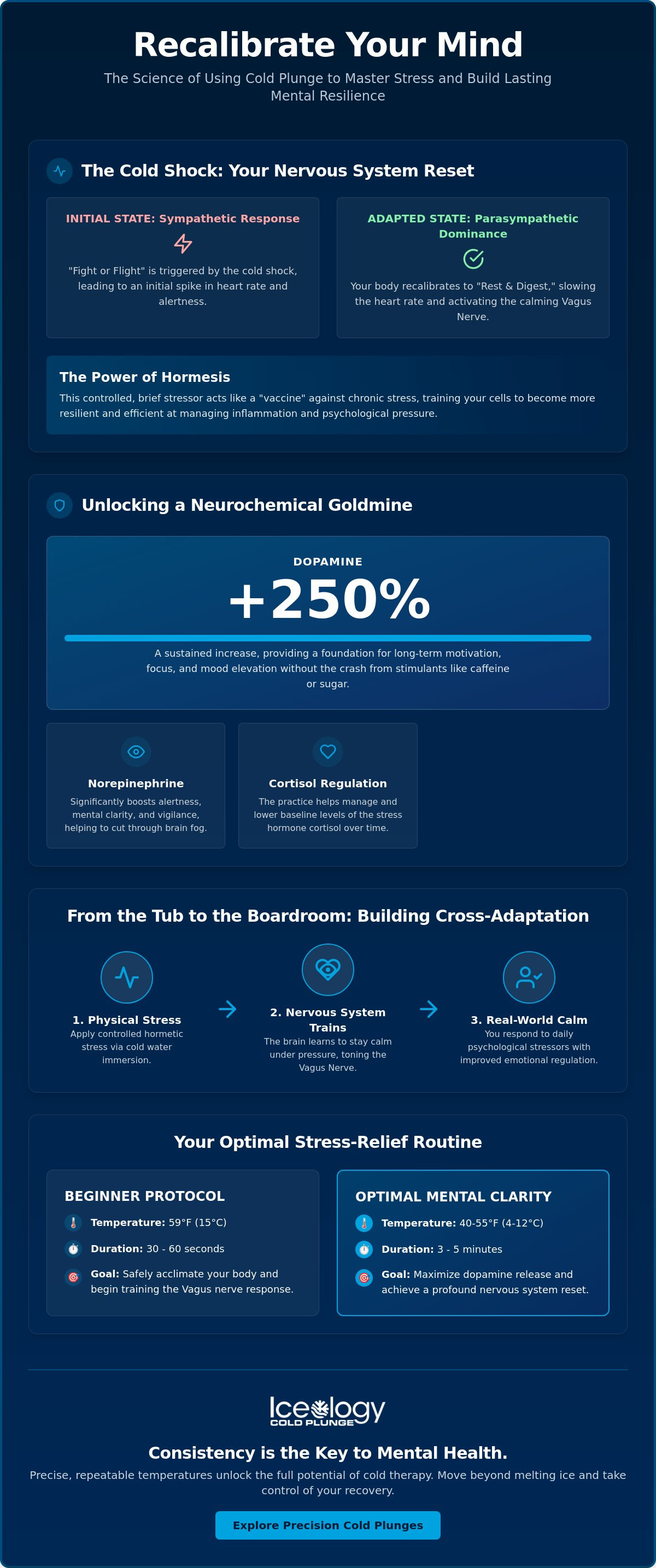
- Understand how "hormetic stress" triggers a 250% increase in dopamine, providing an immediate neurochemical reset for a racing mind.
- Discover how the practice of cold plunge for stress relief builds "cross-adaptation," training your nervous system to remain calm under real-world pressure.
- Learn why maintaining a precise 39°F "sweet spot" is more effective for mental clarity than the inconsistent temperatures of melting ice.
- Identify the specific routine adjustments needed to optimize thermal contrast, particularly for those living in warmer climates like South Florida.
- Explore how shifting from a reactive to a proactive recovery routine builds the "top-down" mental control necessary to eliminate decision fatigue.
The Science of the Cold Shock: How Plunging Triggers a Stress Reset
The moment you break the surface of the water, your body undergoes a profound transformation. It's a strategic intervention. The sudden cold triggers the sympathetic nervous system, initiating the "cold shock response." While this feels like panic, it's actually the first step in using a cold plunge for stress relief. By exposing yourself to this controlled environmental stressor, you're initiating a process known as cold-water immersion that forces your internal systems to adapt and stabilize. It's the difference between being a victim of your environment and being its master.
This transition from the "fight or flight" sympathetic state to "rest and digest" parasympathetic dominance is the core of the recovery journey. As you maintain your position in the water, your body realizes the threat is controlled. The initial spike in heart rate gives way to a rhythmic, steady pulse. This is the nervous system recalibrating in real time. You're teaching your brain that it can remain calm even when the external environment is harsh. It's a physical rehearsal for the mental challenges you face every day.
Hormesis: Why Controlled Stress Reduces Chronic Stress
Hormesis is the biological principle that low doses of a stressor can actually improve health and resilience. When you enter a cold tub, your cells experience a brief, intense challenge. This isn't the same as the grinding, chronic stress of a high-pressure job. Instead, it's a precision-engineered moment of hardship that prepares your body for future challenges. Brief cold exposure pre-conditions your cells, making them more durable and efficient at managing inflammation. Beyond external stressors, supporting your cellular resilience internally with specific hydration strategies, such as the use of ionized alkaline water described by pH 9 Wasser, can further enhance this recovery process. Hormesis acts as a biological vaccine against psychological stress, teaching your body that it can survive and thrive under pressure.
The Vagus Nerve Connection
The bridge between the physical shock and mental calm lies in the Vagus nerve. This is the longest nerve in your body and a primary component of the parasympathetic nervous system. Stimulating the Vagus nerve through cold water exposure on the face and chest triggers a rapid shift in your internal state. You'll notice your heart rate begin to slow and your breathing deepen after the initial gasp response. This transition is measured by heart rate variability (HRV). A higher HRV is a hallmark of emotional stability and a resilient nervous system. Using a cold plunge for stress relief effectively trains this Vagus response, allowing you to access a state of calm even when life feels chaotic.
Precision matters in this process. Beginners often start at 59°F for just 30 to 60 seconds to safely trigger these pathways. As your tolerance grows, you can progress toward the 40–55°F range for three to five minutes. This isn't about endurance for the sake of it; it's about finding the exact thermal window where your nervous system learns to reset. Consistency with these specific temperatures ensures the Vagus nerve remains toned and responsive.
Neurochemical Goldmine: Dopamine, Norepinephrine, and Cortisol
The physical shock discussed previously is just the catalyst. What happens next is a profound chemical reorganization. When you utilize a cold plunge for stress relief, you're essentially triggering a massive release of neurotransmitters that reshape your mental landscape. This isn't a fleeting sensation. It's a fundamental shift in your internal chemistry. By forcing the body to manage extreme cold, you initiate a cascade of "feel-good" chemicals that provide both immediate clarity and long-term psychological resilience.
This neurochemical shift is characterized by three primary molecules: dopamine, norepinephrine, and cortisol. Together, they form a powerful internal defense against the mental fog and fatigue of modern life. While the initial dip requires discipline, the resulting "Post-Plunge Glow" is a state of calm, clear-headed determination that persists long after you've dried off. You're not just cooling your skin; you're upgrading your brain's operating system.
The Dopamine Sustenance
Research indicates that cold water immersion can cause a 250% increase in baseline dopamine levels. Unlike the sharp spikes and subsequent crashes associated with caffeine or processed sugar, this rise is steady and sustained. It provides a foundation for long-term motivation and productivity. Achieving this specific neurochemical threshold requires consistent, controlled temperatures. An Iceology Cold Plunge allows for the precision needed to hit these neurochemical thresholds, ensuring every session delivers the maximum benefit. This sustained dopamine level is why many users report feeling a sense of focused energy for several hours after their plunge.
Lowering the Cortisol Baseline
Chronic stress keeps your cortisol levels elevated, leading to mental fatigue and persistent anxiety. A systematic review of cold water immersion highlights how these practices can help regulate the body's stress response. Instead of "spiky" cortisol rhythms that leave you feeling wired yet tired, regular plunging helps flush the system of excess stress hormones. This recalibration moves you toward a more balanced rhythm. Over time, this results in better emotional regulation and a more reliable "off switch" at the end of the day. Consistent practice helps you maintain a lower baseline of anxiety, making it easier to navigate high-pressure environments without feeling overwhelmed.
For those whose health goals extend into reproductive wellness, managing these hormone levels is especially critical. Holistic providers like Ombright Wellness Fertility Acupuncture specialize in using acupuncture and functional medicine to support hormonal balance and reduce the physiological impact of stress on the body.
Norepinephrine acts as the "focus molecule." It clears mental fog and sharpens decision-making capabilities. In the cold, norepinephrine levels can jump by 200% to 300%, providing an immediate sense of alertness. This combines with the dopamine rise to create a state of high-performance calm. If you're looking to optimize your mental recovery, exploring high-quality cold tubs can provide the reliable environment needed for these daily neurochemical resets.
Building Cross-Adaptation: From the Tub to the Boardroom
Resilience is rarely built in comfort. While the neurochemical shifts discussed previously provide a vital foundation, the true power of a cold plunge for stress relief lies in the concept of cross-adaptation. This biological phenomenon occurs when the body's adaptation to one stressor, such as extreme cold, enhances its ability to manage other forms of stress. When you step into the water, you aren't just cooling your muscles. You're training your brain to remain composed during high-stakes presentations, unexpected project delays, or difficult interpersonal conflicts. It's a functional transfer of calm from the tub to the professional world.
The practice of voluntary hardship is central to this development. By choosing to enter the cold, you exert "top-down" mental control over your survival instincts. This repeated exposure reduces your "startle response" to everyday irritants. Traffic jams and tight deadlines begin to lose their power to trigger a full-blown stress reaction. Instead of a reactive spike in anxiety, your nervous system maintains a disciplined, steady baseline. A three-minute plunge becomes a powerful metaphor for navigating life's challenges. If you can master your breath in 39°F water, you can master your response to almost anything else.
Neurological Resilience Training
During a plunge, a fascinating battle occurs within the brain. Your Amygdala, the center for fear and emotion, screams for you to exit the water. However, your Prefrontal Cortex, the seat of logic and executive function, overrides this impulse. This specific interaction is what builds neurological resilience. Cold exposure acts as a gym for the willpower, forcing the mind to build endurance against the natural urge to quit. This ability to stay calm under pressure is directly transferable. The same mental pathways used to settle your heart rate in a cold tub are activated when you need to stay level-headed during a high-pressure meeting.
Overcoming the "I Can’t" Barrier
The most common objection to cold therapy is a simple one: "I hate being cold." Acknowledging this discomfort is the first step toward mastery. Every morning that you choose the water despite your hesitation, you achieve a significant psychological victory. This "win" happens before you even check your first email. It sets a tone of capability and discipline for the rest of your 2026 workday. Overcoming the internal resistance to the cold proves that your "I can't" is often just a temporary feeling, not a permanent fact. This mindset shift is a primary reason why using a cold plunge for stress relief is becoming a staple for high-performing professionals who require peak emotional regulation.
- Focus on the breath: Controlled exhales signal safety to the brain, shortening the shock phase.
- Set a timer: Knowing exactly when the challenge ends helps the Prefrontal Cortex maintain control.
- Track your progress: Documenting your rising tolerance builds confidence in your own resilience.
Optimizing Your Stress Relief Routine in South Florida
Living in climates like Miami or Orlando presents a unique physiological challenge. High humidity and relentless heat contribute to a specific type of "brain drain." It's more than physical discomfort; it's a constant drain on your cognitive resources. Using a cold plunge for stress relief in these environments provides a necessary thermal contrast that resets your core temperature and clears heat-induced irritability. This sharp shift in temperature is particularly effective for those who spend their days in air-conditioned offices only to step out into sweltering humidity.
The Florida Heat Factor
Chronic exposure to high heat keeps the body in a mild but persistent state of stress. This makes the transition to a cold environment even more impactful. In regions where ambient temperatures rarely drop, traditional ice-based methods are impractical. Iceology’s built-in chillers are essential in Florida where ice melts in minutes. These systems maintain the precise temperature required for neurological recalibration, regardless of the external humidity. By lowering your core temperature, you aren't just cooling down; you're actively reducing the physiological load that heat places on your brain.
A Step-by-Step Stress Relief Protocol
While general guidelines suggest starting at 59°F, 39°F is the "sweet spot" for many seeking profound mental clarity. To see the best results when using a cold plunge for stress relief, you must follow a structured approach. Consistency is vital for neurological change. You should aim for a minimum of 3-4 sessions per week to ensure your nervous system maintains its newfound resilience.
To maximize the psychological benefits, follow this protocol:
- Step 1: Focus on box breathing for two minutes before entry. This steadies the heart rate and prepares the mind for the thermal shift.
- Step 2: Submerge to the neck to trigger the full mammalian dive reflex. This immediately slows the heart rate and signals the Vagus nerve to initiate a calm state.
- Step 3: Maintain the immersion for 2-5 minutes. Don't overstay your welcome; the goal is a neurochemical reset, not an endurance test.
- Step 4: Allow for natural rewarming to lock in the metabolic benefits. This ensures the post-plunge clarity lasts for several hours throughout your day.
Morning plunges are ideal for setting a high-dopamine baseline for focus and productivity. Conversely, an afternoon session acts as a powerful "reset button" to shed the decision fatigue accumulated throughout the workday. Ready to bring this level of precision to your daily routine? Explore our professional-grade Cold Plunge Tubs and take control of your mental recovery.
The Iceology Advantage: Why Consistency is the Key to Mental Health
Neurological resilience isn't built in a single session. It's the result of repeated, disciplined exposure. As we've established, the nervous system requires frequency to maintain its recalibrated state. If the process of getting into the water feels like a chore, the habit will eventually fail. Relying on a cold plunge for stress relief works best when the "friction" of the activity is removed. You need a solution that is ready at 5:00 AM without requiring a trip to the store for fifty pounds of ice. This is where precision engineering meets psychological habit formation.
Many beginners struggle with the "lukewarm" reality of melting ice. In a high-heat environment, ice begins to lose its cooling power the moment it hits the water. This makes it almost impossible to maintain the consistent 39°F "sweet spot" necessary for the neurochemical shifts we discussed earlier. When the temperature fluctuates, your body doesn't get the same reliable signal to reset. A dedicated system provides the precision cooling required to ensure every minute spent in the water contributes to your long-term mental performance.
Removing the Barriers to Entry
The logistical burden of buying and hauling ice is the number one reason people abandon cold therapy. It turns a wellness practice into a heavy lifting task. Investing in a USA-made cold plunge tub ensures your recovery tool is always at the perfect temperature. This "always-on" availability transforms the plunge from a planned event into a frictionless part of your morning. To see how this fits into your space, our Cold Plunge Tub Setup guide provides a clear roadmap for creating a professional-grade home sanctuary. When the water is waiting for you, you're far more likely to commit to the practice.
Hard-Sided Tubs vs. Inflatables
There's a significant psychological benefit to a permanent wellness station. While inflatables offer a low entry point, they often lack the structural integrity and insulation needed for 2026 standards of efficiency. A hard-sided tub acts as a dedicated "Mental Sanctuary." It signals to your brain that this practice is a non-negotiable pillar of your life. High-density polyurethane foam insulation keeps the water at a steady temperature without driving up energy costs. This efficiency allows you to focus entirely on your breath and your mental state rather than worrying about the equipment. American craftsmanship means you're using a tool designed for longevity, providing a reliable "reset button" for your nervous system for years to come. Using a cold plunge for stress relief is an investment in your future self, and the quality of your equipment should reflect that commitment.
- Precision Thermal Management: Maintain a steady 39°F regardless of external heat.
- Structural Longevity: Hard-sided construction supports long-term habit formation.
- Frictionless Use: No ice required, no setup time, just immediate recovery.
- Energy Efficiency: Advanced insulation keeps operating costs low while maintaining peak performance.
Mastering Your Mental State Through Precision Recovery
Mastering your mental state is no longer a luxury; it's a physiological necessity. By understanding the hormetic stress response and the neurochemical shifts triggered by cold water, you've gained the roadmap to a more resilient life. A consistent cold plunge for stress relief transforms a simple recovery tool into a permanent sanctuary for cognitive clarity. You've seen how precision cooling bridges the gap between physical shock and professional composure, allowing you to navigate high-stakes environments with ease.
The path to peak performance requires a reliable partner. Invest in your mental resilience with an Iceology Cold Plunge to ensure your recovery is effortless and effective. With built-in chillers capable of maintaining a precise 39°F and premium insulation made in the USA, you're choosing a durable tool for a lifetime of mental performance. Integrated filtration provides a maintenance-free mental reset, so you can focus entirely on your personal growth. Take control of your internal chemistry and discover the calm determination that comes with mastering the cold. Your most resilient self is waiting just below the surface.
Frequently Asked Questions
Is cold plunging safe for everyone with high stress?
Cold plunging is safe for most healthy individuals, but medical consultation is essential for those with pre-existing cardiovascular or respiratory conditions. The initial shock causes a rapid spike in heart rate and blood pressure. If you're managing chronic high stress, start with warmer temperatures and shorter durations. Gradually building tolerance ensures your system adapts without being overwhelmed by the intensity.
How long do I need to stay in the cold plunge for mental health benefits?
You only need two to five minutes in the water to achieve significant mental health benefits. Beginners should start with 30 to 60 seconds to safely trigger the initial stress reset. Staying in longer than five minutes doesn't necessarily increase the neurochemical reward. It's more about the quality of the immersion and your ability to maintain calm breathing throughout the session.
Can I cold plunge every day, or will I get "used" to the stress relief?
You can certainly cold plunge every day without losing the benefits of the practice. While your body adapts to the initial cold shock, the underlying neurochemical response remains effective. Consistency is actually the primary driver for long-term neurological change. Daily sessions help maintain a lower baseline of anxiety and reinforce the top-down mental control required for peak performance.
What is the best temperature for reducing anxiety?
The most effective temperature range for reducing anxiety and using a cold plunge for stress relief is between 39°F and 55°F. Many experienced users find that 39°F provides the most profound psychological reset. Precision is key here. High-quality cold tubs with integrated chillers ensure you stay within this therapeutic window, which is difficult to achieve with inconsistent ice baths.
Why do I feel so much happier after a cold plunge?
That surge of happiness is the result of a massive, sustained release of dopamine and norepinephrine. These molecules act as your brain's natural mood enhancers and focus agents. Unlike the temporary spikes from caffeine, this "post-plunge glow" provides a steady sense of well-being that can last for several hours. It's a fundamental chemical shift that rewards the discipline of the practice.
Can cold plunging help with sleep issues caused by stress?
Cold plunging can significantly improve sleep quality by lowering your baseline cortisol levels. High evening cortisol is a primary cause of the inability to "switch off" after work. By regulating the autonomic nervous system during the day, you make it easier for your body to enter deep, restorative sleep at night. It's a reliable way to fix the stress-induced sleep cycle.
Is a cold shower as effective as a full-body cold plunge for stress?
A cold shower is a good starting point, but it isn't as effective as a full-body cold plunge for stress relief. Showers don't provide the hydrostatic pressure or the total thermal immersion needed to trigger the mammalian dive reflex. To achieve the deep Vagus nerve stimulation and the full neurochemical cascade, you need the consistent, 360-degree cooling found in a dedicated cold tub.
How does cold water immersion affect my heart rate over time?
Regular cold water immersion typically leads to an increase in heart rate variability (HRV) and a lower resting heart rate over time. This indicates a more resilient and balanced autonomic nervous system. By repeatedly challenging your heart during the cold shock and then calming it through breathwork, you're essentially performing a high-intensity workout for your heart's ability to recover from stress.