
Cold Plunge Tub Custom Color Options for Your Space
Color is part of the design, but it also needs to suit the tub’s material, finish, and setting. The right cold plunge tub custom color options can help the tub feel intentional in your space, rather than like an afterthought.
It makes sense to want more than a standard look. A custom finish can help a cold plunge complement its surroundings, while details such as trim and personalization shape the overall effect. The key is understanding how those choices fit together before fabrication begins.
This guide explains the color, finish, and personalization possibilities to consider, along with how custom fabrication and approvals fit into the process. You’ll learn what influences the final look and how to move from an idea to a clear design decision.
Key Takeaways
- Compare color and finish choices with your room’s materials and overall design so the tub feels integrated into the space.
- Consider how personalization details can shape the look while keeping the design cohesive.
- Understand how design decisions and approvals fit into custom fabrication before the tub is made.
- Separate visual customization from product options so you can focus on the details that matter most to your setup.
- Explore Iceology Cold Plunge tubs and accessories as options for building a cold-water recovery space.
Available color choices for cold plunge tubs
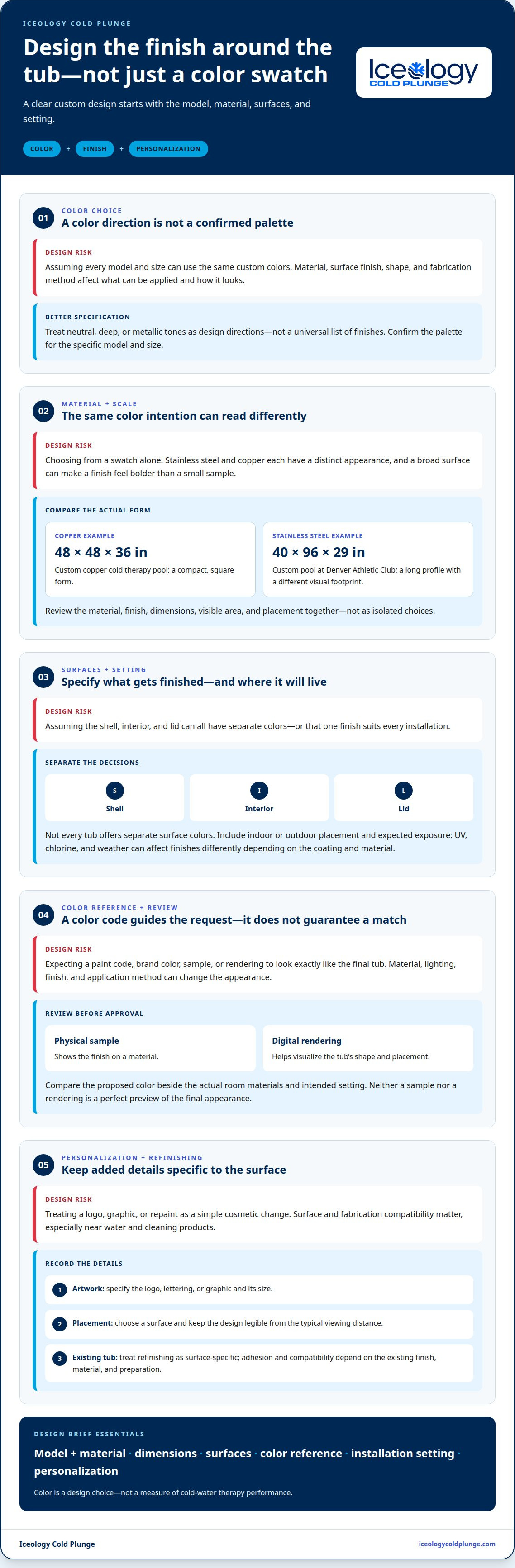
Custom colors aren’t automatically available for every cold plunge model and size. The material, surface finish, shape, and fabrication method all affect which colors can be applied and how they appear. Treat cold plunge tub custom color options as model-specific choices, not a universal palette.
Start by separating a color direction from a confirmed product palette. Neutral tones, deep colors, and metallic looks can each guide a design brief, but they don’t represent a universal list of tub finishes. A pale neutral may blend with light tile, while a darker tone can create contrast against stone or timber. Metallic surfaces have their own character, shaped partly by the underlying material rather than color alone.
Material changes the visual result. Stainless steel reads differently from copper, even when both are specified with a similar warm or cool intention. For example, a custom copper cold therapy pool is described at 48 x 48 x 36 inches. That example shows why color planning should account for the visible material and the tub’s proportions, not just a swatch viewed on its own.
Stainless steel provides another useful comparison. A custom stainless steel cold plunge pool at the Denver Athletic Club measures 40 x 96 x 29 inches. Its long profile creates a different visual footprint from a compact, square pool. Before settling on a color direction, consider how much of the tub will be visible, where it will sit, and which nearby surfaces it will meet.
- Match the setting: Compare the proposed tone with nearby flooring, walls, cabinetry, or outdoor materials.
- Consider the material: Stainless steel and copper each contribute a distinct appearance.
- Account for dimensions: A 40 x 96-inch profile presents color differently from a 48 x 48-inch form.
- Review the finish: Surface texture and reflectivity can affect how a color reads in the room.
For a more reliable visual decision, review the color alongside the actual material and finish, then assess it in the intended setting. A finish that looks balanced on a small sample may feel bolder across a broad exterior panel. Lighting also changes perception: indoor light and daylight can make the same tone appear different. Compare samples near the surfaces they’ll sit beside.
Color is a design choice, not a measure of cold-water therapy performance. Review cold plunge tub custom color options alongside material, dimensions, and placement. This helps separate the look you want from the choices a particular tub’s construction can support.
Custom finishes and personalization options
A finish affects more than color: it shapes how the tub looks beside nearby materials. For a useful specification, consider the shell, lid, interior, and expected exposure together.
Interior, Exterior, and Lid Colors
Interior, exterior, and lid colors may be separate design decisions, but not every tub offers separate colors. The shell material and construction determine which surfaces can receive a finish. A contrasting lid, for example, can create a defined visual break, while a coordinated exterior and lid can make the tub read as one form. Specify each surface separately in the design brief.
Custom Color Durability
UV exposure, chlorine, and outdoor weather can affect finishes differently, depending on the coating and underlying material. There’s no single durability rating for every custom-colored tub. An indoor tub beside a window faces different conditions from an outdoor installation exposed to sun and rain. Include those conditions in the finish specification rather than assuming a color treatment suits every setting.
A paint code or brand color can guide a custom color request, but it doesn’t guarantee an exact visual match. The finish, base material, lighting, and application method can all change how the color appears. Treat the code as a reference, then review a sample or finish rendering against the intended space before approving the design. A warm gray, for instance, may look different beside white tile than beside natural stone.
Personalization can also include a logo, lettering, or a simple graphic, if the surface and fabrication method support it. Keep the artwork legible from the tub’s typical viewing distance, and choose a placement that doesn’t compete with the surrounding design. A small mark on an exterior panel has a different visual impact from a large graphic across the lid. Record the artwork, size, placement, and finish as distinct design decisions.
Repainting or refinishing an existing tub may be possible on some surfaces, but it isn’t appropriate for every shell or coating. Adhesion and compatibility depend on the existing finish, material, and preparation. A new coating must also suit the surface’s intended use, especially near water and cleaning products. Treat refinishing as a surface-specific project, not a simple color change.
- Identify: List each surface, such as the shell, interior, and lid.
- Specify: Provide a color code, material, and intended indoor or outdoor setting.
- Review: Compare the proposed finish with nearby surfaces before approval.
For the design stage, consider how cold plunge tub options can fit the space and intended finish.
Custom fabrication and approval process
A clear approval sequence connects your design brief to the finished tub. Define the color, surfaces, and installation setting before fabrication begins.
Color Samples and Renderings
Brands handle pre-purchase color reviews differently. A custom-fabrication program may use physical samples, digital renderings, or both; the brand’s process determines what you can review. A sample shows the finish on a material, while a rendering helps visualize the tub’s shape and placement. Neither is a perfect preview of the final appearance.
For a wellness space with pale tile and warm wood, review the proposed color beside both materials. A digital image can clarify how a dark exterior might contrast with the room, but screen settings affect its appearance. A physical sample gives a closer view of the finish itself, though room lighting still changes how it looks.
Before approval, make sure the design record identifies the color reference, finish, material, and surfaces covered. If a rendering shows the exterior in one shade, confirm that the lid and interior are represented accurately too. This simple comparison helps prevent a mismatch between the visual concept and the written specification.
Custom Color Lead Times
There isn’t one typical lead time for every custom-color tub. The schedule depends on the fabrication process, selected material and finish, design revisions, and production sequence. A straightforward color specification may move through review differently from a project that changes several surfaces or requires revised artwork.
Use the approval stages to understand what affects timing. First, the design brief establishes the requested color and surfaces. Next, reviewing a sample or rendering may prompt refinements. After approval, fabrication follows the agreed specification. A delayed decision or a change after approval can alter the sequence, so treat sign-off as a defined project milestone.
Keep the process organized with a concise record of each decision:
- Design brief: Note the color reference, material, finish, and intended setting.
- Visual review: Compare samples or renderings with nearby surfaces and lighting.
- Final approval: Confirm the approved design before fabrication proceeds.
Ask how the brand documents the approved color and whether later revisions restart any review steps. That distinction matters if the project includes multiple finishes or a logo. A written approval record gives the fabrication team a consistent specification to follow, keeping the finished tub aligned with the design selected for your recovery space.
Customizations and product options
A tub’s appearance is one part of its specification. Connect the selected finish with practical choices such as size, placement, and chiller setup.
How much does a custom-colored cold plunge tub cost? The total depends on the project’s materials, fabrication scope, finish, and selected product options. A color request for one exterior surface differs from a design involving multiple surfaces, specialized artwork, or other fabrication changes.
Separate the visual brief from the equipment brief. List the tub’s intended location, who will use it, and the available footprint. Then identify the options that support that setup, such as a suitable chiller and accessories. This makes it easier to distinguish essential function from aesthetic preference.
Chiller selection matters because temperature management is central to regular cold-water use. A built-in chiller supports a more consistent routine than relying on ice alone. The color specification should sit alongside, not replace, the equipment requirements. Clarify the tub’s use and operating needs before finalizing decorative details.
Think through the space as a complete installation. For an indoor recovery room, note nearby walls, flooring, and access around the tub. For outdoor placement, account for the surrounding environment and the route used to position the unit. These details help align product selection with real-world placement, instead of treating the tub as an isolated design object.
- Function: Define how the tub will support your cold-water routine.
- Fit: Record the available space and practical access for installation.
- Appearance: Identify the finish, color, and surfaces included in the design.
- Equipment: Consider the chiller and accessories needed for the setup.
Consider a home gym where the tub sits beside dark flooring. A finish that complements the room may be a priority, while footprint and chiller configuration remain functional decisions. In a shared wellness area, ease of movement around the tub may matter more than a highly detailed exterior. The space and routine help establish which options deserve attention first.
Keep the specification readable. Describe the product configuration separately from the color request, and list any artwork or special finish as its own item. This helps prevent a visual preference from being mistaken for an equipment feature. It also gives the fabrication discussion a clear basis for reviewing the requested design and how it relates to the selected tub.
Compare each option by asking what it changes: appearance, placement, water-temperature management, or daily use. A color choice affects the visual result; a chiller supports temperature control; accessories address related setup needs. Prioritizing these roles helps keep customization intentional and supports a cold plunge setup suited to your space.
For comparison, the Plunge product listing describes comparable-value pricing as potentially involving similar merchandise in a different color or pattern. These listing details can help frame a product comparison, while the requested finish, equipment, and placement still define the configuration to review.
Which cold plunge tub brands offer custom color options?
In the US market, custom color is a model-level capability, not something to infer from a brand name. A manufacturer may offer standard finishes across its catalog while reserving custom fabrication for selected models. Compare the exact tub and its specifications, rather than assuming every product from one brand supports the same choices.
Look for clear product language that distinguishes standard colors from made-to-order finishes. A page showing several catalog colors establishes those choices, but doesn’t by itself establish custom matching. For example, a listing that describes a specific color as standard answers a different question from a fabrication description that accepts a project color specification.
Brand comparisons are more useful when you track what each maker actually commits to. Record whether the tub comes in fixed colors, whether a custom color reference is accepted, and whether the request applies to the model you’re considering. This prevents a broad brand-level claim from standing in for product-specific details.
Also distinguish a manufacturer from a custom fabricator. A manufacturer may build a defined product range, while a fabricator may work from a project brief. Those business models can lead to different design processes. A hotel wellness room, for instance, may need a coordinated appearance across several surfaces, while a home installation may prioritize a simple finish that suits existing decor.
Use this practical review when comparing brands:
- Product page: Identify the exact model and its stated standard color choices.
- Customization language: Look for a stated made-to-order or custom fabrication process.
- Scope: Note which product surfaces the color choice covers.
- Approval method: Compare whether the design process uses a sample, rendering, or written specification.
- Model fit: Keep each option tied to the specific tub, not only the brand.
These distinctions also clarify what “custom” means. It may refer to choosing from an expanded palette, specifying a particular finish, or developing a project-specific appearance. These are different levels of personalization. A brand’s description should make clear which level applies, so you can compare like with like rather than treating every nonstandard finish as equivalent.
If one maker offers a limited selection of catalog colors and another describes custom fabrication, compare the scope of each process. A broad palette may suit a straightforward room update. A project-specific process may be more relevant when the tub needs to coordinate with a designed interior. The right distinction is the one that matches your space and the tub model.
Explore cold plunge tub options as you consider the product configuration that fits your space.
Iceology Cold Plunge
Iceology Cold Plunge offers hard-sided cold plunge tubs designed for recovery and wellness. Once you’ve identified a preferred color direction, material, and placement, consider those choices alongside the tub and any accessories that support your setup.
Iceology’s Cold Plunge Tubs, Cold Tubs, and Ice Baths offer options to explore as you plan a cold-water routine. The right choice depends on your space, preferred look, and intended use. Keeping those priorities clear can make the product decision more focused.
For help choosing a cold plunge tub for your space and design priorities, explore Iceology Cold Plunge’s tub and accessory options.
Shape a Cold Plunge Space That Feels Like Yours
Choosing cold plunge tub custom color options is a chance to make your recovery space feel considered from the start. Think beyond a single finish: consider how the tub relates to the room’s materials, your preferred atmosphere, and how you plan to use the space. A cohesive design can make the routine feel like a natural part of your day.
Iceology Cold Plunge offers Cold Plunge Tubs, Accessories, and Ice Baths to help you plan your setup. Bring your design priorities into the product decision, including the look you’re working toward and the practical needs of your space. That gives you a clearer basis for deciding what matters most in your cold-water routine.
You don’t need to settle every detail at once. Start with the experience you want to create, then refine the choices around it. A thoughtful setup can support a steady practice and make your space feel distinctly your own.
Take the next step by exploring Iceology Cold Plunge tubs and accessories for your setup.
Frequently Asked Questions
What custom colors and finishes are available for cold plunge tubs?
Available colors and finishes depend on the tub’s material, model, and fabrication method. Some designs use a manufacturer’s standard palette, while custom fabrication may allow a project-specific color direction. For a cohesive room, compare the proposed finish with fixed elements such as flooring, stone, or cabinetry. This helps you judge the whole installation, rather than choosing a tub color in isolation.
How much does a custom-colored cold plunge tub cost?
The cost depends on the project’s materials, fabrication scope, finish, and selected product options.