
Cold Plunge Tub for a Bad Back: Relief and Cold or Heat
A cold plunge tub for a bad back may offer temporary relief, but research specifically on cold immersion for back pain is limited. A targeted ice pack may be a simpler option for a sore spot: apply it for 15 to 20 minutes at a time. Cold can help with short-term comfort, but it isn’t a cure for the cause of back pain.
It’s natural to wonder whether full-body cold exposure can do more than cool one tense area. The right choice depends on the type and duration of your pain, and whether you need focused relief or broader cold exposure.
This guide explains when cold or heat may feel more useful, what temporary relief a cold plunge might offer, and how a plunge compares with an ice pack. You’ll also find practical safety considerations for approaching cold water therapy carefully.
Key Takeaways
- Choose cold for recent, activity-related discomfort; gentle heat may suit long-standing stiffness and muscle tension better.
- A plunge may offer temporary comfort, but lasting back-pain improvement also depends on addressing its cause.
- An ice pack cools one sore area, while immersion exposes the whole body to cold; the right fit depends on the relief you need.
- Start cautiously: Cleveland Clinic advises beginners to limit sessions to one or two minutes and keep the water at or above 40°F.
- Plan for stable, controlled entry and exit, and seek clinical care for severe pain, leg symptoms, numbness, or changes in bladder or bowel control.
Cold Plunge For Back Pain: Does It Really Help?
Cold water immersion may provide short-term comfort, but evidence specifically for back pain remains limited. A cold plunge changes the exposure: an ice pack targets one area, while immersion cools the whole body.
Water Temperature and Session Length
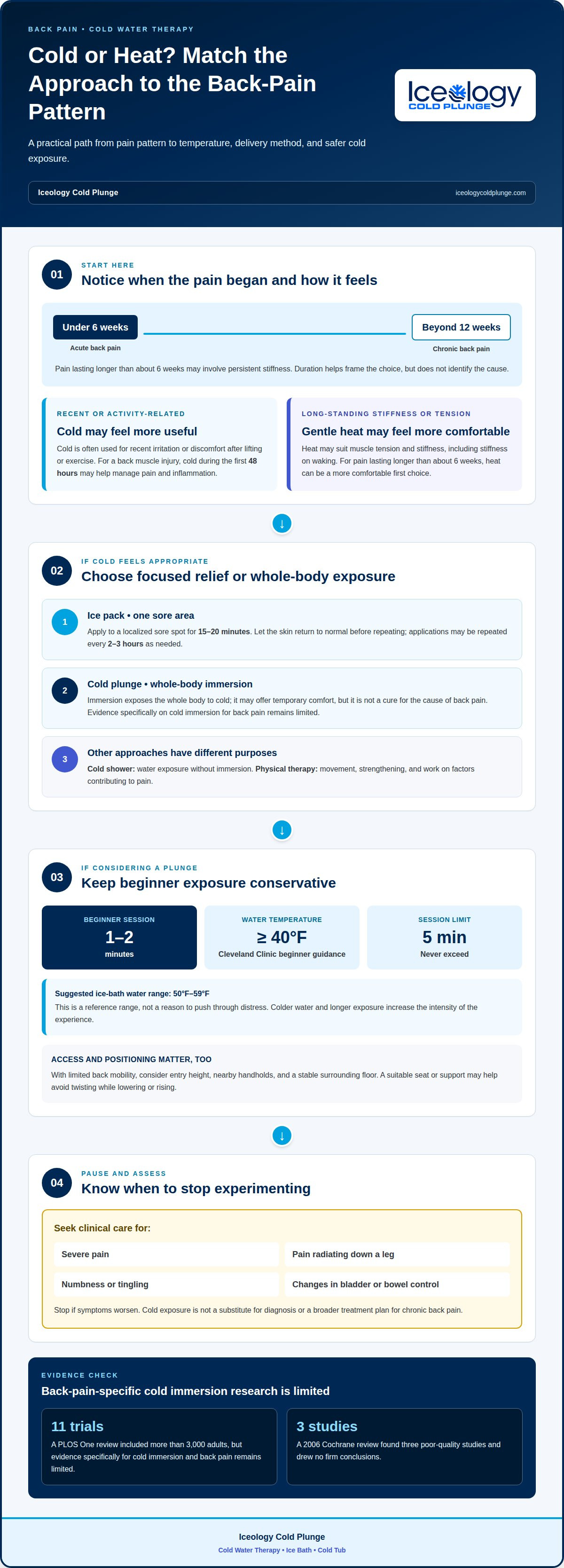
Water temperature and exposure time determine how intense a cold session feels, so beginners should start conservatively. Home guidance suggests two to three minutes, with gradual increases as the body adjusts. Cleveland Clinic advises beginners to limit plunges to one or two minutes, keep sessions under five minutes, and maintain water at or above 40°F. A suggested range for ice bath water is 50°F to 59°F.
Treat these figures as reference points, not a reason to push through distress. For example, someone new to cold water can start near the warmer end of the range and exit early if the experience feels overwhelming. A cold plunge isn’t a substitute for diagnosis or a broader treatment plan for chronic back pain.
Cold Plunges Compared With Other Options
Cold plunges, ice packs, cold showers, and physical therapy differ in coverage and purpose. An ice pack can cool a sore back muscle for 15 to 20 minutes, while a plunge exposes the whole body. A cold shower offers water exposure without immersion. Physical therapy focuses on movement, strengthening, and addressing factors contributing to pain.
For a localized sore spot, an ice pack may be easier to direct. A plunge may suit someone seeking whole-body cold water therapy, but it doesn’t replace physical therapy’s movement-based work. A PLOS One review included 11 trials and more than 3,000 adults, but research specifically on cold immersion for back pain remains limited. A 2006 Cochrane review found three poor-quality studies and drew no firm conclusions.
Features for Back Comfort and Access
When back mobility is limited, access and stable positioning matter as much as cold exposure. Before using a tub, consider whether its entry height, nearby handholds, and surrounding floor allow controlled movement. A stable seat or support may help you avoid twisting while lowering or rising, but the setup needs to suit the person using it.
In the United States, the total cost of owning a tub depends on the tub, cooling system, installation needs, and ongoing water and maintenance requirements. A chiller-based setup and electrical work can affect the overall expense, while upkeep varies with the system and how it is used.
Cold and warm water can also be alternated in contrast therapy. One suggested protocol alternates three to five minutes of cold immersion with 10 to 15 minutes of heat, repeated two to three times. This approach combines different sensations; it doesn’t establish cold immersion as a proven back-pain cure. Cleveland Clinic’s conservative beginner limits offer a safer reference for people considering cold exposure.
Choosing cold or heat based on pain type and duration
Choose between cold and heat by considering when the pain began and how it feels. Recent irritation, persistent stiffness, and post-exercise muscle soreness may call for different approaches.
Choosing Cold or Heat for Back Pain
Cold is often used for recent, activity-related pain, while gentle heat may suit long-standing stiffness and muscle tension. For a back muscle injury, cold therapy during the first 48 hours may help manage pain and inflammation. Pain lasting longer than about six weeks may involve persistent stiffness, where heat can be a more comfortable first choice.
Duration helps frame the decision, but it doesn’t identify the cause. Acute back pain is described as lasting less than six weeks, while chronic pain persists beyond 12 weeks. If discomfort follows lifting or exercise, cold may feel preferable; if mornings bring stiffness, gentle heat may feel more useful.
Temperature, Session Length, and Frequency
Cold water immersion is commonly discussed at 50°F to 59°F, but shorter exposure is a prudent starting point. Cleveland Clinic advises beginners to keep sessions to one or two minutes, keep water at or above 40°F, and never exceed five minutes. These limits matter because colder water and longer exposure increase the intensity of the experience.
Frequency depends on your goal and response. One suggested approach for chronic back pain describes three to four weekly sessions, while contrast therapy guidance suggests one to three sessions weekly. These are different approaches, not a reason to increase exposure through discomfort. For post-exercise soreness, recovery needs and training plans also matter.
Timing and Duration of Ice Application
For a localized sore area, apply an ice pack for 15 to 20 minutes, then allow the skin to return to normal before repeating. Applications may be repeated every two to three hours as needed. This targets one area without exposing the whole body to cold water, making it a practical option when a single back muscle feels tender.
Ice baths involve a different level of exposure. Guidance ranges from 10 to 20 minutes, while another recommendation sets a 10-minute maximum. Given those differing limits, avoid treating longer immersion as automatically more effective. A recent injury, pain intensity, and cold tolerance all affect what feels manageable.
Heat and cold can also be alternated: one suggested contrast routine uses three to five minutes of cold immersion, followed by 10 to 15 minutes of heat, repeated two to three times. Stop if symptoms worsen. Severe pain, pain radiating down a leg, numbness, tingling, or bladder or bowel changes warrant clinical care rather than experimenting with temperature.
For a structured cold-water routine, explore cold water immersion as one option alongside appropriate back-pain care.
Potential short-term cold-plunge relief for back pain
Cold immersion may offer temporary relief, but it doesn’t cure the cause of back pain. Judge its practical value by changes in symptoms and everyday movement, not by how intense the cold feels.
Cold Immersion and Pain Signaling
Cold exposure changes how the body experiences sensation, which may briefly make a painful area feel less prominent. That temporary shift may matter during a specific activity, such as standing from a chair or taking a short walk, but it doesn’t show that an underlying injury has healed.
A 2025 review in the Journal of Multidisciplinary Healthcare concluded that cold acclimation therapy may help relieve acute and chronic pain, support post-exercise recovery, and reduce inflammatory responses. The review also noted unanswered questions. Treat any perceived relief as one part of care, rather than proof that cold immersion has corrected the source of pain.
Acute and Chronic Back Pain
Acute back pain is described as lasting less than six weeks, while chronic back pain persists beyond 12 weeks. Cold therapy may be more relevant after a recent muscle injury or activity-related flare, when pain and inflammation are prominent. Chronic discomfort can involve persistent stiffness and other contributing factors, so a plunge alone isn’t a complete treatment strategy.
Compare the same everyday tasks before and after immersion. For example, note whether getting dressed, walking across a room, or bending to reach a low shelf feels easier. If pain radiates down a leg, or numbness, tingling, or bladder or bowel changes occur, seek clinical care instead of relying on cold exposure.
Tracking Pain and Mobility Changes
A simple written record can help distinguish brief relief from a meaningful change in function. Before a session, note where the pain is and which movement feels difficult. Afterward, repeat those observations using the same examples, such as walking, sitting, or rising from a chair.
Record how long any relief seems to last and whether discomfort returns during everyday activity. Feeling looser immediately after immersion but stiff again while getting dressed suggests a different pattern from easier movement that continues through the day. Share these observations with a healthcare professional when discussing diagnosis or treatment.
Safe Entry and Exit With Limited Mobility
Plan entry and exit around controlled movement, not speed. Keep the route to the tub clear, use a stable handhold if available, and avoid twisting while stepping in or out. If you’re new to cold water therapy, don’t plunge alone. Having someone nearby can help if cold shock or limited mobility makes movement difficult.
Cold immersion can raise heart rate and blood pressure on entry. People with heart disease, high blood pressure, Raynaud’s, cold sensitivity, pregnancy, or circulation concerns should consult a medical professional before trying it. Afterward, warm naturally with light movement rather than going straight into a hot shower. Stop if you feel unwell or your back symptoms worsen.
Cold plunge versus targeted ice pack
A targeted ice pack and full-body water immersion deliver cold differently. Compare them practically: how much of the body needs cooling, how easy it is to control exposure, and whether getting into water adds strain. Choosing a cold plunge tub for a bad back means weighing these factors, not assuming that more extensive cold exposure will work better.
An ice pack cools one spot, such as a sore lower-back muscle, while a plunge exposes the whole body. For a localized area, apply an ice pack for 15 to 20 minutes at a time. That focused approach makes it easier to reposition or remove the cold without changing your whole-body temperature, which can be useful when only one area feels tender.
A plunge prompts a different response. Cold shock is strongest during the first minute, and cold immersion raises heart rate and blood pressure. Cold can also cause blood vessels to constrict. That whole-body reaction matters if back pain already makes movement difficult or cold exposure feels overwhelming. A cold plunge tub for a bad back should suit your mobility and comfort, not add an avoidable challenge.
Consider the task, not just the sensation. If one muscle feels sore after lifting, a wrapped ice pack lets you cool that area while seated or lying down. If soreness affects a broader area after strenuous exercise, immersion cools more of the body at once. Cold-water immersion after strenuous exercise has been associated with less muscle soreness over the next one to four days than rest.
Control differs, too. With an ice pack, you can adjust its position or remove it quickly. A plunge requires entry and exit, so limited mobility can add effort before cold exposure begins. Plan both transitions and have another person nearby, especially if you’re new to cold water therapy.
These options aren’t interchangeable treatments. A plunge may offer temporary relief, but it doesn’t cure the cause of back pain. Research specifically on cold immersion for back pain remains limited, so a strong response to cold doesn’t prove that your back has healed. An ice pack cools one area rather than addressing why the pain started.
Choose based on your immediate need. For one tender spot, an ice pack offers focused application without getting into water. For broader post-exercise soreness, whole-body immersion may be more convenient if getting in and out is manageable. Stop if either option worsens your symptoms. Severe pain, leg symptoms, numbness, tingling, or bladder or bowel changes call for clinical care rather than more cold.
How should you enter and exit a cold plunge tub safely with limited back mobility?
Plan the route, transfer, and exit before entering the water. With limited back mobility, a rushed step or awkward twist can make the transition harder than the plunge itself. Move carefully, and have another person present, especially if you’re new to cold water therapy.
- Prepare the area. Clear the path between your seat and the tub. Keep towels and clothing within reach, and use a dry, stable surface to reduce slipping risk. Check that any handhold you plan to use feels secure before putting weight on it.
- Choose a supported position. Sit on a stable seat beside the tub before moving closer. Avoid bending and twisting at the same time. If stepping over the rim requires a painful movement, don’t force that entry method.
- Enter at a controlled pace. Use available stable support and move one leg at a time. Pause if you feel unsteady, dizzy, or overwhelmed by the cold. The cold shock response is strongest during the first minute, so avoid sudden, unsupported movement.
- Plan the exit first. Keep your route clear and ask your companion to stay nearby. Move slowly, use stable support, and sit down once you’re safely out. Don’t rush to reach a towel or clothing across the room.
Consider tub access before building a routine. A high rim, narrow opening, or slippery approach can make entry difficult for someone with back pain. The right setup depends on your range of motion and balance. A transfer that feels manageable for one person may not work for another.
Cold immersion can raise heart rate and blood pressure on entry. If limited mobility makes it difficult to exit independently, don’t plunge alone. A companion can stay close and help if you feel unwell, but shouldn’t pull or twist your back to lift you from the water.
After exiting, sit somewhere stable and warm naturally with light movement. Avoid crossing a wet floor or reaching overhead for clothes while cold and unsteady. If pain becomes severe, travels down a leg, or comes with numbness, tingling, or bladder or bowel changes, seek clinical care instead of attempting another session.
For a setup designed around your access needs, explore cold plunge tub options.
Iceology Cold Plunge
Iceology Cold Plunge offers cold plunge tubs, ice baths, cold tubs, and accessories for people building a home cold-water routine. Its tubs are made in the USA and feature built-in chillers that can lower water temperature to as low as 39°F, giving users temperature control for cold immersion. For back discomfort, that equipment supports a consistent way to experience cold water, but it doesn’t diagnose or treat the underlying cause of pain. Consider how entry, exit, and your mobility fit your routine, and consult a healthcare professional before using cold immersion as part of a back-pain plan. Contact Iceology Cold Plunge to discuss your cold plunge questions and setup needs.
Choose a Recovery Routine That Fits Your Life
A cold plunge tub for a bad back should support a thoughtful recovery routine, not become a test of toughness. Before making it part of your habits, decide what you want it to contribute: a calmer transition after activity, a focused recovery moment, or a structured way to explore cold exposure.
Keep your goal practical and personal. Notice whether the routine fits comfortably into your day and supports the movements and activities that matter to you. Your response may vary, so let comfort, access, and guidance from your healthcare professional shape your choices.
If cold immersion feels like a considered fit, take the next step at your own pace and explore what works for your recovery practice.
Build your routine with patience and purpose. Progress starts with choices you can sustain.
Frequently Asked Questions
Do Ice Baths Work for Back Pain?
Ice baths may offer temporary comfort, but they aren’t an established cure for back pain. Evidence specific to cold immersion and back pain is limited, so a soothing sensation shouldn’t be treated as proof of recovery. If cold exposure briefly makes standing easier, note that change and how long it lasts. Persistent or recurring pain still deserves attention to its cause and your overall care plan.
Is an Ice Bath Good for Back Pain?
An ice bath may suit some people with recent, activity-related soreness, but it isn’t the best choice for every back problem. Long-standing stiffness may feel better with gentle heat, while a cold pack may be more practical for one tender spot. Consider when the pain began and how your body responds. If immersion increases discomfort or makes movement harder, stop rather than extending the session.
What is Cold Water Immersion Therapy?
Cold water immersion therapy means deliberately placing some or all of the body in cold water for a limited time. A home setup allows repeated exposure without relying on a cold shower or localized ice pack. Because it affects the whole body, it differs from cooling one sore muscle. It’s a recovery practice, not a diagnosis or stand-alone treatment for the source of back pain.
Can cold plunges help lower back pain or a bad back?
A cold plunge may temporarily change how lower-back discomfort feels, but it doesn’t correct the underlying cause. You might notice brief comfort after activity, then feel symptoms return during normal movement. That response can help describe the pattern, but it doesn’t establish that your back is healing. Persistent pain is better addressed through a care plan that considers movement, strength, and why the symptoms began.
What does research say about cold-water immersion for back pain?
Research directly focused on cold immersion for back pain remains limited. A 2006 Cochrane review found only three poor-quality studies of cold therapy for low back pain and concluded that firm conclusions couldn’t be drawn. A PLOS One review examined cold-water immersion more broadly, but its findings don’t establish a specific back-pain effect. Treat general recovery findings as different from proof of back-pain treatment.
Can cold plunging worsen muscle spasms, sciatica, or a back injury?
Cold exposure can feel uncomfortable, and symptoms may feel worse for some people during or after immersion. The research described here doesn’t establish that plunging specifically worsens spasms, sciatica, or an injury. Don’t push through increased pain or difficulty moving. Pain radiating down a leg, numbness, tingling, or changes in bladder or bowel control call for clinical care, not another cold session.
When should someone with back pain avoid cold plunges or ask a doctor first?
Get medical advice before cold immersion if you have heart disease, high blood pressure, circulation problems, Raynaud’s, cold sensitivity, or are pregnant. Cold exposure raises heart rate and blood pressure on entry, which matters for people with cardiac concerns or certain blood pressure medications. Don’t plunge alone if you’re new to cold water or have heart or circulation concerns. Severe back pain or neurological symptoms also warrant clinical care.
What water temperature and plunge duration are safest for beginners with back pain?
For beginners, Cleveland Clinic advises water at or above 40°F and sessions limited to one or two minutes, with no session longer than five minutes. Start with progressively colder baths rather than jumping directly into intense exposure. Have another person nearby, especially if back mobility is limited. Exit if you feel unwell, and warm naturally with light movement afterward instead of moving straight into a hot shower.