
Cold plunge tub for a spiritual practice: safety and breath control
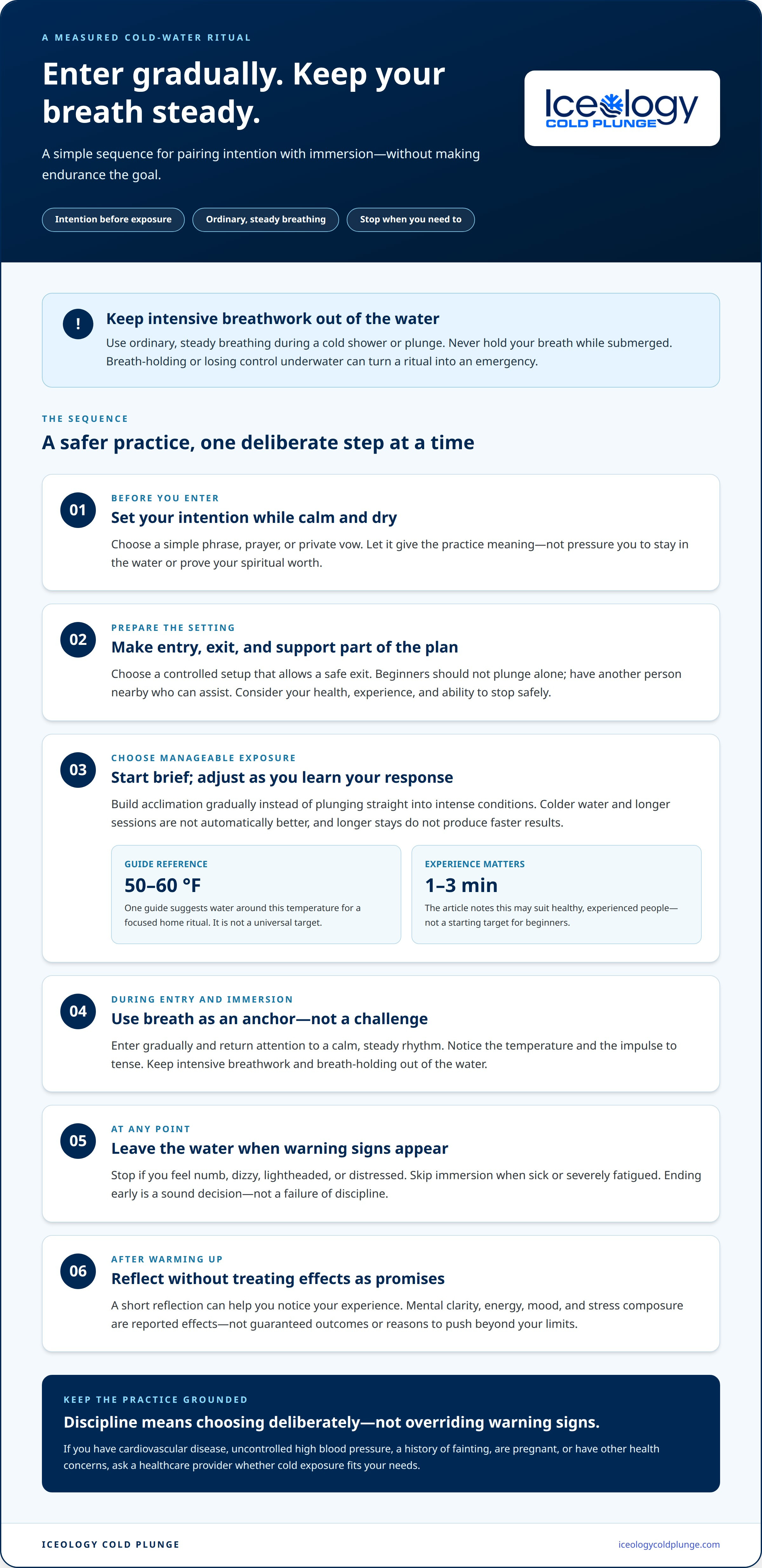
Breath control matters more than enduring the cold. A cold plunge tub for a spiritual practice can pair intention with immersion, but keep intensive breathwork out of the water: enter gradually, breathe steadily, and never hold your breath while submerged. The aim is calm awareness, not pushing through distress.
It makes sense to want a ritual that feels grounding, focused, and personally meaningful. Cold exposure can trigger an instinctive gasp, so a spiritual practice needs to allow for a clear, steady response and a safe exit, rather than relying on willpower alone.
This guide explains how to approach breathwork and cold-water entry more safely, which beginner mistakes to avoid, and what to consider when setting up a practice at home. It also covers mental clarity and stress composure as reported experiences, not guaranteed outcomes, so you can shape a ritual around thoughtful intention, measured exposure, and respect for your limits.
Key Takeaways
- Keep intensive breathwork outside the water; during immersion, prioritize steady breathing and an easy exit if you feel unwell.
- Build cold exposure gradually with short, manageable sessions rather than chasing colder water or longer stays.
- Set a clear intention for the ritual, and treat mental clarity or greater stress composure as personal experiences, not guaranteed results.
- Plan a home setup around a stable, controlled water temperature and a space that supports safe entry and exit.
- Use breath as an anchor during entry: avoid breath-holding and focus on settling into a calm rhythm.
Are there any safety concerns with combining spiritual breathwork practices and cold immersion?
Yes. The central safety concern is combining water exposure with breathwork that changes breathing intensity. Some holotropic workshops pair controlled hyperventilation with brief immersion, but intensive breathwork is safer away from the water. In a cold shower or plunge, use ordinary, steady breathing instead. Never hold your breath while submerged: a cold-shock response in open water can contribute to drowning, and losing control underwater can turn a ritual into an emergency.
Cold showers and winter immersion can serve as personal rituals, but traditions differ. Hindu devotees may regard bathing in cold rivers or temple tanks as purification of body and soul. During Navratri, some bathe in rivers or waterfall streams as an act of devotion and detachment from bodily comfort. These beliefs belong to particular religious contexts; they shouldn’t be reduced to a generic wellness technique or assumed to represent every Hindu community.
Cold immersion can also express connection with the divine, nature, or a chosen spiritual tradition. In a Scandinavian-inspired personal practice, someone might reflect on Skadi or chant a rune before entering. Treat these as intentional choices, not universal customs. Sarah Ferguson, an Afro-Cuban Lukumí practitioner, advises considering why you want to participate and choosing carefully whom you learn from. Avoid anyone who takes away your choice or claims a plunge cures anxiety or depression.
Set an intention before exposure, while you’re calm and dry. A simple phrase, prayer, or private vow can give a cold shower meaning without turning endurance into a test. Don’t make an oath under pressure or treat staying submerged as proof of spiritual worth. The practice should preserve your autonomy: you can end the immersion whenever you need to. Discipline means making a deliberate choice, not overriding warning signs.
For a focused home ritual, one guide suggests water around 50-60 °F. A tub can make immersion more controlled than entering a winter river, while a contrast routine may pair warmth with cold. Temperature alone doesn’t determine suitability: consider your health, experience, entry and exit, and ability to stop safely. Ask a healthcare provider whether cold exposure fits your needs, especially with cardiovascular disease, uncontrolled high blood pressure, fainting history, pregnancy, or other health concerns.
Choose a setup that supports calm entry rather than a dramatic challenge. Beginners shouldn’t plunge alone; arrange for another person to stay nearby and able to assist. Children, older adults, and people with health conditions may need a modified approach. Skip immersion when sick or severely fatigued, and leave the water if you feel numb, dizzy, lightheaded, or distressed. These limits apply whether the ritual involves a shower, a tub, or winter water.
What is the most common mistake people make when starting a cold exposure ritual practice?
A common mistake is starting too cold, staying in too long, or both. Gradual exposure supports a more disciplined practice than treating discomfort as a measure of spiritual progress.
Gradual Acclimation to Cold
Gradual acclimation means introducing cold exposure in manageable steps instead of plunging straight into intense conditions. Begin with a brief, challenging session that still lets you stay composed, then adjust your exposure as you learn how your body responds. Colder water isn’t automatically better, and longer sessions don’t produce faster results. Healthy, experienced people may stay for 1-3 minutes, focusing on sensation and breath.
Cold-Exposure Safety Precautions
Safety precautions are choices that reduce avoidable risks before and during immersion. Sudden exposure can risk hypothermia or underwater blackout, so don’t make an abrupt plunge or practice alone. Beginners should have a trained person nearby to guide and assist them. If you have a heart condition, speak with a doctor before starting. Skip a session when you’re sick or severely fatigued, and leave the water if you feel dizzy, numb, or distressed.
Modern spiritual cold exposure can draw on different traditions without claiming they are interchangeable. For example, a person might take a cold shower as a morning ritual, using a chosen prayer or quiet reflection. Another might dedicate a plunge to a personal intention. Keep the practice voluntary: an oath or spiritual commitment shouldn’t pressure you to stay in the water when you want to stop.
Mindfulness gives the session a focus beyond enduring discomfort. Notice the temperature, the impulse to tense, and when your breathing settles. You might choose one word, such as “steady,” as an anchor during a brief shower. This simple discipline makes the practice about attention and resilience, rather than competing with others or chasing a more extreme sensation.
Cold exposure can feel powerful and stimulating. It may increase energy, improve mood, and sharpen focus, but these reported effects aren’t a reason to push beyond your limits. Treat alertness as an experience to notice, not a guaranteed result. A short reflection after warming up can help you distinguish a calmer, clearer state from the temporary intensity of the cold itself.
For a measured ritual, set the intention before entering, choose manageable conditions, and keep your attention on sensation rather than duration. If you’re planning a home practice, a controlled cold water therapy setup can support consistency. The key is to build comfort with exposure over time; stopping early is a sound decision, not a failure of discipline.
Reported mental clarity and stress composure
People describe different mental effects from cold immersion, including focused attention and a steadier response to discomfort. Personal reports and meditation findings offer useful context, but they describe different practices.
Mind-Body Harmony
Mind-body harmony means noticing physical sensations while deliberately directing your attention. During cold meditation, the sharp temperature change can make each breath and muscle response feel immediate. That awareness gives the ritual a clear focus: observe the body’s reaction without letting it dictate every thought. After warming up, sit for a minute and notice the returning warmth and calm.
A simple reflection can make the experience more specific. Name one sensation, such as tingling hands, then notice whether it changes as you warm up. This isn’t an endurance test; it’s a way to observe how attention shifts under stress. A brief journal entry afterward can capture what felt grounding, what distracted you, and whether the practice supported your intended focus.
Mental and Spiritual Effects
Reported spiritual effects often come from the meaning a person brings to immersion. In rune symbolism, Isa represents stillness, concentration, and frozen clarity. Someone working with that image might reflect on it before entering, then use it as a quiet point of focus. The symbol gives the ritual personal structure; it doesn’t prove that cold exposure produces a spiritual outcome.
Other rune associations suggest different interpretations. Hagalaz represents trial and disruption, while Thurisaz evokes primal, bracing energy. These meanings can frame a personal meditation around change or resilience. Choose a symbol because it fits your own practice, not because it promises transformation. After the plunge, note whether your attention or interpretation changed; that observation is more useful than measuring the ritual against someone else’s experience.
Mood and Mental Health
Mood changes are among the personal effects described by cold-immersion practitioners. One author reported better sleep and fewer anxious thought loops within a month of beginning the practice. The same author said cold exposure’s effects carried into daily life within weeks. These are individual accounts, not a timetable or treatment plan for others.
Meditation offers another point of comparison. Michael Posner and Yi-Yuan Tang reported structural changes in attention networks after a few weeks of meditation practice, alongside better focus and less anxiety. That finding concerns meditation, not cold immersion. It can help readers distinguish a broader mindfulness routine from claims about cold alone, and keep expectations grounded.
For a useful self-check, record your mood before the ritual and again after warming up. Write down one concrete observation, such as whether you felt more settled during a later task. Repeat the same reflection across sessions without treating a difficult day as failure. If the practice worsens distress or disrupts sleep, pause and discuss the change with a healthcare professional, especially if you’re managing a mental health condition.
How involved is the setup process for a home cold plunge?
A home ritual takes more planning than filling a tub. Consider its location, water management, entry, exit, and how you’ll create a consistent routine. The setup can be simple, but it should support safe, repeatable immersion rather than add avoidable friction.
Local rules or permits may apply, depending on your location and the work involved. Plumbing, electrical changes, drainage, or structural modifications can affect which requirements apply, so describe the planned installation to your local building department before work begins.
Ancient practices show how cold water has carried meanings beyond physical discomfort. Ritual immersion has appeared across cultures for thousands of years, though these traditions are distinct and shouldn’t be treated as one shared practice. Ancient Greek priests immersed themselves in cold streams before ceremonies, using water as part of ritual preparation.
In ancient Rome, some bathhouse routines ended with a cleansing dip in a frigidarium, a cold pool associated with hardening body and spirit. Ancient Egyptians bathed in the Nile as a symbol of rebirth. These examples can inspire reflection on renewal, but they don’t establish a single modern routine or universal spiritual meaning.
Japanese Shinto practitioners perform Misogi, a purification ritual involving cold mountain lakes and waterfalls, to unite mind, body, and spirit. In some Native American cultures, cold-water baths connect prayer with the natural world. These practices are rooted in specific communities. A personal home ritual should respect their context rather than copy sacred customs without understanding them.
For a modern routine, choose one repeatable cue, such as a morning meditation, a short prayer, or a moment of stillness before immersion. Keep towels and warm clothing nearby, and clear the route from the water to your warming space. These simple choices reduce setup friction and keep your attention on your intention, not on searching for essentials.
Make the space work for the entire ritual, not just the plunge. Decide where you’ll enter and exit, where water will be managed, and where you’ll pause afterward. A written sequence can help: prepare the space, set an intention, enter calmly, then warm up and reflect. Adapt the routine to your home rather than forcing a setup that creates discomfort or risk.
Consistency doesn’t require an elaborate ceremony. A quiet place, a clear entry and exit, and one meaningful intention can make the practice feel grounded. Be mindful of water use, too; water scarcity is an increasingly pressing global issue. A thoughtful setup balances personal stillness with practical care for your home and its resources.
Breath control during cold-water entry
Prepare mentally by choosing one simple intention, then take three slow breaths before entering. As you lower into the water, keep breathing and make each exhale longer than the inhale; never hold your breath underwater.
Cold water can trigger an involuntary gasp and rapid breathing as your nervous system responds to the temperature change. Focus on a controlled, unforced exhale rather than trying to suppress the response. The initial cold-shock response may fade within thirty seconds as you settle into a slower rhythm. That timing isn’t a target to endure: leave the water sooner if breathing stays difficult or distress increases.
Recommendations for breathing before entry vary. One approach uses three slow breaths; another suggests five slow nasal breaths before immersion. Treat either as a brief attention cue, not a performance test. If nasal breathing feels uncomfortable, don’t force it. The purpose is to pause, notice how you feel, and enter with awareness rather than rushing into the water.
Keep intensive breathwork on dry ground. The Wim Hof Method combines breathing techniques with gradual cold exposure, but breath practices involving hyperventilation aren’t appropriate while submerged. Faintness or loss of control in water can become dangerous quickly. Even in a tub, don’t use deliberate rapid breathing, prolonged breath holds, or underwater breath challenges as part of a spiritual ritual.
A natural body of cold water adds further risk: cold shock can cause drowning. Choose a controlled setting where you can stand, exit without delay, and have another person nearby. Before entering, identify the exit and make sure the area is clear. During immersion, keep your face above water and focus on steady breathing rather than chanting, counting, or trying to prove your endurance.
Use breath as a tool for mindful observation, not to override discomfort. Notice whether your shoulders tense, your jaw tightens, or your breathing becomes rushed. Then soften one response at a time, without demanding instant calm. If dizziness, lightheadedness, numbness, or distress appears, get out. The practice is complete when you choose to stop, not when you reach a particular state.
After exiting, warm up and observe how your breathing changes. A short reflection can connect your physical response with your intention: did your breathing settle, and what helped? That feedback can guide a more measured cold-water therapy routine next time. Breath control means staying responsive to your body, not forcing a calm appearance while your nervous system signals distress.
Iceology Cold Plunge
Iceology Cold Plunge helps make a thoughtful home immersion routine practical with cold plunge tubs, ice baths, cold tubs, and accessories. Its tubs are made in the USA and feature built-in chillers that can lower water temperature to as low as 39 °F, giving you control over the setting for a consistent practice.
For a spiritual ritual, reliable temperature control can make it easier to focus on intention, steady breathing, and a measured entry instead of preparing ice each time. Choose a setup that fits your space and supports safe access, then build your practice around personal limits rather than endurance goals. Cold immersion is not a substitute for medical guidance when health concerns affect your plans.
If you’re ready to explore a home setup for your practice, contact Iceology Cold Plunge.
Shape a Practice That Feels Like Your Own
A cold plunge tub for a spiritual practice can mark a deliberate pause in an otherwise busy day. Let its meaning come from the values you bring to it, whether patience, gratitude, or a renewed commitment to presence. The practice doesn’t need to look dramatic to feel significant. A quiet ritual, approached with respect and care, can be more lasting than chasing intensity.
As you consider what comes next, think about the place cold immersion should hold in your life. A steady routine should fit your schedule, respect your limits, and leave room for other forms of reflection. Choose a setup that supports those priorities, rather than letting equipment or expectations define your practice. Your next step can be simple: decide what you want the ritual to represent, then build from there.
Move at your own pace, stay attentive, and let each deliberate choice strengthen a practice that feels grounded and personal.
Frequently Asked Questions
Can cold plunging really be a form of meditation?
Yes. A cold plunge can become a meditation when you deliberately focus on sensation, thought, or a chosen phrase. A cold plunge tub for a spiritual practice can provide a consistent setting for that attention. For example, notice the feeling in your hands, then return your attention to one word whenever your mind wanders. Keep the practice brief and alert rather than trying to achieve a special state. The meditative element comes from attention and intention, not water temperature alone.
How do I stay calm when I first get in?
Give yourself time to approach the water without rushing. Before entry, decide what would help you feel steady, such as focusing on the tub’s edge or a familiar phrase. Lower yourself in gradually and keep your attention on one observable sensation at a time. If panic or distress builds, exit rather than forcing yourself to stay. A successful practice includes responding to your limits.
How much maintenance does a cold plunge actually require week to week?
For the Iceology Cold Plunge Grizzly 450, the filter cartridge is recommended for replacement every 2-4 weeks, and the chiller screen should be cleaned monthly. Between those tasks, rinse before plunging and follow a regular water-sanitizing routine. The actual attention needed between maintenance tasks depends on use and water condition. Keeping maintenance supplies organized near the tub can make care easier to build into your routine.
Is it safe to meditate in cold water?
Keep water-based meditation simple and stay aware of your surroundings. Choose a stable position, keep your head above water, and avoid practices involving intense breathing, breath-holding, or closing your eyes for long periods. These approaches can make it harder to notice changes in your balance or how you feel. If the water distracts you from staying aware, end the meditation and continue reflecting after you exit.
What are the ongoing running costs I should account for?
Plan for electricity, water care, replacement filters, and any water changes your routine requires. Electricity use depends on factors such as the temperature setting, surrounding conditions, insulation, and how often the tub is used. Water-care supplies and filter replacement also vary with use and care habits. These factors matter more than a generic estimate, so consider your typical routine and local utility rates when planning household expenses.
What size cold plunge do I need for a single-person daily practice?
Choose based on comfortable entry, immersion, and the space available, rather than assuming every single-person tub fits the same way. The Iceology Cold Plunge Grizzly 450 has an overall required space of 77 by 50 inches, including back clearance. Its interior is 31.5 inches wide and 22 inches high. Those dimensions apply to this model, so measure your intended location before selecting it.
How can cold plunging be incorporated into a spiritual practice?
Connect immersion to a personal practice you already value. Choosing a cold plunge tub for a spiritual practice can help establish a familiar place for reflection, while a prayer, meditation, or written reflection can give the ritual structure. For example, name an intention beforehand, then consider afterward whether the experience aligned with it. Keep the ritual flexible; its meaning should come from your beliefs and choices, not pressure to copy someone else.
What are the potential spiritual and mental benefits of cold water immersion?
Practitioners report experiences such as sharper focus, greater alertness, and a stronger sense of composure. Spiritually, immersion may feel meaningful as a ritual of reflection, renewal, or connection with a personal belief. These experiences differ from person to person and shouldn’t be treated as a cure for anxiety, depression, or another health condition. Notice what you experience and keep expectations grounded in personal observation.