
Cold Plunge Tub for Reducing Cortisol Levels and Mental Health
Cold plunging may affect cortisol, but the response isn’t as simple as “colder is better.” Cold water therapy can decrease cortisol levels by up to 30%, and a cold plunge tub for reducing cortisol levels may offer a controlled way to experience cold exposure. That figure isn’t a guaranteed outcome for every person or session.
It makes sense to look for a practical way to manage stress and support mental well-being. Cold immersion can feel clarifying and energizing, but immediate effects are not the same as longer-term benefits, and evidence about mood remains limited.
This article explains what research suggests about cortisol and mental health, as well as possible effects of cold plunging on immunity and cardiovascular function. It also covers practical considerations, including temperature and duration, so you can approach cold exposure carefully rather than relying on dramatic claims.
Key Takeaways
- Cold exposure can affect cortisol differently depending on the session and timing; understand the research before treating plunges as a stress-management solution.
- Beginners can start with brief immersion in 50-59°F water and build gradually rather than pushing for colder temperatures or longer sessions.
- Repeated exposure has been linked with changes in stress responses and immune markers, but mood benefits are not established by strong evidence.
- Cold immersion can raise heart rate and blood pressure, so learn how cardiovascular and respiratory risks may shape whether it’s appropriate for you.
- A tub with a built-in chiller can make water temperature easier to control as you develop a consistent cold-water routine.
How does the cold plunge modulate immune function?
Cold water immersion can trigger short-term stress responses, including changes in cortisol, while repeated exposure may affect immune markers. These findings do not establish cold plunging as an illness treatment or a reliable way to control stress. Responses depend on water temperature, exposure duration, and how often immersion occurs.
Cortisol results vary across studies. In one study, cortisol was significantly lower 180 minutes after cold-water immersion than before immersion. Another study examined a single 15-minute immersion in 10°C water. A separate study found that a one-hour immersion in 32°C, 20°C, or 14°C water did not increase blood cortisol concentrations; levels remained below their initial levels an hour after immersion. These different protocols help explain why one result can’t predict every person’s response.
Immune findings relate to repeated exposure, not just a single plunge. Successive cold-water immersions over a week and then numerous weeks were associated with higher monocyte and lymphocyte values, alongside increases in immune and anti-inflammatory receptors. These are measured-marker changes, not proof that participants were less likely to get sick or recovered faster from infection.
Mood may shift after immersion, too. Thirty-three adults new to cold-water swimming reported mood benefits after five minutes in a 20°C cold bath. Questionnaire responses suggest a correlation between cold-water immersion and improved moods, but evidence is lacking to support firm claims that cold plunges improve mood. Feeling alert after a session is an experience, not proof of a lasting mental-health effect.
A home plunge’s total cost includes the tub, setup, electricity for chilling, water treatment, and maintenance. The total depends on the equipment and installation needs, as well as how often the system is used and maintained.
For a beginner, gradual acclimatization matters more than chasing extreme cold. One suggested starting point is a two-minute immersion in water around 20°C, followed by gradual changes across later sessions. A cautious sequence is to prepare the tub and exit route, enter slowly, keep the head above water, focus on steady breathing, and leave if breathing becomes difficult or you feel unwell. Don’t treat a longer session as a measure of progress.
Water aspiration is a serious concern if a gasp or panicked breathing draws water into the airway. Keep your face clear of the water and avoid breath-holding challenges. The National Center for Cold Water Safety warns that sudden immersion in 50-to-60-degree Fahrenheit water can kill a person in less than one minute. Cold exposure also affects the cardiovascular system, so people with relevant health concerns should consult a healthcare provider before trying it.
Suggested cold-plunge duration and temperature
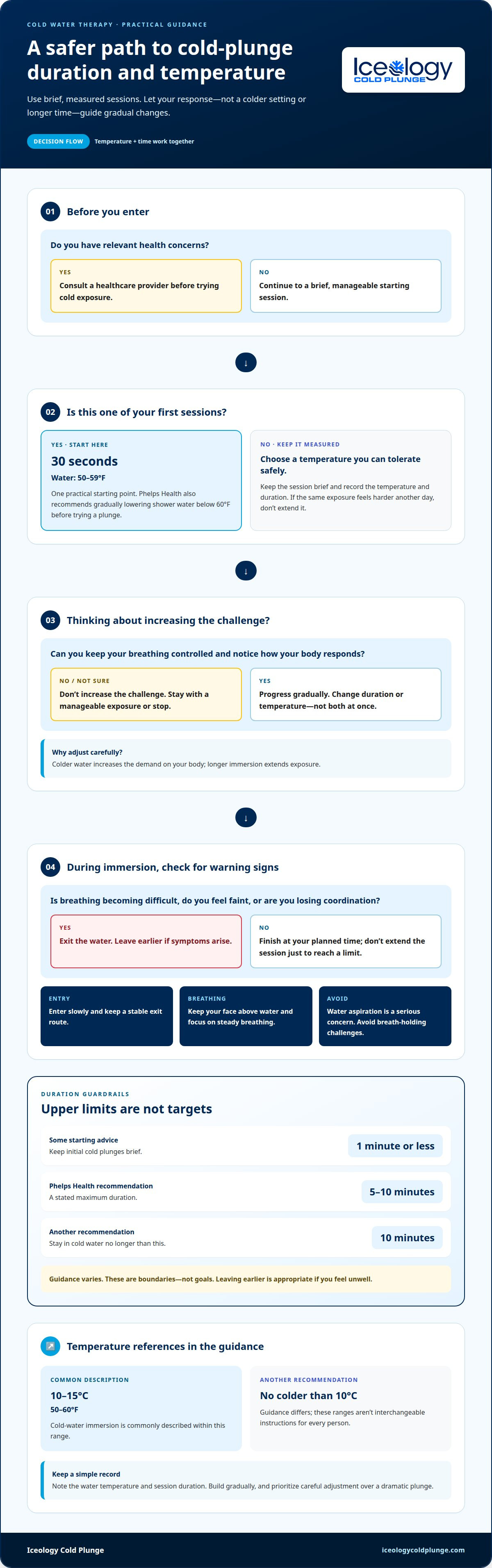
Temperature and time work together: colder water increases the demand on your body, while longer immersion extends exposure. For beginners, guidance suggests starting between 50-59°F and keeping the first sessions brief, rather than choosing the coldest setting available. A gradual approach lets you observe your breathing, comfort, and heart rate before changing either variable.
One practical starting point is 30 seconds in water between 50-59°F. Phelps Health recommends beginning at 30 seconds and gradually lowering shower water below 60°F before trying a plunge. Increase exposure gradually over successive sessions, changing duration or temperature rather than making both more challenging at once. This makes it easier to notice how your body responds.
Guidance differs because studies use different temperatures, durations, and participant groups. Cold-water immersion is commonly described as roughly 10-15°C, or 50-60°F, while another recommendation is to choose temperatures no colder than 10°C. These ranges aren’t interchangeable instructions for every person. A person’s experience, health, and response to cold all affect a sensible starting point.
For session length, some advice says cold plunges should last one minute or less when starting. Phelps Health recommends a maximum duration of 5-10 minutes, while another recommendation advises staying in cold water no more than 10 minutes to help prevent hypothermia. These are upper boundaries, not targets to reach. Leaving early is appropriate if breathing becomes difficult, you feel faint, or you lose coordination.
Cold plunge tubs differ in purchase price, temperature capability, filtration, and safety features. Compare the complete setup and ongoing care, not just the tub. Chiller capability determines the water temperature a system can maintain, while filtration and sanitation affect water care. Safe use also depends on user practices, such as maintaining a stable entry and exit and keeping your face above water.
Use a simple progression: choose a manageable temperature, enter slowly, keep your breathing controlled, and exit at your planned time or sooner if symptoms arise. Record the temperature and duration after each session. If the same exposure feels harder another day, don’t extend it. Consistency and careful adjustment matter more than a dramatic plunge.
For home use, temperature-controlled cold plunge options can help make the water setting repeatable. Choose a temperature you can tolerate safely, then build your routine around brief, measured sessions rather than chasing the lowest reading.
Can Cold Water Plunges Improve Mental Health?
Research has examined repeated cold exposure in relation to stress responses, mood, and cortisol, but these outcomes are not interchangeable. Exposure patterns matter, as do recovery and timing around exercise.
Stress Resilience After Repeated Exposure
Stress resilience is the ability to respond to a challenge and return toward baseline afterward. In one winter-swimming study, participants entered 0-2°C water for twenty seconds, three times weekly, over twelve weeks. Their cortisol levels were significantly lower after four weeks. This repeated-exposure design differs from a single plunge, so it offers a glimpse of adaptation over time, not a guarantee of improved resilience for every person.
If you’re considering cold exposure, prioritize consistency and tolerability over forcing a dramatic session. Studies of short immersions show that repeated exposure can be examined without assuming longer sessions are better. Track changes in mood, sleep, and perceived stress across a routine, rather than judging mental-health effects from a single post-plunge sensation.
Acute Cortisol Response
An acute cortisol response is the body’s short-term hormonal reaction to a stressor, including cold exposure. A plunge can feel intense at entry, but that immediate sensation doesn’t establish what cortisol will do later. Research described in this article found lower cortisol at a later measurement after immersion, while other protocols showed different patterns. The timing of a measurement matters when interpreting results.
Cold exposure also affects other signaling chemicals. Twenty seconds in ice-cold water can increase norepinephrine levels by as much as 300 percent. That response may feel energizing, but it isn’t proof that a plunge treats anxiety, depression, or chronic stress. Evidence is lacking to support broad claims that cold plunges improve mood, even though questionnaire responses suggest a correlation with improved moods.
Gradual adaptation keeps the challenge manageable. Start with a brief exposure, such as a cold shower, and increase coldness or duration progressively rather than changing both together. Pay attention to shivering, coordination, and breathing. Hypothermia is clinically defined as a core body temperature below 95°F, so prolonged exposure and worsening symptoms should never be treated as signs of discipline.
Training timing matters, too. Avoid cold exposure immediately after strength and hypertrophy training, when it can interfere with muscle-growth adaptations. Separate the plunge from that session rather than making cold immersion an automatic post-workout step. A consistent routine should support your priorities, whether they’re stress management, strength gains, or both.
One reported regular-exposure amount is about 11 minutes throughout the week, while another recommendation is 1 to 3 ice baths per week. These figures describe different approaches, not a universal prescription. Choose a tolerable routine, allow recovery between exposures, and assess its effects over time instead of chasing colder water.
How do cold plunges affect the cardiovascular system?
Cold plunging can raise blood pressure and heart rate and increase the risk of abnormal heart rhythms. Phelps Health cautions that cardiovascular or respiratory disease and decreased circulation can make cold exposure particularly risky.
Cold shock begins at entry, when the body responds to sudden exposure. Blood vessels constrict, and the heart works against increased resistance. These changes make the first moments especially important. Enter gradually, keep your face above water, and focus on controlled breathing rather than forcing a prolonged immersion. Cold water between 50 and 59°F has been associated with dangerous outcomes, so a moderate temperature is not automatically risk-free.
Pay close attention to breathing. Sudden immersion can trigger an involuntary gasp, and water aspiration can follow if your face is underwater. Avoid breathwork such as cyclic hyperventilation before entering cold water because it can alter the natural gasp reflex. Keep a clear exit route and leave promptly if you feel faint, unusually breathless, or unable to coordinate your movements.
Phelps Health identifies particular concerns for people with cardiovascular or respiratory disease or reduced circulation. These conditions can affect how the body handles cold exposure’s rapid changes in heart rate, blood pressure, and breathing. A healthcare provider can consider the condition, its severity, medications, and the planned exposure before someone tries cold plunging.
Cold plunging, sauna, and exercise are different approaches to stress management, not interchangeable therapies. Cold exposure creates an immediate cardiovascular response, while sauna research concerns repeated heat exposure and cardiovascular outcomes. The information here doesn’t establish which method reduces cortisol most effectively for an individual.
For cardiovascular health, the research summary reports that sauna use two to three times per week is associated with a 27% lower risk of cardiovascular events. It also reports that increasing sauna use to four times weekly doubles that protective effect. These figures concern sauna use, not cold plunging, and shouldn’t be transferred to cold-water immersion.
Sauna figures describe frequency, not a direct comparison of mental-health benefits or cortisol reduction. One reported range is two to three up to seven sauna sessions weekly for cardiovascular health. That range doesn’t show that more sessions are better for everyone. Heat exposure, health status, and tolerance all shape an individual’s response.
To make a safer decision, consider your health history, circulation, breathing, and the intensity of the temperature change. If you have cardiovascular or respiratory disease or decreased circulation, Phelps Health advises consulting a healthcare provider before cold plunging. That conversation can clarify whether cold water therapy fits your situation and which risks need attention.
Cold plunging and cortisol levels
Cortisol is part of the body’s response to physical and psychological stress. Cold water immersion adds a brief physical stressor, so its effect depends on exposure conditions and when cortisol is measured. A lower reading after immersion does not, by itself, show that everyday stress has decreased or recovery has improved. A cold plunge tub for reducing cortisol levels should be viewed as a way to manage exposure, not as a cortisol treatment.
Cold water therapy is reported to decrease cortisol levels by up to 30%. Treat that figure as an upper reported change, not a prediction for every plunge. Session temperature, duration, and repeated exposure can shape the response. The practical takeaway is to distinguish a measured cortisol change from lasting improvement in mental health, sleep, or stress regulation.
One study examined cryotherapy at −110°C for two minutes, three times a week for twelve weeks. Cryotherapy exposes the body to cold air, not water immersion, so it cannot establish the effect of a cold plunge tub for reducing cortisol levels. Its protocol illustrates why exposure type matters: a chamber session and immersion differ in how cold transfers to the body.
Cortisol is only one measure of the body’s response. Cold exposure can also affect heart rate and blood pressure, and the experience may feel stimulating or demanding. These immediate physical reactions don’t show whether cortisol will decrease over time. Consider the timing of measurement and session conditions before comparing results; a single number is not the whole picture.
For a useful personal record, note the water temperature, time immersed, and how you feel afterward. Keep those details consistent across sessions and compare similar conditions, rather than contrasting a brief, milder exposure with a longer, colder one. If your goal is stress support, also track everyday indicators such as perceived tension and sleep quality. These observations add context but don’t replace clinical assessment.
Cold plunging is one of several ways to approach stress management. Sauna use may also support stress relief, while exercise and other routines can suit different recovery needs. A cold session can be a structured practice, but a noticeable rush or calm feeling isn’t evidence of a specific cortisol change. Choose an approach that suits your health and routine.
Treat cold exposure as one part of a broader recovery plan, not a stand-alone cortisol treatment. Consistent sleep, manageable training, and stress-management practices help put your experience in context. If cold immersion causes concerning symptoms, stop and address them rather than extending exposure to pursue a lower cortisol reading.
Iceology Cold Plunge: Cold Plunge Tubs
Iceology Cold Plunge offers Cold Plunge Tubs for people who want a dedicated setup for regular cold-water immersion. Each tub is made in the USA and has a built-in chiller that can lower water temperature to as low as 39°F. Temperature control can help you keep sessions consistent while following a gradual routine, rather than relying on ice additions to change the water.
A cold plunge tub can support a structured wellness practice, but it is not a guaranteed way to lower cortisol or improve mental health. Use the research and safety guidance in this article to set realistic expectations, choose a cautious approach, and decide whether home immersion fits your routine.
Visit iceologycoldplunge.com to explore Iceology Cold Plunge Tubs or contact the team.
Make Your Next Step a Measured One
Build a cold-water routine around a clear purpose, not pressure to endure more. If you’re considering a cold plunge tub for reducing cortisol levels, treat it as one possible part of a broader wellness practice, not a substitute for care that supports your mental health.
Give yourself room to notice how the practice fits your life. Keep your approach manageable, pay attention to your response, and adjust if it no longer supports your well-being. Progress can mean making a thoughtful choice, including choosing another stress-management practice when cold exposure doesn’t feel right for you.
When you’re ready to explore a home setup, Iceology Cold Plunge offers cold plunge tubs and accessories to support your routine.
Choose your next step with care and consistency. A grounded approach puts your well-being first.
Frequently Asked Questions
Diving into the science of cold plunges: Is it worth the icy dip?
A cold plunge may be worthwhile if you value a structured cold-exposure practice and understand its limits. Research examines cortisol, mood, and immune markers, but these outcomes don’t establish cold plunging as a cure or universal wellness solution. Consider your goal first: a focused routine is different from treating a health condition. If you have cardiovascular or respiratory disease, discuss the risks with a healthcare provider before trying immersion.
Do cold plunges actually help with depression and anxiety?
Cold plunges are not an established treatment for depression or anxiety. Some people report feeling better after immersion, and questionnaire responses suggest an association between cold-water immersion and improved mood. Questionnaire responses may suggest a link between cold-water immersion and mood, but they do not establish it as a treatment for mental-health conditions. If symptoms affect daily life, seek appropriate mental-health care rather than relying on cold exposure alone or replacing prescribed treatment.
Does Cold Plunge Increase Cortisol?
Cold exposure can prompt a physical stress response, but studies don’t show one consistent cortisol pattern across every protocol. A study of one-hour immersion in 32°C, 20°C, or 14°C water found no increase in blood cortisol; levels remained below their initial readings an hour afterward. Other research measured lower cortisol later after immersion. Temperature, exposure length, and measurement timing all matter when interpreting a result.
How long should you expose yourself to the cold?
Start with a brief, manageable exposure rather than aiming for a long session. Phelps Health recommends beginning a plunge at 30 seconds and gives a maximum duration of 5-10 minutes. These are starting and upper limits, not a goal everyone needs to reach. Leave the water sooner if you feel faint, unusually breathless, or uncoordinated; extending a session isn’t necessary to make it worthwhile.
How many ice baths a week should you take?
A suggested frequency is 1 to 3 ice baths per week, allowing time between sessions for recovery and adaptation. Another recommendation is two to three times per week. These schedules aren’t a requirement or a proven fit for everyone. Start with a frequency you can tolerate, then consider how your body responds between sessions. Avoid adding sessions simply to chase a stronger cortisol or mood effect.
Knowing all this, would I recommend cold plunging?
Consider cold plunging an optional wellness practice, not a proven treatment for cortisol problems, depression, or anxiety. It may suit someone who enjoys brief, controlled cold exposure and can approach it cautiously. It’s not a good choice to pursue without medical advice when cardiovascular disease, respiratory disease, or decreased circulation is a concern. A clear goal and readiness to stop if symptoms arise make for a more informed decision.
How does cortisol change during and after cold-water immersion?
Measurements after immersion vary with the protocol and timing. In one study, cortisol was significantly lower 180 minutes after cold-water immersion than before it. In a different one-hour immersion study, levels didn’t rise and remained below initial readings an hour afterward. These results describe distinct study conditions; they don’t establish the exact cortisol response during every plunge or predict an individual’s longer-term levels.
What water temperature and immersion duration are studied for cortisol effects?
Research has examined several combinations rather than one standard protocol. Examples include a 5-minute immersion at 20°C, a single 15-minute session at 10°C, and one-hour immersion in 32°C, 20°C, or 14°C water. The different temperatures and durations make direct comparisons difficult. A study result from one setup shouldn’t be treated as a recommendation for personal use.