
Cold Plunge Tub Maintenance Tips: The 2026 Essential Care Checklist
Most owners spend more time worrying about their water chemistry than actually enjoying the 39°F chill. It's a common trap. You've invested in a high-performance recovery tool for your mental and physical edge, not to become a full-time pool technician. We understand the frustration of lifting the lid only to find cloudy water or a "funky" scent, especially when South Florida humidity is working against you. That's why mastering a few cold plunge tub maintenance tips is essential to protecting your investment and ensuring your sanctuary remains inviting.
You deserve water that stays pristine for months without a complex chemical laboratory in your backyard. We've distilled the science of cold water hygiene into a streamlined, five-minute daily routine that maximizes the lifespan of your tub and chiller. This 2026 essential care checklist will demystify filtration and provide you with a clear roadmap for peak equipment performance. By the end of this guide, you'll have the confidence to maintain a professional-grade environment that supports your journey toward total-body optimization. It's time to let the engineering do the heavy lifting so you can focus on your results.
Key Takeaways
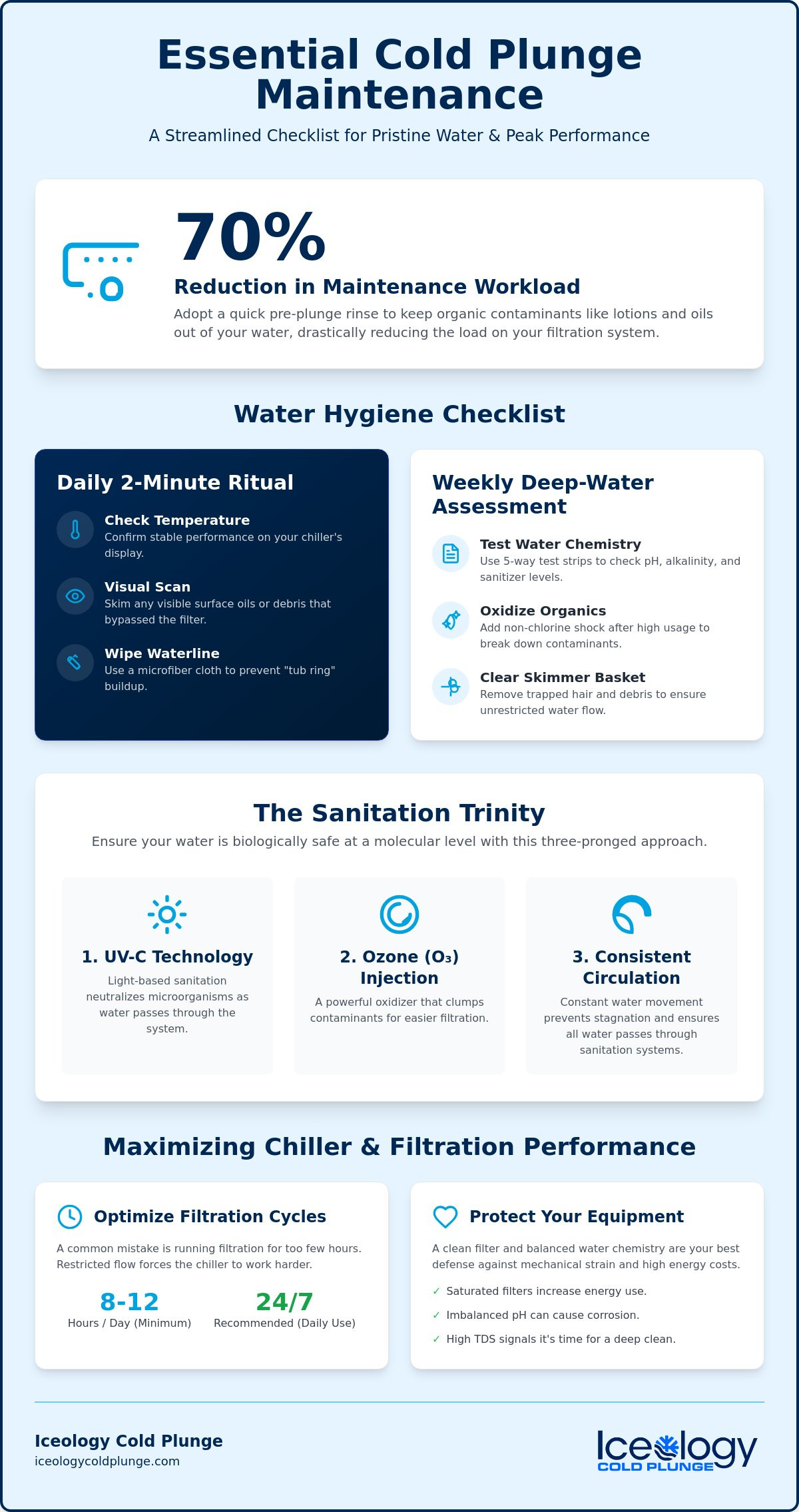
- Reduce your total maintenance workload by up to 70% by adopting a quick pre-plunge rinse to keep organic contaminants out of your water.
- Protect your equipment and manage energy costs by optimizing your filtration cycles and replacing cartridges before they create strain on the chiller.
- Ensure your water remains biologically safe at a molecular level by utilizing the "Sanitation Trinity" of UV-C technology, ozone, and consistent circulation.
- Apply these essential cold plunge tub maintenance tips to recognize when rising Total Dissolved Solids (TDS) levels signal it's time for a quarterly deep clean.
- Leverage the precision of USA-made, hard-sided construction to prevent biofilm growth and maintain a pristine finish with minimal effort.
The Daily & Weekly Water Hygiene Checklist
Hygiene is the silent engine of a successful recovery routine. The most effective of all cold plunge tub maintenance tips is also the simplest: shower before you step in. By rinsing off body oils, lotions, and skin cells, you reduce the organic load on your filtration system by approximately 70%. This proactive step prevents the formation of biofilm, a sticky layer of bacteria that can cling to the hard-sided surfaces of your tub. When you practice cold-water immersion, your goal is physiological optimization, not managing a miniature ecosystem of contaminants.
Organic debris like hair or dust acts as a precursor to cloudy water. Daily skimming removes these particles before they break down and increase Total Dissolved Solids (TDS). Additionally, your thermal lid serves a dual purpose. It maintains the 39°F temperature even in the intense South Florida heat, and it blocks UV rays that trigger algae growth. A tight seal is your first line of defense against both energy waste and biological bloom. Consistent cover management ensures that your chiller doesn't have to fight external elements to maintain your preferred temperature.
Weekly attention to water chemistry protects more than just your skin; it shields your equipment. Monitoring pH and alkalinity is vital because imbalanced water can become corrosive or cause scale buildup. These conditions directly threaten the chiller's heat exchanger, which is the precision-engineered heart of your system. By following these cold plunge tub maintenance tips, you ensure that your water remains as high-performing as your recovery sessions.
Daily 2-Minute Maintenance Ritual
Efficiency is built on consistency. Every morning, take a moment to check the water temperature on your chiller display to ensure performance is stable. Perform a quick visual inspection for surface oils or fine debris that may have bypassed the skimmer. Finally, use a microfiber cloth to wipe the waterline. This prevents the "tub ring" buildup caused by minerals and oils, keeping the premium finish of your USA-made tub looking pristine without the need for abrasive scrubbing later.
Weekly Deep-Water Assessment
Once a week, conduct a more thorough diagnostic of your environment. Use 5-way test strips to verify that pH, alkalinity, and sanitizer levels are within the optimal range. If you've had a high volume of users or particularly long sessions, add a small dose of non-chlorine shock to oxidize any remaining organic matter. Finish by checking the skimmer basket. Removing trapped hair and larger particles ensures unrestricted flow, which allows your pump to operate at peak efficiency without unnecessary mechanical strain.
Maximizing Chiller Performance and Filtration Longevity
The chiller is the precision engine of your recovery sanctuary. While the biological aspects of hygiene are vital, these cold plunge tub maintenance tips focus on mechanical preservation. Your chiller works by circulating water through a sophisticated heat exchanger. Any restriction in this flow forces the system to work harder, generating excess heat and unnecessary mechanical noise. Protecting this component is the key to ensuring your investment provides years of peak performance.
A common mistake is running the filtration cycle for too few hours. For a premium hard-sided system, you should aim for a minimum of 8 to 12 hours of circulation per day. If you plunge daily, 24/7 filtration is the preferred choice to ensure the water is constantly moving through the UV and Ozone sanitization stages. Following CDC water treatment guidelines helps maintain the balance required to prevent mineral scaling inside the chiller's internal plumbing, which can permanently degrade cooling efficiency.
Energy efficiency is directly tied to filter cleanliness. A saturated filter creates backpressure, which can lead to a noticeable spike in your cold plunge tub electricity cost. When the pump has to fight through a layer of captured sediment, it consumes more wattage and runs at a higher temperature. Regular filter changes are the most cost-effective way to keep your monthly utility bills low while extending the life of the pump motor.
Finally, consider the environment surrounding your chiller. In the South Florida climate, ambient heat is already a significant challenge. Your unit needs to "breathe" to effectively dissipate the heat it pulls from the water. If you notice your tub isn't hitting its target temperature, perform the "39-Degree Test." Check the airflow and the filter. If both are clear and the tub still won't reach 39°F, it's often a sign that the condenser coils need cleaning. Investing in a premium cold plunge tub ensures you have the robust engineering needed to handle these thermal demands.
How to Change Your Cold Plunge Filter
Maintaining clear water starts with a fresh 20-micron filter. First, power down the chiller and close the isolation valves to prevent water loss. Relieve the internal pressure using the air bleed valve and unscrew the filter canister. Inspect the old filter for heavy sediment or dark discoloration, which can indicate high organic load. Finally, lubricate the O-ring with a silicone-based lubricant and install the fresh cartridge to ensure a watertight seal.
Chiller Unit Health Check
A quarterly health check prevents unexpected downtime. Use a soft brush or vacuum to clear the condenser coils of dust every three months; this maintains optimal heat transfer. Inspect all connection points and hoses for slow leaks that could lead to air entering the system. Always ensure the unit has at least 12 inches of clearance on all sides. This space allows for optimal heat dissipation and prevents the chiller from recirculating its own hot exhaust air.
Sanitization Strategies: UV, Ozone, and Chemical Balance
Achieving crystal-clear water requires a synergistic approach known as the "Sanitation Trinity." This framework combines mechanical filtration, constant circulation, and active oxidation to ensure pathogens never have the opportunity to colonize. While previous sections focused on physical debris, these cold plunge tub maintenance tips address the microscopic level of hygiene. When water is stagnant, it becomes a breeding ground. By keeping the water moving and treating it with high-intensity UV-C light and ozone, you create an environment where bacteria cannot survive.
Iceology systems utilize a dual-pathway approach to sanitization. UV-C light penetrates the cell walls of microorganisms, effectively scrambling their DNA to prevent reproduction. Simultaneously, ozone acts as a powerful oxidizer, breaking down organic contaminants like sweat and skin oils at the molecular level. This combination reduces the need for harsh chemicals. It provides a more natural experience for your skin while maintaining professional-grade safety standards. You get the benefit of medical-grade water quality without the abrasive side effects of a traditional swimming pool.
Your "bather load" dictates the intensity of your care schedule. A single user plunging daily creates a manageable load, but a family of four requires more frequent monitoring of the oxidation levels. In regions like Miami or Tampa, the Florida climate adds another layer of complexity. High humidity levels can lead to moisture accumulation on the tub's exterior, which may encourage mold growth in the surrounding area if left unchecked. Staying ahead of these environmental factors is what separates a premium experience from a high-maintenance chore.
Comparison of Sanitization Methods
Standard chemical sanitizers like chlorine or bromine are effective but can cause skin irritation or a "chemical smell" in the cold water. Mineral purifiers offer a gentler alternative, using silver or copper ions to inhibit bacterial growth without the harshness of traditional salts. For those seeking a truly holistic approach, natural enzyme treatments can be added weekly. These enzymes specifically target and break down body oils and lotions. This process prevents the "scum line" and significantly reduces the burden on your 20-micron filter.
Addressing the South Florida Humidity Challenge
Managing moisture is critical in tropical climates. Always wipe down the tub’s exterior shell with a dry cloth after use to prevent mildew from forming in the humid air. Your outdoor cold plunge tub placement is also a factor; choosing a well-ventilated area with adequate drainage prevents water from pooling around the base. If you've installed your system in a home gym or garage, running a dedicated dehumidifier will protect both your equipment and your home's air quality.
The Quarterly Deep Clean: Draining and Shell Care
Even with a disciplined daily routine, your water eventually reaches its chemical saturation point. Total Dissolved Solids (TDS) represent the accumulation of everything that has entered the tub, from tap water minerals to microscopic organic matter. When these levels climb too high, your sanitizers lose their efficacy and the water may take on a dull, heavy appearance. Recognizing these signs is one of the most critical cold plunge tub maintenance tips for long-term performance. While generic advice often suggests a six-month interval, a quarterly deep clean is the professional standard for maintaining a premium recovery environment.
Protecting the integrity of your tub's interior shell is paramount. Abrasive cleaners or harsh industrial chemicals can etch the surface, creating microscopic pockets where bacteria can colonize. Instead, rely on gentle, non-abrasive solutions that preserve the high-quality finish. Once a year, it's also beneficial to perform a plumbing flush using a specialized cleanser. This process targets biofilm that can accumulate inside the internal lines where UV light cannot reach. By clearing these hidden pathways, you ensure that your circulation remains unrestricted and your water stays biologically pure.
The transition from a drain to a refill is the perfect time to reset your system for peak efficiency. If you're ready to upgrade your recovery space with a system designed for durability and ease of care, explore our premium cold plunge tubs today. Once the tub is replenished, you can begin the pull-down process to your target temperature. With the precision engineering of a USA-made chiller, reaching 39°F happens quickly, allowing you to return to your recovery practice without extended downtime.
Step-by-Step Draining and Refilling
Efficiency is the priority during a deep clean. Use the built-in drain valve or a submersible pump to empty the tub quickly. Once empty, wipe the interior surfaces with a 10% white vinegar solution to neutralize mineral deposits without damaging the shell. Rinse the interior thoroughly and flush a few gallons of fresh water through the lines before your final fill. This prevents any residual cleaning agent from affecting your new water chemistry. After refilling, balance your pH immediately to protect the chiller's heat exchanger during the cooling cycle.
Protecting the Hard-Sided Exterior
The craftsmanship of your system deserves external care that matches its internal performance. If your tub is located outdoors, applying a UV-protectant spray to the hard-sided exterior every three months prevents fading from intense sun exposure. In coastal areas, pay close attention to stainless steel components; a quick polish prevents tea-staining caused by salt air. Finally, inspect the insulation seals around the lid and chiller connections. Maintaining these seals ensures your system retains its thermal efficiency, allowing you to reach peak cold without wasting energy.
Engineered for Longevity: The Iceology Advantage
The path to peak performance shouldn't be paved with tedious chores. While these cold plunge tub maintenance tips provide a roadmap for hygiene, the hardware itself determines how often you'll have to consult that map. Iceology's USA-made construction is intentionally designed to reduce maintenance friction. By utilizing precision-engineered components and hard-sided materials, we've created a system that stays cleaner for longer. This allows you to spend your energy on the discipline of the plunge rather than the labor of the upkeep.
Thermal stability is a key factor in equipment longevity. Our high-density insulation does more than just keep your water at a crisp 39°F; it prevents the rapid temperature fluctuations that force a chiller to cycle on and off repeatedly. When the water temperature remains stable, the mechanical strain on the compressor is significantly reduced. This efficiency protects the internal components from premature wear and ensures that your system remains a reliable partner in your recovery journey for years to come.
Strategic planning during your initial cold plunge tub setup also plays a vital role in ease of care. By ensuring easy access to drainage valves and enough clearance for filter changes, you turn a potential chore into a seamless transition. Integrating the right cold plunge tub accessories, such as a specialized skimmer or a high-micron replacement filter, further simplifies your routine. These tools are designed to work in harmony with our hardware to maintain a pristine environment with minimal intervention.
Why Quality Materials Matter
The choice between a hard-sided tub and a porous inflatable model is a choice in maintenance philosophy. Iceology's non-porous surfaces resist bacterial attachment far better than soft-sided alternatives, which are prone to biofilm buildup in the microscopic pores of the fabric. Our commercial-grade chiller components are designed for continuous duty, providing the durability needed to handle high usage. This American-made reliability offers peace of mind, knowing your equipment is built to withstand the rigors of daily cold water therapy.
Next Steps for Your Maintenance Routine
Consistency is the final piece of the optimization puzzle. We recommend creating a simple maintenance log to track your filter changes and weekly water tests; this prevents the "guessing game" of water chemistry. Setting up a dedicated "Plunge Station" near your tub keeps all your cleaning supplies in one organized place, reducing the time spent on preparation. If you ever encounter a unique water quality challenge, don't hesitate to contact Iceology support for personalized advice tailored to your specific environment and usage patterns.
Master the Art of Pristine Recovery
Maintaining a pristine sanctuary shouldn't feel like a second job. By embracing a "prevention-first" mindset, you ensure that every session is defined by clarity and performance rather than cleanup. We've explored how a simple pre-plunge rinse and regular filtration checks can reduce your total workload by 70%. Implementing these cold plunge tub maintenance tips is the most effective way to protect the integrity of your equipment while providing you with the most hygienic recovery experience possible.
Whether you're managing high bather loads or the intense South Florida humidity, your focus should remain on your personal results. Our USA-made systems are engineered to handle the toughest climates, featuring chillers that reach a consistent 39°F even in peak summer heat. If you're ready to streamline your routine and maximize longevity, Shop Premium Iceology Maintenance Accessories to keep your system running at peak efficiency. Our expert support is always available for Florida residents who need personalized guidance. Take control of your environment and let your discipline lead the way. You've mastered the cold; now it's time to enjoy the results.
Frequently Asked Questions
How often should I change the water in my cold plunge tub?
You should change the water every three to six months depending on your usage frequency. If you plunge daily with multiple users, a quarterly drain is the professional standard to prevent high mineral accumulation. Monitoring your Total Dissolved Solids (TDS) levels will give you a precise indicator of when the water has reached its saturation point. This proactive approach is one of the most effective cold plunge tub maintenance tips for preserving your equipment.
Do I really need to use chemicals in a cold plunge if the water is cold?
Yes, sanitization is required because cold water only slows bacterial growth rather than stopping it entirely. While low temperatures inhibit some pathogens, they don't eliminate the organic load introduced by your skin. Utilizing a "Sanitation Trinity" of UV-C light, Ozone, and a mild residual sanitizer ensures your environment remains biologically safe. This combination provides professional-grade water quality without the need for the high chemical levels found in traditional pools.
Can I leave my cold plunge running all the time?
You can and should leave your system running continuously to maintain optimal water quality. Constant circulation ensures that the water is always moving through the filtration and sanitization stages, which prevents stagnation and biological bloom. Iceology chillers are specifically engineered for continuous duty. This steady state is more energy-efficient than forcing the chiller to pull the water down from ambient temperatures before every session.
What happens if I don't change the filter in my cold plunge?
A clogged filter creates backpressure that forces your pump to work harder, leading to increased mechanical wear and higher energy costs. When the flow rate drops, your chiller cannot effectively pull heat from the water, making it difficult to reach your target temperature. Replacing your 20-micron filter every four to eight weeks protects the motor and keeps your system running at peak efficiency without unnecessary strain on the heat exchanger.
Is it safe to use Epsom salts in my cold plunge tub?
It isn't safe to use Epsom salts in a cold plunge tub equipped with a chiller and pump system. High concentrations of salt are corrosive to the internal components of the heat exchanger and can lead to permanent mechanical failure. If you want the benefits of magnesium, it's better to use it as a topical spray or a separate soak. Protecting the precision engineering of your system ensures its long-term reliability and keeps your warranty intact.
How do I prevent algae from growing in my outdoor cold plunge?
The best way to prevent algae is to keep the tub covered with a thermal lid whenever it isn't in use. Algae requires light and nutrients to grow; by blocking UV rays and using an integrated UV-C sanitizer, you eliminate the primary triggers for growth. Regularly wiping the waterline and maintaining your filtration cycle will also remove the organic matter that algae uses as food, keeping your outdoor sanctuary pristine even in humid climates.
What is the best way to clean the exterior of a hard-sided tub?
Use a soft microfiber cloth and a mild, non-abrasive soap or a 10% white vinegar solution to clean the exterior. Avoid harsh industrial chemicals that can etch the hard-sided finish or damage the insulation seals. If your tub is located outdoors, applying a UV-protectant spray every three months will prevent fading from sun exposure. These cold plunge tub maintenance tips ensure your USA-made tub looks as high-performing as it functions.
How can I tell if my chiller needs a professional service?
If your system consistently fails the "39-Degree Test" despite having clean filters and clear airflow, it may require a professional diagnostic. You should also watch for unusual grinding noises, persistent leaks at the connection points, or error codes on the chiller display. Catching these mechanical issues early prevents minor wear from turning into a major repair. Our expert support team can provide personalized guidance if you notice a drop in cooling performance or efficiency.