
Cold Plunge vs Cryotherapy: Which Recovery Method Is Best in 2026?
You might assume that standing in a -200°F chamber is the most aggressive way to reset your body, but the physics of thermal conductivity tells a different story. While cryotherapy offers a quick blast of dry air, 39°F water immersion provides a deeper physiological shift that air simply cannot match. When comparing cold plunge vs cryotherapy, the choice often comes down to how efficiently you want to pull heat from your core and whether you value the added benefit of hydrostatic pressure. It is a battle between the convenience of air and the raw, immersive power of water.
We understand the frustration of balancing a high-performance lifestyle with the rising costs of boutique wellness memberships. You want faster muscle recovery and reduced systemic inflammation without wasting hours commuting to a recovery studio or settling for inconsistent DIY ice baths. This article explores the scientific and practical differences between these two methods to help you choose the ultimate recovery tool for your lifestyle. We will examine why water's density makes it a superior thermal conductor and how bringing professional-grade cooling technology into your own space provides long-term cost savings and total-body optimization.
Key Takeaways
- Understand why the superior thermal conductivity of water provides a more profound physiological response than the dry air used in cryotherapy chambers.
- Examine the practical trade-offs of cold plunge vs cryotherapy to determine which method offers the highest return on your recovery time and investment.
- Discover how professional-grade insulation and integrated chillers maintain precise temperatures, even in demanding environmental conditions like the Florida heat.
- Identify the specific advantages of owning a hard-sided home recovery tool, from immediate accessibility to significant long-term savings over studio memberships.
Defining the Cold War: Cold Plunge vs Cryotherapy
The landscape of physical recovery has shifted from simple ice packs to sophisticated thermal management systems designed for elite performance. While the debate of cold plunge vs cryotherapy often centers on which temperature is more extreme, the medium of delivery is what truly dictates the physiological outcome. One relies on the dense, immersive power of water, while the other utilizes the rapid, surface-level chill of super-cooled air. Both methods aim to trigger hormetic stress, a controlled dose of environmental pressure that forces the body to adapt, strengthen, and heal.
It is time to move past the outdated "ice bath" label. For the modern professional, recovery is no longer about dumping bags of melting ice into a plastic bin. Premium home recovery systems have replaced that inconsistency with precision engineering. These hard-sided tubs maintain a steady, reliable temperature, ensuring that every session provides the exact stimulus needed for cellular repair. Choosing between water and air is not just a matter of preference; it is a choice between two distinct biological pathways.
The Cold Plunge Experience
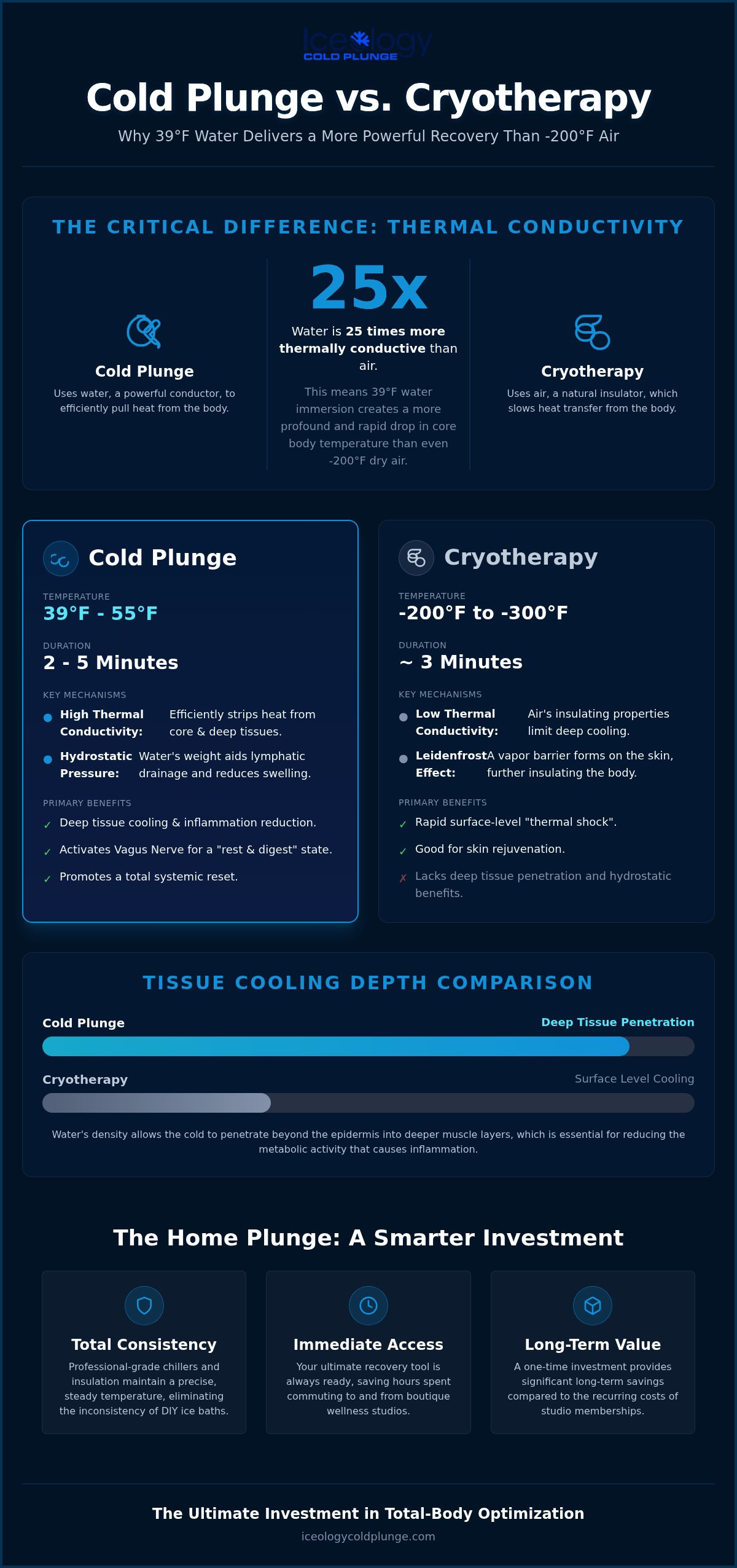
Immersion in water ranging from 39°F to 55°F offers a unique advantage known as hydrostatic pressure. As you submerge, the water exerts a gentle, consistent compression on your body. This pressure assists the lymphatic system in flushing metabolic waste and reducing swelling in the deep tissues. For those following the Iceology standard, a consistent 39°F environment provides a reliable baseline for daily discipline. Most advanced users find that a duration of 2 to 5 minutes is the "sweet spot" for achieving a total systemic reset without overtaxing the central nervous system.
The Cryotherapy Experience
Cryotherapy utilizes nitrogen-cooled or electric dry air between -200°F and -300°F to create a "thermal shock" on the skin's surface. Because air is significantly less dense than water, these triple-digit negative temperatures feel less biting than a cold soak. A typical whole-body session lasts about 3 minutes in a specialized chamber or sauna. While it is excellent for rapid surface-level inflammation and skin rejuvenation, the "dry cold" sensation does not penetrate the muscle tissue as deeply as water immersion. It is a fast, efficient option, though it lacks the compressive benefits that water provide through its natural weight and density.
Thermal Conductivity: Why 39°F Water Beats -200°F Air
Physics provides a clear verdict when evaluating the cold plunge vs cryotherapy debate. Water is approximately 25 times more thermally conductive than air. This means that a 39°F water environment is significantly more efficient at extracting heat from your body than -200°F air. While the air temperature in a cryo chamber sounds more impressive, air acts as an insulator. Water, by contrast, is a relentless conductor. It wraps around the body, eliminating any protective thermal layer and stripping heat from the skin and underlying tissues at an accelerated rate.
In cryotherapy, the body often experiences what is known as the Leidenfrost Effect. This phenomenon occurs when a thin layer of air or vapor forms between your skin and the extreme cold, acting as a temporary barrier. It's why you can stand in a -200°F chamber for three minutes without immediate tissue damage. Water immersion offers no such shield. It provides sustained cooling that forces a more significant drop in core temperature. According to research from the University of North Dakota, while cryotherapy is effective for rapid skin cooling, cold water immersion results in a lower overall tissue temperature over a longer duration.
The Science of Cold Water Immersion Therapy
The density of water allows the cold to penetrate beyond the epidermis into the deeper muscle layers. This deep tissue cooling is essential for reducing the metabolic activity that leads to inflammation. Beyond the physical, the pressure and temperature of water immersion trigger the vagus nerve, which helps shift the body from a "fight or flight" state into a "rest and digest" recovery mode. For a deeper dive into these biological mechanisms, explore our Cold Water Immersion Therapy: The Definitive Guide.
The Misconception of Extreme Air Temperatures
It's a common error to equate a lower temperature with a better result. You can tolerate -200°F air because it only affects the very surface of your skin. However, 39°F water feels much more intense because it's actively pulling heat from your core. Conductivity, not just temperature, determines the rate of heat loss. This is why a high-quality USA-made cold tub provides a more effective systemic reset than a session in a cryo sauna.
Practical Comparison: Convenience, Cost, and Long-Term Results
Deciding between cold plunge vs cryotherapy involves more than just comparing temperatures. It's a question of lifestyle integration. While a cryotherapy studio offers a high-tech environment, the recurring costs and logistical friction often derail long-term consistency. Investing in a home recovery system shifts the focus from a per-session expense to a durable asset. Over a 24-month period, the return on investment for a home unit becomes undeniable when compared to the cumulative price of boutique memberships.
Accessibility is the ultimate driver of results. The ability to execute a 6:00 AM plunge without leaving your house eliminates the most common barrier to recovery: time. You aren't beholden to a studio's opening hours or a practitioner's schedule. This 24/7 availability allows for a disciplined practice that fits your specific routine. It's why top athletes and high-performers are increasingly moving toward home-based setups. They prioritize the ability to reset their nervous system at a moment's notice, whether that's immediately after a workout or right before a high-stakes meeting.
Customization also plays a vital role in the effectiveness of your recovery. In a commercial setting, you're often limited to the facility's standard settings. Owning your equipment allows you to dial in your precise temperature, such as the 39°F Iceology benchmark. This level of control ensures that your body receives a consistent stimulus every single time, which is essential for building the mental resilience and physiological adaptations you're chasing.
The Hidden Costs of Cryotherapy
Cryotherapy sessions in 2026 often cost between $40 and $100 per visit. If you're committed to a twice-weekly routine, those fees can easily exceed $6,000 annually. Beyond the financial cost, you must factor in commute time and the mental energy required for scheduling. Having premium cold plunge tubs available at home removes these obstacles. It turns a recovery session into a seamless part of your environment, ensuring you actually use the tool you've invested in.
Maintenance and Durability
Quality matters when choosing a permanent recovery solution. Many entry-level inflatable alternatives suffer from high failure rates and poor thermal retention. In contrast, hard-sided tubs built with USA-made craftsmanship offer a level of longevity that justifies the investment. These units feature integrated chillers that maintain a steady temperature without the constant need for ice runs. This "no-ice-needed" convenience is a game-changer for busy professionals who value precision and efficiency over DIY workarounds.
Cold Therapy in Florida: Overcoming Heat and Humidity
Florida's climate is the ultimate stress test for cooling technology. When the ambient temperature hits 95°F in Miami or Tampa, maintaining a crisp 39°F water temperature becomes a battle of engineering rather than just a struggle of willpower. In the cold plunge vs cryotherapy debate, Florida residents must consider environmental factors that don't exist in cooler regions. While a cryotherapy chamber sits in a climate-controlled studio, a home recovery unit often resides in a garage or on a patio, where it must fight relentless heat and high humidity every hour of the day.
Insulation is the secret sauce for energy-efficient recovery in South Florida. Without it, your chiller will run constantly, leading to premature wear and inflated utility bills. Polyurethane foam stands as the gold standard for thermal management. It creates a dense, airtight barrier that keeps the heat out and the cold in. This level of protection is essential for anyone looking to maintain the Iceology benchmark of 39°F without stressing their equipment. If you plan on an outdoor placement, protecting your investment with a high-quality cover and proper shading will further ensure the longevity of your system in high-humidity environments.
Energy Efficiency in the Sunshine State
High-quality insulation prevents your chiller from overworking by maintaining a steady thermal state. In a state where the sun is a constant factor, thermal integrity determines whether your recovery practice is sustainable or a financial drain. Florida homeowners find that chilled tubs with professional insulation operate with remarkable efficiency even during the peak of summer. For a successful installation that accounts for these local variables, consult our guide on Cold Plunge Tub Setup in 2026.
Local Support and Craftsmanship
Choosing USA-made cold plunge tubs provides a significant advantage for Florida residents, particularly regarding material durability. Hard-sided tubs are engineered to resist the corrosion often caused by salt air in coastal cities like Naples and West Palm Beach. This craftsmanship ensures the exterior remains as resilient as the internal cooling components. Florida biohackers overwhelmingly prefer built-in chillers over manual ice because the state's relentless humidity causes ice to melt almost instantly, making a consistent 39°F impossible to maintain without professional-grade thermal management.
Explore our range of Florida-ready cold plunge tubs to start your recovery journey today.
Conclusion: Why a Chilled Home Plunge is the Ultimate Investment
The debate between cold plunge vs cryotherapy ultimately settles at the intersection of physics and personal discipline. While cryotherapy offers a high-tech, dry alternative, it cannot bypass the fundamental laws of thermal conductivity. Water's ability to extract heat 25 times faster than air ensures that a 39°F immersion reaches the deep tissues where inflammation often hides. If your goal is a profound systemic reset, water is the superior medium. Cryotherapy remains a valuable tool for those seeking a rapid, surface-level refresh without the need to get wet, but it lacks the hydrostatic pressure and core-cooling efficiency of a dedicated plunge.
Beyond the physical, there is a distinct psychological edge gained from water immersion. Stepping into a chilled tub requires a level of mental fortitude that standing in a dry air chamber simply doesn't demand. You learn to control your breath, steady your heart rate, and master your internal state under pressure. This mental resilience translates into every other area of your life, from professional performance to emotional regulation. In 2026, the dominant trend in wellness is the move toward home longevity labs, where accessibility and consistency are prioritized over expensive, inconvenient studio memberships.
Our final recommendation is simple. Choose the cold plunge for deep tissue recovery, metabolic health, and mental grit. Reserve cryotherapy for those moments when you need a quick, dry refresh or have limited time between appointments. For the serious practitioner, the depth of water immersion provides a level of total-body optimization that air-based systems struggle to replicate.
Your Recovery, Your Rules
Owning a high-performance recovery tool gives you the freedom of precise temperature control. You don't have to settle for the average settings of a commercial facility when you can dial in the exact 39°F stimulus your body needs. Integrating these sessions into a daily routine allows you to compound the benefits of cold plunge, turning a sporadic treatment into a foundational pillar of your health. It's about reclaiming your time and ensuring that your recovery equipment is ready whenever you are.
The transition from a visitor at a clinic to the owner of your recovery journey is the ultimate investment in your long-term well-being. It's about taking control of your physical and mental state through a practice that is both disciplined and rewarding. Explore Iceology’s USA-made chilled tubs to bring professional-grade recovery into your daily life and experience the transformative power of precision cooling.
Master Your Recovery Protocol
Choosing between a cold plunge vs cryotherapy is about more than just temperature. It's about the physics of heat transfer and the discipline of a sustainable daily practice. While air-based chambers offer a quick session, they cannot match the deep-tissue penetration and hydrostatic benefits of water immersion. Water wins the conductivity war every time. Bringing this professional-grade technology into your home eliminates the friction of travel and the high costs of recurring memberships. It transforms recovery from a luxury appointment into a foundational pillar of your lifestyle.
Precision engineering makes the difference in achieving long-term results. Our USA-made units feature premium polyurethane insulation to maintain a consistent 39°F even in the most demanding climates. This durability ensures your investment lasts for years, providing a reliable systemic reset whenever you need it most. You deserve a recovery tool that matches your commitment to peak performance and personal excellence. Stop settling for inconsistent DIY solutions or expensive studio commutes.
Upgrade your recovery with an Iceology Chilled Plunge and take full control of your physical and mental state. Your path to a stronger, more resilient self starts with a single, focused step into the cold. You have the power to redefine your limits.
Frequently Asked Questions
Is cold plunge or cryotherapy better for muscle soreness?
Cold water immersion is generally superior for deep muscle soreness due to the combination of sustained cooling and hydrostatic pressure. While a 2026 systematic review found both methods effective for reducing delayed onset muscle soreness, the density of water allows for deeper tissue penetration than dry air. This makes the plunge a more effective tool for athletes managing high training volumes and significant physical inflammation.
Can I do a cold plunge every day?
Daily immersion is safe and highly beneficial for most healthy individuals looking to build mental resilience and optimize recovery. Consistent exposure helps regulate the nervous system and maintains a steady baseline for systemic inflammation reduction. Many high performers utilize a 3 minute morning plunge at 39°F to trigger a natural dopamine release and enhance focus for the remainder of the day.
How much does it cost to run a cold plunge tub in Florida?
Operating costs for a high-quality home unit typically range between $30 and $60 per month depending on local utility rates and environmental heat. In the Florida climate, using a tub with professional polyurethane foam insulation is vital to keep these costs at the lower end of the spectrum. This energy-efficient barrier prevents the chiller from overworking while maintaining your target temperature against the external humidity.
Why does 39°F water feel colder than -200°F air?
Water feels more intense because it is 25 times more thermally conductive than air, meaning it strips heat from your body at a much faster rate. In the cold plunge vs cryotherapy comparison, air acts as an insulator, often creating a thin protective layer around the skin. Water immediately breaks this barrier, providing a relentless and uniform cooling effect that impacts your core temperature more significantly than air ever could.
Is a home cold plunge worth the investment compared to cryo sessions?
Investing in a home unit provides a significant return on investment when compared to the recurring fees of commercial cryotherapy memberships. With session prices often exceeding $40 at boutique studios, a home tub pays for itself within 18 to 24 months of consistent use. Beyond the financial savings, the 24/7 accessibility ensures you never miss a recovery session due to scheduling conflicts or commute times.
What are the safety risks of cold plunge vs cryotherapy?
Cold water immersion carries a risk of cold shock or hypothermia if sessions exceed recommended durations, while cryotherapy involves risks of skin burns or oxygen deprivation in nitrogen-based systems. It's essential to start with shorter durations and higher temperatures as you adapt. Modern electric cryo chambers and precisely chilled water tubs have significantly improved safety profiles, provided users follow established protocols and listen to their body's signals.
Does cryotherapy help with inflammation as much as water immersion?
Cryotherapy is highly effective for surface-level inflammation and skin rejuvenation, but it lacks the hydrostatic pressure needed for deep lymphatic drainage. When analyzing cold plunge vs cryotherapy for systemic recovery, water immersion provides a more comprehensive approach. The physical weight of the water helps compress the tissues, which assists in moving metabolic waste out of the limbs and back toward the heart for filtration.
What is the best temperature for a home cold plunge tub?
The ideal temperature range for most users is between 39°F and 55°F to achieve the desired hormetic stress response. Beginners often start at 50°F and gradually work their way down as their cold tolerance improves over time. The 39°F benchmark is favored by advanced practitioners because it provides the most potent physiological stimulus, ensuring a rapid reset of the central nervous system and maximum recovery benefits.