
Cold Water Immersion Therapy: The Definitive Guide to Science, Benefits, and Practice
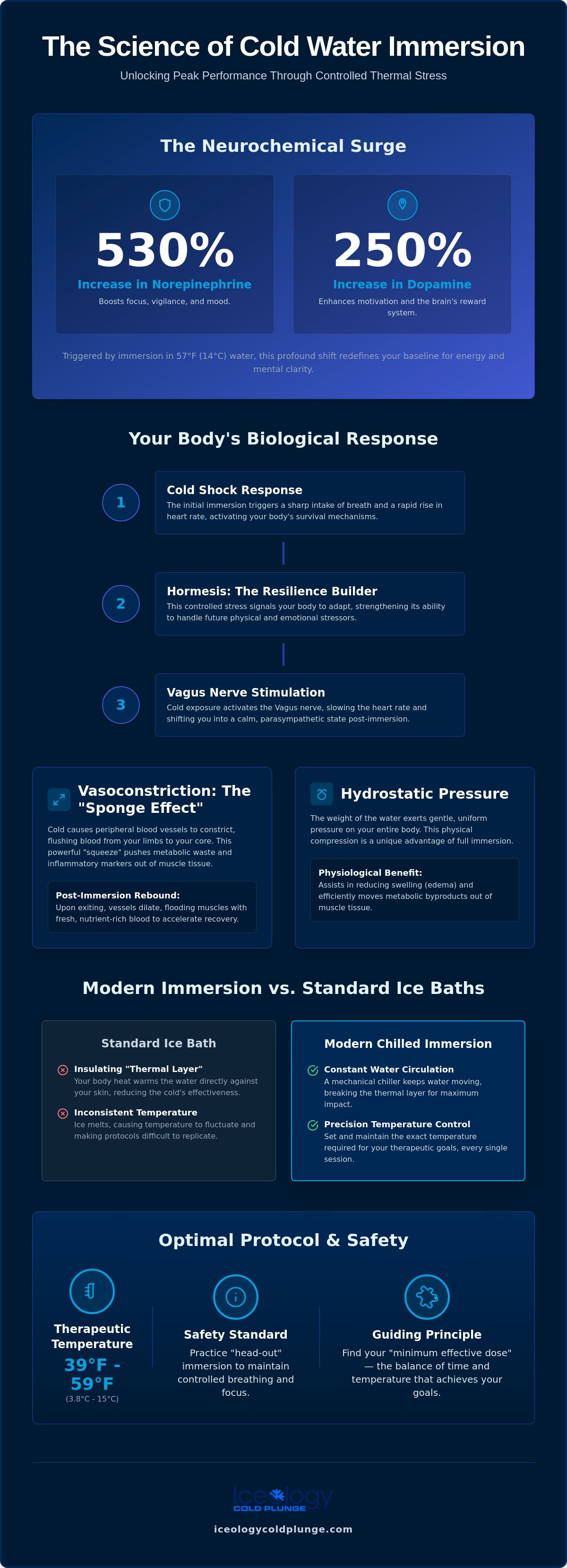
Did you know that submerging your body in 14°C water can trigger a 530% spike in norepinephrine and a 250% surge in dopamine? These aren't just numbers; they represent a profound neurochemical shift that can redefine your baseline for focus and energy. While many view a quick dip in an ice bucket as a simple recovery hack, true cold water immersion therapy is a disciplined, engineered practice that demands thermal precision. It's the difference between a temporary chill and a systemic biological upgrade.
You've likely experienced the heavy drag of muscle soreness after intense training or the persistent fog of mental fatigue that lingers throughout the day. In the relentless Florida heat, maintaining the consistent temperatures required for these physiological results is a genuine challenge. This definitive guide will show you how to bridge the gap between effort and outcome by leveraging proven science to optimize your physical and mental state. We’ll explore the specific mechanisms behind inflammation reduction, navigate the new 2026 safety standards, and provide a roadmap for integrating high-level recovery into your daily routine.
Key Takeaways
- Understand the biological principle of hormesis. This process transforms short-term thermal stress into a foundation for long-term physiological resilience.
- Discover how targeted cold exposure suppresses systemic inflammation. It provides a sophisticated, non-invasive solution for managing chronic pain and accelerating recovery.
- Define your ideal protocol for cold water immersion therapy. You'll learn to master the balance between temperature precision and the "minimum effective dose" for your goals.
- Evaluate the importance of high-performance engineering. Quality insulation and mechanical chiller systems are essential for maintaining therapeutic cold in demanding environments.
What is Cold Water Immersion Therapy? Defining the Practice
At its core, cold water immersion therapy is the practice of submerging the body in water cooled to specific therapeutic ranges, typically between 39°F and 59°F. While the concept might seem like a modern trend, its roots stretch back to ancient civilizations that utilized thermal contrast for vitality. Today, this ancient wisdom is backed by rigorous engineering and clinical research. Unlike a standard cold shower, which provides uneven cooling and lacks depth, true cold-water immersion ensures that every square inch of the skin's surface area is in direct contact with the cooling medium. This comprehensive coverage is vital for triggering the systemic responses needed for peak recovery.
The practice has evolved from rudimentary river dips to the sophisticated protocols used by elite athletes and wellness enthusiasts. The goal isn't just to get cold; it's to induce a specific physiological state. By controlling the environment, you can dictate how your body responds to the stressor. This level of control is what separates a casual dip from a professional-grade recovery session. It's about precision, consistency, and understanding the biological levers you're pulling.
Cold Water Immersion vs. Standard Ice Baths
There's a significant technical distinction between a traditional ice bath and modern chilled immersion. In a manual ice bath, your body heat creates a "thermal layer" of warmer water directly against your skin, which actually insulates you from the cold. Mechanical chillers solve this by maintaining constant circulation. This movement breaks the thermal layer and ensures that the water temperature remains precise throughout the session. Beyond the physics, there's the element of friction. Relying on bags of ice is a logistical hurdle that often prevents consistency. A dedicated cold tub eliminates this barrier, providing a ready-to-use environment that respects your time. Ultimately, cold water immersion therapy is a controlled environmental stressor used to trigger systemic healing.
The Role of Hydrostatic Pressure
Immersion offers a unique physiological advantage that topical icing or showers cannot match: hydrostatic pressure. When you submerge, the weight of the water exerts a gentle, uniform pressure on your limbs. This "squeeze" effect assists in reducing edema and moving metabolic waste out of the muscle tissue more efficiently than air-cooled environments. Whole-body immersion engages the entire circulatory system at once, rather than focusing on a single joint. For safety and efficacy, the gold standard is head-out immersion. This allows you to maintain controlled breathing and focus while your body reaps the rewards of the thermal and physical pressure. It's a holistic approach that turns a simple dip into a powerful recovery tool.
This focus on comprehensive recovery is shared by international specialists like Ortopedia Suiza, who provide a range of orthopedic and rehabilitation products designed to help individuals maintain their physical health and mobility alongside advanced thermal therapies.
The Biological Response: What Happens to Your Body in the Cold?
The moment you submerge, your body initiates the "Cold Shock Response." This immediate reaction triggers a sharp intake of breath and a rapid rise in heart rate. While it feels intense, this is the catalyst for hormesis. This biological process uses short-term, controlled stress to build long-term physiological resilience. It’s a systemic recalibration that strengthens your ability to handle both physical and emotional stressors. Central to this is the Vagus nerve, the primary component of the parasympathetic nervous system. By stimulating this nerve through cold exposure, you effectively "reset" your internal balance. This activation of the mammalian diving reflex naturally slows the heart rate and promotes a deep sense of calm once the initial shock passes—a physiological state also explored by enthusiasts at Cozumeldivehub who value the mental clarity that comes with professional-grade water immersion.
Understanding these mechanisms is essential for anyone looking to master their recovery. Cold Water Therapy isn't just about enduring the temperature; it's about the sophisticated internal shifts that occur when your body is pushed out of its comfort zone. These responses are predictable, measurable, and highly effective for total-body optimization.
Vasoconstriction and the 'Sponge Effect'
Cold water causes your peripheral blood vessels to constrict with significant force. This process, known as vasoconstriction, flushes blood away from your limbs and toward your core to protect vital organs. This creates a powerful "sponge effect," squeezing metabolic waste and inflammatory markers out of your muscle tissues. Upon exiting your session, you experience rebound vasodilation. Your blood vessels open wide, allowing fresh, nutrient-rich blood to flood back into the tissues. This rapid exchange acts as a natural pump, enhancing circulatory efficiency and accelerating the healing of micro-tears caused by training.
Neuroendocrine Activation and Mood
The impact of cold water immersion therapy on your brain chemistry is nothing short of transformative. Research has shown that immersion in 14°C (57°F) water can increase plasma norepinephrine by 530% and dopamine by 250%. Unlike the fleeting spike of caffeine, this neuroendocrine surge provides a sustained window of focus, energy, and mood elevation. Additionally, regular cold exposure helps to regulate the endocrine system by blunting cortisol production. By lowering the body's primary stress hormone, you create a physiological environment conducive to recovery and mental clarity. To begin your journey toward this state of peak performance, consider exploring a dedicated cold tub designed for thermal precision.
Systemic Benefits: Why High-Performers Embrace the Chill
High performers don't just endure the cold for a social media post. They do it for the profound systemic shifts that occur beneath the surface. Beyond the immediate neurochemical surge discussed earlier, cold water immersion therapy acts as a catalyst for metabolic efficiency and restorative sleep. By activating brown adipose tissue (BAT), the body initiates non-shivering thermogenesis to stay warm. This process consumes energy at a higher rate, effectively turning your recovery session into a metabolic workout that improves insulin sensitivity and fat oxidation.
Quality rest is the ultimate performance enhancer. Lowering your core body temperature is a primary signal for your brain to initiate the sleep cycle. Plunging in the evening helps facilitate this drop, leading to deeper REM cycles and more restorative rest. A systematic review of cold-water immersion benefits confirms these effects on sleep architecture and recovery, proving that the chill has far-reaching consequences for your overall health. When you control your temperature, you control your ability to recharge.
Physical Recovery and Performance
High-intensity training creates a "fire" of inflammation in your muscle fibers. While some inflammation is necessary for growth, excessive swelling leads to Delayed Onset Muscle Soreness (DOMS) that can sideline you for days. Cold exposure suppresses this systemic inflammation by preserving muscle fiber integrity and reducing secondary tissue damage. This allows you to maintain a higher training frequency without the debilitating pain of overreach. It's a strategic tool for those who refuse to let soreness dictate their schedule. For a deeper dive into the mechanics of these outcomes, explore The Scientific Benefits of Cold Plunge.
Cognitive Edge and Mental Resilience
The mental benefits are perhaps the most valuable for those in high-pressure environments. Every time you step into the water, you're practicing "top-down" control. You are consciously overriding your brain's limbic system, which is screaming at you to exit the cold. This builds a psychological buffer. Over time, the stress of a deadline or a difficult conversation feels less overwhelming because you've already mastered the art of staying calm in a freezing environment. Integrating a Cold Plunge for Mental Performance routine sharpens your cognitive edge and fosters a level of grit that carries over into every facet of life. It’s not just about the body; it's about building an unbreakable mind.
Protocol and Safety: How to Practice Cold Immersion Correctly
Mastering cold water immersion therapy requires more than just willpower; it demands a structured approach to ensure safety and maximize biological returns. The most critical metric to understand is the "Minimum Effective Dose" (MED). Current research, notably from Dr. Susanna Søberg, suggests that a total of 11 minutes of cold exposure per week, spread across two to four sessions, is the sweet spot for triggering metabolic and immune benefits. You don't need to endure thirty-minute sessions to see results. In fact, shorter, more intense exposures often yield better neurological adaptations than long, moderate ones.
When you first enter the water, your primary challenge is managing the cold shock response. Controlled breathwork is your most effective tool here. Focus on long, slow exhales to signal to your brain that you aren't in immediate danger. Once you've settled, the goal is to reach a temperature that feels "uncomfortably cold but safe." For many, this starts around 55°F, though experienced practitioners often gravitate toward the 39°F to 45°F range. To truly optimize the metabolic impact, follow the Søberg Principle: allow your body to warm up naturally after exiting. Avoid the temptation of a hot shower immediately. By forcing your body to generate its own heat through shivering and non-shivering thermogenesis, you maximize the activation of brown fat.
The Beginner's Cold Plunge Protocol
Consistency beats intensity every time. If you're new to the practice, follow this progressive roadmap to build resilience without overtaxing your system:
- Step 1: Start with water between 55°F and 60°F. Aim for 1 to 2 minutes per session to acclimate your nervous system.
- Step 2: Gradually lower the temperature by 2 to 3 degrees each week while maintaining your time.
- Step 3: Once comfortable, aim for a total of 11 minutes of cold exposure per week across multiple sessions.
For a more detailed breakdown of your first thirty days, consult our A Beginner’s Guide to Cold Plunging.
Safety Precautions and Contraindications
While the benefits are vast, cold immersion is a significant physiological stressor. Individuals with cardiovascular issues or high blood pressure must consult a physician before starting, as the initial vasoconstriction causes a temporary but sharp rise in blood pressure. You should also be aware of "afterdrop," a phenomenon where your core temperature continues to fall after you exit the tub as cold blood from your extremities returns to your core. To mitigate this, keep moving after your plunge to encourage circulation. For those practicing in the Florida heat, the transition from a 40°F tub to 90°F humidity can be taxing. Stay hydrated and allow your body a few minutes in a shaded, temperate area before heading back into the sun. If you're ready to bring this level of recovery home, investing in a high-quality cold tub ensures you have the thermal precision needed for a safe, effective practice.
Elevating the Practice: Why Premium Equipment Matters
To transition from a casual interest to a disciplined wellness routine, the equipment you choose is just as important as the protocol you follow. While DIY chest freezers or stock tanks filled with ice bags are common entry points, they often fail to provide the consistency required for true cold water immersion therapy. Professional results depend on thermal precision. If your water temperature fluctuates or the logistical friction of buying ice prevents you from plunging, you won't achieve the systemic adaptations discussed in previous sections. Investing in purpose-built hardware removes these barriers, turning a difficult chore into a seamless part of your daily high-performance routine.
Engineering plays a vital role in maintaining therapeutic temperatures, especially in demanding environments. In warm climates like Florida, ambient heat is the constant enemy of cold water. This is why high-density polyurethane foam insulation is a non-negotiable feature for serious practitioners. It acts as a thermal barrier, ensuring that your chiller doesn't have to work overtime to combat 90°F humidity. Without proper insulation, a tub loses its "cold" almost as fast as you can create it. Premium, hard-sided tubs offer the structural integrity and thermal efficiency that inflatable alternatives simply cannot match, providing a stable environment that holds 39°F with ease.
Precision Cooling in Warm Climates
Maintaining a specific temperature in South Florida requires more than just a powerful motor; it requires a balanced cooling system. Integrated chillers provide a consistent therapeutic dose every time you step in, regardless of the sun's intensity outside. Beyond temperature, hygiene is a critical component of a premium setup. As the 2026 industry standards for cold spas move toward stricter regulation, features like advanced filtration and ozone disinfection systems have become essential. These systems ensure that your water stays crystal clear and safe for daily use, eliminating the need for frequent, wasteful water changes. It's about creating a professional-grade sanctuary in your own home.
Choosing the Right Setup for Your Lifestyle
When evaluating your options, consider the long-term value of American craftsmanship. USA-made quality isn't just a label; it's a guarantee of durability and reliable support. A hard-sided plunge tub serves as a permanent fixture in your wellness space, offering superior aesthetics and a much smaller footprint than bulky, temporary solutions. Iceology's design focuses on this intersection of form and function, ensuring your equipment looks as good as it performs. If you're ready to stop managing ice and start managing your results, explore our USA-made premium cold plunge tubs and start your recovery journey today. Taking control of your physical and mental state begins with the right environment.
Master Your Recovery and Reclaim Your Peak State
Transforming your physical and mental performance isn't a matter of chance; it's a matter of disciplined science. You've explored how cold water immersion therapy triggers profound neurochemical shifts and strengthens your systemic resilience through hormesis. From the suppression of chronic inflammation to the sharpening of your cognitive edge, the benefits are clear for those willing to embrace the challenge. The roadmap to total-body optimization is now in your hands.
The roadmap to total-body optimization is now in your hands. While maintaining a high-performance lifestyle requires dedication, it's equally important to find time for relaxation; for those near the coast, you can explore Island Excursion opportunities with Beach & Bar Cruises to enjoy a restorative day on the water.
Consistency is the final piece of the recovery puzzle. To maintain this high-level practice, you need a setup that works as hard as you do. Expert craftsmanship and reliable engineering are essential for holding a precise 39°F temperature, especially when high-efficiency polyurethane foam insulation is protecting your progress from the heat. Don't settle for temporary solutions when your health is the ultimate investment.
Design your ultimate recovery station with Iceology Cold Plunge and experience the durability of a professional-grade tub made in the USA. You have the knowledge and the protocol. Now, take the final step toward total optimization. Your best self is waiting just below the surface.
Frequently Asked Questions
Is cold water immersion therapy safe for everyone?
No, cold immersion is a significant physiological stressor that isn't suitable for every individual. People with pre-existing cardiovascular conditions, high blood pressure, or respiratory issues should consult a physician before attempting a plunge. The sudden vasoconstriction causes a sharp, temporary rise in blood pressure that requires a healthy heart and vascular system to manage safely.
How long should I stay in a cold plunge for maximum benefits?
You should aim for a total of 11 minutes of exposure per week, spread across two to four sessions. Individual sessions typically last between two and five minutes depending on your tolerance and the water temperature. Research indicates that once you've triggered the initial cold shock and settled your breathing, you've already initiated the primary biological benefits.
What is the best temperature for cold water immersion therapy?
The most effective temperature range for cold water immersion therapy is between 39°F and 59°F. Beginners often find success starting at 55°F to build psychological and physiological resilience. More experienced practitioners often lower the temperature to the 40°F range to maximize the release of norepinephrine and dopamine for enhanced mental clarity.
Can I do cold water immersion every day?
Yes, daily immersion is safe for most healthy individuals and can be a powerful tool for mood regulation. Many people use a quick morning plunge to leverage the sustained dopamine spike for better focus throughout the workday. Just ensure you're monitoring your body's ability to warm back up naturally and aren't exceeding the recommended weekly time by an excessive margin.
Should I cold plunge before or after a workout?
Plunging after a workout is the gold standard for reducing muscle soreness and suppressing systemic inflammation. However, if your sole focus is maximum muscle hypertrophy, some data suggests waiting several hours after lifting to allow the natural inflammatory signaling for muscle growth to occur. Conversely, a pre-workout plunge can provide a massive surge in energy and alertness.
How do I maintain a cold plunge tub in a hot climate like Florida?
Effective maintenance in high-humidity environments requires a combination of high-density polyurethane foam insulation and a powerful chiller. The insulation prevents the Florida heat from radiating into the water, while a dedicated chiller maintains the therapeutic 39°F threshold. You must also use an ozone disinfection system and regular filtration to keep the water sanitary in the heat.
What is the difference between a cold shower and a cold plunge?
The primary differences are surface area coverage and hydrostatic pressure. A cold shower provides uneven, topical cooling that often fails to trigger a full systemic response. Cold water immersion therapy involves total submersion, which uses water pressure to assist in moving metabolic waste and ensures that every square inch of skin is subjected to a constant, precise temperature.
Does cold water immersion help with weight loss?
Cold exposure supports weight management by activating brown adipose tissue (BAT) for non-shivering thermogenesis. When your body is forced to generate its own heat, it burns calories and improves insulin sensitivity. While it isn't a standalone solution for weight loss, it acts as a powerful metabolic catalyst when combined with proper nutrition and regular physical activity.