
Cold Plunges for Mental Resilience: Benefits and Limits
A cold plunge can be a way to practise staying composed under stress, but it isn’t a substitute for therapy or medication. Building mental resilience with a cold plunge may help you notice how you respond to discomfort; it does not replace professional mental health care.
It’s reasonable to wonder whether intense cold can change how you feel or handle pressure. Cold exposure prompts a strong physical stress response, and practising steady breathing may help you feel more in control in the moment. That experience is not the same as treating a mental health condition.
This article explains what cold exposure may mean for mood, breath control, resilience, and athletic performance, while separating possible benefits from proven treatment. You’ll also learn why responses vary, when cold plunging may carry added risk, and how to view it as one wellness practice rather than a cure. The aim is a realistic overview to help you decide whether cold water therapy fits your routine.
Key Takeaways
- Cold exposure can offer a structured way to practice staying composed through discomfort, but the experience alone doesn’t establish lasting resilience.
- Notice how your breathing responds to the cold; regaining a steady rhythm can help you feel more in control during the experience.
- Mood and stress responses vary, so understand the possible effects on the brain and body without treating them as a substitute for mental health care.
- Consider how cold immersion may fit into athletic recovery and mental preparation, while recognizing that it affects the body as well as the mind.
- Learn who may face added risks and what signs mean it’s time to get out of the water.
What are the mental benefits of cold exposure?
Cold exposure triggers a brief physical stress response that gives you a chance to practise composure. Its potential value lies in how you respond, not in the idea that discomfort alone creates resilience.
Emotional Control Under Pressure
Emotional control under pressure means noticing an intense reaction and choosing a measured response instead of reacting automatically. During cold immersion, the initial shock can draw your attention to discomfort. Noticing that reaction and returning your focus to breathing gives you a specific skill to practise. Staying present through a difficult moment may also support clearer decisions under pressure. Resilience means adapting and recovering effectively from adversity, trauma, or significant stress. A cold plunge is one possible practice, not a measure of your character or mental health.
Controlled Stress and Adaptation
Controlled stress is a brief challenge the body encounters by choice. Hormesis describes the idea that a limited stressor can prompt adaptation. Cold water immersion creates this kind of challenge: your body reacts to the cold as you practise remaining composed. Repeated exposure may make the experience feel more manageable, but responses vary. The goal is not to endure the most uncomfortable conditions; it’s to notice your response and keep exposure controlled.
That distinction matters for emotional control. A cold plunge activates the body’s stress response, including faster breathing, so calmness doesn’t happen automatically when you enter the water. Practise noticing the reaction without treating it as proof of failure. Andrew Huberman has discussed the anterior midcingulate cortex, a brain region associated with willpower and resilience, in the context of choosing difficult tasks. That discussion doesn’t show that cold exposure treats a mental health condition or replaces therapy or medication.
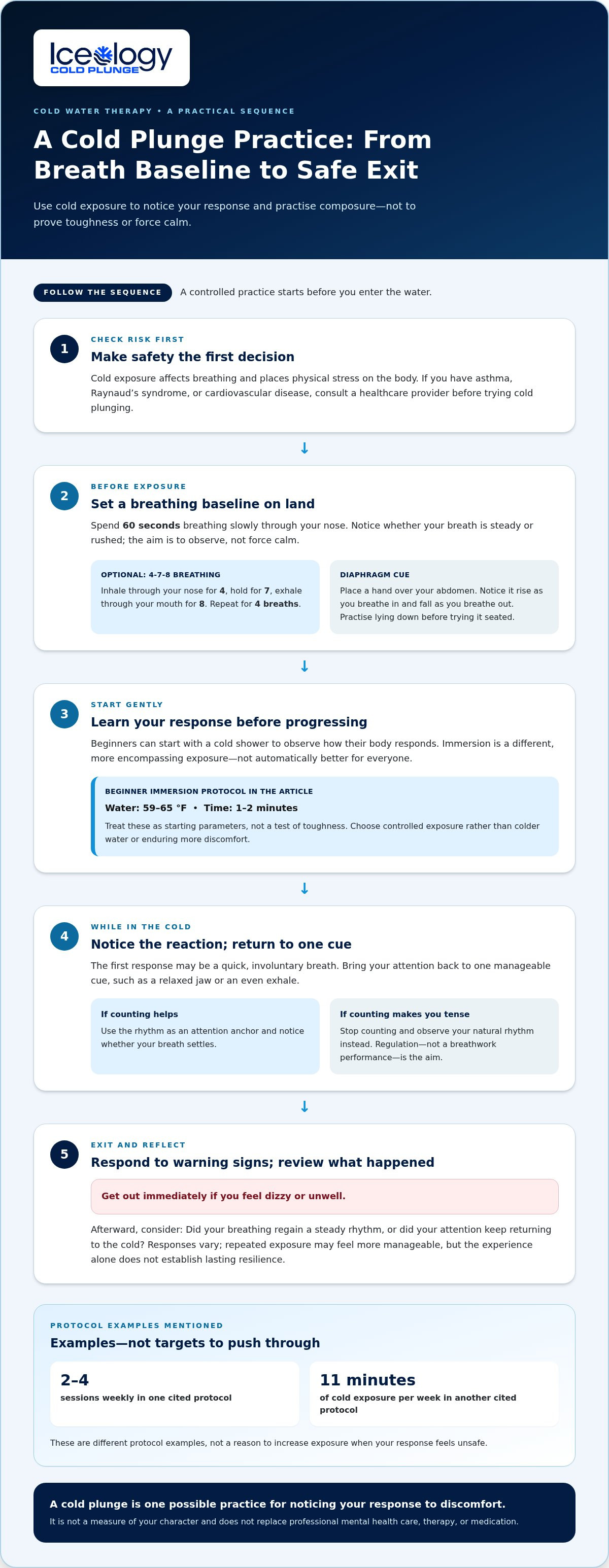
Cold therapy also carries risks. People with asthma, Raynaud’s syndrome, or cardiovascular disease may face greater risks from cold plunging, so consult a healthcare provider before trying it. Get out immediately if you feel dizzy or unwell. These precautions matter because cold exposure affects breathing and places physical stress on the body, not just mental focus.
Cold plunge vs. cold shower for mental resilience: Neither is automatically better for everyone. Beginners can start with cold showers to learn how their bodies respond, then consider immersion as a different, more encompassing exposure.
How long should beginners stay in a cold plunge? A beginner protocol recommends 1 to 2 minutes. Treat that as a starting protocol, not a test of toughness, and leave the water sooner if you feel dizzy or unwell.
What water temperature is recommended for a cold plunge? The beginner protocol recommends 59 to 65 °F. Temperature changes how intense the exposure feels, so start within that range rather than choosing colder water to prove resilience.
How often should you cold plunge for mental resilience? One cited protocol recommends two to four sessions weekly, while another recommends 11 minutes of cold exposure per week. These are protocol examples, not a reason to increase exposure when your response feels unsafe.
How can you start a cold plunge routine safely? Start with a cold shower to observe your response, and consult a healthcare provider first if you have asthma, Raynaud’s syndrome, or cardiovascular disease. If you progress to immersion, use the beginner protocol’s 59 to 65 °F water and 1 to 2 minutes, then get out immediately if dizziness or feeling unwell occurs.
Parasympathetic activation and breath control
Cold immersion can disrupt your breathing before you have time to settle. Regaining control of your breath may signal safety to the body and engage the parasympathetic nervous system, connecting your attention with a physical response.
Before entering, spend 60 seconds breathing slowly through your nose. This gives you a simple baseline to notice: Is your breath steady, or are you rushing? Treating breathing as an attention anchor can help you observe discomfort without letting each sensation dictate your next move. The aim is regulation, not forcing calm.
The 4-7-8 breathing technique offers one structured way to practise that attention on land. Inhale through your nose for a count of four, hold for seven, then exhale through your mouth for eight. Repeat the pattern for a total of four breaths. The counting gives your mind a task, while the longer exhale makes the rhythm easy to track.
Diaphragmatic breathing gives you a physical cue to follow. Place a hand over your abdomen and notice it rise as you breathe in, then fall as you breathe out. Practise lying down before trying it seated; the movement can make shallow upper-chest breathing easier to notice. This is a skill-building exercise, not a requirement to breathe deeply at all times.
During cold exposure, the first response may be a quick, involuntary breath. Rather than aiming for an impressive breathwork performance, bring your attention back to one manageable cue, such as a relaxed jaw or an even exhale. That cue helps you notice regulation while discomfort is present. If counting makes you tense, stop counting and observe your natural rhythm instead.
Consistency matters more than adding complexity. For example, use the same 60-second nasal-breathing practice before each session, then notice whether your breathing settles after entering. You can also reflect afterward on what changed: Did you regain a steady rhythm, or did attention keep returning to the cold? A brief observation turns each session into feedback, not a test of strength.
Cold exposure affects the nervous system, but a breathing exercise doesn’t guarantee a particular emotional state. The practical value is the chance to notice a response, choose an attention anchor, and practise breath regulation within a controlled challenge. If you’re exploring a more consistent cold-water routine, learn about cold water immersion as one option for structured practice.
Cortisol, dopamine, serotonin, and mood
An ice bath can trigger a strong nervous system response, followed by changes in how some people feel. Cortisol, dopamine, and serotonin play roles in stress and mood, but short-term chemical shifts don’t establish that cold exposure treats anxiety, depression, or other mental health conditions.
Cortisol is associated with the body’s stress response. A cited cold-water immersion study found cortisol levels dropped after 15 minutes, then stayed below initial levels for three hours. Significant stress reduction after cold exposure was also reported as measurable at 12 hours post-exposure. These findings describe measured changes, not a recommended session length or a guaranteed emotional result.
Dopamine is linked to motivation, reward, and attention. Cold plunging is described as producing a 250% increase in dopamine, while focus-driving neurochemicals are claimed to rise by up to 500%. Cold exposure may affect brain chemicals involved in mood, though responses can vary. These figures can sound dramatic, but they don’t show that every person will experience an enhanced mood or lasting change.
Serotonin is involved in mood regulation, but a chemical response doesn’t translate directly into an individual emotional outcome. One person may feel energized after an ice bath, while another mainly notices the discomfort of cold. Sleep, existing stress, expectations, and individual responses can all shape the experience. A temporary lift should not be mistaken for treatment or a reason to stop prescribed care.
Brain activity adds another layer. Functional MRI studies have found that cold-water immersion alters brain connectivity, particularly in regions associated with emotion processing. This suggests the brain responds to immersion, but it doesn’t prove that connectivity changes cause lasting mood benefits. A measurable brain response and improved emotional wellbeing in daily life are not interchangeable outcomes.
For practical context, notice your mood before and after a session rather than relying on a broad claim about dopamine. A journal can track stress around cold exposure for 30 days, helping reveal whether your own response is consistent or variable. Note a specific example, such as feeling alert immediately afterward but returning to your usual mood later. That pattern offers more useful personal context than assuming every session will feel the same.
Cold immersion may support exercise recovery by reducing muscle inflammation and soreness after physical strain. But recovery benefits and mental health treatment are different questions. Keep cold therapy in perspective: it can be one wellness practice, while professional care remains essential for mental health concerns. If low mood or anxiety affects your daily life, a cold plunge shouldn’t replace therapy, medication, or a conversation with a qualified healthcare professional.
Mental toughness and athletic performance
Mental toughness is the ability to stay engaged with a challenge while discomfort, frustration, or fatigue compete for attention. Grit usually emphasizes sustained effort toward a longer-term goal; toughness describes how someone responds during a demanding moment. A study of 43 tennis players found mental toughness might contribute to successful performance during a match. That finding points to a relationship, not proof that cold exposure improves athletic results.
For athletes, cold immersion can act as a deliberate challenge with a clear beginning and end. The experience of entering 40-degree water is uncomfortable, so a person can observe their initial reaction and choose how to respond. That practice can feel relevant to a difficult training session, but a cold plunge doesn’t reproduce a tennis match, race, or competition. The setting, skills, and pressures differ.
Make the practice purposeful rather than turning it into a contest. Before immersion, choose one focus, such as noticing tension or keeping your attention on a single task. During the experience, notice whether your mind shifts from that task to the urge to quit. Afterward, reflect on what helped you respond deliberately. This turns a session into a chance to understand your response, not a score of toughness.
That distinction matters in fitness. Physical conditioning develops abilities such as strength and endurance through sport-specific training; mental toughness concerns how someone manages a challenge. A runner who stays focused through a hard interval is using a different skill from someone tolerating cold water. Cold exposure alone doesn’t establish that an athlete will become stronger, faster, or more successful. Training in the actual sport remains central to performance.
Grit also means persisting with good judgment. Continuing every challenge regardless of warning signs isn’t resilience; it can be poor decision-making. An athlete who ends an immersion when feeling unwell is responding to relevant information, not failing a toughness test. The useful lesson is to distinguish manageable discomfort from a signal to stop, then choose deliberately.
Cold exposure can complement an athlete’s existing preparation, but it shouldn’t displace coaching, recovery, or care for a mental health concern. Therapy addresses needs a cold plunge cannot diagnose or treat. Think of immersion as an optional way to observe your response to discomfort, not a shortcut to competition readiness. The clearest measure of athletic progress remains performance in the chosen activity, assessed against that activity’s demands.
Cold water immersion for mental resilience
Building mental resilience with a cold plunge is best understood as practising a response to discomfort, not proving you can handle every difficult situation. Cold water immersion combines a physical stress response with a deliberate choice to stay present. You experience an intense sensation, notice your reaction, and practise responding with attention rather than impulse. Immersion is a setting for practising composure, not a test of character.
The body responds immediately to cold. Cold exposure activates the sympathetic nervous system and increases heart rate, blood pressure, and breathing rate. These changes can make the first moments feel demanding, even when the exposure is planned. Observing the response gives you information about your reactions. It doesn’t mean you should ignore discomfort or assume a more intense plunge makes for better mental practice.
Protocols offer structure, not a toughness contest. One cited cold-exposure protocol recommends sessions lasting one to five minutes each, with 11 minutes weekly in total. These figures describe a protocol, not a target every person must reach. The useful measure is whether the practice stays controlled and purposeful, rather than whether you can stay in cold water longer than someone else.
Adaptation can change how a familiar challenge feels. After four to six weeks of consistent cold exposure, practitioners commonly report that the same water temperature feels more manageable. That shift is a reason to track your experience: the water may feel different, while noticing discomfort and choosing deliberately remain central skills.
Someone building mental resilience with a cold plunge can spend 30 seconds after a session noticing their mental state. Consider what felt difficult, when your attention shifted, and what helped you stay composed. For example, you might note that focusing on one steady exhale helped you respond thoughtfully to each sensation. This turns an intense experience into an observation you can carry into other situations.
Cold immersion can release β-endorphins, which contribute to pain relief and a sense of wellbeing. This may help explain why some people describe feeling positive afterward, but it doesn’t establish cold water as mental health treatment. The science concerns bodily responses and reported experiences; immersion doesn’t replace therapy, medication, or professional care.
Keep the practice grounded in observation. Record how the session felt, whether your breathing settled, and how your mood changed afterward. Reviewing your notes can help distinguish a brief post-plunge feeling from a pattern that matters in daily life. Resilience isn’t measured by enduring the most intense cold. It involves noticing your response and choosing a measured next step.
Iceology Cold Plunge: Cold Plunge Tubs
Iceology Cold Plunge offers Cold Plunge Tubs for people who want to make cold immersion part of a home wellness routine. Its tubs include built-in chillers that can lower water temperature to as low as 39 °F, giving you control over the water’s temperature as you establish a consistent practice.
Choose a cold plunge as a practical setup for planned exposure, not as a treatment for mental health conditions or a replacement for professional care. Iceology Cold Plunge also offers Accessories and Ice Baths to support cold-water routines. A dependable routine still relies on measured exposure, attention to your response, and stopping if you feel unwell.
Explore Iceology Cold Plunge’s tubs and accessories to find a setup for your cold-water routine.
Make Your Next Step Intentional
Building mental resilience with a cold plunge can start with a simple intention: observe your response rather than chase a dramatic result. Decide what you want to notice, then take time to reflect on whether the practice supports your wellbeing. Consistency should serve your needs, not become another measure of achievement.
Keep professional care in the picture. Cold exposure isn’t a substitute for therapy, medication, or support from a qualified healthcare professional. If you’re considering a cold-water routine, take a measured approach that respects your health and helps you make an informed choice.
Explore Iceology Cold Plunge’s tubs and accessories to find a setup for your practice.
Choose a pace that feels thoughtful and sustainable. Small, deliberate choices can help you build a wellness routine with confidence.
Frequently Asked Questions
Is cold exposure a substitute for therapy or medication?
No. Cold exposure isn’t a substitute for therapy, medication, or care from a qualified mental health professional. It’s a physical wellness practice, not a treatment for a mental health condition. If you’re receiving care, don’t stop or change treatment because of a cold plunge. Use cold exposure only as an additional routine, and discuss treatment decisions and concerns with your healthcare professional.
Who Can Benefit?
People interested in a structured physical challenge or an addition to their wellness routine may find cold immersion worth exploring. It offers an opportunity to notice personal reactions and practise deliberate attention. It isn’t right for everyone: health history and individual responses to cold matter. If cold exposure feels distressing, you can choose another wellness practice without viewing that choice as a lack of resilience.
How can cold plunges help build mental resilience?
A cold plunge creates a demanding moment in which you can practise choosing deliberately instead of reacting automatically. You might set an intention to notice your thoughts and decide whether continuing still feels appropriate. Reflecting this way can help you understand your responses to discomfort. The practice is about awareness and judgment, not proving toughness by enduring more cold.
What does research say about cold water immersion and stress resilience?
Research describes immediate physical responses to immersion and reports changes involving stress, mood, and brain activity. These observations help explain the interest in cold water as a resilience practice, but they don’t establish it as treatment or prove that a person will handle unrelated stress better. Read findings in context: a response measured after immersion differs from a demonstrated, lasting change in everyday coping.
What are the risks and contraindications of cold plunges?
Cold plunging carries added risks for people with asthma, Raynaud’s syndrome, or cardiovascular disease. Talk with a healthcare provider before trying it, especially if you have one of these conditions or another health concern. Cold exposure affects breathing and cardiovascular responses, so don’t treat severe discomfort as a challenge to push through. If you feel dizzy or unwell, get out of the water immediately.
Can cold plunges worsen anxiety or panic symptoms?
Yes. Cold exposure activates the body’s stress response and increases heart rate and breathing rate. These sensations can feel intense or resemble parts of a panic episode. If cold water triggers anxiety or panic, don’t force yourself to remain immersed. Stop the exposure and discuss your reaction with a healthcare professional before trying again. A cold plunge isn’t required for resilience, and choosing another practice is valid.