
Cold Plunging After Weight Training: Recovery and Adaptations
After weight training, timing matters: if building muscle is your priority, wait four hours after your workout before using a cold plunge. A cold plunge for post-workout recovery in the heat may ease soreness and make recovery feel more comfortable, but plunging immediately after lifting could work against long-term muscle gains. The right choice depends on what matters most: short-term relief or strength and muscle adaptation.
It makes sense to want quick relief after a demanding workout in hot weather. Cold water can feel restorative, and research suggests immersion may reduce perceived muscle soreness for several days. But feeling better and adapting to training aren’t the same thing, so make timing a deliberate part of your recovery routine.
This guide explains how cold plunging may affect soreness and perceived recovery, why timing can matter after resistance training, and what to consider when heat adds another recovery challenge. Use it to decide when immersion may fit your goals, when to leave space after lifting, and how to make cold exposure one part of a broader recovery plan.
Key Takeaways
- If muscle growth is your priority, leave four hours between weight training and a cold plunge to avoid potentially interfering with training adaptations.
- Cold-water immersion may ease perceived soreness, which can be useful when short-term recovery between demanding sessions matters most.
- Choose water temperature and immersion time with care; beginners should start with brief exposure rather than pushing through discomfort.
- Weigh the immediate recovery benefit against your longer-term training goal before deciding when to plunge.
When Should You Use a Cold Plunge After Workout Sessions?
Choose cold-water immersion after a workout based on your recovery goal, heat exposure, and comfort. Duration and temperature matter, especially if you’re new to cold water or managing a health condition.
Immersion Duration and Temperature
Cold-water immersion uses cool water to expose the body to cold; temperature and time shape the experience. Post-exercise suggestions include water between 52 and 59 degrees Fahrenheit for 10 to 15 minutes, while other guidance limits sessions to five minutes. That spread makes a conservative, brief first exposure a sensible way to assess tolerance.
Beginners are advised to start with one or two minutes, and a separate recommendation suggests 3-5 minutes. Cleveland Clinic recommends beginner water between 50 and 59 degrees Fahrenheit and advises keeping it at or above 40 degrees Fahrenheit. Stop if you feel unwell; cold exposure can raise blood pressure and disrupt heart rate. People with heart disease should consult a healthcare provider first.
Recovery and Acute Effects
Cold water immersion may temporarily constrict blood vessels and reduce swelling, which can ease perceived muscle soreness after demanding exercise. A Cochrane review of 17 studies found some evidence of reduced perceived soreness for up to four days. That may matter after intense cardio or when athletes face back-to-back events, but soreness relief doesn’t establish better long-term strength gains.
Is a cold plunge better than a cool shower, ice bath, or active recovery? Not in every case: immersion is one option for perceived soreness, while active recovery offers a different approach. A small 2014 study found that 10 minutes in 10-degree Celsius water helped male athletes’ muscle function rebound faster than active cycling recovery after intense strength work.
How much does a home or gym cold plunge cost in the United States? Costs vary with the setup, cooling equipment, installation, and upkeep, so there isn’t one figure that fits every home or gym. Compare the complete setup, not just the tub—for indoor spaces, investing in water-resistant surfaces from suppliers like Frankly Flooring is often a practical step to protect your home gym from splashes and moisture.
How should you rehydrate and warm up afterward? Drink water, dry off, and warm gradually with dry clothing and gentle movement. After a sweaty workout, replacing fluids remains part of recovery, even if cold water makes you feel refreshed.
Heat-Related Recovery Research
Cold exposure can lower body temperature, making immersion relevant after strenuous exercise in hot conditions. A 2012 research article identified cold-water immersion as the most effective pre-cooling method for exercise; that finding concerns preparation, not proof of a universal post-workout benefit. Cold immersion is also used in sports medicine as emergency treatment for heat-related illness.
What does research say about heat-related recovery and body temperature? Immersion can cool the body, but research on pre-cooling and post-workout recovery addresses different questions. After a workout in hot weather, distinguish feeling cooler from muscle recovery, and treat suspected heat-related illness as an urgent medical situation.
Definition and typical temperature of cold plunging
Cold plunging means immersing the body in cold water for a planned session. Temperature helps distinguish it from a cool shower or brief exposure.
What Cold Plunging Means
Cold plunging is deliberate water immersion, usually with much of the body below the waterline. Unlike a shower, the water continuously surrounds the submerged areas, creating sustained cold exposure. That distinction matters because time, temperature, and how much of the body is submerged shape the session.
Cold therapy covers several methods, including cold-water immersion. A shower cools the skin with flowing water, while immersion keeps water in contact with the submerged body. Choosing between a shower and a tub means choosing different exposure conditions, not simply different names for the same practice.
Cold plunging is used for recovery and perceived soreness, but it isn’t a guaranteed way to prevent inflammation or improve every workout outcome. The purpose matters: a cooling session after hot-weather exercise differs from repeated immersion around resistance training. Identify your goal before choosing a method.
Typical and Safe Water Temperatures
Typical cold-plunge water falls around 50-60 degrees Fahrenheit, or 10-15 degrees Celsius. The ranges describe a common practice, not a single required temperature. A colder setting can make exposure feel more demanding, so temperature should be considered alongside session length and personal tolerance.
Cleveland Clinic advises keeping cold-plunge water at or above 40 degrees Fahrenheit. For beginners, Cleveland Clinic recommends water between 50 and 59 degrees Fahrenheit. These figures provide a practical reference: check the water temperature rather than judging it by touch, then choose a setting within the beginner range.
A thermometer makes it easier to track temperature between sessions, especially as outdoor conditions change. Record the temperature and how the session feels. Avoid making the water colder and the exposure longer at the same time. This helps you identify what affects comfort without treating one reading as a universal prescription.
Temperature also affects how cold therapy fits into a recovery routine. Cold water may cause blood vessels to constrict temporarily, while the body’s response changes as it warms afterward. That response is one reason a plunge is distinct from simply cooling a room or rinsing briefly. For a controlled immersion setup, explore cold-water therapy options as one way to make temperature part of a consistent routine.
Cold plunging and weight-training adaptations
Cold plunging immediately after resistance training may reduce long-term muscle growth compared with training alone. That creates a trade-off: immersion may ease soreness in the short term, but timing can matter when strength and muscle adaptation are the main goals. After a muscle-building workout, choose recovery practices that support your next training block, not just immediate comfort.
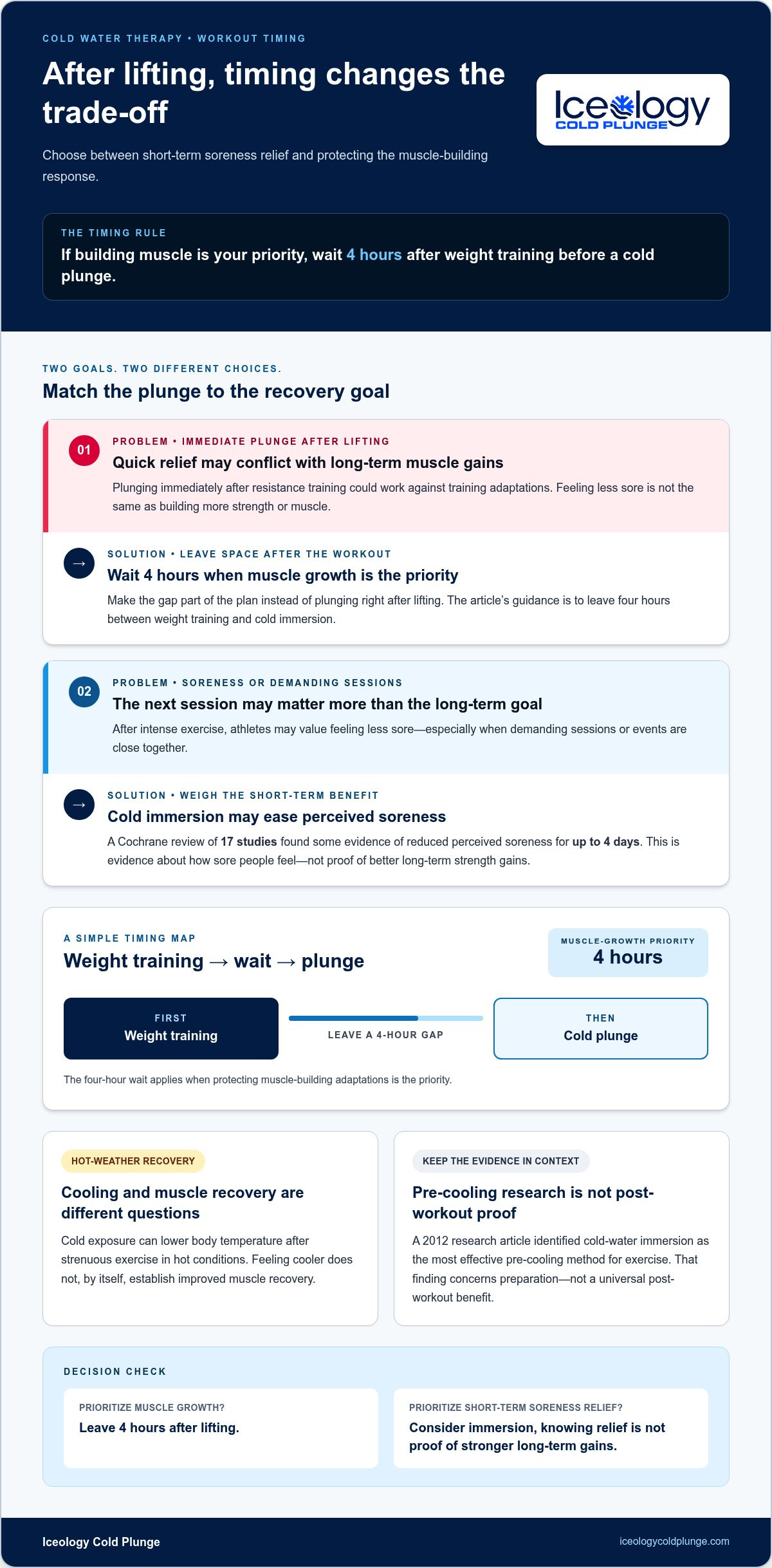
Cold exposure within four hours of a muscle-building workout may interfere with muscle gains. If growth is your priority, leave at least four hours between lifting and immersion. This separates the training stimulus from cold exposure instead of placing a plunge right after your final set.
Repeated cold-water immersion after resistance training may negatively affect training adaptations and strength gains over time. A 2020 finding highlights why the pattern matters, not just one session. For example, plunging after every weekly lifting workout creates repeated exposure around the same adaptation process. Consider how often cold therapy fits into the full training schedule.
The trade-off depends on an athlete’s immediate demands. Someone preparing for back-to-back competitions may prioritize feeling recovered for the next event, while someone following a progressive strength plan may protect adaptation by separating immersion from lifting. Cold plunging may fit better on rest days, away from a resistance session.
Let your workout goal guide the timing. After a heavy squat session focused on muscle growth, wait four hours before plunging. If short-term recovery between demanding events is the priority, cold immersion may be more useful, though it doesn’t replace thoughtful programming. Reducing soreness and maximizing long-term strength are related, but distinct, goals.
Track the pattern across training weeks. Note when resistance workouts happen, whether immersion follows within four hours, and how your strength work progresses. If you regularly plunge after lifting, moving sessions to rest days creates more separation from the workout stimulus. This keeps your recovery method aligned with the adaptation you’re pursuing instead of applying the same timing after every type of exercise.
Post-workout soreness and perceived recovery
Cold-water immersion can reduce muscle soreness for one to three days after a tough workout. This may matter when soreness affects how ready you feel for your next training session. Perceived recovery is your own sense of readiness, not a direct measure of muscle repair or strength. A plunge may change how sore you feel without proving your muscles have fully recovered.
Assess soreness and readiness separately. After a demanding leg workout, note soreness, fatigue, and how movement feels before choosing cold exposure. Check those same signs afterward and during your next workout. This comparison helps distinguish short-term relief from readiness to train, without assuming that feeling better means your strength or performance has improved.
Cold exposure constricts blood vessels and may temporarily reduce swelling and inflammation. Circulation increases again as the body warms. These responses may help explain why some athletes report less soreness after immersion, but they don’t show that every cause of post-exercise discomfort has been addressed. A less sore muscle may still need time before another hard training session.
Match your recovery routine to the workout that caused the soreness. After high-intensity cardio, for example, a cold plunge may be an option for short-term comfort. After resistance training focused on muscle growth, timing needs more care because immediate immersion may affect long-term adaptations. Relief alone shouldn’t determine when you exercise again.
Assess perceived recovery by recording what changes across several workouts. Note the training type, where you feel sore, whether you used immersion, and how the next session felt. Look for patterns instead of judging the method from one plunge. If soreness drops but your workout still feels unusually difficult, treat those as separate observations.
Focus on the result that matters to your goal. An athlete facing frequent events may value feeling less sore between efforts, while a lifter building strength may prioritize adaptation over immediate relief. Sleep, nutrition, and well-designed programming remain the foundation of recovery; cold exposure is an add-on. This keeps a temporary change in comfort from becoming your only measure of progress.
Post-workout cold plunging
After exercise in hot weather, cold immersion may serve two priorities: feeling cooler and managing recovery between sessions. Endurance athletes with high training volumes may value short-term relief when another workout follows soon. A cold plunge for post-workout recovery in the heat can fit this routine, but timing should reflect the next session’s demands, your hydration, and your training goal.
Cold exposure constricts blood vessels, temporarily reducing blood flow to muscles. As the body warms, circulation increases again. This response may help reduce inflammation and is associated with clearing waste products such as lactic acid. A plunge doesn’t replace rest, fluids, or sound training structure. Treat cold therapy as one recovery tool, chosen for a specific need.
For athletes training multiple times a day, immersion between workouts may help manage cumulative fatigue and support performance later. Consider an endurance athlete with a demanding morning session and another workout scheduled later. A cold plunge for post-workout recovery in the heat may fit that schedule, but the decision should also account for hydration and how the athlete feels before the next effort.
Keep the transition calm. After immersion, drink water, dry off, and warm gradually with dry clothing and gentle movement. Deep breathing during the plunge may help you settle and make exposure more manageable. These steps can be useful after a sweaty cardio session, when replacing fluids and returning to a comfortable body temperature remain part of recovery.
Cold plunging doesn’t serve the same purpose in every training plan. If your next priority is another endurance workout, feeling fresh may carry more weight. If your workout focused on resistance training for muscle gain, consider the adaptation trade-off and leave time between lifting and immersion. This helps keep short-term comfort from overriding your longer-term goal.
Build a routine around the week, not a single session. Note whether each workout focused on cardio or strength, whether heat added to the recovery challenge, and how you felt during the next effort. If immersion helps you manage frequent training, use it selectively. If it competes with the adaptation you’re pursuing, shift it to a rest day or another point in your schedule.
For a consistent home setup, explore cold water therapy options.
Iceology Cold Plunge: Cold Plunge Tubs
Iceology Cold Plunge offers Cold Plunge Tubs for people building a consistent home recovery routine. Their built-in chillers can lower water temperature to as low as 39 °F, giving you control over the water’s temperature as you plan cold-water immersion around exercise and training goals. The tubs are made in the USA.
Choose a dedicated tub if regular access to cold water suits your routine better than occasional immersion. Keep timing in mind: after weight training focused on muscle growth, allowing four hours before plunging may help avoid interfering with training adaptations. Iceology Cold Plunge offers hard-sided Cold Plunge Tubs with built-in chillers, so no ice is needed, along with accessories for cold-water recovery.
Explore Iceology Cold Plunge’s tubs and accessories online to find an option for your recovery routine.
Make Your Recovery Routine Intentional
Let your training goal guide your next choice. A routine built around long-term strength may call for different recovery timing than one shaped by frequent sessions or hot-weather exercise. Rather than adding cold exposure automatically, decide what you want it to contribute, then consider how it fits alongside sleep, nutrition, and your next workout.
Use a cold plunge for post-workout recovery in the heat as a deliberate part of your plan, not a substitute for the fundamentals. Track how you feel and how your training progresses, then adjust your routine to match your priorities. A sustainable recovery approach depends on making thoughtful choices consistently.
Build your recovery practice with calm focus, and let each choice support the work you’re committed to doing.
Frequently Asked Questions
Does cold plunge hurt muscle gains?
Cold plunging immediately after resistance training may reduce long-term muscle growth compared with training alone. The concern is repeated timing, not simply owning or using a plunge. Someone following a progressive lifting plan, for example, could schedule cold exposure on rest days instead of after every strength session. Separating the two helps keep short-term recovery preferences from routinely overlapping with the body’s adaptation to lifting.
Does a cold plunge improve post-workout recovery in hot weather?
Cold immersion can cool the body and may make post-workout soreness feel more manageable, but that isn’t the same as restoring every part of recovery. After a hot outdoor run, it may offer cooling and perceived relief; it doesn’t replace drinking water, rest, or appropriate care for heat-related illness. Think of cold exposure as one possible tool, not a complete response to heat stress.
How long should you wait after exercise before taking a cold plunge?
For general post-workout use, one recommendation is to plunge within 30 minutes of finishing exercise. If your session focused on building muscle, however, wait four hours after resistance training to reduce the chance of interfering with gains. For example, a lifter finishing in the afternoon could schedule cold exposure later rather than making it the immediate next step after the last set.
What water temperature and duration are recommended for a post-workout cold plunge?
Suggested post-exercise water temperature is 52 to 59 degrees Fahrenheit, but duration advice differs. Some guidance suggests 10 to 15 minutes, while another recommendation says sessions shouldn’t exceed five minutes. Cleveland Clinic recommends beginners use water between 50 and 59 degrees Fahrenheit and keep it at or above 40 degrees. Start conservatively rather than assuming longer exposure is better.
Does cold water immersion reduce muscle soreness or impair muscle growth and strength gains?
It may reduce perceived soreness, while frequent immersion immediately after resistance training may negatively affect muscle growth and strength adaptations. A Cochrane review of 17 studies found some evidence of reduced perceived soreness for up to four days. That outcome doesn’t establish better strength recovery. If your goal is lifting progress, separate plunges from workouts and judge progress by training performance, not soreness alone.
How does heat and dehydration affect cold plunge safety after exercise?
Heat and a sweaty workout can leave you needing fluids, so drink water after immersion and don’t treat a plunge as rehydration. If you feel unwell after exercising in the heat, prioritize your symptoms instead of relying on cold water as a recovery shortcut. Cold exposure can affect blood pressure and heart rate, so avoid adding unnecessary stress when you’re already feeling unwell.
What are the risks of cold plunging after exercise, including cold shock and heart strain?
Sudden cold exposure can put cardiovascular stress on the body: cold-water immersion may raise blood pressure and disrupt heart rate. This matters after strenuous exercise, when your body is already recovering from exertion. Enter gradually and end the session if you feel unwell. Don’t use a plunge to manage suspected heat-related illness; cold-water immersion in that context is emergency treatment.
Who should avoid cold plunges or consult a doctor first?
People with heart disease should consult a healthcare provider before cold plunging, because immersion can affect blood pressure and heart rate. The same caution applies to anyone with a health issue that could be worsened by those changes. If you’re unsure how cold exposure fits your health needs, discuss your condition and planned immersion routine with a qualified healthcare professional before starting.