
Compare home cold plunge choices for a busy parent
The best home cold plunge for a busy parent isn’t necessarily the one with the most features. Adults often target water between 50 and 59°F, so a cold plunge tub for a busy parent should make it practical to reach and maintain a preferred temperature without adding a complicated chore to the day.
It makes sense to weigh more than the tub itself. Temperature control, app features, upkeep, and how easily a plunge fits around family responsibilities can all shape whether the routine feels sustainable.
This guide covers home cold plunge options, practical temperature control, and ways to plan a cautious routine around family life. It also explains how to think about timing and convenience while keeping adult cold-water use separate from decisions about what may be appropriate for children.
Key Takeaways
- Compare home options by how they manage temperature and how much hands-on upkeep they require, so the setup fits your daily routine.
- Adults often target water between 50 and 59°F; choose a temperature approach you can manage consistently and comfortably.
- Keep adult cold-water routines separate from decisions about children. Consult a pediatrician before considering cold immersion for a child, and never leave a child unsupervised near cold water.
- Build a conservative routine by starting with brief exposure, increasing gradually, and stopping if you feel unwell.
- Make the plunge easier to sustain by choosing a realistic time in your day and treating it as a short, deliberate recovery break.
1. Temperature control and app connectivity
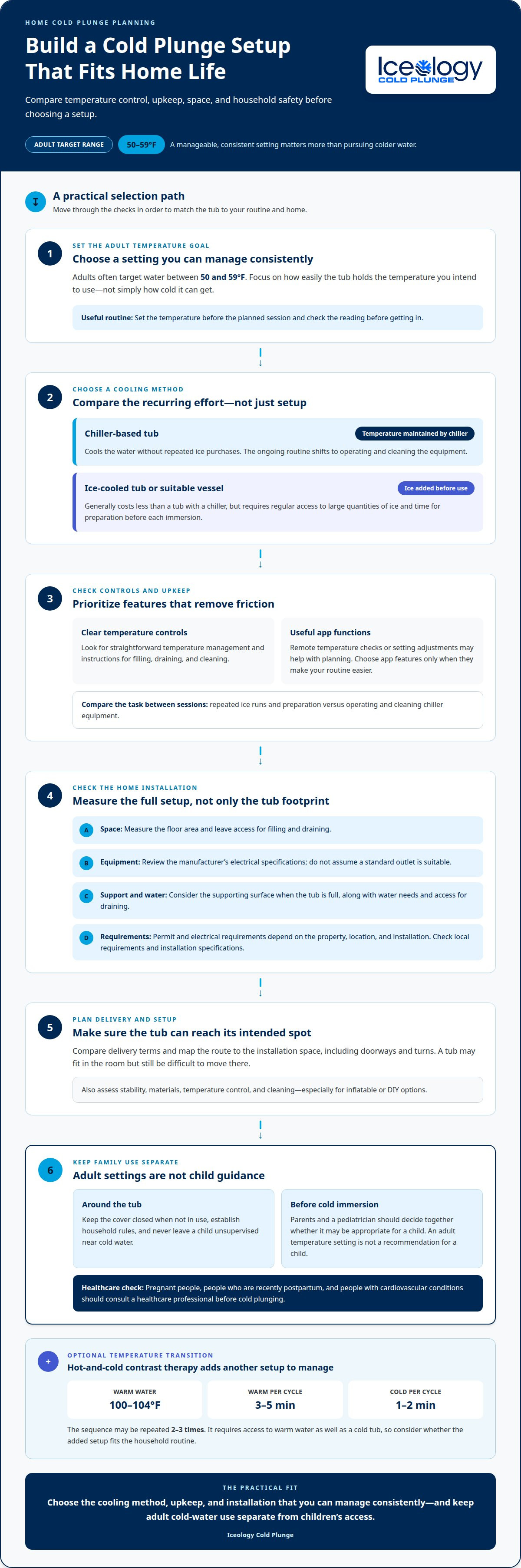
A cold plunge tub for a busy parent should make temperature management straightforward. Adults often target water between 50 and 59°F for cold immersion. A tub with a built-in chiller can maintain a chosen temperature without relying on repeated ice runs. That can make a planned morning session easier to fit around school drop-offs or breakfast. The useful comparison is not simply how cold a tub can get, but how easily it holds the temperature you intend to use.
App connectivity matters only if it makes your routine easier. Consider whether an app lets you check water temperature or adjust settings remotely, which can help you plan ahead. For example, checking the temperature before getting ready for a session can prevent a last-minute surprise. Prioritize clear controls and useful information over features you are unlikely to use.
Temperature control also matters for family safety. Set the plunge for the adult using it, and never assume that an adult setting is suitable for a child. The equipment cannot determine whether cold immersion is appropriate for an individual child; parents and pediatricians should make that decision together. Pregnant people, people who are recently postpartum, and people with cardiovascular conditions should consult a healthcare professional before cold plunging.
In a home with children, keep adult plunge routines separate from children’s access to the tub. Children should never enter cold water unsupervised, and an adult setting is not a safe temperature recommendation for a child. Keep the cover closed and establish clear household rules when the tub is not in use. Temperature displays support adult use, but do not replace supervision or a pediatrician’s guidance.
Hot-and-cold contrast therapy adds another temperature transition to manage. The suggested warm-water range is 100–104°F, with 3–5 minutes in warm water and 1–2 minutes in cold water per cycle. The cycle may be repeated 2–3 times. That sequence requires access to warm water as well as a cold tub, so consider whether the extra setup fits your household routine before making it a regular practice.
Cold water therapy is often discussed in relation to inflammation, circulation, and mental well-being. However, the National Library of Medicine notes that definitive interventional evidence is still needed. Treat temperature as one controlled part of a routine, not proof of a guaranteed health outcome. Choose a manageable setting, pay attention to how the session feels, and adjust cautiously rather than pursuing colder water.
For straightforward temperature control, set the temperature before your planned session and check the reading before you get in. Useful app controls can make these steps more convenient, but the simplest setup that supports consistent adult use may be enough. Keep children supervised and separate from cold immersion.
2. What is the Best Cold Plunge for Home Use?
The best home option is the one whose setup, upkeep, and cooling method fit your space and schedule. A chiller-based tub cools the water without repeated ice purchases, while a tub cooled with ice requires ice to be added before use. For a busy household, compare the ongoing effort between sessions, not just the initial setup.
Before choosing a tub, look for clear instructions on filling, draining, cleaning, and temperature management. Adding ice before every session creates a recurring task; a chiller-based tub shifts the routine to operating and cleaning the equipment. The practical choice is the one whose upkeep you can manage consistently.
Affordable alternatives to a dedicated cold plunge tub include an ice-filled bathing container or another suitable vessel. Ice tubs generally cost less than tubs with chillers, but require regular access to large quantities of ice. That trade-off means the purchase price is only one part of the decision: factor in repeated ice runs, preparation, and the time needed to set the water for each immersion.
Permit and electrical requirements depend on the property, location, and equipment installation, so there is no single answer for every home. Review the manufacturer’s installation specifications and applicable local requirements. Do not assume that a standard outlet is suitable or that installation never requires a permit.
Space, electrical requirements, and water needs vary by tub. Before choosing a spot, measure the available floor area, allow access for filling and draining, and review the equipment’s electrical specifications. Remember that a filled tub weighs more than an empty one, so assess the supporting surface as well as the footprint.
Inflatable and DIY tubs are not automatically safe or effective just because they hold cold water. Stability, materials, temperature control, and cleaning all affect practical use. A vessel that shifts when entered or cannot maintain a consistent temperature may complicate a planned session, so assess these basics before relying on it.
Plan for delivery and setup when choosing a home tub. Compare the delivery terms and access route with the intended installation space, including doorways and turns. A tub may fit in the room but still be difficult to move there, so map the route in advance.
To compare a dedicated setup with your household’s constraints, consider the home cold plunge options alongside the space, upkeep, and temperature features that matter most to your routine.
Space and setup depend on the tub’s dimensions, capacity, and chiller. Measure the available floor area, allow access for filling and draining, review the electrical specifications, and consider whether the supporting surface can handle the tub when full.
3. Adult cold plunge use in family households
For adults, morning plunges may increase alertness and focus, while evening plunges may relieve inflammation and muscle fatigue. These are possible reasons to schedule a session, not guaranteed outcomes. Cold water also creates a physical stressor, so adults with cardiovascular conditions should consult a healthcare professional before plunging. People who are pregnant or recently postpartum should also consult a healthcare professional first.
Plan a session for a time when someone else is responsible for the children. For example, one parent can plunge while another adult remains available for family needs. If you are the only adult at home, wait until the children are settled and supervised rather than trying to manage them while in the water. A plunge should be deliberate, not squeezed between interruptions.
Set clear household boundaries before using a tub. Explain that cold water is for an adult’s planned session, not a place for children to play. Keep children away from the water and never let them enter unsupervised. The equipment cannot determine whether cold immersion is appropriate for a child; parents and pediatricians should make that decision. Adult use does not establish a safe routine for children.
Choose a location that allows you to enter and exit calmly. Keep towels and dry clothes within reach, and leave a clear path to the place where you will warm up. If the tub is outside, consider the trip back indoors while wet and cold. Avoid a setup where household traffic could interrupt you or distract you.
Pay attention to your body during each session instead of treating a timer as a target. Leave the water if you feel dizzy, numb, or shivery, or notice erratic breathing. End the exposure rather than pushing through to complete a planned duration. Afterward, sit still and let your body rewarm naturally. Dry off, then rest in the sun or wrap yourself in a towel for gentle warming.
A practical family routine follows a simple sequence: arrange supervision, prepare the space, enter only when ready, and leave if concerning symptoms appear. If you are returning from a sleepless night or caring for a sick child, skip a plunge while dealing with that major stressor. Recovery practices should fit the day you actually have. If the circumstances feel unsafe, postpone the session.
4. Building a conservative family cold therapy routine
For beginners, conservative exposure means starting briefly and increasing only as comfort allows. One recommendation is 30 seconds to 1 minute, while another advises 1–2 minutes before gradually working toward 5–8 minutes. Because these starting ranges differ, choose the shorter option for a cautious first session. There is no need to reach a particular duration quickly.
How often should beginners plunge? Start with a manageable session length and a schedule that fits your recovery and family responsibilities, rather than aiming for a fixed frequency. A repeatable routine could mean choosing a calm time, setting out towels beforehand, and postponing the session when the household needs more attention.
Before entering, take 3–5 deep breaths and make sure children are supervised by a responsible adult. Keep cold-water exposure for adults separate from children’s activities. A child should never enter cold water unsupervised, and parents should consult a pediatrician before considering immersion, especially if the child has a cardiovascular, respiratory, or circulatory condition.
Do not treat a timer as a challenge. Leave the water if you feel dizzy, numb, or shivery, or notice erratic breathing. Afterward, sit still and let your body rewarm naturally; drying off and wrapping yourself in a towel can support gentle warming. These steps give a session a clear beginning and end, even on a busy morning.
Keep the routine flexible around exercise and family demands. Do not force a plunge immediately after a major stressor, such as a sleepless night or caring for a sick child. If a workout leaves you depleted or the day becomes unpredictable, postpone the session. Cold-water use should support your day, not compete with essential rest or caregiving.
Children need a different standard from adults. Cold-plunge equipment cannot determine whether immersion is appropriate for an individual child, and adult cold-plunge benefits should not be assumed to apply to children. If a pediatrician supports considering exposure, parents should supervise continuously, stop at the first sign of discomfort, and end the session immediately if shivering, blue lips, or disorientation occurs.
Set simple boundaries to keep the practice family-friendly: use the tub only when another adult can supervise the children, and keep children out unless their care has been discussed with a pediatrician. Do not measure a child’s session against an adult timer. For adults, consistency means listening to your body and adjusting to the day, not pushing through discomfort to meet a target.
5. Cold plunging as a convenient recovery ritual for parents
A recovery ritual works best when it has a clear place in an ordinary day. For a parent, that could mean pairing a brief plunge with a morning transition, before breakfast or the household’s first rush. A short 1–2 minute plunge has been suggested as a possible micro-break for busy mothers. Treat it as a pause, not another performance target on an already full schedule.
Timing can shape how the ritual feels. Morning plunges may increase alertness and focus, making them a possible fit before a demanding workday. Evening plunges may relieve inflammation and muscle fatigue, which can feel relevant after a physically active day. These are potential reasons to choose a time, not promises that a session will make recovery faster or change how every person feels.
Build the habit around an existing transition instead of adding a complicated block to the calendar. For example, set out a towel before the morning routine begins, then plunge only when another adult can supervise the children. That small preparation removes one decision. If family responsibilities interrupt the plan, skip the session rather than rushing through entry, exposure, and rewarming.
Keep the ritual focused on one purpose. After a workout, you might use a plunge as a deliberate recovery pause; on another day, you might value the mental reset. Choosing one intention helps you notice how the session fits your day without treating cold water as a cure-all. A brief note afterward can record the time, your comfort, and whether the routine felt manageable.
Make consistency practical, not rigid. If your schedule is unpredictable, choose a flexible morning or evening window and use it only when supervision and preparation are in place. A missed session does not need to be made up later. The goal is a repeatable wellness practice that respects family needs, not a streak that adds pressure.
End each session with a calm transition back to caregiving or work. Sit still, dry off, and let your body rewarm naturally before moving to the next task. End the ritual when your body signals you, even if the planned time has not elapsed.
Convenience comes from reducing friction: choose a realistic time, prepare what you need, and keep the session manageable for your day. That can make a cold plunge a purposeful recovery break rather than another demand on family time. Use the same approach when deciding whether a home setup suits your routine.
Iceology Cold Plunge
Iceology Cold Plunge helps parents consider a home cold-water setup that fits their space, temperature preferences, and routine. Its cold plunge tubs are made in the USA and include built-in chillers that can lower water temperature to 39°F. That gives you a clear starting point when weighing temperature control against the practical demands of family life.
Explore cold plunge tubs, ice baths, cold tubs, and accessories with your priorities in mind: ease of use, home setup, and a recovery routine you can maintain. Start by considering how you will use the equipment and where it will fit, rather than paying for features you do not need.
Contact Iceology Cold Plunge to discuss options for your home routine.
Make Your Next Step Fit Your Home
The right cold plunge tub for a busy parent is one that supports a manageable routine without competing with family responsibilities. Before deciding, picture where it will sit, when you could use it, and how you will keep the experience practical. A good setup should feel like a considered addition to your home, not another obligation on a full calendar.
Iceology Cold Plunge sells cold plunge tubs, ice baths, and accessories for home cold-water routines. Explore the options and choose a setup that fits your space, schedule, and priorities.
Build a recovery practice around the life you have. A thoughtful choice can make room for a steady, grounded routine.
Frequently Asked Questions
What is the Best Cold Plunge for Home Use?
The best home tub is one that fits your space, routine, and preferred temperature management. For example, Iceology’s Grizzly 450 is a hard-sided tub with a built-in chiller, so it works with no ice needed. It operates on a standard 110 V outlet and draws up to 7 A. Review the electrical and space requirements alongside your intended use before choosing a setup.
What water temperature is recommended for a cold plunge?
Adults often target water between 50 and 59°F for cold plunging. A tub’s lowest possible setting is a separate consideration from the temperature you choose for a session. For example, the Grizzly 450 chiller regulates between 39°F and 41°F, so it can operate below that common adult target. Select a setting conservatively and focus on a manageable experience rather than pursuing the coldest available water.
How much do home cold plunge tubs cost in the United States?
The cost of a home cold plunge tub depends on the setup, temperature-control equipment, and included accessories. A tub cooled with ice differs from a chiller-equipped system in both purchase price and upkeep. To plan the full household expense, consider the tub along with ongoing needs such as filter replacement and water care. Comparing complete setups gives a more useful picture than looking at the tub alone.
What are the best cold plunge tubs for busy parents?
Look for a tub that reduces recurring preparation and makes maintenance manageable. A chiller-based setup avoids preparing ice before each session, while a clear maintenance schedule helps you plan upkeep around family life. For the Grizzly 450, the filter cartridge change interval is every 2–4 weeks. Consider whether that task and the tub’s operating requirements fit your household routine.
How can parents use a cold plunge safely around children?
Use the tub only when a responsible adult can supervise the children, and never let a child enter cold water unsupervised. Cold-plunge equipment cannot determine whether immersion is appropriate for an individual child, so parents should consult a pediatrician before considering it. Stop a child’s exposure immediately if discomfort, shivering, blue lips, or disorientation occurs. Keep adult use and children’s access clearly separate.
How much space, electricity, and water does a home cold plunge tub need?
Space and setup depend on the tub’s dimensions, capacity, and chiller. Measure the floor area and allow access for filling and draining, review the equipment’s electrical specifications, and make sure the supporting surface can handle the tub when full.