
How to Fit a Cold Plunge Into a Busy Schedule
A cold plunge can fit into a busy week without taking over your routine: plan for 2-4 sessions per week, with each session lasting 2-5 minutes. For newcomers, even a brief 30-60-second immersion can be a starting point. The key to how to fit a cold plunge into a busy schedule is to choose repeatable times that work with your training and daily commitments.
It’s reasonable to want a recovery habit that feels manageable, not like another demanding appointment. A simple, consistent plan is easier to maintain than trying to find a large block of free time.
Here, you’ll learn when to plunge, how often to do it, and how long to stay in. You’ll also see how to fit sessions around different training goals and build a weekly routine that can adapt when your calendar gets crowded.
Key Takeaways
- Choose plunge timing around your goal: recovery after endurance work and muscle growth after strength training call for different schedules.
- Build a realistic weekly rhythm with short sessions you can repeat, rather than relying on occasional long plunges.
- Anchor sessions to a consistent time on selected days to make the practice easier to maintain.
- Start with a brief immersion and increase duration gradually as you learn how your body responds.
- Use your training calendar and daily commitments to find a practical slot that won’t make recovery feel like another major task.
Choosing a plunge time based on your goals
Start by matching plunge timing to your main goal, whether that’s alertness, endurance recovery, or strength development. Then choose a repeatable time that fits your training and daily routine.
- Choose a setup that suits your week. A home cold plunge tub requires an upfront purchase, water care, and electricity; gym or spa access usually means recurring fees and travel time. Weigh those trade-offs against how often you expect to plunge and whether travel fits your schedule. A home setup may make brief sessions easier to fit between everyday commitments, while facility access can suit someone who prefers planned visits.
- Set a practical water temperature. A target of 50-59°F is recommended for most users. This range gives you a clear starting point when planning cold water immersion, rather than choosing a temperature based on intensity alone. Keep the temperature consistent while you build a routine; changing both temperature and duration makes it harder to judge how a session feels.
- Protect strength-training goals. Cold plunging soon after lifting may blunt muscle adaptation, so avoid placing a plunge immediately after strength work when muscle growth is the priority. Leave at least four hours between cold immersion and strength training. For example, if you lift in the evening, schedule your plunge earlier in the day or choose a non-lifting day. That simple calendar decision can help align your recovery routine with your training goal.
- Use endurance sessions differently. If reducing inflammation after endurance training is your priority, schedule the plunge within 30-60 minutes of finishing. Put it in your post-run or post-ride plan, rather than leaving it as an optional task later. Strength and endurance goals may call for different timing, so let the session’s purpose guide the calendar slot.
- Pick a time of day for alertness. A morning plunge can support alertness for the next 4-6 hours, making it a possible fit before a workday that needs focus. For a pre-workout mental lift, use a 2-3-minute plunge, then allow 10-15 minutes of light movement before your first working set. If mornings are rushed, choose another consistent opening in your day instead of sacrificing the time needed to prepare and transition.
When muscle growth is the priority, make the lifting session the anchor for the day’s plan. Schedule cold immersion separately rather than treating it as an automatic end to your workout. A cold plunge after strength training may slow inflammation processes involved in muscle repair and development. Keeping the activities apart helps avoid working against the adaptation your session is intended to support.
Leave at least four hours between strength work and cold-water immersion. If your schedule can’t accommodate that gap, choose another plunge window or skip immersion after the lift. That keeps the decision aligned with your goal instead of letting a general recovery habit dictate what follows every workout. Revisit the timing whenever muscle growth becomes the main priority, and choose a slot that respects the gap and fits your training plan.
Recommended weekly frequency and session length
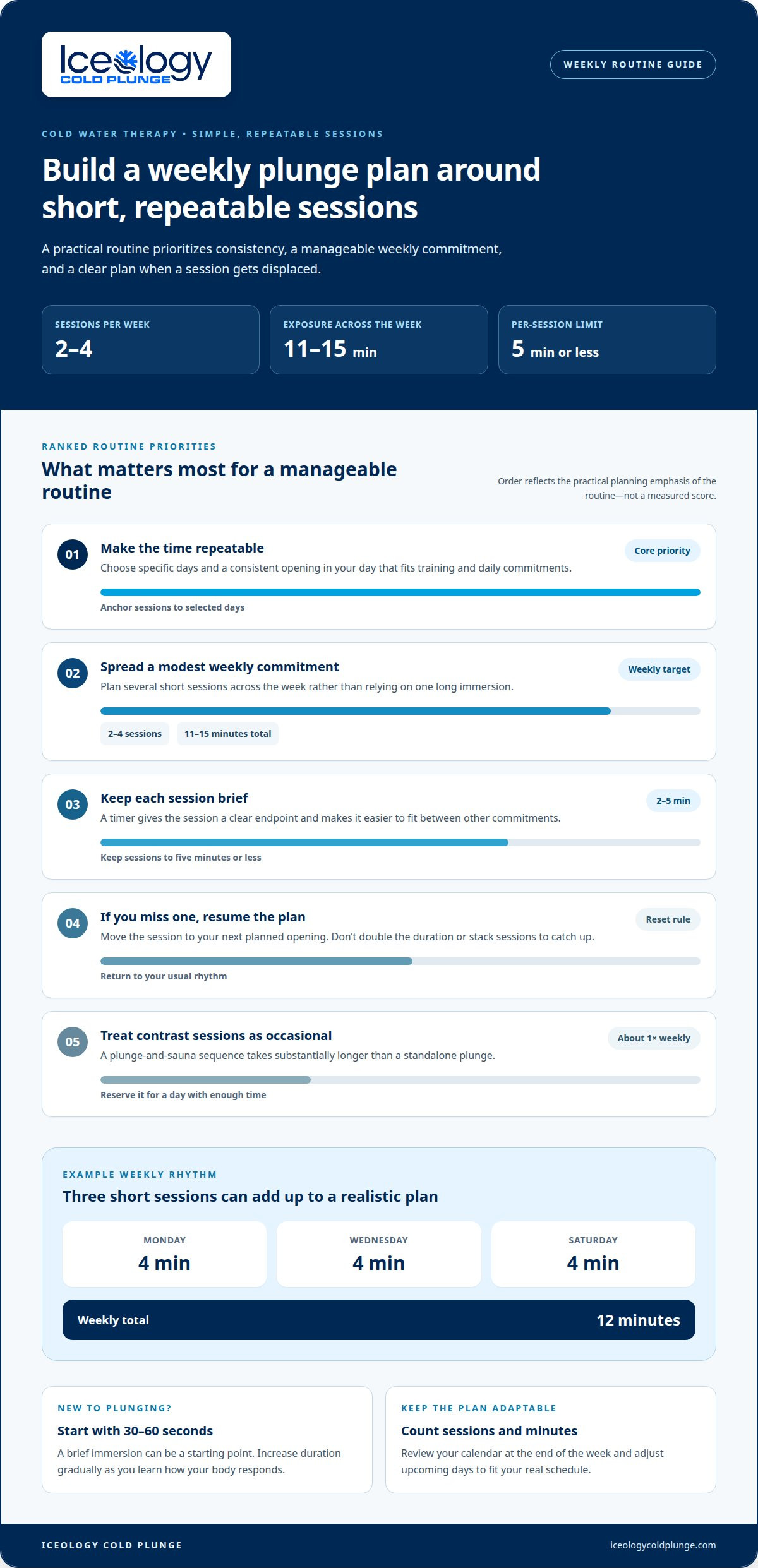
Yes, a 2-5-minute plunge can be a useful, brief session. Plan several short sessions across the week instead of relying on one long immersion.
-
Set a Weekly Frequency and Time Commitment
Schedule 2-4 sessions per week, aiming for 11-15 minutes of cold exposure across the week. For example, three sessions of four minutes each reach 12 minutes without requiring a long appointment. Put each session into a calendar slot you can protect, then check whether travel, preparation, or changing clothes adds more time than the immersion itself.
Keep sessions to five minutes or less to help minimize hypothermic symptoms. Don’t extend a missed session to compensate; longer exposure won’t make an inconsistent routine easier to sustain.
-
Use Short Guided Sessions
Set a timer for 2-5 minutes and use a guided audio track or a simple breathing count to stay focused. A clear endpoint helps keep cold water immersion contained, especially when fitting it between work and a workout. Short sessions also make it easier to plan the full transition back to your next task.
A brief plunge can count as a cold-water immersion session; it doesn’t need to become a long ice bath. Follow your timer rather than extending the duration because the water feels manageable that day.
-
Build a plan for missed sessions. If a meeting or workout displaces a plunge, move it to your next planned opening. Don’t double the duration or stack sessions to catch up. For instance, if Tuesday’s session falls through, resume your usual plan on Thursday and keep the rest of the week intact.
This approach preserves your weekly rhythm without turning cold-water immersion into a catch-up task. Mark completed sessions on a calendar, then use the pattern to choose more realistic days next week.
-
Keep sauna combinations occasional. A contrast session can involve a 2-3-minute plunge, 15-20 minutes in a sauna, and three rounds. That sequence takes substantially longer than a standalone plunge, so reserve it for a day with enough time. Keep full contrast sessions to about one per week, rather than making them the default for every recovery slot.
On a tight day, keep to one short immersion. It takes less planning and makes it easier to fit cold exposure into the week.
-
Choose consistency over complexity. Place sessions on specific days, such as Monday, Wednesday, and Saturday, then maintain the same duration where practical. If a home routine suits your week, explore cold plunge setup options while planning where each session fits.
At the end of the week, review your calendar: count your sessions, add up the minutes, and adjust the next week’s plan without making up missed exposure.
Scheduling cold plunges as a consistent recovery practice
Beginners can start around 30 seconds, focus on steady inhales and longer exhales, then let the body adjust naturally after exiting. People with cardiovascular conditions, cold sensitivity, or other medical concerns should consult a healthcare professional before cold plunging.
-
Build a Consistent Habit
Choose the same time on each plunge day, such as before breakfast or after work, and add it to your calendar. A fixed cue, like finishing your morning coffee, connects the session to an existing routine. Follow that schedule for at least four weeks before assessing its effects, and note changes in soreness, energy, or recovery after each session.
If your workday shifts, choose another repeatable time rather than abandoning the plan. Consistency matters more than sticking to an ideal schedule that conflicts with daily responsibilities.
-
Prioritize Consistency Over Intensity
Keep the water temperature and session length manageable as you establish the habit. Cold tolerance may develop over 4-6 weeks of regular exposure, so avoid making each plunge colder or longer to prove progress. A steady routine supports a more useful comparison of how your physical and mental responses change over time.
Track the basics in a calendar: session day, duration, and how you felt afterward. If a session leaves you unusually uncomfortable, shorten the next one rather than increasing the intensity.
-
Use a four-week review. After following your calendar for at least four weeks, look for patterns in soreness, sleep, and perceived recovery. For example, note whether a plunge on a particular day fits around work and training or keeps getting displaced. Keep the time slot that works and move the one that doesn’t.
This review turns wellness into a practical routine rather than a test of willpower. Adjust one part of the schedule at a time, then observe how the change affects consistency.
-
Plan evening sessions around bedtime. If an evening plunge suits your routine, schedule it about 90 minutes before bed. Some practitioners use a brief 1-2-minute evening session. Leave enough time afterward to notice how you feel and let your body settle before sleep, rather than squeezing immersion into the final moments of the night.
If the timing disrupts your rest or makes the routine harder to maintain, move the session earlier. The best slot is one you can repeat without sacrificing sleep or another essential part of your day.
-
Make recovery responsive, not rigid. Keep planned sessions on the calendar, but adjust them when your physical response or schedule changes. If you feel unwell or unusually uncomfortable, skip the session rather than forcing exposure. People with cardiovascular conditions, cold sensitivity, or other medical concerns should seek professional medical guidance before starting.
After each plunge, let your body return to a stable temperature naturally. A gradual transition gives you time to notice how you feel before resuming your routine.
Gradually increasing plunge duration
Use a measured progression instead of guessing at a longer duration. Small adjustments make it easier to track your response and keep cold-water therapy manageable.
-
Begin with a 30-second immersion. Set a timer before entering, so the first session has a clear endpoint. Treat that opening duration as a baseline, not a test of toughness. Notice your breathing, stress response, and comfort as the seconds pass. If the cold feels overwhelming, end the session rather than forcing yourself to stay longer.
Use the same starting duration for your first few exposures. A familiar 30-second window gives you a consistent reference point before you change the timing.
-
Increase in 15- to 30-second steps. After a session feels manageable, add only 15 to 30 seconds the next time. For example, move from 30 seconds to 45 seconds, then consider another small increase later. This progression lets you assess each change without turning the plunge into an endurance challenge.
Keep a simple record of the duration and how the session felt. If a new interval creates a strong stress response, return to your previous comfortable duration instead of adding more time.
-
Work toward two to three minutes. Use that range as a gradual target for building tolerance, not a deadline. Moving from 30 seconds in small increments takes multiple exposures, and each step should feel controlled. A timer can help you avoid extending the session just because you’re focused on reaching the next milestone.
For example, an athlete with a demanding training week can keep the same duration across several sessions before progressing. The aim is a repeatable practice, not a record-setting plunge.
-
Change one variable at a time. Keep the water temperature steady while adjusting duration, or hold duration steady when the temperature changes. Altering both at once makes it harder to identify what caused a more difficult response. For a clear comparison, record the temperature and time alongside a brief note about comfort.
Use that record to guide your next decision. If the same duration feels manageable across sessions, consider a small increase; if not, maintain your current interval.
-
Set a firm endpoint before entering. Choose your duration in advance, start the timer, and get out when it ends. Don’t extend a session to enhance the experience or match another person’s time. Cold-water therapy is individual, and an athlete’s tolerance doesn’t establish the right duration for someone else.
Build duration around control, not intensity. A short session you can repeat makes a more dependable routine than an occasional plunge pushed beyond your planned limit.
Fitting cold plunges into a busy schedule
To understand how to fit a cold plunge into a busy schedule, map the session around the minutes you genuinely have, including preparation and getting dressed afterward. A 10-minute morning routine can work if the setup is ready beforehand and the immersion stays brief. Don’t plan to use every minute for the plunge itself.
-
Prepare the night before. Set out a towel and clothes, choose your session time, and make sure your plunge is ready. This cuts down on morning decisions and gives the routine a clear starting cue. For example, put your essentials beside your workout clothes so you can follow the same sequence before leaving home.
Keep the steps simple: prepare, immerse, exit, dry off, and get ready. If setup repeatedly takes longer than expected, move the session to a more suitable time.
-
Match the session to your available window. A 10-minute opening must also cover entering, exiting, and drying off. Choose an immersion duration that leaves enough time for those transitions. If a workout follows, remember the recommended 10-15 minutes of light movement before your first working set. A short morning window may not allow both activities without rushing.
If setup doesn’t fit your schedule, choose another time for the plunge. A workable routine leaves enough room to transition from immersion to your next task.
-
Use an existing daily transition. Attach a plunge to a reliable cue, such as finishing breakfast, returning from a workout, or arriving home. Reserve the time in your calendar on planned session days. After a week, see whether meetings or errands repeatedly displace it, then choose a more realistic cue.
Learning how to fit a cold plunge into a busy schedule means planning around your actual day, not an idealized one. Move a session earlier if evenings regularly become crowded.
-
Choose a backup time. Identify another opening for days when your first choice disappears. If a morning session is interrupted, move it to an available evening slot rather than extending a later plunge. This gives your routine flexibility without turning cold exposure into a catch-up obligation.
Record the planned time, actual time, and your response. Those notes can show which calendar openings are dependable and which need replacing.
-
Reduce friction around the setup. Keep towels and clothing in a predictable place, and arrange the surrounding space before your first session. If you’re planning a home setup, explore cold plunge options as part of organizing a familiar, easy-to-follow routine. If a nervous response makes starting difficult, follow your planned timer rather than improvising a longer exposure.
In a busy household, agree on a regular session window so it doesn’t compete with shared routines. A dependable setup helps preserve that time without adding unnecessary steps.
Iceology Cold Plunge
Iceology Cold Plunge offers Cold Plunge Tubs, Accessories, Ice Baths, Cold Tubs, and options such as Grizzly Cooler, Active Aqua, and Ozone Sanitation System for people building Cold Water Therapy into a home routine. A setup ready where you live can make it easier to plan sessions around work, training, or family commitments, rather than adding travel to an already busy day.
The tubs are made in the USA and feature built-in chillers that can lower water temperature to as low as 39 °F. That temperature range supports a consistent setup, while your schedule and personal goals determine when and how long to plunge. Consider Iceology Cold Plunge when you’re ready to make home cold immersion part of a repeatable recovery routine.
For help choosing a setup that fits your routine, contact Iceology Cold Plunge.
Make Your Next Session Easier to Start
The most useful next step is to turn intention into a routine that fits your actual day. Choose a practical session window, prepare what you need ahead of time, and make the setup part of your environment. Small decisions made in advance can reduce friction when work, training, or family plans compete for attention.
Learning how to fit a cold plunge into a busy schedule is about making the practice sustainable, not forcing it into every available gap. If a home setup would help you build that routine, explore Iceology Cold Plunge tubs and accessories for your cold-water practice.
Start with a routine you can maintain, then let consistency grow from there.
Frequently Asked Questions
How should you schedule it?
Choose session days that don’t conflict with your training priorities, then reserve a repeatable time on each day. For example, if you lift on Monday and Wednesday evenings, schedule plunges earlier or on different days, leaving at least four hours between a plunge and strength work. Treat the calendar slot as an appointment, but keep a backup time available for days when work or family plans change.
How long should a cold plunge session last for beginners?
Start with about 30 seconds, or a 30- to 60-second immersion, and finish sooner if you feel unwell or overwhelmed. If that first duration feels manageable, add 15 to 30 seconds in a later session rather than extending the same plunge unexpectedly. Use a timer, and keep sessions at five minutes or less to help minimize the risk of hypothermic symptoms.
What is the best time of day to cold plunge?
There isn’t one best time for everyone; choose a slot that supports your goal and fits your day. A morning plunge may suit someone seeking alertness, while an evening session can work for some practitioners when scheduled about 90 minutes before bed. If you train, prioritize the timing around that workout, especially when strength development is a goal.