
How to Protect a Cold Plunge from Sun Damage: A Practical Guide
Could the sun be working against your cold plunge even when the water still feels icy? Direct sunlight can warm the water and add to the chiller’s workload, while prolonged UV exposure may affect the tub’s exterior depending on its materials. If you’re wondering how to protect cold plunge from sun damage, start with a simple principle: reduce exposure without restricting the equipment’s airflow.
Shade, a cover, or a new location may help, but the right choice depends on your tub and chiller setup. A poorly placed cover or enclosure could interfere with ventilation, and care guidance varies by model. Check the instructions before making changes so you can limit sun exposure without compromising the equipment’s intended operation.
This guide covers what sunlight may affect, how shade and placement can help, and what to confirm in your tub’s manual before covering or relocating it. Whether you’re setting up an Iceology Cold Plunge or caring for another cold tub, these practical steps can help you assess sun exposure and the chiller’s needs.
Key Takeaways
- Learn how to protect cold plunge from sun damage by reducing direct exposure while keeping the equipment operating as intended.
- Compare natural shade, a compatible cover, and relocating the tub. Check how sunlight shifts across the day before choosing.
- Review your tub’s manual before adding a cover or changing its placement. Recommendations vary by model.
- Check visible surfaces and covers periodically, and avoid guessing at the cause of any changes.
- For outdoor use, consider placement, care guidance, insulation, and chiller access. Iceology Cold Plunge makes hard-sided tubs with built-in chillers and efficient insulation.
How Sunlight Can Affect a Cold Plunge Tub
If your cold plunge sits outdoors, repeated sun exposure is worth considering. Sunlight doesn’t automatically damage every cold plunge. Its effects depend on the tub’s materials, how much sun it receives, and the manufacturer’s care guidance.
Sun protection means limiting unnecessary direct exposure while allowing the tub and equipment to operate as intended. Sunlight brings both ultraviolet (UV) radiation and heat. UV can affect some materials over time, while heat from direct sun can warm exposed surfaces and the surrounding environment. For general background on how UV can contribute to changes in some polymers, see Polymer degradation. This overview does not identify the materials in any particular tub or diagnose damage.
Practical definition: Protect a cold plunge from sun by reducing direct exposure in ways that follow the model’s care instructions and preserve the equipment’s intended operation.
What parts of a cold plunge may need protection?
Check the exposed exterior, cover, and accessible components. Note where sunlight falls and look for visible changes in appearance or condition over time. These observations can help you describe a concern to the manufacturer, but they can’t establish its cause or predict a material’s lifespan.
Materials and care requirements differ. Consult your model’s manual for guidance on sun exposure, cleaning, covers, and placement. Don’t assume care advice for one cold tub applies to another, and don’t use a cleaner or cover unless the manufacturer’s instructions allow it.
Can direct sun affect cold plunge water temperature?
Sun can add heat to an outdoor setting, but its effect on water depends on the setup and conditions. Direct sunlight may reach the tub or cover, while surrounding air and other environmental factors also affect the heat the system must manage. There’s no universal temperature change to expect from sun exposure alone.
Shade can reduce direct solar exposure around the tub, which may limit one source of heat. It can’t guarantee a particular water temperature or cooling performance. Before using a cover or moving the tub, check the manual to make sure the change won’t obstruct components or interfere with the chiller’s intended operation. That’s a practical first step in how to protect cold plunge from sun damage while keeping the system operating as designed.
How Shade, Covers, and Placement Help Protect a Cold Plunge
No single solution works for every outdoor setup. Natural shade limits direct sun without adding anything to the tub. A compatible cover can shield the area it covers, and relocating the tub may offer more consistent shade if its current spot receives prolonged sun. Weigh these options against your routine and the tub’s installation guidance.
Is shade or a cover better for a cold plunge?
Shade and covers do different jobs. A naturally shaded location can reduce direct exposure around the tub, while a cover may shield the covered surface when fitted. Neither prevents all weathering or heat transfer. Covers vary in fit and intended use, so confirm compatibility with your tub and follow the manufacturer’s instructions.
Compare the options against your setup:
| Option | Potential benefit | What to consider |
|---|---|---|
| Natural shade | Reduces direct sun on the tub during shaded periods. | Check how shade shifts throughout the day and across the hours you use the tub. |
| Suitable cover | Can shield the covered area when fitted as intended. | Verify compatibility, approved use, and care instructions for your model. |
| Relocation | May provide a more consistently shaded position. | Confirm the new location meets installation and equipment-access requirements. |
Assess shade at different times rather than judging a spot from one moment. A location shaded in the morning may receive direct sun later. Observing the pattern helps you understand actual exposure before adding a cover or moving the tub.
Where should you place an outdoor cold plunge?
Choose a location by weighing shade, convenient access, and installation requirements together. A covered patio may offer shelter, but the chiller still needs the clearance and ventilation specified by the manufacturer. Don’t put an enclosure or other obstruction around it unless the manual allows it.
Before changing locations, review the cold plunge tub setup guide and your specific model’s instructions. These checks help you balance sun exposure with safe access to the tub and its equipment. If you’re comparing tubs for an outdoor setup, explore Iceology Cold Plunge tubs and review their placement and care guidance before installation.
Cold Plunge Sun-Protection Myths: What Owners Should Check First
A hard-sided cold plunge may seem like a set-and-forget piece of equipment, especially if it’s built for regular use. But a sturdy exterior doesn’t mean the tub is immune to outdoor conditions or needs no care. Materials, finishes, covers, and equipment layouts vary, so one owner’s experience may not apply to another model.
There’s no universal lifespan or precise sun-exposure threshold for every cold plunge. Sunlight, weather, construction, and the manufacturer’s care guidance all matter. Reduce unnecessary direct exposure, check visible surfaces periodically, and follow the instructions for your model. General precautions can help you plan, but material-specific care and installation requirements should come from the manufacturer.
Does a durable cold plunge need sun protection?
Durability describes how a product is intended to perform, not immunity to every outdoor condition. Prolonged exposure may affect materials differently, but appearance alone can’t confirm the cause of a change or predict how long a tub will last. Don’t rely on broad claims about a material unless they apply to your tub’s exact construction.
Instead, include visual checks in your routine. Look over exposed surfaces and the cover, then consult the manual or manufacturer if something concerns you. Use only approved care methods. This keeps decisions grounded in the product’s actual materials rather than guesses about what sunlight may have done.
Can a cover create problems around a cold plunge chiller?
Yes, if a cover blocks intended equipment access or airflow. A cover designed to shield the tub shouldn’t automatically be used over the chiller, and an added enclosure shouldn’t restrict the equipment unless the manufacturer’s instructions allow it.
Before using a cover, check how it should be fitted, when it should be removed, and whether it can stay in place while the system operates. Follow the model’s installation instructions for clearances rather than estimating them. If the manual doesn’t address your proposed setup, ask the manufacturer before making the change.
Bottom line: Check the model manual before adding a cover or changing clearances. This is the safest starting point for how to protect cold plunge from sun damage without compromising the tub’s intended operation. A well-meant shade solution should not create equipment-access or airflow problems.
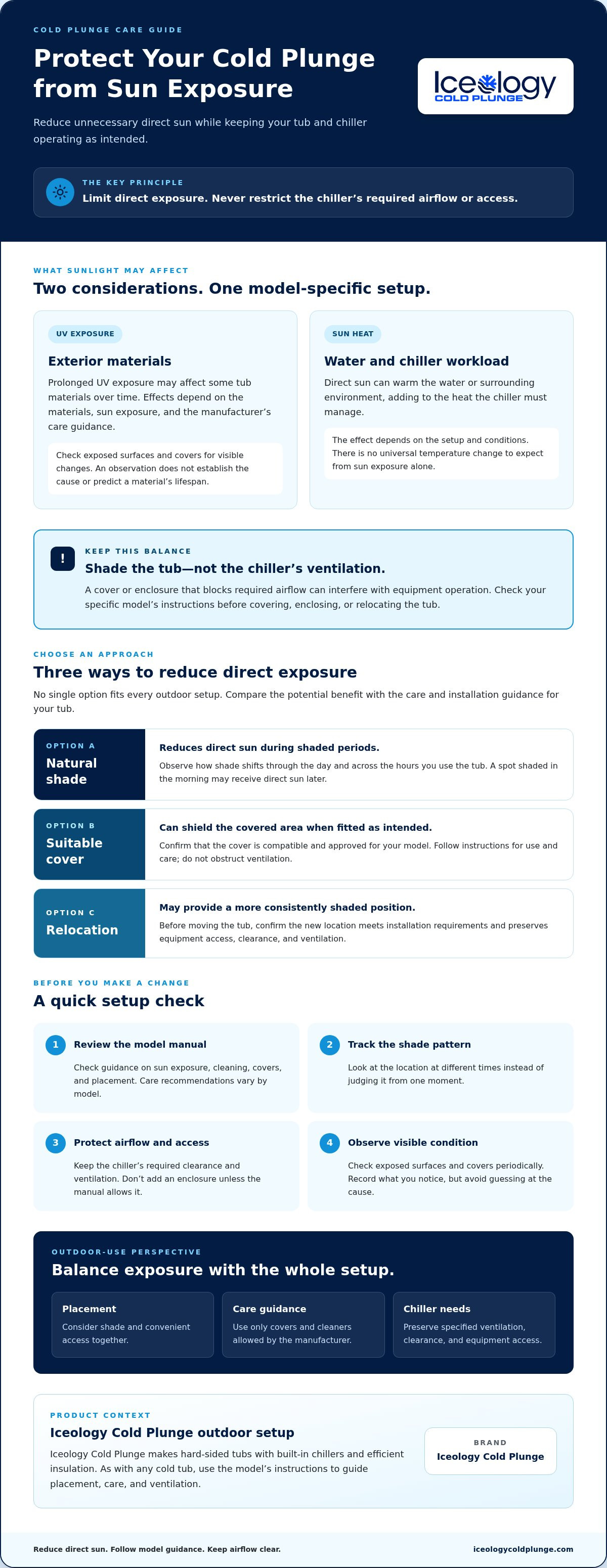
A Simple Routine to Protect Your Cold Plunge from Sun Damage
A consistent check is more useful than guessing whether a sunny day caused harm. Confirm the guidance for your model, assess when direct sun reaches the tub, make only approved adjustments, and look for visible changes during routine checks. This provides a practical way to manage exposure without assuming every tub needs the same care.
A step-by-step outdoor protection checklist
- Find the model-specific instructions. Review the care and installation guidance, including advice about outdoor placement, covers, and chiller access.
- Assess sun exposure. Observe the location at different times to see when direct sunlight reaches the tub. Consider whether an approved shaded location or placement adjustment is practical.
- Check covers and equipment access. Confirm a cover is compatible and follow the manufacturer’s directions for fitting or removing it. Keep the chiller accessible and preserve any required clearance.
Don’t treat cleaning as a catch-all solution. Use only products and methods approved in your tub’s manual. If the guidance isn’t clear, ask the manufacturer before applying a cleaner or trying another care method.
What should you inspect after prolonged sun exposure?
Look over accessible exterior surfaces and the cover for visible changes. Note what you see, when you noticed it, and whether the area receives direct sun. A visual change alone doesn’t establish its cause or confirm material damage. Don’t sand, repaint, apply a treatment, or attempt repairs unless the manufacturer approves it.
Also check that the chiller remains accessible and that the system appears to operate as described in its manual. If you notice an unexpected change or have concerns about performance, contact the manufacturer for model-specific guidance instead of adjusting equipment or making an unapproved repair.
For anyone researching how to protect cold plunge from sun damage, the key is a repeatable process, not a one-size-fits-all promise. Follow the manual, note recurring exposure concerns, and reassess your setup if the sun pattern or equipment access changes. Keep decisions grounded in the tub’s instructions and what you can observe.
Choosing a Cold Tub Designed for Consistent Outdoor Use
Planning for outdoor use means looking beyond appearance. Placement, maintenance guidance, insulation, and chiller access all affect whether a setup suits your space and routine. Before choosing a cold tub, ask what outdoor conditions the manufacturer supports and what the equipment needs to operate as intended.
What to ask before buying an outdoor cold plunge
Use these questions to compare options and clarify the care your setup will require:
- Where can the tub be placed? Ask which placement conditions the manufacturer supports and whether a covered or shaded location is recommended.
- What care does it require? Confirm the recommended routine, approved cleaning methods, and whether a particular cover is compatible.
- How should the chiller be positioned? Check the installation instructions for access, ventilation, and required clearance. Don’t assume an enclosure or cover is suitable without model-specific guidance.
- What are the insulation and chiller specifications? Compare verified details for the tub you’re considering instead of assuming every cold plunge system performs the same way.
These checks help you consider how to protect cold plunge from sun damage as part of a complete setup, not as a feature you can judge by appearance alone. Even if a tub suits your needs, outdoor placement and care should follow its own instructions.
How Iceology Cold Plunge fits a considered setup
Iceology Cold Plunge designs and manufactures hard-sided cold plunge tubs with built-in chillers and efficient insulation. The company states that its tubs can chill water to 39°F. These features describe the tubs and their cooling systems. They don’t mean direct sun has no effect on the surrounding conditions or that every outdoor location is appropriate.
Pair product details with a practical placement plan. Review the model’s guidance, keep the chiller accessible as instructed, and consider the sunlight your chosen location receives. Your decision should reflect both the tub’s capabilities and the care required in your space.
Make Outdoor Cold Plunge Care Part of Your Routine
Protecting a cold plunge from sun doesn’t mean assuming damage is inevitable or that one fix works for every tub. The practical approach to how to protect cold plunge from sun damage is to reduce unnecessary direct exposure, assess shade throughout the day, and follow the care and installation instructions for your model. Covers and placement changes should not interfere with the chiller’s intended operation.
Check accessible surfaces and covers for visible changes, and contact the manufacturer if something concerns you. There’s no universal lifespan or damage threshold to rely on, so model-specific guidance matters. Consider outdoor placement, insulation, routine care, and chiller access together when choosing a tub.
Iceology Cold Plunge makes hard-sided cold plunge tubs with built-in chillers and efficient insulation. Its products are made in the USA. These features can inform your choice, while the right placement and care still depend on your setup and the tub’s instructions.
With a considered setup and consistent care, you can focus on making cold water therapy a steady part of your routine.
Frequently Asked Questions
Can direct sunlight damage a cold plunge tub?
It can contribute to wear in some materials, but damage isn’t inevitable, and effects vary with tub construction and exposure. UV radiation and heat are different factors, so don’t assume a visible change is caused by sunlight alone. Check your model’s manual for material-specific care guidance, and ask the manufacturer about unexpected changes rather than relying on a universal lifespan or damage threshold.
Should I keep my cold plunge in the shade?
Shade is a practical way to reduce direct sun exposure, so choose a shaded location if it works with your setup. Check how shade changes throughout the day, since a spot shaded in the morning may receive sun later. Balance shade with convenient access and installation instructions, especially requirements for chiller access or airflow.
Can I cover my cold plunge when it is outside?
Use a cover only in the way the tub manufacturer approves. Covers vary, so confirm compatibility and follow the instructions for fitting, removing, and using it. Keep the cover clear of the chiller and components that need access or airflow. Don’t assume you can leave a cover in place while the system runs unless your model’s guidance says so.
Does sunlight make a cold plunge chiller work harder?
Direct sun can add heat to the tub’s surroundings and may increase the heat the cooling system has to manage. The effect depends on the setup and conditions, so there’s no fixed temperature change or workload to expect. Shade may reduce direct solar exposure, but it can’t guarantee a particular water temperature or chiller performance.
How do I protect a cold plunge from UV exposure?
To learn how to protect cold plunge from sun damage, start with the care instructions for your exact model. Consider a location with less direct sun, and use a cover only if it’s compatible and approved. Check accessible surfaces and the cover for visible changes. Don’t apply cleaners, treatments, or repairs unless the manufacturer’s guidance allows them.
Can a cold plunge stay outside year-round?
That depends on the tub and chiller, along with environmental conditions at the installation site. Don’t assume every model is designed for year-round outdoor use. Check the manufacturer’s placement and care instructions for supported conditions, chiller protection, and seasonal guidance. If the manual doesn’t answer your question, contact the manufacturer before leaving the setup outdoors through changing weather.
How often should I inspect my outdoor cold plunge?
Follow any inspection schedule in your model’s manual. If it doesn’t specify one, make visual checks part of your routine and check again after prolonged sun exposure or a placement change. Look over accessible exterior surfaces and the cover, and confirm the chiller remains accessible. Contact the manufacturer about unexpected changes rather than diagnosing damage or attempting unapproved repairs.