
St. Petersburg Cold Plunges for Sale: Prices and Features
An Iceology Cold Plunge for sale can differ in price depending on its size, construction, cooling system, and included features. To choose the right tub, consider your available space, how often you’ll use it, and how much temperature control and maintenance you want.
Upfront cost matters, but construction and equipment also affect long-term value. A compact design may work better in a tight space, while a more robust build can suit frequent use.
This guide explains how size, materials, cooling, and sanitation affect cold plunge costs, and what to compare when choosing a tub. You’ll also learn how to match its dimensions and construction to your space and recovery routine.
Key Takeaways
- Measure the intended location and access route before choosing a tub, so its footprint and setup work for your home.
- Compare total value by considering construction, cooling, sanitation, and ongoing care alongside the purchase price.
- Learn how material choice and build quality can affect durability and the demands of regular use.
- Plan the placement around practical electrical, plumbing, drainage, and clearance needs.
- Understand how delivery access and installation arrangements can shape the setup process in St. Petersburg.
Cold plunge dimensions
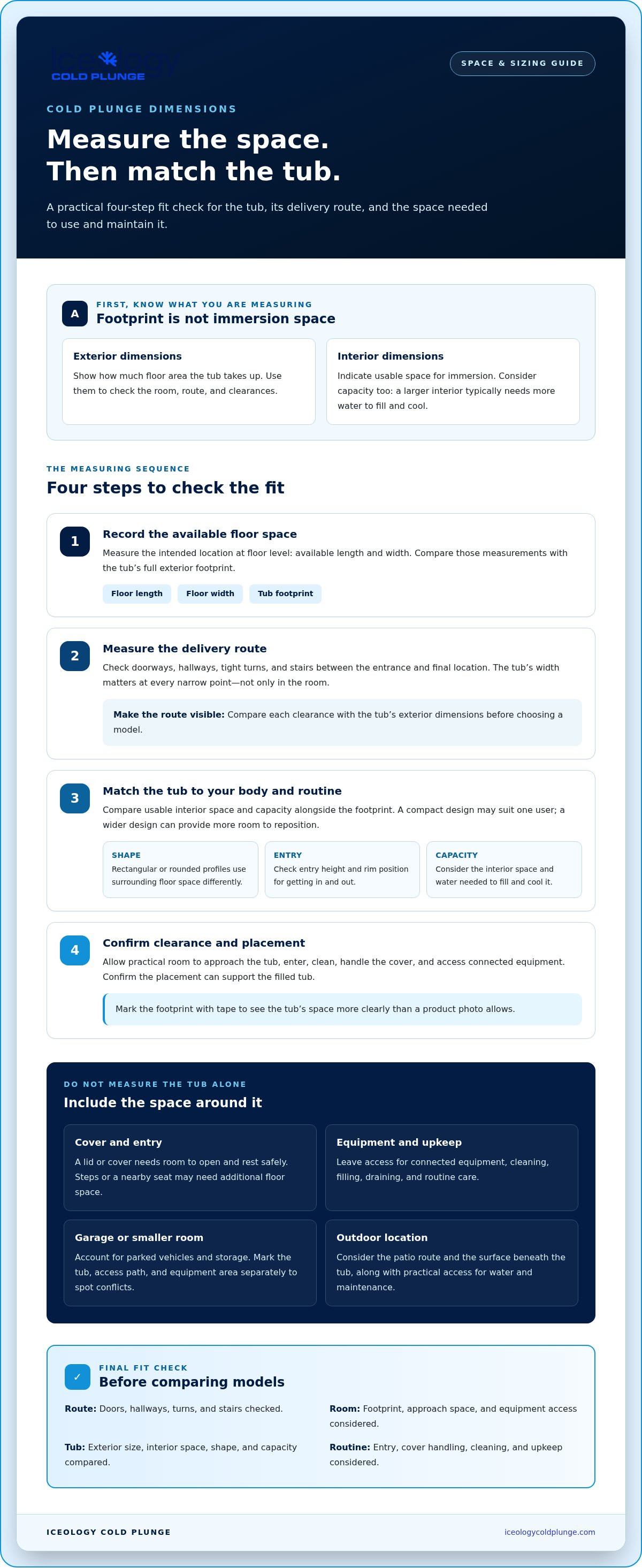
Match the tub’s interior space to your body and routine. Then measure the installation area, the route to bring it in, and the clearance needed for maintenance.
Tub sizing
Compare exterior dimensions with usable interior space. Exterior measurements show how much floor area the tub takes up; interior measurements indicate how comfortably you can immerse. Check capacity as well, since a larger interior typically needs more water to fill and cool. A compact footprint may suit one user, while a wider design can provide more room to reposition.
Consider the shape as well as the measurements. A rectangular tub may fit neatly against a straight wall, while a rounded profile can change how much surrounding floor space is usable. Check the entry height and rim position, too. These details affect how easily you can step in, settle into the water, and get out.
Space requirements
Measure the intended spot at floor level, then compare it with the tub’s full exterior footprint. Allow room to approach the tub and operate connected equipment. A close fit between walls can leave little access for cleaning or service. Mark the footprint with tape to assess the space more clearly than a product photo allows.
Check the route from the delivery entrance to the final location, including doorways, turns, and stairs. The tub’s width matters at every narrow point, not just in the room. For an outdoor setup, consider the patio route and the surface beneath the tub. Choose a location with practical access for filling, draining, and routine care.
Use a simple measuring sequence before comparing models. First, record the available floor length and width. Next, measure doorway clearances and tight turns. Compare those figures with the tub’s exterior dimensions, allowing usable access around it. Finally, confirm that the placement can support the filled tub and remains convenient for regular entry and upkeep.
Plan for more than the tub’s footprint. A lid or cover needs room to open and rest safely, and steps or a nearby seat may take up additional floor space. In a garage, account for parked vehicles and storage. In a smaller room, mark the tub, access path, and equipment area separately to spot conflicts early.
Safety, maintenance, and operating costs depend on the setup, water volume, cooling system, sanitation, and frequency of use. Anyone with medical conditions or concerns about cold exposure should consult an appropriate healthcare professional before adding cold plunging to their routine.
- Measure the route: Compare doors, hallways, and turns with the tub’s exterior dimensions.
- Plan access: Leave practical room for entry, cleaning, cover handling, and equipment access.
- Match capacity to use: Consider interior space and water volume alongside the footprint.
Cold plunge price ranges
Cold plunge prices depend on the included equipment and construction. When comparing a St. Petersburg cold plunge for sale, assess the complete setup, not just the tub. A basic vessel and a temperature-controlled system are different equipment levels. Key cost factors include cooling, materials, capacity, and sanitation, which also affect setup and ongoing operation.
Start by identifying the system type. A simple tub relies on an external cooling method, while a self-contained setup includes temperature-control equipment. Commercial systems may add greater capacity and integrated functions. Added complexity affects the purchase price. Compare what each configuration includes before treating two listings as equivalent.
Cooling is a major cost factor. With an external chiller, the tub and cooling equipment may be priced separately. A built-in chiller combines them in one setup. Compare the cooling method, temperature control, and operating requirements. The right choice depends on how consistently you want to maintain cold water.
Construction and capacity also influence cost. A larger tub generally uses more material and holds more water, while a compact design may suit a smaller space. Materials affect durability and care requirements, so assess them alongside the cooling system, not by appearance alone.
- Basic configuration: Compare the vessel, cooling method, and included components.
- Integrated configuration: Identify the cooling and sanitation functions included.
- Commercial configuration: Weigh capacity and equipment complexity against intended use.
Accessories can affect the total cost. Covers, steps, filtration, and sanitation equipment may be included or sold separately. List each component before comparing offers. A tub without cooling equipment, for example, may need a separate chiller. A system with integrated equipment may cost more upfront but include more of the components you need.
Consider operating costs, too. Electricity use depends on the cooling system, water volume, insulation, and frequency of use. Water and sanitation needs vary with maintenance habits, so one ownership estimate won’t suit every home. Compare the equipment and routine care involved to understand the practical demands of each setup.
For a clear comparison, list the tub, chiller, sanitation components, accessories, delivery, and installation separately. Compare systems with similar capacities and functions. This avoids weighing a basic vessel against a complete temperature-controlled setup. A St. Petersburg cold plunge for sale is easier to assess when the differences between included components are clear.
As you evaluate cold plunge system features, weigh construction, cooling, and included components together. The best match is the setup that suits your space, routine, and priorities, rather than the one with the longest feature list.
Treat a listing without cooling as a separate equipment comparison, and check that the quoted setup includes the components required for its stated configuration before comparing totals.
Construction materials and durability
Material choice affects how a cold plunge stands up to daily use, moisture, cleaning, and outdoor exposure. Compare the water-holding shell with its frame, finish, and fittings. These parts may use different materials, so a polished exterior alone doesn’t show how the tub is constructed.
Stainless steel is valued for its strength and smooth, nonporous surface. Its grade and finish matter, particularly around joints and fittings. Ask what type of steel forms the water-contact surface, and inspect how seams are finished. In a humid setting such as St. Petersburg, good cleaning and drying habits help keep surfaces in sound condition.
Molded acrylic and fiberglass are common shell materials in bathing products. Acrylic can provide a smooth, finished surface, while fiberglass uses a reinforced composite structure. With either option, inspect the shell’s finish and support. A visible crack, rough repair, or flexing panel deserves attention before purchase.
Some designs pair an inner shell with an exterior cabinet. Wood can create a warm, furniture-like appearance, while synthetic panels may require different care. The outer layer doesn’t necessarily reveal the shell material. Ask which parts contact water, support the filled tub, or serve as decoration. This distinction helps you compare construction accurately.
Inspect the build, not just the finish
Follow a consistent inspection sequence. First, examine the shell for an even finish and visible damage. Next, inspect corners, seams, and fitting connections. Then check that the frame and base provide stable support. Finally, review the care instructions for the materials. These checks offer a clearer comparison than color or showroom appearance alone.
Durability also depends on use and maintenance. Abrasive cleaners, for example, may be unsuitable for a polished acrylic surface, while standing water on an exterior wood panel can affect its condition. Follow material-specific cleaning directions. Keep fittings accessible so routine inspection doesn’t require moving the tub.
For outdoor placement, consider direct sun, rain, and nearby landscaping. Sun exposure can affect some exterior finishes, and leaves or debris can collect around edges and equipment. A covered location may reduce exposure, but still needs practical access for cleaning and inspection. Plan the placement and maintenance routine together.
- Identify each material: Separate the shell, frame, cabinet, and fittings.
- Inspect connection points: Look for consistent seams, secure joints, and visible damage.
- Match care to finish: Use cleaning directions intended for the specific material.
Before choosing a tub, compare construction details against your intended placement and routine. A smooth shell, stable base, well-finished joints, and manageable care instructions are useful signs to assess together. In St. Petersburg, thoughtful material selection and regular upkeep can help preserve the tub’s appearance and function over time.
What electrical, plumbing, and space requirements do home cold plunge tubs need?
Plan the site around the tub, chiller, water access, and drainage. Requirements depend on the equipment and its location. A garage setup may need a different arrangement from a covered patio. Review the equipment instructions before preparing the space, then map connections and access points.
Electrical planning
Check the chiller’s electrical requirements in its product documentation. Confirm the required outlet type, circuit needs, and cord reach before choosing a location. Don’t assume an existing outlet is suitable. A nearby outlet, for example, may be inconvenient if the cord crosses a walkway or is exposed to splashes.
Have a qualified electrician assess the proposed connection if electrical work is needed. Share the chiller documentation and planned tub location. This helps ensure the installation matches the actual equipment rather than an assumed power requirement. Keep the plug and connection accessible for routine operation and service.
Water and drainage
Decide how you’ll fill the tub and manage water changes. A garden hose may reach an outdoor patio, while an indoor setup may need a practical route from a sink or another water source. Consider hose length, doorways, and trip hazards before filling. Keep the route clear of regular access.
Plan drainage before installation. Identify a suitable drain or discharge point and consider how water will flow from the tub. A basement tub, for example, may not drain by gravity to a floor drain. Follow the equipment instructions and keep the connection reachable without shifting a filled tub.
Consider splashes and moisture around nearby surfaces. A tiled room and a carpeted room have different cleanup needs. Keep towels and cleaning supplies within reach, and position electrical connections away from places where water may collect. Separating wet handling from electrical equipment makes daily use more manageable.
Placement and clearance
Measure the complete footprint, including the chiller and connecting lines. Leave room to enter and exit, clean the shell, and access equipment panels. A tub squeezed beside storage shelves may fit on paper but leave no working space. Mark the outline on the floor before moving the unit into place.
Check the route from the entrance to the final location. Door frames, corners, steps, and narrow halls can affect delivery and placement. Compare each tight point with the tub’s exterior dimensions. For an outdoor location, consider the walking surface and whether the route stays clear after rain.
Plan in this order: choose the location, check equipment requirements, map water and drainage access, then confirm electrical access. Revisit the plan if the chiller sits separately from the tub. A simple drawing of the tub, connections, drain, and access path can reveal conflicts before setup begins.
What are typical cold plunge delivery and installation options in St. Petersburg?
Delivery generally involves two stages: transporting the tub and placing it at home. Installation depends on the equipment, access route, and site preparation. Before arranging delivery, clarify what each stage includes. Drop-off and a completed, connected setup are different outcomes.
Delivery arrangements
Freight delivery can bring a packaged tub to a residential address, with drop-off at a driveway, garage entrance, or another accessible spot. That doesn’t necessarily mean the tub will reach its final room. A narrow gate or interior turn, for example, may prevent a large unit from moving beyond the drop-off point.
Some delivery arrangements include moving the item closer to its intended location. Define the destination clearly: is the tub going into a garage, through a side gate, or onto a patio? Share details about steps, surfaces, and barriers along the route before delivery day.
Site preparation and placement
Prepare the final location before the tub arrives. Clear the route from the entrance to the installation area, including furniture, stored boxes, and patio items. Identify any stairs, sharp turns, or tight doorways in advance. A clear path reduces the risk of an access problem during placement.
Make sure the floor or outdoor surface is ready for the filled tub. Consider the planned electrical connection, water access, and drainage route. Placing a tub in the far corner of a garage, for example, could complicate hose access or routine draining. The location should also allow access to the chiller and connection points.
Installation and setup
Installation can involve different tasks, from positioning the tub and connecting supplied equipment to coordinating separate electrical or plumbing work. Review the equipment instructions to distinguish user setup from work that requires a qualified tradesperson. A tub that needs a dedicated electrical connection requires different preparation from one that uses an existing suitable outlet.
Use this sequence to prepare:
- Measure the route from the delivery point to the final location.
- Clear doorways, gates, turns, and floor space.
- Prepare electrical access, water supply, and drainage.
- Confirm where the tub, chiller, and accessories will sit.
- Keep the equipment instructions available during setup.
A ground-floor patio with a clear gate and nearby water access, for example, offers a simpler route than an upstairs room reached by narrow stairs. In either case, communicate access details and site readiness before arranging delivery. This helps match the delivery method to the home’s layout and keeps transport, placement, and installation distinct.
Iceology Cold Plunge: Cold Plunge Tubs
Iceology Cold Plunge offers Cold Plunge Tubs for people ready to build cold water therapy into their home routine. Its tubs are made in the USA and feature built-in chillers that can lower water temperature to as low as 39 °F. That integrated cooling can simplify temperature management compared with assembling separate components.
Consider Iceology Cold Plunge when you’ve compared dimensions, materials, site needs, and delivery planning, and want a dedicated tub for regular use. Accessories, Ice Baths, and Cold Tubs provide additional options for shaping your setup. Match your choice to your available space and preferred routine.
Contact Iceology Cold Plunge to discuss your cold plunge plans.
Choose a Setup That Supports Your Routine
The right cold plunge should fit naturally into your home and recovery practice. Think beyond the purchase: consider where you’ll use it, how it fits into your routine, and what will make regular use manageable. A thoughtful choice can help turn a wellness goal into a consistent habit.
A St. Petersburg cold plunge for sale should make sense for your space and priorities, not just look appealing in a listing. Iceology Cold Plunge offers Cold Plunge Tubs, Accessories, and Ice Baths, giving you options to shape a setup around your needs. Start with the features that matter most to you, then take the next step at a pace that feels right.
Your recovery routine starts with a considered choice. Choose a tub that fits your space and goals, then make room for a practice you can sustain.
Frequently Asked Questions
What Factors Into the Price?
Price reflects the tub’s construction, cooling equipment, and included sanitation features. For example, the hard-sided Grizzly 450 includes a built-in 1/4 HP Active Aqua chiller and an integrated ozone generator. An optional 1/2 HP chiller upgrade and separately purchased accessories can change the total. Compare what comes with the tub against the components you’ll need for your intended setup.
How much does a cold plunge tub cost in St. Petersburg, including delivery and installation?
Continental U.S. Installation costs depend on the work involved at your home, such as preparing electrical or plumbing connections. Treat delivery and installation as separate considerations when planning the full setup.
What are the best cold plunge tubs for home use, and how do they compare?
The right option depends on your space, routine, and temperature-control preferences. Compare a basic tub with external cooling against an integrated setup, considering capacity, construction, sanitation, and included components.