
The Science-Backed Cold Plunge Routine for Recovery in 2026
You might think that staying in a 39°F tub for as long as possible is the ultimate test of grit, but the reality of a truly effective cold plunge routine for recovery is far more nuanced. It is exhausting to let muscle soreness dictate your training schedule while you struggle with the confusion of how cold is "too cold." You likely already know that cold water immersion is a powerful tool, yet the initial shock and the lack of a clear protocol often make it difficult to stay consistent with your practice.
This guide empowers you to stop guessing and start optimizing with a professional-grade ritual that transforms physical stress into a calculated physiological edge. By following science-backed standards like the Søberg Protocol, you can effectively reduce systemic inflammation and accelerate muscle repair without interfering with your long-term gains. We will explore the precise balance of temperature and duration, giving you a clear roadmap to faster recovery, improved sleep, and the mental clarity required for peak performance in every session.
Key Takeaways
- Understand the biological mechanisms of hormesis and how a structured cold plunge routine for recovery uses temperature to flush metabolic waste and boost resilience.
- Learn why timing is critical, specifically the 4-6 hour window after lifting, to ensure cold exposure aids recovery without blunting muscle growth.
- Master pre-plunge mental framing and specific breathing techniques to lower your heart rate and transition from cold shock to calm determination.
- Discover how to manage the "after-drop" and utilize natural rewarming methods to safely restore your core temperature after your session.
- Identify why professional-grade equipment with integrated chillers is essential for maintaining the thermal precision required for a consistent daily ritual.
The Physiology of the Chill: Why a Routine Matters
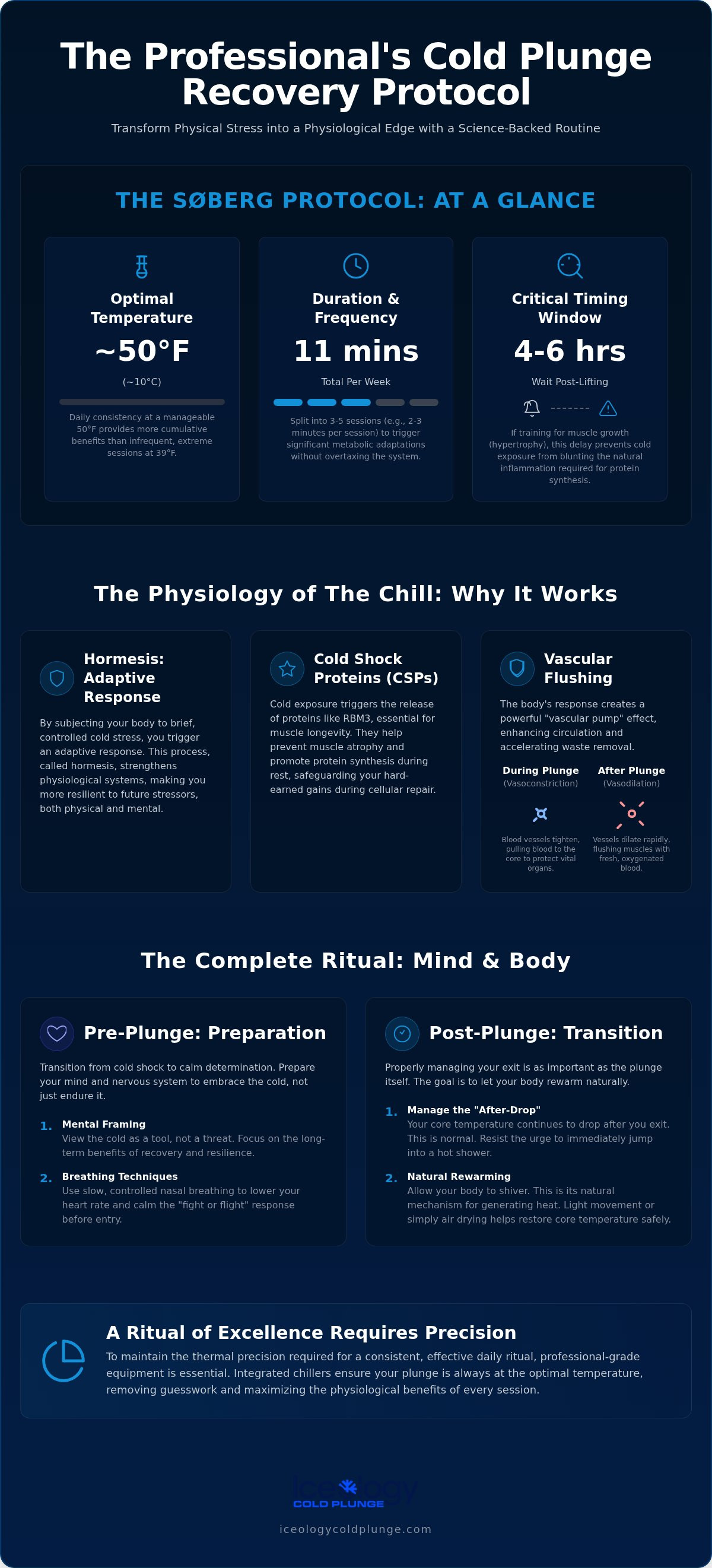
A professional cold plunge routine for recovery isn't just about enduring low temperatures. It's a calculated application of biological stress designed to trigger a process called hormesis. By subjecting your body to a brief, controlled environment of extreme cold, you're teaching your physiological systems to adapt, strengthen, and become more resilient. This isn't a passive soak; it's an active engagement with your own biology. While many focus on the immediate numbing effect, the real magic happens in the hours and days following the session as your body repairs itself at a cellular level.
Beyond the vascular benefits, cold exposure triggers the release of cold shock proteins (CSPs) like RBM3. These proteins are essential for muscle longevity because they help prevent muscle atrophy and promote protein synthesis even during periods of rest. They act as a biological safeguard, ensuring that your hard-earned gains are preserved while your body focuses on cellular repair. This cellular protection is a primary reason why high-performance athletes integrate cold exposure into their long-term training cycles.
Consistency is the foundation of any successful recovery protocol. While reaching a temperature of 39°F is an impressive feat, a daily routine at a manageable 50°F provides more cumulative benefits than an infrequent, extreme session. A reliable ritual builds the habit of discipline and ensures that your inflammation levels remain low while your nervous system stays primed for the next challenge.
Hormesis and the Adaptive Response
Repeated exposure to cold water strengthens your autonomic nervous system by forcing it to manage the initial shock response. When you first enter the water, your body enters a "fight or flight" state. However, through a consistent cold plunge routine for recovery, you learn to bridge the gap into a "rest and digest" state more quickly. This transition is a hallmark of high-level athletic performance and mental fortitude. You can explore the scientific benefits of cold plunge to see how this adaptation impacts everything from metabolic rate to cognitive function.
Vascular Flushing for Muscle Repair
The immediate reaction to cold immersion is intense vasoconstriction, where blood vessels tighten to keep heat near your core. This process, which is a key component of The Physiology of the Chill, initiates a powerful "vascular pump" when you finally exit the water. As you warm up, your vessels dilate rapidly, flushing fresh, oxygenated blood through your muscle tissues. This cycle effectively clears lactic acid and metabolic waste that accumulates during high-intensity training.
Vascular shunting is the body's primary defense mechanism for protecting core organs by redirecting blood flow inward during the initial phase of cold immersion. This internal movement also stimulates the lymphatic system, enhancing its drainage efficiency and reducing the systemic inflammation that leads to delayed onset muscle soreness (DOMS).
Designing Your Protocol: Timing, Temperature, and Duration
Constructing an effective cold plunge routine for recovery requires more than just a willingness to endure the chill. It demands a strategic approach to timing and thermal precision. To truly master this ritual, you must align your sessions with your specific metabolic needs and training objectives. Data from The Physiology of Cold Immersion highlights that recovery isn't a one-size-fits-all metric. Instead, it's a variable process that responds best to specific windows of exposure and temperature ranges.
For most high-performance athletes, the "sweet spot" involves 3 to 5 sessions per week. The widely recognized Søberg Protocol recommends a total of 11 minutes of cold exposure per week, divided into smaller sessions. This duration is sufficient to trigger significant metabolic adaptations, such as increased dopamine production and improved insulin sensitivity, without overtaxing the central nervous system. When you maintain this frequency, you move beyond the initial shock and begin to build a profound level of physiological resilience.
The 4-Hour Post-Lifting Window
If your training focus is hypertrophy, you need to be cautious about when you submerge. Cold water immersion is exceptionally effective at reducing inflammation, but it can also blunt the mTOR pathway responsible for muscle protein synthesis. Research suggests waiting at least 4 to 6 hours after lifting before you start your cold plunge routine for recovery. This delay ensures that the natural inflammatory signaling required for muscle growth isn't prematurely extinguished.
Your schedule should reflect this biological reality. If you lift in the evening, consider a morning plunge to start your day with a dopamine spike. Conversely, if you're performing high-intensity cardio or endurance work, immediate immersion is highly beneficial. It rapidly lowers your core temperature and reduces the systemic strain caused by prolonged aerobic exertion. By choosing a cold plunge tub with an integrated chiller, you can ensure the water is ready exactly when your recovery window opens, eliminating the need for inconvenient ice runs.
Temperature Tiers for Progressive Adaptation
Precision in temperature is what separates a professional recovery ritual from a casual soak. Beginners should start at the "Therapeutic Minimum" of 50-55°F. This range is cold enough to initiate vascular flushing while allowing you to focus on breath control. As your autonomic nervous system adapts, you can move into the advanced range of 39-45°F. This lower tier is where you maximize brown fat activation and metabolic efficiency.
- 50-55°F (Beginner): Excellent for general recovery and reducing perceived soreness.
- 45-49°F (Intermediate): Ideal for managing acute inflammation after intense competitions.
- 39-44°F (Advanced): The "Iceology Edge" for maximum neurological benefits and metabolic conditioning.
Safety must remain your primary concern as you push toward lower temperatures. Never plunge alone when testing water below 45°F. The intense cold can cause a significant gasp reflex or temporary loss of motor control, making a partner or observer essential for a safe and productive session.
The Pre-Plunge Ritual: Preparing the Mind and Body
Stepping into 39°F water requires more than just physical presence; it requires a psychological shift. Your cold plunge routine for recovery begins minutes before your skin touches the water. Instead of viewing the cold as a hostile force to be conquered, frame it as a recovery partner that facilitates deep cellular healing. This mental framing reduces the anticipatory stress that often leads to a jagged, panicked entry. When you approach the tub with a mindset of calm determination, you're already halfway toward a successful session.
Avoid the temptation of a "hot start," such as a scalding shower or intense sauna session, immediately before you plunge. While it might seem easier to enter the water while overheated, the extreme temperature swing can be overly taxing on your cardiovascular system. A light mobility flow is a superior alternative. Five minutes of controlled joint rotations and dynamic stretching primes your blood flow without elevating your core temperature to a point of conflict with the water. This gentle preparation ensures your body is ready for the transition without the metabolic confusion caused by rapid heat-to-cold shifts.
Mastering the Gasp Reflex
The gasp reflex is the body's natural, involuntary reaction to sudden cold immersion. To bypass this, you must consciously trigger the mammalian dive reflex, a physiological response that lowers your heart rate and optimizes oxygen distribution. The most effective method is a structured breathwork protocol performed right before entry. Use Box Breathing: inhale for 4 seconds, hold for 4, and exhale for 4. This pattern creates a state of controlled hypercapnia, which is the intentional and safe buildup of carbon dioxide in the blood to improve oxygen delivery and increase your overall cold tolerance. By mastering your breath, you transform the initial shock into a state of focused stillness.
Setting the Recovery Environment
Consistency in your cold plunge routine for recovery is heavily influenced by the quality of your space. A dedicated cold plunge station serves as a visual and sensory anchor for your practice. Use cues like soft lighting or a specific playlist to signal to your nervous system that it's time to shift from high-intensity training to deep recovery. These environmental signals help lower cortisol levels before you even touch the water.
In the South Florida climate, environmental control is especially critical for maintaining performance. Ensure your station is positioned in a shaded area to maintain the thermal integrity of your tub. Even with high-density polyurethane foam insulation, direct sunlight can force your chiller to work harder, potentially impacting the precision of your water temperature. A cool, shaded environment protects your equipment and enhances the sensory experience of your daily ritual, making it a space you look forward to visiting every day.
Post-Plunge Transition: Managing the After-Drop
Exiting the water is only the midpoint of a professional cold plunge routine for recovery. Many practitioners make the mistake of thinking the challenge ends when their skin hits the air. However, the next fifteen minutes are critical for stabilizing your core temperature and maximizing the metabolic benefits of the session. If you mismanage this transition, you risk unnecessary discomfort or even a vasovagal response. Mastering the rewarming process is just as important as the immersion itself.
You might notice that you feel significantly colder ten minutes after exiting than you did while submerged. This is the after-drop. It occurs when blood begins to circulate back into your chilled extremities, cools down, and then returns to your core. This internal cooling can cause intense shivering if you don't manage it correctly. You should avoid jumping into a hot shower immediately after your session. The sudden heat causes rapid vasodilation, which can lead to a sharp drop in blood pressure, resulting in dizziness or fainting. Patience is a requirement for safety.
The Soberanes Rewarming Protocol
Instead of seeking external heat, use the Soberanes method to generate internal warmth through movement. Perform gentle, low-impact exercises like air squats, lunges, or a brisk walk. This physical activity encourages your brown adipose tissue (BAT) to engage in non-shivering thermogenesis. By forcing your body to create its own heat, you enhance your metabolic rate and strengthen your thermal regulation systems.
In the South Florida climate, high humidity plays a unique role in your cold plunge routine for recovery. Moisture on the skin evaporates more slowly in humid air, which can prolong the cooling sensation and intensify the after-drop. Pat yourself dry immediately with a towel and start your movement protocol right away to take control of your internal thermostat. This proactive approach ensures that you transition from the chill to a state of energized recovery without the lingering bone-deep cold.
Contrast Therapy: Fire and Ice
If you choose to pair your cold tub with a sauna, you are engaging in what experts call vascular gymnastics. This practice involves alternating between extreme heat and cold to force your blood vessels through rapid cycles of expansion and contraction. This process acts as a literal pump for your circulatory system, moving nutrients into muscle tissue and flushing out metabolic byproducts.
- Optimal Ratio: Aim for 15 minutes of heat for every 3 minutes of cold immersion.
- The Finish: End your session on cold to maximize metabolic health, brown fat activation, and the long-lasting dopamine spike.
- Evening Sessions: If your primary goal is improved sleep, consider finishing on heat to help lower your heart rate and relax your central nervous system before bed.
To ensure your water is always at the perfect therapeutic temperature for these advanced protocols, consider investing in a premium cold plunge tub with an integrated chiller that maintains your desired setting regardless of the outside heat.
Ritual of Excellence: Why Equipment Choice Defines Your Routine
Excellence is rarely the result of a single effort. It's the byproduct of a sustained, disciplined ritual. Your cold plunge routine for recovery is only as reliable as the equipment you use to facilitate it. While temporary solutions like inflatable tubs might offer a low barrier to entry, they often lack the thermal precision and structural integrity required for long-term performance. A "forever ritual" demands a "forever tub" that's designed to withstand daily use and maintain exact temperatures without fail.
American craftsmanship plays a vital role in this reliability. Choosing USA-made quality ensures that your recovery tool is built with high-grade materials and engineering standards that imported alternatives often overlook. Hard-sided construction provides a stable, premium environment that encourages you to commit to your practice. When your equipment feels like a professional tool rather than a temporary toy, your psychological commitment to the routine deepens. You aren't just taking a bath; you're engaging in a high-level recovery protocol.
The Chiller Advantage: No More Ice Runs
The greatest enemy of consistency is friction. If your cold plunge routine for recovery requires a trip to the store for twenty bags of ice, you're far more likely to skip a session when you're tired or busy. Utilizing a cold plunge with a chiller removes this obstacle entirely. An integrated cooling system ensures the water is always ready, allowing you to move from your training session to your recovery ritual with zero downtime.
Precision is another critical factor. Advanced metabolic protocols often require specific temperatures, such as the 39°F setting used for maximum brown fat activation. Manual ice baths are notoriously difficult to calibrate, frequently hovering in a range that's either too warm for metabolic benefits or inconsistently cold. Integrated chillers provide the exact thermal environment your body needs for calculated physiological adaptation. Over time, these systems are also more energy-efficient and cost-effective than the cumulative expense of manual ice maintenance.
Built for the Florida Climate
In regions like Miami or Tampa, the environment presents unique challenges for cold water immersion. High ambient temperatures and intense UV exposure can quickly degrade inferior materials and compromise water temperature. High-density polyurethane foam insulation is essential for protecting your session from the South Florida sun. This industrial-grade insulation ensures that once the water reaches your target temperature, it stays there, regardless of the heat outside.
There's also a significant psychological benefit to a clean, filtered, and always-ready plunge. Knowing that your water is continuously circulated and sanitized allows you to focus entirely on your breathwork and mental framing. You aren't distracted by murky water or fluctuating temperatures. Investing in professional-grade recovery equipment is ultimately an investment in your performance longevity. It's the difference between a fleeting wellness trend and a lifelong habit of excellence.
Master Your Physiological Edge
Mastering a cold plunge routine for recovery is a journey of both physical and mental discipline. By respecting the 4 to 6 hour hypertrophy window and utilizing precise temperature tiers, you transform a simple soak into a calculated performance tool. You've learned that managing the after-drop through movement is just as critical as the immersion itself. This ritual isn't about surviving the cold; it's about thriving through it. Consistency remains the ultimate differentiator between those who chase trends and those who achieve lasting, elite results.
Reliable results require reliable engineering. When your equipment is always ready and precisely chilled, the friction of recovery disappears. It's time to invest in a system that matches your dedication. Build your ultimate recovery station with a premium Iceology Cold Plunge to experience the benefit of a USA-made system featuring an integrated 39°F chiller and high-density insulation designed for the Florida heat. Take control of your physical state and turn every training session into a platform for your next peak performance. You've done the work; now give your body the professional-grade recovery it deserves.
Frequently Asked Questions
When is the best time of day for a cold plunge routine?
The morning is generally the most effective time to integrate a cold plunge routine for recovery. Immersing yourself early in the day leverages the significant dopamine spike and increased norepinephrine levels, providing a sustained boost in alertness and mood that lasts for hours. Avoid plunging late in the evening, as the stimulatory effect on your central nervous system can interfere with your natural sleep onset.
How long should I stay in the cold plunge for maximum recovery?
Aim for 2 to 5 minutes per session to achieve optimal physiological benefits. Research, including the Søberg Protocol, suggests a cumulative weekly total of 11 minutes is the threshold for significant metabolic and recovery improvements. Staying in longer than 5 minutes rarely provides additional benefits and can increase the risk of an intense after-drop or hypothermia, especially at temperatures near 39°F.
Can I cold plunge every day or do I need rest days?
You can safely plunge every day, but 3 to 5 sessions per week is the ideal frequency for most high-performance athletes. Consistency is the foundation of long-term adaptation, so it's better to maintain a steady schedule than to plunge sporadically. If you feel signs of extreme central nervous system fatigue or persistent lethargy, listen to your body and take a rest day to allow for full systemic recalibration.
Should I cold plunge immediately after a heavy lifting session?
No, you should wait at least 4 to 6 hours after a hypertrophy-focused workout before you begin your cold plunge routine for recovery. Cold water immersion can blunt the inflammatory signaling and mTOR pathway required for muscle protein synthesis and growth. If your session was purely cardiovascular or focused on endurance, immediate plunging is beneficial for reducing core temperature and systemic strain.
What is the ideal temperature for a beginner's cold plunge routine?
Beginners should start within the therapeutic range of 50°F to 55°F. This temperature is cold enough to trigger the necessary vascular and hormonal responses without being overwhelming for your first few sessions. As your autonomic nervous system becomes more resilient, you can use your integrated chiller to gradually lower the temperature toward the advanced 39°F to 45°F range for deeper metabolic conditioning.
Is it better to do a cold plunge before or after a workout?
It depends on your goal, but after a workout is the standard for recovery. Plunging after exercise helps flush metabolic waste and reduce delayed onset muscle soreness (DOMS). If you choose to plunge before a session, it can increase focus and blood flow, but you must ensure you perform a thorough dynamic warm-up afterward to return your muscles to an optimal operating temperature before lifting heavy loads.
How do I breathe properly during the initial cold shock?
Focus on long, controlled exhalations to signal your parasympathetic nervous system to take control. When you first enter the water, your body will naturally want to gasp or take short, shallow breaths. Counteract this by inhaling for 4 seconds and exhaling slowly for 6 to 8 seconds. This deliberate breathing pattern helps you bypass the "fight or flight" response and find a state of calm determination within the first 30 seconds.
What should I do if I feel dizzy after getting out of the cold water?
Sit down immediately and focus on steady, rhythmic breathing until the sensation passes. Dizziness is often caused by a rapid shift in blood pressure as your vessels dilate upon exiting the water. Avoid the temptation to step into a hot shower right away, as this can exacerbate the drop in blood pressure. Use gentle movement like walking or light air squats to encourage your core to rewarm naturally and safely.