
The Science of Insulation: Why Polyurethane Foam is the Standard for Premium Cold Plunges
What if the most critical component of your recovery routine isn't the water temperature itself, but the invisible barrier keeping it there? Many athletes and wellness seekers invest in high-end chillers only to realize that maintaining a consistent 39°F in a warm climate is a constant battle against physics. You've likely experienced the frustration of watching your electricity bill climb while your tub's temperature rises just as fast. It's a common struggle that turns a focused morning ritual into a logistical headache involving condensation puddles and overworked equipment.
Choosing a polyurethane foam cold plunge changes the equation entirely. By integrating high-density insulation, you transform a simple tub into a professional-grade recovery station that holds its temperature effortlessly. This engineering choice ensures your water stays crisp while slashing monthly operating costs and protecting your floors from moisture damage. We'll break down the science of thermal resistance and show you why closed-cell polyurethane foam is the absolute standard for anyone serious about high-performance, low-maintenance cold therapy.
Key Takeaways
- Understand why R-value is the most critical metric for thermal efficiency and how it dictates your tub’s ability to resist external heat.
- Discover how a polyurethane foam cold plunge uses high-density, closed-cell insulation to maintain a steady 39°F while slashing electricity costs.
- Compare the long-term durability of hard-sided insulated systems against the performance limitations of portable, inflatable tubs that struggle to hold temperature.
- Learn how premium insulation acts as a thermal shield in tropical climates, preventing heat penetration even when ambient temperatures exceed 90°F.
- Gain insights into crafting a professional-grade recovery station that pairs advanced thermal management with minimal maintenance for peak daily performance.
What is a Polyurethane Foam Cold Plunge?
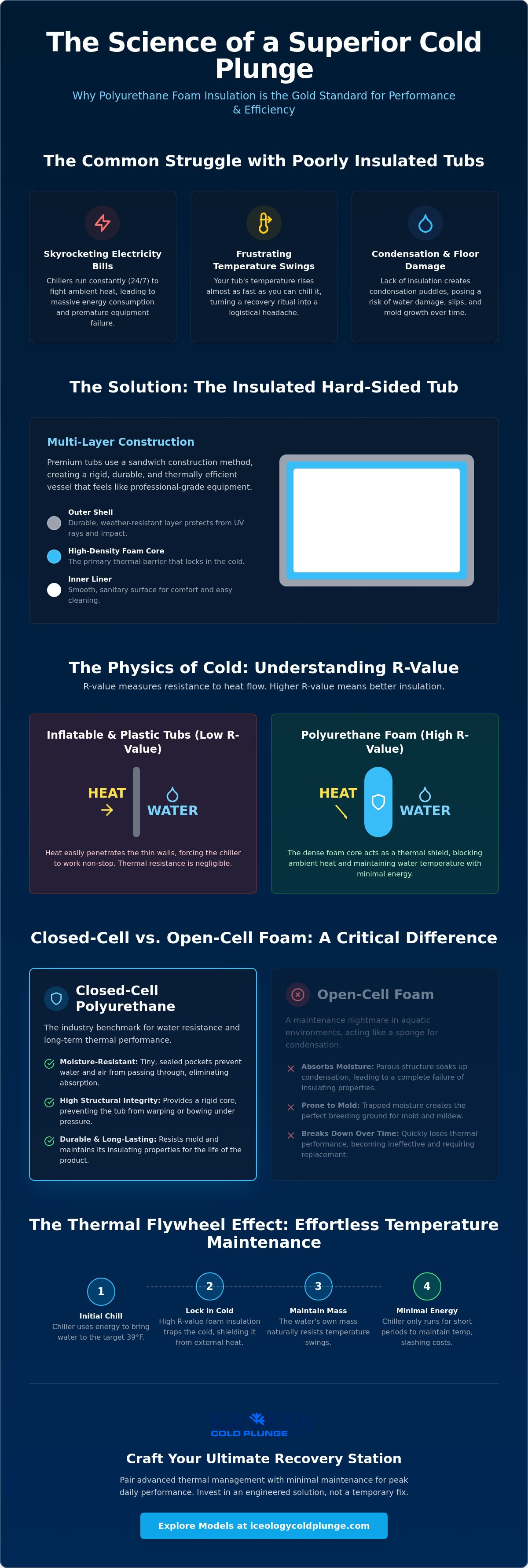
In the world of elite recovery, a Polyurethane foam cold plunge represents the intersection of high-end engineering and thermal efficiency. This isn't just a tub; it's a sophisticated thermal vessel. Polyurethane foam is a high-density, closed-cell insulation material that serves as the backbone of premium recovery systems. While early cold therapy relied on galvanized stock tanks or simple plastic tubs, the industry has shifted toward these hard-sided, insulated systems to meet the demands of consistent, year-round use.
The transition from traditional ice baths to modern setups was driven by a need for precision. Dumping bags of ice into a thin-walled container is inefficient and costly. In 2026, the gold standard for recovery tech relies on materials that offer both structural integrity and extreme thermal retention. The foam doesn't just keep the heat out; it provides a rigid core that makes the tub feel like a permanent piece of professional equipment rather than a temporary solution. This material is the foundation of a high-performance recovery tool.
Closed-Cell vs. Open-Cell Foam: Why it Matters
The distinction between foam types is the difference between a long-lasting investment and a maintenance nightmare. Closed-cell foam consists of tiny, sealed pockets that prevent air and water from passing through. This makes it naturally moisture-resistant and essential for aquatic environments where humidity is constant. Open-cell foam, by contrast, has a porous structure that acts like a sponge. In a cold plunge setting, open-cell foam eventually absorbs condensation, leading to mold growth and a complete failure of its insulating properties. Closed-cell polyurethane foam is the industry benchmark for water-resistance and long-term thermal performance.
The Anatomy of a Hard-Sided Insulated Tub
Premium tubs utilize a sandwich construction method that balances aesthetics with rugged performance. This multi-layered approach creates a durable unit that stands the test of time. The structure typically includes:
- Outer Shell: A durable, weather-resistant layer that protects the unit from UV rays and physical impact.
- Foam Core: The thick layer of high-density polyurethane foam that provides the primary thermal barrier.
- Inner Liner: A smooth, sanitary surface designed for comfort and easy cleaning.
This construction prevents the "bowing" or warping commonly seen in cheaper plastic tubs when they are filled with hundreds of gallons of water. When you step into a polyurethane foam cold plunge, you'll immediately notice the solid, high-quality feel. It doesn't flex under pressure, and it doesn't vibrate when the chiller is running. It feels like a professional-grade recovery station because that's exactly how it's built.
The Physics of Cold: R-Value and Thermal Conductivity
Understanding the science of temperature maintenance begins with a single metric: R-value. This value measures a material's resistance to heat flow. The higher the number, the better the insulation performs. In the context of a polyurethane foam cold plunge, this metric determines how hard your equipment has to work to fight ambient heat. According to the American Chemistry Council, polyurethane foams provide some of the highest insulating values per inch of thickness available on the market. This high thermal resistance is what separates a professional recovery tool from a simple bucket of water.
Most entry-level tubs use single-wall plastic or simple air-gaps. These materials offer negligible thermal resistance. Heat from the surrounding air penetrates the water almost instantly. By contrast, closed-cell foam acts as a dense physical barrier. It minimizes thermal conductivity, which is the rate at which heat transfers through a solid. When you use a foam-insulated tub, you're essentially creating a protected environment for your recovery water. This allows for the "thermal flywheel effect." Once your water reaches the target temperature, the insulation keeps it there with very little additional energy. The water's own mass, shielded by the foam, resists temperature swings naturally.
Maintaining the 39-Degree Threshold
There is a massive difference between the energy required to drop water to 39°F and the energy needed to keep it there. Without proper insulation, your chiller is in a constant state of catch-up. Poorly insulated tubs force chillers to run 24/7, which leads to early mechanical failure and skyrocketing electricity bills. Following a cold plunge tub 39 degrees protocol requires a system that can hold that specific threshold without constant mechanical intervention. Investing in a professionally engineered cold plunge ensures you aren't just buying a tub, but a sustainable recovery ecosystem that protects your hardware.
Vapor Barriers and Condensation Control
Polyurethane foam provides a secondary benefit that is often overlooked: it acts as a high-performance vapor barrier. In humid climates like Florida, uninsulated tubs will "sweat" profusely. This condensation isn't just a nuisance; it's a liability. Constant moisture buildup can lead to mold on your deck or permanent water damage to indoor flooring. Because the polyurethane foam cold plunge is insulated internally, the outer surface remains close to the ambient air temperature. This prevents the dew point from being reached on the exterior shell. You get a dry, clean recovery station that protects your home or gym environment while maintaining peak thermal efficiency.
Polyurethane Foam vs. Inflatable Cold Plunges
Choosing between a portable option and a polyurethane foam cold plunge is essentially a choice between a temporary accessory and a permanent recovery fixture. While inflatable tubs are often marketed for their convenience, they lack the structural integrity required for a dedicated daily practice. Inflatable models are prone to UV degradation, seam leaks, and physical punctures that can end their lifespan in just a few seasons. By contrast, a hard-sided, foam-insulated tub is a legacy purchase. It provides a rock-solid foundation that stays in place, looks professional, and functions reliably for decades.
The aesthetic difference is striking. A foam-filled unit feels substantial and premium. It doesn't flex when you enter or exit, and it won't lose its shape over time. For those crafting a sophisticated home wellness space, a rigid tub offers a level of design integration that a plastic inflatable simply cannot match. It signals a commitment to quality and a disciplined lifestyle. You aren't just buying a container for water; you're investing in a piece of equipment that matches the caliber of your training.
Thermal Performance Comparison
Thermal management is where the performance gap becomes undeniable. Inflatable tubs rely on thin layers of PVC or drop-stitch fabric that offer almost no resistance to ambient heat. The U.S. Department of Energy emphasizes the superior insulating properties of polyurethane, which provides a dense barrier that air-filled walls lack. In practical terms, an inflatable tub can gain several degrees in a single afternoon, forcing your chiller to work overtime. A foam-insulated tub maintains its temperature with surgical precision. Even during a full 10-minute plunge, the water temperature remains stable, ensuring you get the exact physiological response you're looking for without the chiller constantly cycling on and off.
Long-Term Investment Value
When you look at the total cost of ownership, the "buy once, cry once" philosophy is clearly the smarter financial path. Premium hard-sided cold plunge tubs retain significant resale value because their core components don't degrade like cheaper alternatives. There's also a significant environmental factor to consider. Replacing a non-recyclable inflatable every few years creates a cycle of waste that high-quality, American-made gear avoids. By choosing a polyurethane foam cold plunge, you're making a sustainable choice that prioritizes durability, performance, and long-term value over temporary convenience.
Maximizing Efficiency in Florida’s Tropical Climate
Living in Miami, Tampa, or Orlando presents a brutal challenge for thermal management. When the mercury hits 90°F and the humidity peaks, a poorly insulated tub becomes a heat magnet. Within minutes, ambient heat penetrates thin-walled containers, causing water temperatures to spike and ruining your recovery session. A polyurethane foam cold plunge acts as a thermal fortress against these tropical conditions. By creating a dense, high-performance barrier, the foam ensures that the intense external heat never reaches your chilled water. It maintains that crisp, 39°F environment even when the sun is at its most punishing.
This insulation does more than keep the water cold; it actively protects your equipment. In high-heat environments, chillers are often pushed to their mechanical limits. Without the support of high-density foam, a chiller might run continuously without ever reaching the desired threshold. This leads to overheating and premature mechanical wear. To maximize the efficiency of your polyurethane foam cold plunge, place your unit in a shaded area with ample airflow. While the foam is incredibly effective, reducing the direct solar load helps the entire system operate with less strain and greater longevity.
Electricity Costs: The Hidden Price of Poor Insulation
The real cost of a cold plunge isn't just the purchase price; it's the ongoing monthly power bill. High-density foam acts like a thermal battery for your water mass. By holding the temperature steady, it prevents the constant "on-off" cycling that consumes the most electricity. Over a period of 3 to 5 years, the savings on your utility bill can actually offset the initial investment of a premium tub. A polyurethane foam tub can reduce chiller runtime by up to 60%. This efficiency makes daily recovery sustainable for your budget while ensuring your water is always ready when you are.
Saltwater and Humidity Resistance
Coastal Florida air is notoriously corrosive. Salt-laden humidity can quickly degrade internal components and sensitive electronics if they are left exposed. Closed-cell foam serves as a vital secondary layer of protection against this salt-air intrusion. It seals the internal cavity of the tub, preventing moisture from settling on critical parts. Choosing USA-made materials is essential for local climate durability. These units are engineered to withstand the specific rigors of a tropical environment, ensuring your investment doesn't succumb to rust or moisture damage.
Ready to build a recovery station that thrives in the heat? Explore our high-performance cold plunge tubs designed for maximum thermal efficiency and long-term durability.
Crafting the Ultimate Recovery Station with Iceology
Iceology integrates the science of thermal management into every build to ensure your recovery is never compromised by external conditions. Our commitment to using high-density insulation isn't just about lowering energy bills; it's about providing a reliable, professional-grade tool for your daily practice. By housing a powerful built-in chiller within a high-R-value shell, we've created a closed-loop system that operates with surgical precision. This synergy ensures your water remains at the 39°F threshold, ready for your next session without the need for constant monitoring or maintenance.
Choosing cold plunge tubs made in USA allows for a level of quality control that mass-produced imports simply can't replicate. We oversee every stage of the manufacturing process, from the initial shell molding to the final injection of the foam core. This hands-on approach guarantees that every polyurethane foam cold plunge we ship meets our rigorous standards for thermal retention and structural longevity. When you invest in an Iceology system, you're choosing a piece of equipment designed to be the centerpiece of your wellness routine for years to come.
The Iceology Difference: Engineering Meets Recovery
Our manufacturing process utilizes a precision-injection method to ensure uniform foam density throughout the entire tub structure. This eliminates the risk of "cold spots" or air voids that can compromise insulation in inferior builds. This dense core works in perfect harmony with our 39°F chillers, allowing the system to maintain extreme temperatures with minimal mechanical strain. To complete your recovery station, we offer customized accessories specifically designed for our hard-sided tubs, ensuring a seamless fit and a clean, professional aesthetic in your home or gym.
Starting Your Recovery Journey
Integrating a polyurethane foam cold plunge into your lifestyle is a powerful step toward better physical and mental health. We recommend establishing a permanent "recovery corner" in your home to foster the mental discipline required for consistent cold therapy. Having a dedicated, high-performance station removes the friction of setup and makes your daily plunge an effortless ritual. Our Florida-based experts are available to consult with you on the specific model that best fits your space and climate needs, ensuring you get the most out of your investment.
Explore our collection of premium, USA-made cold plunge tubs and discover how professional engineering can elevate your recovery practice to the next level.
Elevate Your Recovery Standards
The journey to peak performance requires equipment that matches your level of commitment. By understanding the science of thermal resistance, it's clear that a polyurethane foam cold plunge is more than just a luxury choice. It's a functional necessity for maintaining a precise 39°F recovery environment. High-density insulation ensures your chiller operates efficiently, your electricity costs remain low, and your recovery station stands as a permanent fixture of discipline in your home.
Choosing a professional-grade, American-made tub means you're prioritizing longevity and precision over temporary convenience. You deserve a system that resists the elements, protects your investment, and delivers the transformative benefits of cold water therapy without compromise. It's time to stop fighting physics and start leveraging engineering to reach your wellness goals.
Upgrade to an Iceology Cold Plunge: The Ultimate in Thermal Efficiency. Our units are made in the USA, cool down to 39°F, and utilize high-density polyurethane foam insulation for maximum energy savings. Take control of your recovery today and build the foundation for a stronger, more resilient tomorrow.
Frequently Asked Questions
Is polyurethane foam safe for the environment and the user?
Yes, cured polyurethane foam is inert and safe for both the user and the environment. Once the material has fully reacted and hardened within the tub's shell, it doesn't off-gas or leach chemicals into your recovery space. Its extreme longevity also makes it a sustainable choice. By lasting decades instead of years, it reduces the environmental waste associated with replacing cheaper, disposable alternatives.
How much can I save on electricity with an insulated cold plunge?
You can save significantly on your monthly utility bills by reducing the workload on your chiller. High-density insulation allows the system to reach 39°F quickly and stay there with minimal energy input. A polyurethane foam cold plunge can reduce chiller runtime by up to 60%. This efficiency ensures that your daily recovery ritual remains affordable and sustainable over the long term.
Does the thickness of the foam matter more than the type of foam?
The type of foam is actually more critical than thickness alone because of the R-value per inch. Closed-cell polyurethane foam provides superior thermal resistance compared to open-cell alternatives or air-gaps. While a thicker wall helps, the density and closed-cell structure are what truly block heat transfer. This allows for a more compact, efficient design that outperforms bulkier, poorly insulated models.
Can I leave a polyurethane foam cold plunge outside in the Florida sun?
Yes, you can operate these units outdoors, provided they have a UV-resistant outer shell. The internal foam core is protected from direct sunlight by the tub's exterior layers. In high-heat regions like Florida, the insulation is even more vital for maintaining performance. Placing the unit in a shaded area further enhances the foam's efficiency and protects the exterior finish from long-term sun exposure.
How do I clean a hard-sided foam-insulated tub?
Cleaning a hard-sided, foam-insulated tub is a straightforward process that requires minimal effort. Use a non-abrasive cleaner and a soft cloth to wipe down the inner liner during regular water changes. Because the closed-cell foam is sealed within the shell, you don't have to worry about water penetrating the insulation. This design makes it much easier to maintain a sanitary environment compared to porous materials.
Why do professional athletes prefer rigid foam tubs over inflatables?
Professional athletes prioritize the stability and thermal consistency that only a rigid structure can provide. A polyurethane foam cold plunge offers a solid foundation that doesn't flex or wobble when entering the water. This stability, combined with the ability to hold a precise temperature through back-to-back sessions, makes it the preferred choice for high-performance training facilities and serious home recovery stations.
What happens to the insulation if the tub gets a puncture?
If the outer shell is punctured, the closed-cell nature of the foam prevents water from migrating through the insulation. Unlike open-cell foam, which acts like a sponge, closed-cell structures remain water-resistant even if the exterior is compromised. Most minor shell damage can be easily repaired with a marine-grade sealant without affecting the tub's overall thermal performance or structural integrity.
Does the foam help with sound dampening of the chiller system?
High-density foam acts as an excellent sound dampener for your recovery space. The mass of the foam absorbs the mechanical vibrations from the chiller and pump system, leading to a much quieter operation. This creates a more serene environment for your plunge, allowing you to focus on your breath and mental state rather than the hum of the cooling equipment.