
Vertical vs. Horizontal Cold Plunge Tubs: How to Choose in 2026
The tub that takes up less floor space may not be the easiest to enter or use. When comparing vertical vs horizontal cold plunge tubs, focus on how each layout fits your room, your preferred immersion posture, and the routine you want to maintain.
Shape is a sensible starting point, especially if floor space is limited or comfortable access matters. But orientation alone doesn’t determine cooling performance: the chiller, insulation, water volume, and operating conditions matter too. This guide explains how to compare dimensions, entry points, and usable interior space, then weigh those details against how you want to sit or recline. Iceology Cold Plunge designs and manufactures premium, hard-sided tubs in the USA with built-in chillers capable of cooling water to as low as 39°F and efficient insulation. Consider those features alongside the layout to find a cold tub that suits your space and routine.
Key Takeaways
- Compare vertical vs horizontal cold plunge tubs using dimensions and product diagrams, since sellers may use orientation labels differently.
- Measure the tub’s footprint, entry clearance, nearby pathways, and room to access equipment for maintenance.
- Choose a posture and entry design that work for your height, mobility, and preferred way to immerse.
- Assess cooling through chiller specifications, insulation, water volume, and operating conditions, not tub shape alone.
- Consider whether an American-made, hard-sided Iceology Cold Plunge tub with built-in cooling fits your space and routine.
Vertical vs. horizontal cold plunge tubs: what does each layout mean?
The distinction is mainly the tub’s shape and the posture it supports. A vertical layout is generally upright, with more of its form rising from a relatively compact floor area. A horizontal layout is longer and lower-profile, extending farther along the floor. These terms are useful starting points, not standardized guarantees. Sellers may describe similar shapes differently, so compare product diagrams and listed dimensions rather than relying on the label.
Separate the outer footprint from the interior space. Exterior measurements show how much floor area the tub occupies, but not how much usable room you’ll have inside, how deep the water will be, or whether you’ll fit comfortably in your preferred posture. An ice bath is used for cold-water immersion, but its layout affects how you enter and position yourself. Orientation alone doesn’t establish cooling performance or overall plunge quality. Chiller capability, insulation, materials, and the tub’s specific design matter too.
What is a vertical cold plunge tub?
A vertical cold plunge tub is designed for a more upright immersion posture, such as sitting or standing, depending on its interior configuration. Its compact floor plan may suit a space where floor area is limited. However, a compact exterior doesn’t guarantee a comfortable interior. Check the interior dimensions, water depth, entry method, and step height for the specific tub, then consider how these details work for your height and mobility.
What is a horizontal cold plunge tub?
A horizontal tub has an elongated form that may support a more reclined or stretched posture. That can suit someone who prefers room to extend their body, but the longer footprint affects placement and movement around the tub. Entry styles and interiors vary, so check the specific access design and usable space rather than assuming every horizontal model is the same.
For a practical comparison, review each product diagram and note:
- Exterior length, width, and height: Use these measurements to assess the actual footprint, not just the orientation label.
- Interior dimensions and water depth: Check whether the space supports your preferred immersion posture.
- Entry and surrounding clearance: Identify where you’ll get in and out, and how much room you’ll need to do so comfortably.
That’s the useful way to compare vertical vs horizontal cold plunge tubs: weigh the floor space each design occupies against the interior space and posture it provides. A tub should fit the room and make regular entry and immersion manageable.
How vertical and horizontal cold plunge tubs differ in everyday use
Shape affects how a tub occupies a room and how you approach immersion. The day-to-day experience depends on the specific design and the needs of the people using it. Use this comparison as a starting point, then review the manufacturer’s dimensions, diagrams, and access details.
| Consideration | Vertical layout | Horizontal layout |
|---|---|---|
| Footprint | May use less floor area, but check the full exterior dimensions. | Often extends farther along the floor, so placement can affect room flow. |
| Entry | Depending on the design, entry may involve stepping up or lowering into the tub. | Entry may be from the side or end; the specific access design matters. |
| Immersion posture | Generally supports a more upright seated or standing posture. | May allow a more reclined or stretched position. |
| Placement | Allow room to enter, exit, and reach equipment for maintenance. | Account for the longer footprint, nearby pathways, and service access. |
Footprint, room flow, and placement
Measure more than the tub’s intended spot. Include the space needed at the entry point, along nearby pathways, and around equipment you’ll need to access for maintenance. Check the doorway and route to the planned location too. A tub can fit in its final position but be difficult to move through a narrow doorway or tight turn. A compact-looking design may still need generous access space, while an elongated tub may fit along a clear wall. Use the product’s actual measurements to map the fit.
Entry, posture, and immersion comfort
Your height, balance, mobility, and preferred posture all affect how comfortable a tub feels. One person may prefer an upright position; another may want room to recline. Review the entry height and any handholds or other access features shown in the product details. Consider whether everyone who will use the tub can enter and exit comfortably, and whether anyone may need assistance. These are practical fit questions, not benefits guaranteed by a particular shape.
Cooling and water treatment are separate considerations. Orientation alone doesn’t determine cooling capability or sanitation approach. Evaluate the chiller, insulation, water volume, and treatment features for the specific setup. This makes the vertical vs horizontal cold plunge tubs comparison more useful: decide on body fit, access, and room placement first, then assess equipment on its own merits.
Bottom line: Compare the tub’s interior and access details, not its label alone. For a closer look at hard-sided cold plunge options with built-in cooling, explore Iceology Cold Plunge tubs.
Does tub orientation change cooling, maintenance, or plunge performance?
A vertical or horizontal shape alone doesn’t determine how effectively a cold plunge cools, how it should be maintained, or the quality of the immersion. Those depend on the tub’s complete design and equipment. Tubs with different layouts may use similar cooling components, while tubs with the same orientation may have different specifications.
What determines cold plunge cooling performance?
Compare the cooling system and thermal design, not just the tub’s silhouette. Review these factors:
- Chiller specifications: Check the stated cooling capability and how the system is integrated with the tub.
- Insulation: Efficient insulation helps limit heat transfer and supports temperature maintenance.
- Water volume: The amount of water being cooled is part of the system’s operating conditions.
- Ambient conditions: The environment around the tub can affect cooling behavior.
These factors work together. A vertical tub isn’t automatically faster or more efficient to cool than a horizontal one, and a horizontal layout doesn’t inherently cool less effectively. Compare the stated specifications for the complete setup rather than drawing conclusions from its shape.
Iceology Cold Plunge designs and manufactures premium, hard-sided tubs in the USA with built-in chillers capable of cooling water to as low as 39°F. The tubs also feature efficient insulation. Weigh these specifications alongside the tub’s layout, water volume, and operating conditions rather than treating orientation as a measure of cooling performance.
Does shape affect cleaning and maintenance?
Shape can affect how easily you reach parts of a tub, but the details depend on the product. Check whether interior surfaces are accessible for cleaning, where filters are located, and whether equipment service areas remain reachable after installation. A narrow interior or a tub placed close to a wall may require a different access plan from a more open placement. The orientation label won’t tell you these details.
Use the manufacturer’s care instructions to understand cleaning and routine maintenance for the specific model. Don’t assume one layout is more hygienic or easier to maintain without checking the interior design, filtration setup, and access points. Cooling, water treatment, and care features are separate from the tub’s upright or elongated form.
For a fair vertical vs horizontal cold plunge tubs comparison, assess layout for fit and comfort, then review cooling specifications, insulation, and maintenance access separately. Choose the tub whose overall design and documented features suit your space and routine.
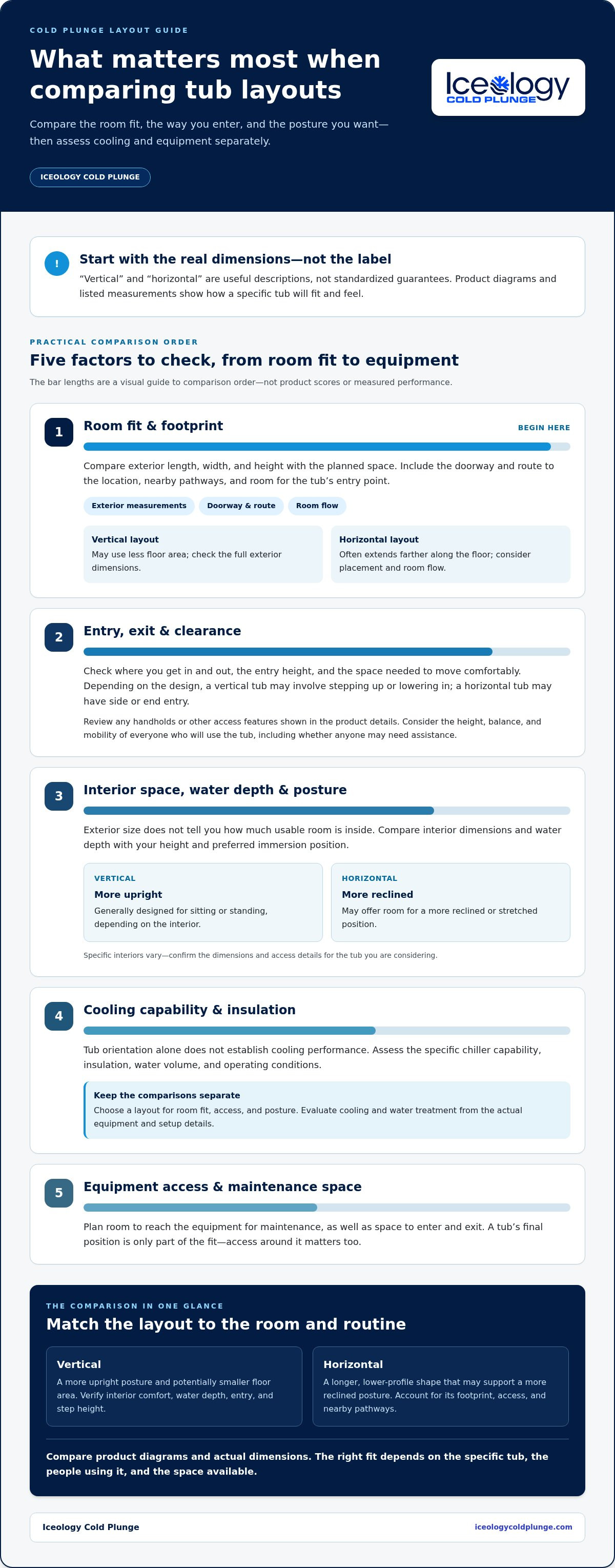
How to choose between a vertical and horizontal cold plunge tub
Use a practical sequence to decide which layout suits your home and routine. The goal isn’t to find a universally better shape. It’s to choose a tub that fits the space, feels manageable to use, and has specifications that meet your needs.
- Measure the installation area and access route. Record the available floor space, then compare it with each candidate’s published exterior dimensions and installation guidance. Include clearance to enter and exit, nearby pathways, and room to reach service areas for ongoing care. Measure the route from the entrance to the setup location, including doorways and tight turns. A tub can fit its final spot but still be difficult to move there.
- Assess access for everyone who’ll use it. Consider entry height, the position of the access point, balance, mobility, and whether anyone may need assistance. Don’t judge entry by orientation alone: upright models can differ from one another, just as elongated tubs can. If several people will use the tub, account for their different needs before choosing a layout.
- Define your preferred posture. Decide whether you prefer an upright position or more room for an elongated posture. Compare interior dimensions and water depth with your height and how you expect to sit or recline. A layout that looks efficient on a floor plan still needs to feel practical for regular use.
- Compare specifications separately. Review chiller capability, insulation, water volume, and care requirements independently of shape. This keeps the vertical vs horizontal cold plunge tubs decision focused: orientation informs space and posture, while the product’s stated features inform cooling and upkeep.
For more on delivery routes, placement, and installation planning, read the cold plunge tub setup guide. If you’re weighing cooling options as well as layout, use the cold plunge tub with chiller guide to consider that decision separately.
Choose a configuration that fits your measured space and feels comfortable to access and use. Then review the complete specifications instead of relying on a shape label or a general assumption about which orientation performs better.
Choose a cold plunge tub built for your space and routine
The right choice depends on how a tub fits your home and how you’ll use it. Compare measured fit, comfortable access, preferred immersion posture, and the specifications of each complete setup. Neither vertical nor horizontal is automatically better. Choose the layout that works in your space and feels practical to use consistently.
What to compare before you decide
Review the exterior dimensions to understand the footprint, then check interior dimensions and water depth to assess usable space. Look at the entry design and installation requirements, including clearance to get in and out and access for routine care. Product diagrams can help you picture the layout, but use measurements to confirm the fit.
Evaluate chiller capability and insulation separately from orientation. Shape describes the tub’s layout, while these specifications help you understand its cooling system and thermal design. For more criteria beyond layout, read the premium cold plunge tub selection guide.
Why consider Iceology Cold Plunge?
Iceology Cold Plunge designs and manufactures premium, hard-sided cold plunge tubs in the USA. Its tubs have built-in chillers capable of cooling water to as low as 39°F, along with efficient insulation and expert craftsmanship. Weigh these product features alongside dimensions, entry access, and your preferred posture rather than treating orientation as a measure of overall quality.
Use the same checklist for each option: Will it fit through the access route and in the intended location? Does the interior suit your body and preferred posture? Can you reach the areas needed for care? Do the chiller and insulation specifications align with your expectations? Clear answers make the comparison more grounded and help you select a cold plunge tub for your space and routine.
Choose the layout that works for you
There’s no universal winner in the vertical vs horizontal cold plunge tubs comparison. Choose a tub that fits your measured space, offers comfortable entry, and supports your preferred posture. Check exterior and interior dimensions, access points, and placement needs instead of relying on an orientation label alone.
Keep layout and performance separate as you compare. Shape influences footprint and positioning, while chiller capability, insulation, and other specifications help define the complete plunge setup. Considering both gives you a clearer basis for choosing a tub that suits your space and routine.
Iceology Cold Plunge offers American-made, hard-sided cold plunge tubs with built-in chillers capable of cooling water to as low as 39°F. Efficient insulation and expert craftsmanship are also part of the design.
Compare fit, access, comfort, and specifications, then choose a setup that feels right for your home and routine.
Frequently Asked Questions
What is the difference between a vertical and horizontal cold plunge tub?
A vertical tub has an upright immersion layout, while a horizontal tub has a longer, lower-profile form. Their shapes can affect floor footprint, entry, posture, and room circulation. Since labels aren’t always used consistently, compare the actual dimensions, interior configuration, and access details. Check whether the interior supports your preferred seated or reclined position and whether there’s enough clearance to enter and exit comfortably.
Is a vertical cold plunge tub better than a horizontal one?
Neither layout is automatically better. The right choice depends on your space and comfort. A vertical design may suit a room where limiting floor footprint is a priority, while a horizontal design may appeal if you prefer a more elongated posture. Compare the specific tub’s interior dimensions, entry design, and installation needs. The label can help narrow options, but it can’t replace checking product details.
Does a horizontal cold plunge tub take up more space?
A horizontal tub’s elongated shape may require more length, but its actual footprint depends on the model. Measure the intended location and include clearance for entry, exit, nearby pathways, and maintenance access. Also measure the route from the entrance to the setup area. Compare those measurements with the manufacturer’s specifications. Check a vertical tub’s width, height, and access clearance too.
Can a vertical cold plunge tub cool water as effectively as a horizontal one?
Yes. Orientation alone doesn’t establish cooling capability. Compare the chiller specifications, insulation, water volume, and operating conditions for each complete tub setup. Don’t assume one shape cools faster or uses less energy. Iceology Cold Plunge tubs include built-in chillers capable of lowering water temperature to as low as 39°F. Review each product’s stated features rather than relying on its layout.
Which cold plunge tub is easier to get into and out of?
Entry comfort depends on the specific tub’s height and access design, as well as your mobility and balance. An upright tub may involve a different entry motion from an elongated model, but there’s no universal rule about which is easier. Consider who will use the tub regularly and whether anyone may need assistance. Compare entry details and the space available to move around the tub.
How do I choose between a vertical and horizontal cold plunge tub for home use?
Start by measuring the room, access route, and clearance around the tub. Then compare each model’s exterior and interior dimensions, entry design, and the posture you prefer for immersion. For vertical vs horizontal cold plunge tubs, the most useful comparison is how the specific model fits your home and routine, not a broad assumption about the category. Review cooling, insulation, and care requirements separately.
Does the shape of a cold plunge tub affect maintenance?
Shape may affect access to interior surfaces or service areas, but maintenance requirements depend on the specific tub and its components. Check where filters and equipment are located, whether you can reach the areas that need routine care, and how much clearance installation requires. Follow the manufacturer’s care instructions. Don’t assume a vertical or horizontal model is easier to clean based on orientation alone; compare its actual design and recommended upkeep.