
Wood vs Composite Siding for Cold Plunge Tubs: Which Lasts Longer
A wooden cold plunge tub isn’t necessarily made entirely of wood. Its exterior may be wood or composite cladding around a separate liner and supporting structure, so the siding alone doesn’t show how the tub contains water or how durable the complete unit will be.
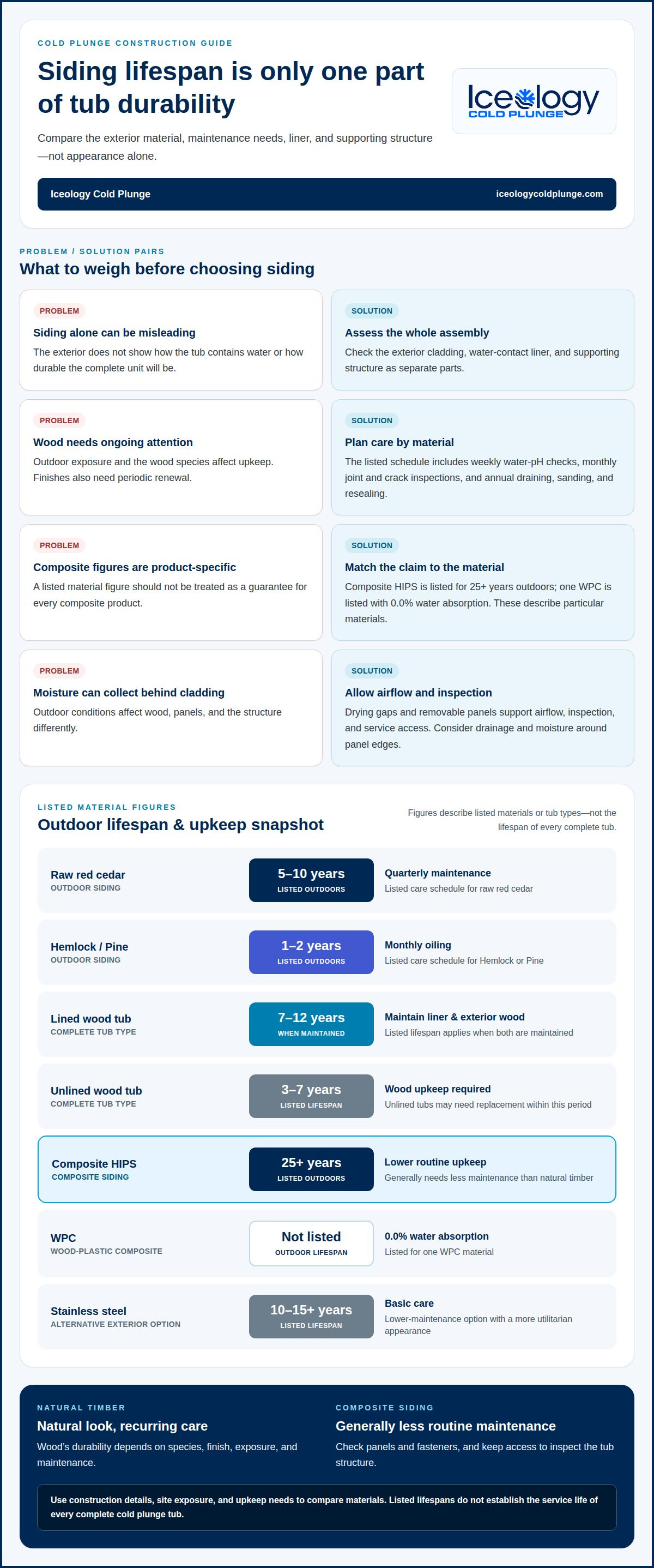
For outdoor longevity, composite siding has the edge over natural wood: composite HIPS is listed for 25+ years outdoors, compared with 5-10 years for raw red cedar. But those figures describe the exterior material, not the lifespan of every part of a cold plunge tub. A lined wood tub may last seven to twelve years when its liner and exterior wood are maintained.
Choosing wood vs composite siding for cold plunge tubs involves more than comparing lifespan. Wood offers a natural look but needs ongoing care; composite generally requires less maintenance. The liner, structure, exposure, and upkeep also affect durability. This guide compares outdoor suitability, maintenance, and material longevity, and explains how siding differs from the water-contact liner and tub structure.
Key Takeaways
- Compare siding materials by outdoor exposure and upkeep needs, not appearance alone; composite’s low water absorption can be an advantage.
- Plan for weather protection and moisture management when placing a wood-wrapped tub outdoors.
- Separate the exterior cladding from the water-contact liner and structural system when evaluating durability.
- Choose wood based on its species and intended care routine, since a tub’s appearance alone doesn’t reveal its performance.
- Use the complete tub construction, including the liner and structure, to guide your choice between natural timber and composite.
Durability and Lifespan: Which Material Lasts Longer?
Composite siding generally needs less exterior upkeep, while wood’s durability depends on its species, finish, and exposure. The liner and supporting structure also affect a tub’s service life. Compare the complete assembly, not just the cladding, when weighing wood vs composite siding for cold plunge tubs.
Wood Siding Upkeep and Lifespan
Raw red cedar is listed for 5-10 years outdoors; Hemlock/Pine is listed for 1-2 years outdoors. A lined wood tub may last seven to twelve years when its liner and exterior wood are maintained, while unlined wooden tubs may need replacement after three to seven years. Typical material and installation costs depend on species, siding area, preparation, fastening, finish, and labor, so compare those project elements rather than siding alone.
For wood care, check water pH weekly, inspect joints and cracks monthly, and drain, sand, and reseal annually. Listed care schedules call for monthly oiling of Hemlock or Pine and quarterly maintenance for raw red cedar.
Composite Absorption and Maintenance
Cold plunge siding composites include HIPS and wood-plastic composite (WPC). One WPC is listed with a 0.0% water absorption rate, while composite HIPS is listed for 25+ years outdoors. Those figures describe particular materials, not every composite product. Composite siding generally needs less routine maintenance than natural timber, but outdoor exposure and installation still matter.
Composite siding typically needs cleaning and checks of its panels and fasteners, rather than the regular oiling or resealing required for wood. For an outdoor installation, consider moisture around panel edges and leave access to inspect the tub’s structure.
Exterior Finishes and Upkeep
Wood finishes help protect surfaces from moisture and sunlight, but need periodic renewal. Sealing or staining intervals depend on the wood, coating, and exposure. The listed maintenance schedules for cedar and Hemlock or Pine illustrate why species matters. Harsh weather can also increase the attention an exterior needs.
Composite avoids recurring oiling or staining, while stainless steel offers another durable, lower-maintenance option with a more utilitarian appearance. A cover and a well-maintained filter support tub care, but neither replaces exterior inspections. Installation costs depend on preparation, panel cutting, fastening, and finishing. The wood vs composite siding for cold plunge tubs decision therefore involves both maintenance preferences and build complexity.
| Material | Outdoor lifespan listed | Maintenance comparison |
|---|---|---|
| Raw red cedar | 5-10 years | Quarterly maintenance |
| Hemlock/Pine | 1-2 years | Monthly oiling |
| Lined wood tub | Seven to twelve years | Maintain liner and exterior |
| Unlined wood tub | Three to seven years | Wood upkeep required |
| Composite HIPS | 25+ years | Lower routine upkeep |
| WPC | Not listed | 0.0% water absorption listed |
| Stainless steel | Ten to fifteen years or longer | Basic care |
Choose based on the finish you want, site exposure, and willingness to maintain wood. Listed lifespans describe materials, not every complete tub assembly.
Can a wood-wrapped tub stay outdoors?
A wood-wrapped tub can be used outdoors if its cladding, coating, liner, drainage, cover, and electrical setup suit the site. Weather affects the exterior differently from the water-contact structure, so outdoor durability depends on the complete assembly and its maintenance.
Weather Exposure and Protection
Sunlight, moisture, and temperature changes can cause wooden cladding to expand, contract, fade, or deteriorate. Drying gaps and removable panels support airflow, inspection, and service access, helping address moisture behind the exterior. A fitted cover also protects the water between cold-water therapy sessions.
Corrosion resistance depends on the tub’s metal components and the surrounding conditions. Grade 304 stainless steel resists corrosion in most environments, while grade 316 includes molybdenum for improved resistance to salt and harsh conditions. That makes material selection especially relevant in coastal settings. Keep drainage and freeze conditions in the outdoor plan, rather than treating attractive wood as proof of weather readiness.
Indoor and Outdoor Suitability
Indoor placement reduces direct exposure to rain and sunlight, but still calls for a suitable floor, drainage plan, and room for the chiller and service access. Outdoors, weather protection becomes a larger part of the setup, especially in harsh conditions or hot summers. Either setting can suit the look; site conditions determine the maintenance demands.
Wood species and grade matter, but the visible finish can’t establish either. Nor does it reveal the liner, insulation, cooling performance, outdoor rating, or recommended maintenance interval. Cedar and teak are commonly used for wooden ice baths. The USDA Forest Products Laboratory’s Wood Handbook offers background on wood and moisture. Choose based on construction details, not appearance alone.
Outdoor wellness space planning should include movement around the tub, access to equipment, and a clear route between recovery areas. A sauna-and-cold-plunge layout may use about 150 square feet for ample room. Keep the chiller accessible, and consider where water drains during cleaning. Those practical choices can protect both the wood exterior and the surrounding space.
Permit requirements depend on the location and project. Before installing an outdoor tub, review applicable local rules, including requirements for equipment suitability and electrical protection.
For a setup designed around cold immersion, explore cold plunge tub options alongside the site’s exposure and layout.
Natural timber versus composite cladding
In freezing climates, neither wood nor composite siding alone determines whether a cold plunge tub suits the site. Choosing wood vs composite siding for cold plunge tubs means looking beyond the exterior to moisture management, drainage, insulation, the water-contact structure, and cooling equipment.
Timber, composite, and plastic surfaces
Natural timber has cellular air pockets that slow heat transfer, but siding isn’t a complete insulation system. Species, board layout, and underlying construction all influence the finished assembly. Cedar and teak are common choices for wooden ice baths, while wood-plastic composite offers a manufactured alternative with a different appearance and maintenance profile.
Composite siding isn’t interchangeable with every plastic tub. Materials and construction vary, so compare the complete wall assembly rather than relying on a broad label. A useful wood vs composite siding for cold plunge tubs comparison distinguishes decorative cladding from insulation and the water-holding body.
Cooling and insulation in cold settings
A chiller controls water temperature; exterior siding doesn’t cool it. Some tubs have built-in chillers, while others use external cooling equipment. Either setup needs appropriate service access and protection from site conditions. The cladding itself doesn’t establish cooling capacity or filtration performance.
Foam-filled acrylic and composite tubs in the United States typically have insulation rated between R-4 and R-7. That range describes those insulated tub types, not every composite-sided model. Natural timber can slow heat transfer, but wood cladding alone doesn’t determine a tub’s insulation rating. In freezing weather, consider insulation and moisture drainage alongside the exterior finish.
Lined and unlined construction
A lined wooden tub separates the water-contact surface from its timber exterior: the liner contains the water, while the siding provides the visible finish. Some designs pair cedar cladding with a stainless steel interior. For these tubs, the liner and supporting structure matter as much as the choice between wood and composite panels.
An unlined wooden tub depends more directly on the wood’s ability to hold water and on ongoing care. In freezing conditions, water trapped around joints or gaps can freeze and stress materials. Drainage, drying, and maintenance access therefore belong in the material decision. Match the complete assembly, including its liner, insulation, cooling arrangement, and exterior, to the intended setting.
Water-contact liners and tub structure
Siding affects heat loss only as part of the complete wall assembly; insulation and the liner matter too. Assess the exterior cladding separately from the water-contact surface and supporting tub body.
Insulation, Heat Loss, and Condensation
Wood’s cellular air pockets slow heat transfer, but exterior boards alone don’t establish a tub’s insulation performance. Foam-filled acrylic and composite models typically have insulation rated between R-4 and R-7. Compare that rating with the whole construction, including any insulation layer, water-contact liner, and gaps between exterior panels.
Condensation forms when cold surfaces meet warmer, humid air. A common example is plunge water at 39°F with outside air at 75°F around a steel tank. Insulation can reduce temperature transfer through the tub wall, while a cover limits exposure at the water surface. Siding can influence the outer surface temperature, but the assembly and surrounding air affect condensation too.
Safety and Structural Considerations
Identify which component holds the water and which provides the exterior finish. A wood- or composite-clad tub may have a separate liner and supporting structure; a stainless steel interior is one example. Cladding alone doesn’t prove watertightness or structural capacity. Drying gaps and removable panels can support inspection and access behind the exterior.
Water quality depends on regular care, not siding alone. Test plunge water weekly for pH and bacteria, and change it at least every two weeks to help prevent algae or slime buildup. Stainless steel is non-porous, making it harder for bacteria and contaminants to penetrate its surface. A filter and consistent sanitizer levels also affect water care; inspect the exterior for damage as well.
Temperature choice depends on the intended use and personal tolerance. Many users target water around 50°F or below, while a separate recommendation for most users is 10 to 15°C. These are different reference points, not a siding specification. A chiller controls water temperature; exterior material alone doesn’t determine cooling performance or water hygiene.
Compare construction details across models before choosing a finish:
- Water-contact surface: Identify whether the liner is stainless steel or another material.
- Structure: Distinguish the supporting tub body from decorative cladding.
- Thermal design: Review the insulation rating and how panels fit around the tub.
- Care access: Look for removable panels that allow inspection and servicing.
- Water routine: Account for testing, filtration, sanitizing, and water changes.
When these elements work together, siding is one part of a durable, maintainable cold plunge system, not a replacement for its liner, structure, or water-care routine.
Wood selection for cold plunge tubs
Choose wood based on the tub’s construction, not its color. A visible red cedar exterior doesn’t establish the wood’s grade, water-contact liner, insulation, cooling performance, outdoor rating, or maintenance interval. Evaluate those details separately, then select timber suited to the conditions it will face.
Western red cedar has a Janka hardness rating of 350 lbf, a measure of resistance to indentation. Hemlock/Pine is listed at 500 lbf. Hardness alone doesn’t describe how well wood handles outdoor moisture or how long a complete tub lasts. For durability classes in solid wood, EN 350-2 is identified as the relevant standard basis. Compare the intended use and construction, not one measurement.
How wood responds to moisture is another selection factor. The USDA Forest Products Laboratory’s Wood Handbook offers background on this relationship. Timber exposed to weather can change as it gains or loses moisture, so species, finish, panel layout, and drying access all matter. A covered or sheltered site has different exposure from an uncovered one, even with the same wood.
Thermally modified timber is baked above 400°F in an oxygen-free kiln. That describes a treatment process, not a guarantee of cold-plunge performance. Cedar and teak are commonly used in wooden ice baths, while cedar is often selected for its outdoor appearance and visual pairing with a cedar sauna. Cedar also contains natural antimicrobial oils that may help limit microbial growth; this doesn’t replace filtration or water care.
Use a practical selection sequence:
- Identify the wood: Confirm species and whether the exterior is solid timber or another material.
- Separate the systems: Determine whether wood is cladding around a distinct liner and structural body.
- Match exposure: Consider weather, sunlight, moisture, drainage, and whether panels can dry.
- Review treatment: Distinguish thermally modified timber from naturally durable species.
- Set care expectations: Choose a finish and maintenance routine suited to the site.
Prefer red cedar when its natural appearance and outdoor character suit your setting, while assessing its construction and care needs alongside the liner. Choose composite cladding when reducing routine upkeep is a priority. Neither material determines filtration, water quality, or cooling; those depend on the tub’s separate systems. Don’t let a siding choice stand in for assessing the complete build.
Iceology Cold Plunge
Iceology Cold Plunge designs and manufactures cold plunge tubs for recovery and wellness. When comparing wood and composite, look beyond the exterior: the liner, supporting structure, insulation, and care routine all shape ownership.
Its range includes Cold Plunge Tubs, Ice Baths, Cold Tubs, and Accessories. The tubs are made in the USA and feature built-in chillers that can lower water temperature to as low as 39 °F. These details help connect material choices with the broader setup for cold water immersion.
For a tub that fits your recovery goals and preferred maintenance approach, contact Iceology Cold Plunge.
Make Your Material Choice Part of the Bigger Plan
Choosing wood or composite siding for a cold plunge tub is one part of creating a space you’ll use consistently. Consider how the tub will look alongside existing materials, how it fits into your routine, and what upkeep feels realistic over time. A considered choice makes your recovery setup feel intentional, not like an afterthought.
Iceology Cold Plunge offers cold plunge tubs, ice baths, and accessories for a cold-water routine. Start with your priorities for appearance and care when deciding what kind of setup suits your goals.
Choose with clarity, then make room for a steady practice that supports your wellbeing.
Frequently Asked Questions
Is a wooden cold plunge tub made entirely from wood?
Not necessarily. “Wooden” can describe the visible exterior, while a separate liner holds the water and another structure supports the tub. For example, wood cladding may surround a metal interior. Before choosing a model, distinguish the siding from the water-contact surface and supporting body. This clarifies which material needs exterior care and which component contains the water.
The Verdict: Which Cold Plunge Tub Material Should You Buy?
Choose composite if less exterior upkeep is your priority; choose wood if natural grain and a traditional appearance matter more. The right decision also depends on the complete tub, including its liner, structure, and insulation. A composite exterior doesn’t guarantee an insulated tub, just as cedar siding alone doesn’t establish how the tub holds water. Compare the entire assembly with your preferred setting and care routine.
Which is easier to maintain: cedar or WPC?
WPC is generally easier to maintain because it doesn’t require the same oiling or resealing routine as wood. One wood-plastic composite is listed with a 0.0% water absorption rate, while raw red cedar maintenance is listed as quarterly. Both still benefit from cleaning and inspection. Look over joints, panel edges, and fasteners during routine care, especially where moisture can collect.
Why wood tubs?
Wood tubs appeal to people who value natural texture, warmth, and a crafted appearance. Timber’s cellular air pockets also slow heat transfer, although exterior wood alone doesn’t establish a tub’s insulation performance. Cedar can complement a cedar sauna for a coordinated wellness space. Choose wood when its appearance justifies the care routine, and assess the liner and structure separately for water containment.
Which wood species are best for cold plunge tub siding outdoors?
Cedar and teak are commonly used for wooden ice bath tubs, but neither is automatically the best choice for every site. Consider the species, grade, finish, and local weather exposure together. Western red cedar has a Janka hardness rating of 350 lbf, but hardness measures resistance to indentation, not overall outdoor durability. A species name alone also won’t tell you the tub’s liner or maintenance needs.
How well do wood and composite siding resist moisture, freeze-thaw cycles, rot, and UV damage?
Performance depends on material, finish, construction, and exposure. Wood can absorb moisture and respond to changing conditions; water standing in joints can add stress in freezing weather. Composite may absorb less water, but that doesn’t make every product immune to weathering or UV exposure. Favor designs that drain and dry, and assess exterior material claims separately from the tub’s overall suitability for freezing conditions.
How should wood or composite siding be installed around a cold plunge tub to allow drainage and ventilation?
Plan the layout so water drains away instead of collecting behind panels or beneath the tub. Drying gaps can support airflow, while removable panels provide inspection and service access. Keep openings clear and avoid trapping moisture around joints. Plan the cladding alongside the drainage route, liner, and equipment access so maintenance doesn’t require dismantling the exterior.