
Cold Plunge and Physical Performance: The 2026 Science-Backed Guide to Peak Athletic Recovery
What if the very habit you rely on for recovery is actually blunting your hard-earned muscle gains? It's a common dilemma for high-performance athletes who find themselves caught between the need to soothe persistent muscle soreness and the desire to maximize hypertrophy. You've likely experienced the frustration of heavy legs limiting your training frequency or the crushing heat exhaustion that comes with training through a humid Florida summer. You know that recovery is the bridge to progress, yet the conflicting information about when and how to chill can be overwhelming.
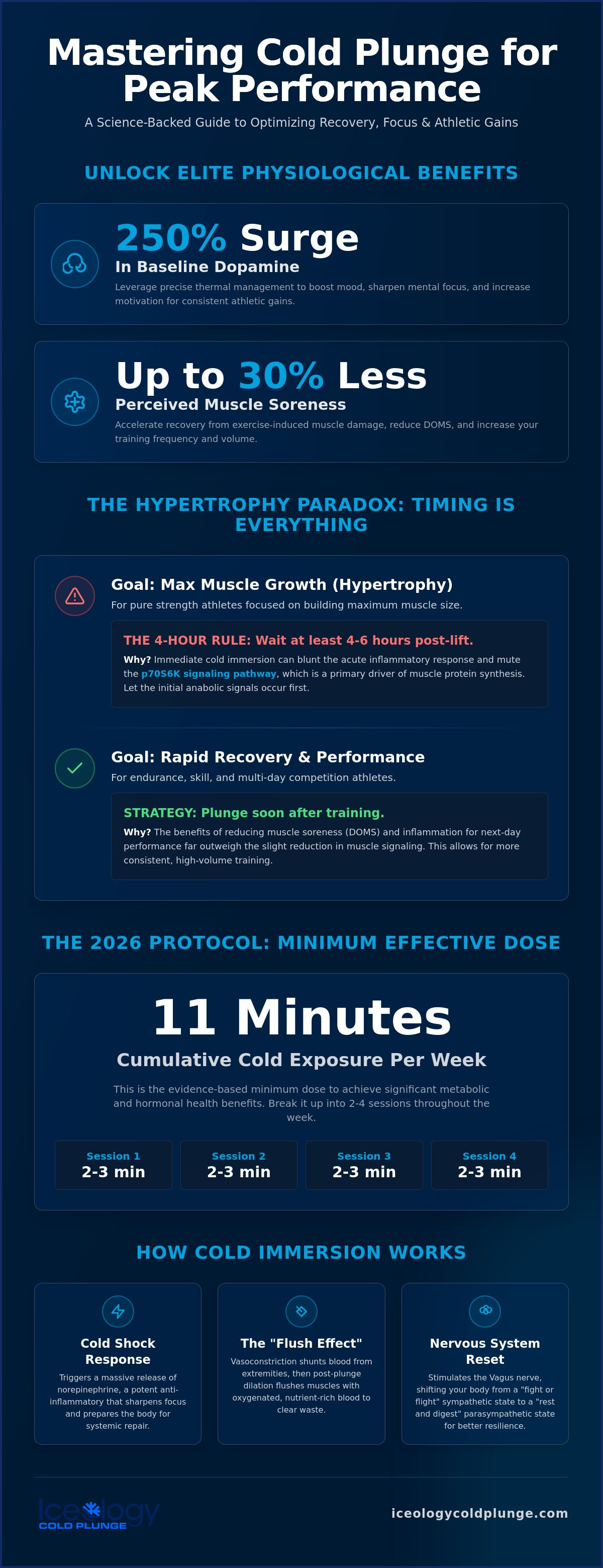
This guide will help you master the science of cold plunge physical performance so you can use cold water immersion as a surgical tool for your nervous system. We'll show you how to leverage precise thermal management to unlock a 250% surge in baseline dopamine and reduce perceived muscle soreness by up to 30% according to recent 2026 meta-analyses. By understanding the latest evidence-based protocols, you'll learn to manage core body temperature and schedule your sessions for consistent athletic gains. We're moving beyond simple ice baths to explore a disciplined, science-backed approach to total-body optimization and mental resilience.
Key Takeaways
- Understand how the cold shock response triggers a surge in norepinephrine to accelerate muscle recovery and sharpen mental focus.
- Learn the precise timing required to optimize your cold plunge physical performance without blunting muscle growth after high-intensity resistance training.
- Master the 2026 protocol of 11 cumulative minutes per week to achieve the minimum effective dose for metabolic and hormonal health.
- Discover how strategic cooling lowers your perceived rate of exertion and manages core body temperature while training in high-heat environments.
- Identify why integrated chiller systems provide the precision and thermal consistency necessary for elite results compared to manual ice baths.
The Physiology of Cold Water Immersion and Athletic Output
Cold Water Immersion (CWI) is far more than a test of willpower; it's a sophisticated recovery modality designed to recalibrate your body after intense physical strain. When you submerge in water below 55°F, your body initiates a rapid physiological cascade. This begins with the "Cold Shock Response," which triggers a massive release of norepinephrine. This neurotransmitter doesn't just wake you up; it acts as a potent anti-inflammatory agent that sharpens focus and prepares the body for systemic repair. Understanding The Physiology of Cold Water Immersion helps athletes see that this process is about precision, not just endurance. Optimizing your cold plunge physical performance requires a deep understanding of these biological levers.
During immersion, your peripheral blood vessels constrict to protect your core temperature. This process, known as vasoconstriction, shunts blood away from the extremities. Once you exit the tub, your vessels dilate rapidly. This "flush effect" creates a powerful surge of oxygenated, nutrient-rich blood back into the muscle tissue. This cycle is essential for reducing exercise-induced muscle damage (EIMD) at the cellular level, effectively muting the biological markers of fatigue that would otherwise linger for days.
Managing the Central Nervous System (CNS)
High-intensity training keeps your body locked in a sympathetic state, often called "fight or flight." Cold exposure forces a hard reset. By stimulating the Vagus nerve, a cold plunge shifts your system into a parasympathetic state, or "rest and digest." This transition is critical for long-term athletic resilience. A regulated nervous system ensures that your cold plunge physical performance translates into higher power output and better coordination during your next session. It allows you to approach your next workout with a calm, focused mind rather than a frayed nervous system.
Reducing Inflammation Without Blunting Adaptation
Athletes must distinguish between acute inflammation, which signals muscle growth, and the chronic inflammation that leads to burnout. CWI helps manage this balance by clearing metabolic waste products like lactic acid and creatine kinase from the interstitial fluid. Hydrostatic pressure is the physical force exerted by the water against your skin that helps move fluid out of the tissues to reduce edema. This targeted approach preserves the necessary signals for adaptation while accelerating the timeline for your return to peak training intensity. By managing these markers, you ensure your body spends less time in a state of breakdown and more time in a state of rebuilding.
Immediate Recovery vs. Long-Term Gains: The Hypertrophy Paradox
The most common question among serious lifters isn't about the temperature; it's about the gains. Does cold plunging kill muscle growth? This is the hypertrophy paradox. While cold immersion is elite for recovery, it can be counterproductive if your sole goal is maximum muscle size. The mechanism behind this involves the blunting of the p70S6K signaling pathway. This pathway is a primary driver of muscle protein synthesis after resistance training. By suppressing the natural inflammatory response required for growth, immediate immersion can effectively "mute" the signal your body needs to build new tissue. To protect your cold plunge physical performance, you must understand when to chill and when to let the heat of adaptation do its work.
It's vital to differentiate between performance for endurance or skill and performance for maximum size. If you're a CrossFit athlete or a basketball player, your priority is often the ability to perform at a high level again tomorrow. In these cases, reducing soreness is the priority. A Cochrane review on CWI for muscle soreness confirms that cold immersion significantly reduces delayed onset muscle soreness (DOMS), allowing for more consistent training volume over a 12-week block. However, for the pure strength athlete, the "4-Hour Rule" is the gold standard. Waiting at least four to six hours after a lift allows the initial anabolic signaling to occur before you introduce the cold.
When Cold Plunging is Essential for Performance
For endurance athletes, swimmers, and high-volume skill practitioners, the recovery benefits far outweigh the slight reduction in muscle signaling. During multi-day competitions or tournaments, like the CrossFit Games, the goal is survival and sustained output. Using a cold plunge between events helps clear metabolic waste and lowers core temperature, ensuring your cold plunge physical performance remains stable under pressure. This consistency is what allows athletes to maintain a higher average intensity throughout a grueling season. If you're looking to integrate this into your routine, choosing high-quality Cold Plunge Tubs ensures you have the precise thermal control needed for these specific protocols.
Strategies for Strength and Power Athletes
Strength athletes should adopt a "Wait and See" approach. The sweet spot for immersion is typically 4 to 6 hours post-lift, or even better, on active recovery days. Using cold water therapy on a non-lifting day provides the systemic anti-inflammatory benefits and nervous system regulation without interfering with the previous day's hypertrophy signals. You can learn more about these nuances in our guide on The Scientific Benefits of Cold Plunge. By treating the cold as a surgical tool rather than a blunt instrument, you can enjoy the mental clarity and recovery speed of immersion while still hitting your PRs in the gym.
Optimizing the Performance Window: The 2026 Protocol
To maximize cold plunge physical performance, you must move beyond the "colder is always better" mentality and adopt a surgical approach to timing and temperature. The most recent data suggests that the ideal range for athletic recovery sits between 39°F and 55°F. Within this window, you can target specific physiological outcomes based on your training phase. The 2026 protocol emphasizes a "Minimum Effective Dose" of 11 cumulative minutes per week. This total can be divided into two or three sessions, providing enough stimulus to trigger metabolic and hormonal benefits without overtaxing the system. Consistency is the primary driver of results here, not the duration of a single session.
Strategic timing is the second pillar of this protocol. Pre-workout plunging is gaining traction for its "sobering effect," which provides a massive surge in norepinephrine to sharpen mental focus and alertness. This practice also lowers your core body temperature, creating a "thermal buffer" that can improve endurance during high-intensity sessions in hot environments. For post-workout recovery, timing is more nuanced. While immediate immersion is excellent for controlling acute inflammation and soreness, athletes should consult the latest meta-analysis on cold plunges and muscle hypertrophy to ensure they aren't blunting the signaling pathways necessary for muscle growth after heavy resistance training.
Temperature Selection: Why 39°F Matters
While standard tap water usually plateaus around 55°F, Iceology's integrated chillers are capable of reaching a precise 39°F. This lower temperature is the threshold for more advanced adaptations. Sub-40°F water triggers "brown fat" thermogenesis, a process where the body burns energy to produce heat, which can improve metabolic health and insulin sensitivity. However, extreme cold requires discipline. The "Don't Push Through Pain" rule is essential; once you lose the ability to control your breath or experience sharp pain, the hormetic benefit has likely peaked, and it's time to exit the tub.
Duration and Frequency for Athletes
The 2–5 minute rule is the gold standard for individual sessions. Staying in longer doesn't necessarily improve cold plunge physical performance and can actually lead to excessive core temperature drops that delay your return to a training state. Frequency should match your training load. During a high-volume 12-week block, daily plunging might be necessary to manage systemic inflammation, whereas three times a week may suffice during a maintenance phase. The Soberman Protocol suggests timing your cold exposure early in the day to align with the body's natural circadian rhythm and maximize the subsequent rise in core temperature.
Managing Thermal Stress in High-Heat Environments
Training in South Florida presents a unique set of physiological hurdles that most athletes underestimate. In cities like Miami, Orlando, and across the Sun Belt, the combination of 90°F heat and 90% humidity creates a massive thermal load on the human body. This environmental stress significantly increases your Perceived Rate of Exertion (RPE), meaning your usual pace or power output feels significantly harder than it would in a temperate climate. Your brain essentially throttles your power to prevent overheating. By integrating cold water therapy, you can actively manage this stress to maintain your cold plunge physical performance even during the most oppressive summer months.
The goal isn't just to feel cooler; it's to regulate your core temperature so your internal systems can function at peak efficiency. High ambient heat forces the heart to work harder to pump blood to the skin for cooling, which leaves less oxygenated blood for the working muscles. Cold plunging acts as a hard reset for this process. It allows you to shed the accumulated heat that lingers long after your workout ends, preventing the systemic fatigue that often follows training in high-humidity environments. This proactive thermal management is what separates athletes who thrive in the heat from those who merely survive it.
Pre-Cooling for Florida Endurance Athletes
Pre-cooling is a sophisticated strategy gaining massive traction among elite marathoners and cyclists. A quick 3-minute plunge at 50°F before heading out for a high-intensity outdoor session can significantly extend your time-to-exhaustion. Scientific backing for pre-cooling shows that lowering your starting core temperature provides a "thermal buffer," allowing your body to absorb more heat before performance begins to degrade. This protocol is a standard tool for professionals facing extreme conditions. To achieve this level of precision in a warm climate, many athletes rely on a Cold Plunge Tub with Chiller to maintain exact temperatures regardless of the outdoor air temperature.
Rapid Heat Dissipation Post-Session
After a grueling session in the humidity, your core temperature can stay elevated for hours, delaying the start of the recovery process. Rapidly dissipating this heat is vital. However, athletes must safely manage "after-drop," where core temperature continues to fall after you exit the water. In the Florida climate, hard-sided, insulated tubs are essential for this task. Polyurethane foam insulation ensures the chiller can maintain a consistent 39°F without excessive energy draw. Placement also plays a critical role in efficiency. Positioning your tub in a shaded area or on a covered patio protects the equipment and ensures you can reach your target temperature every time. If you're ready to master your training environment, explore our USA-made Cold Tubs designed specifically for high-performance thermal management.
Elevating Your Routine with Iceology Premium Craftsmanship
Mastering the science of recovery is only half the battle; the other half is having the precision tools required to execute your protocol with total consistency. Many athletes start their journey with a standard bathtub and bags of ice, only to find that the "ice math" required to reach a specific temperature is both exhausting and inaccurate. Maintaining consistent cold plunge physical performance is only possible when your equipment removes the variables of human error and environmental fluctuation. A dedicated recovery system ensures that when you're ready to plunge at 39°F, the water is waiting for you at exactly that temperature, every single day.
The leap from manual ice baths to an integrated chiller system represents a shift from a hobbyist mindset to a professional one. When you don't have to worry about buying ice or monitoring a thermometer, you can focus entirely on the mental discipline of the plunge itself. This reliability is the foundation of a long-term habit. By removing the friction of preparation, you increase the likelihood of sticking to your 11-minute weekly minimum, ensuring that your recovery remains a non-negotiable part of your athletic architecture.
Precision Cooling for Professional Results
The frustration of "Ice Math" is a significant barrier to consistent recovery. Most tap water in southern climates rarely drops below 60°F, making it nearly impossible to reach the therapeutic 39°F to 55°F range without massive amounts of ice. Iceology's integrated chillers provide the exact thermal control needed for research-backed protocols. Our tubs feature hard-sided construction that offers a level of durability and stability that inflatable alternatives simply cannot match. This "quality-first" engineering is why many elite athletes choose a Cold Plunge Tub Made in USA. It's a commitment to a "buy once, plunge forever" philosophy that values longevity over temporary convenience.
Efficiency is also a critical factor for athletes managing a high-performance lifestyle. Our tubs utilize high-density polyurethane foam insulation to maintain target temperatures even in the intense heat of Florida or Arizona. This specialized insulation ensures that your chiller doesn't have to work overtime, keeping your energy costs low while your cold plunge physical performance remains high. You're investing in a system that respects both your time and your resources.
Integrating Iceology into Your Performance Lifestyle
Creating a dedicated "Recovery Sanctuary" at home or in your training facility does more than just provide a place to get cold; it signals to your brain that recovery is a priority. High-end aesthetics and premium materials play a psychological role in maintaining discipline. When your recovery station feels like a professional-grade tool, you're more likely to treat your sessions with the respect they deserve. This psychological "buy-in" is often the difference between a fleeting trend and a lifelong practice of physical and mental optimization. Ready to optimize your output? Explore Iceology Premium Cold Plunge Tubs and take the final step toward peak athletic recovery.
Master Your Recovery and Redefine Your Limits
Achieving peak athletic status requires a disciplined balance between high-intensity output and scientific recovery. By mastering the 11-minute weekly protocol and respecting the timing of the hypertrophy paradox, you ensure that every session in the water translates to a tangible gain on the field. Precision is your greatest ally. Moving away from inconsistent ice baths toward a controlled environment allows you to regulate your central nervous system with surgical accuracy. This level of control is essential for managing thermal stress and maintaining consistent cold plunge physical performance throughout the year.
Your recovery journey deserves equipment that matches your dedication. Iceology tubs are made in the USA with expert craftsmanship, featuring integrated chillers that reach a true 39°F for maximum recovery benefits. With energy-efficient polyurethane insulation, you can maintain professional-grade standards without unnecessary overhead. It's time to stop guessing and start optimizing. Upgrade your recovery with an Iceology Premium Cold Plunge Tub and take command of your physical resilience. You have the knowledge; now give your body the tool it needs to thrive.
Frequently Asked Questions
Does cold plunging after a workout reduce muscle growth?
Cold plunging can reduce muscle growth if you submerge immediately after resistance training. The cold suppresses the acute inflammatory response and blunts the p70S6K signaling pathway that triggers muscle protein synthesis. To protect your gains, wait at least four to six hours after lifting before you get into the water. This delay allows your body to initiate the necessary anabolic signaling while still providing recovery benefits later in the day.
How long should an athlete stay in a cold plunge for performance benefits?
Most athletes find the greatest benefits within two to five minutes of immersion. Staying in longer than 15 minutes increases the risk of hypothermia without adding significant recovery value. Your goal should be to reach a cumulative 11 minutes per week across multiple sessions. This approach ensures you get the metabolic stimulus without overtaxing your central nervous system or delaying your return to a training state.
Is it better to cold plunge before or after a workout for performance?
Choosing between pre and post-workout depends on your specific goals for cold plunge physical performance. Pre-workout plunging provides a surge in dopamine and norepinephrine to sharpen focus and lower core temperature before training in the heat. Post-workout plunging is more effective for reducing perceived muscle soreness and clearing metabolic waste. Many professionals use both strategies depending on the climate and their training intensity.
What is the best temperature for a cold plunge for recovery?
The ideal temperature for recovery typically sits between 50°F and 59°F. This range is cold enough to trigger vasoconstriction and reduce edema without causing excessive physical stress. For athletes looking for advanced metabolic benefits, like brown fat activation, temperatures as low as 39°F are effective. Using an integrated chiller ensures you maintain these precise temperatures regardless of the ambient air heat or humidity.
Can cold plunging improve my cardiovascular performance?
Cold water immersion can improve cardiovascular performance by increasing heart rate variability (HRV) and strengthening the autonomic nervous system. The practice teaches your heart to recover more quickly from stress. Additionally, pre-cooling the body before a session in the heat reduces the cardiovascular strain of maintaining core temperature. This allows your heart to focus on delivering oxygen to your working muscles instead of cooling your skin.
How many times a week should an athlete cold plunge?
Most athletes should aim for two to four sessions per week to reach the 11-minute cumulative goal. You don't need to plunge every day to see results. Matching your frequency to your training volume is the most effective strategy. During high-intensity blocks, you might increase frequency to manage systemic inflammation. During maintenance phases, fewer sessions will still provide the necessary hormonal and mental resilience benefits.
Is a cold plunge better than an ice bath for physical performance?
A dedicated cold plunge is superior to a manual ice bath because it offers total temperature consistency. Manual ice baths suffer from thermal pockets where the water near your skin warms up, reducing the effectiveness of the treatment. Integrated chillers keep the water moving and at a precise temperature. This reliability is critical for athletes who need repeatable data to optimize their cold plunge physical performance over a long season.
What are the risks of cold water immersion for athletes?
The primary risks include the initial cold shock response, hypothermia, and a phenomenon known as after-drop. Cold shock can cause a sudden gasp for air, which is dangerous if your head is submerged. After-drop occurs when your core temperature continues to fall after you exit the tub. Always plunge with a partner, start with shorter durations, and consult a medical professional if you have underlying cardiovascular or respiratory conditions.