
The Scientific Benefits of Cold Plunge: A 2026 Guide to Recovery and Resilience
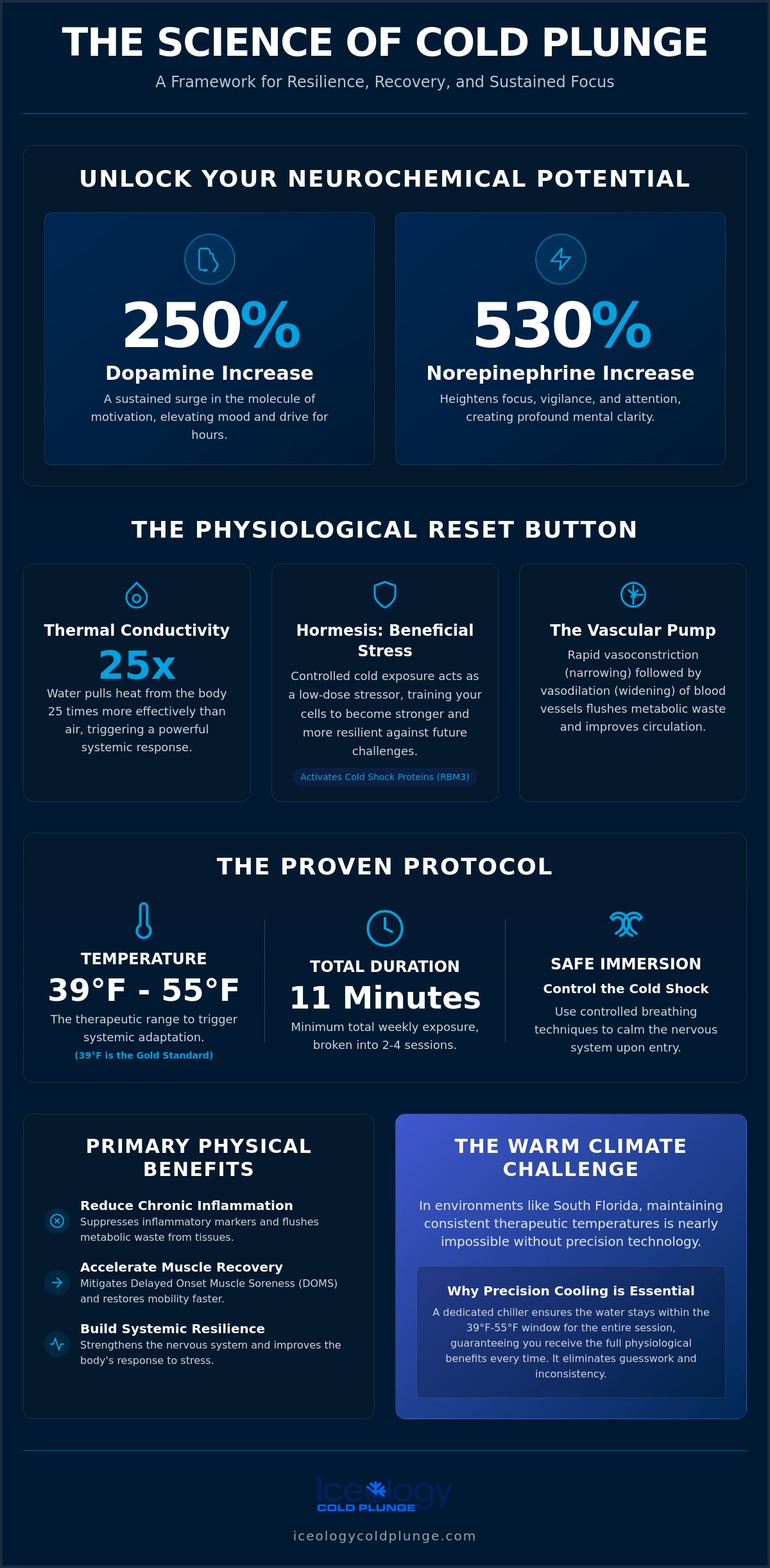
Imagine a single habit that triggers a 250% surge in dopamine and a 530% increase in norepinephrine, sustaining your focus and mood for hours after you finish. It isn't a new supplement or a complex biohack; it's the physiological response to precision cold water immersion. You likely already recognize the primary benefits of cold plunge for reducing chronic inflammation and accelerating post-workout recovery. However, for those living in warm climates like Miami, maintaining a consistent 45 degree environment without a dedicated system is nearly impossible.
You deserve a recovery strategy that works as hard as you do. In this 2026 guide, we'll show you how to leverage cold therapy to transform your metabolic health and mental clarity. We'll move past the hype to provide a clear, science-backed protocol for safe immersion. You will learn how to optimize your recovery windows, understand the long-term ROI of a dedicated tub, and discover why cold plunging is a biological reset button that builds lasting resilience. By the end, you'll have the exact framework needed to master your internal state through disciplined practice.
Key Takeaways
- Understand why water's high thermal conductivity makes it a superior tool for triggering systemic adaptation compared to cold air.
- Discover the specific benefits of cold plunge for reducing muscle soreness and managing chronic inflammation through efficient metabolic waste removal.
- Master the proven 11-minute weekly protocol and specific breathing techniques to safely navigate the initial cold shock response.
- Gain insight into the neurobiological mechanisms that provide hours of sustained focus and mental resilience following a session.
- Explore why precision chiller technology is the only reliable way to maintain therapeutic temperatures in hot, humid environments.
The Physiology of Cold Water Immersion: What is a Cold Plunge?
A cold plunge is far more than a simple test of willpower. It's a precision-engineered biological event designed to trigger systemic adaptation. Unlike a casual dip in a cool pool, true cold water immersion involves submerging the body in water typically ranging from 39°F to 55°F. This specific temperature range is vital. It moves the body out of its comfort zone and into a state of "hormetic stress," where the real benefits of cold plunge begin to manifest at a cellular level.
The effectiveness of this practice relies on thermal conductivity. Water is approximately 25 times more thermally conductive than air. This means that 50°F water pulls heat away from your body significantly faster than 50°F air ever could. This rapid heat transfer is why Cold-water immersion creates a profound physiological shift that a cold breeze or a standard air-conditioned room cannot replicate. For those seeking peak performance, the 39°F Gold Standard represents the pinnacle of advanced recovery, forcing the body to activate deep metabolic processes to maintain core homeostasis.
Hormesis: The Science of Beneficial Stress
The core philosophy of cold therapy is rooted in hormesis. Hormesis is the biological process where a low dose of a stressor induces an adaptive, beneficial effect. When you expose your system to the controlled "insult" of extreme cold, your cells don't just survive; they strengthen. This stress triggers the production of Cold Shock Proteins, specifically RBM3, which has been linked to neuroprotection and muscle preservation. It also stimulates Heat Shock Proteins that help repair damaged cellular structures. By leanining into this temporary discomfort, you're essentially training your body to be more resilient against future physical and environmental stressors.
Vasoconstriction and the Vascular Pump
The moment your skin hits the water, your sympathetic nervous system screams into action. Your blood vessels undergo immediate and intense vasoconstriction. This narrowing of the vessels directs blood away from your extremities and toward your vital organs to protect your core temperature. It's a defensive maneuver that serves as a powerful cardiovascular workout. You can explore how this process helps cold plunge improve circulation by strengthening the structural integrity of your veins and arteries.
The magic happens when you exit the tub. As your body begins to warm, the "flush" effect occurs. Your vessels dilate rapidly, sending fresh, oxygenated blood rushing back to your limbs. This vascular pumping action helps clear out metabolic waste and carbon dioxide that accumulates during intense exercise. It's a natural detoxification process that leaves you feeling revitalized and physically "lighter." This is why precision-chilled immersion therapy is a superior tool compared to unmonitored cold dips; it ensures the temperature stays within the therapeutic window required to sustain this vascular pump throughout the entire session.
Physical Recovery: Reducing Inflammation and Muscle Soreness
The primary benefits of cold plunge center on the body's ability to halt acute inflammation before it becomes a chronic hurdle. During high-intensity training, muscle fibers sustain microscopic tears, leading to the accumulation of metabolic byproducts. Precision cold water immersion uses hydrostatic pressure and low temperatures to constrict blood vessels, effectively flushing these waste products out of the muscle tissue. This mechanism is a cornerstone of professional sports medicine, specifically designed to mitigate Delayed Onset Muscle Soreness (DOMS) and systemic swelling that can otherwise sideline a dedicated athlete.
Beyond muscle tissue, cold therapy provides immediate relief for joint pain. By suppressing the inflammatory response, the cold reduces the volume of fluid in the joints, which eases pressure and restores mobility. This isn't just about temporary numbing; it's about altering the chemical environment of the tissue to favor repair over degradation. For those managing the physical toll of a high-performance lifestyle, having a reliable recovery tool at home is essential. Exploring professional-grade Cold Tubs can provide the consistency needed to maintain this baseline of physical health.
Accelerating Athletic Recovery
Athletic performance is often measured by how quickly you can repeat a peak effort. One key metric in this process is the reduction of creatine kinase, an enzyme that leaks into the blood when muscles are damaged. Research indicates that cold immersion lowers these levels more effectively than active recovery or massage. Timing, however, remains a critical factor. If your primary goal is muscle hypertrophy, you should wait 4 to 6 hours after strength training to plunge. This window ensures you don't blunt the natural inflammatory signals required for muscle growth. For a comprehensive breakdown of these protocols, consult our cold plunge for muscle recovery guide.
Metabolic Boost and Brown Fat Activation
Cold immersion also acts as a powerful metabolic catalyst. The human body contains two types of fat: White Adipose Tissue (WAT), which stores energy, and Brown Adipose Tissue (BAT), which burns it. BAT is dense with mitochondria and is responsible for non-shivering thermogenesis, a process where the body incinerates calories to maintain its core temperature. Regular exposure to cold water doesn't just burn calories during the session; it actually increases the density of your brown fat stores. This shift improves your metabolic efficiency and long-term insulin sensitivity, transforming how your body manages energy and inflammation on a systemic level.
Achieving this level of systemic efficiency requires a body that is structurally sound. To learn more about specialized equipment designed to strengthen the upper spine and improve posture, consider how targeted training can complement your metabolic recovery routine.
Mental Resilience: Dopamine, Stress, and the Nervous System
One of the most profound benefits of cold plunge is the immediate and sustained shift in neurochemistry. Unlike the fleeting spike from caffeine or sugar, cold water immersion triggers a massive release of neurotransmitters that define your mental state. Verified studies show that immersion in 57°F water results in a 250% increase in baseline dopamine and a 530% increase in norepinephrine. These aren't just temporary surges; these levels can remain elevated for several hours after you exit the tub. This sustained baseline provides a steady foundation of focus, alertness, and mood stability that carries you through the most demanding parts of your day.
Beyond the chemistry, there's a psychological transformation at play. Every time you step into the water, your brain sends a loud signal to get out. By overriding this primal impulse, you develop "Top-Down Control." This is the ability of your prefrontal cortex to govern your limbic system, essentially training your brain to stay calm under pressure. This mental fortitude is a core component of cold plunge for stress relief, as it recalibrates how you respond to external stressors in your professional and personal life. You aren't just enduring the cold; you're mastering your reaction to it.
Vagus Nerve Stimulation
Splashing cold water on your face and neck, or submerging to the chest, triggers the "mammalian dive reflex." This ancient biological response immediately lowers your heart rate and increases Heart Rate Variability (HRV), a key indicator of nervous system health. The vagus nerve acts as the "brake pedal" for the sympathetic nervous system. By stimulating this nerve regularly, you improve your "vagal tone," making it easier for your body to switch from a "fight or flight" state back into a "rest and digest" state after a stressful event.
Sleep Quality and Circadian Rhythm
Your body's circadian rhythm is closely tied to its internal temperature. To fall asleep, your core body temperature must drop by about two degrees. A morning plunge can help set your "cortisol clock," triggering an early peak in alertness that naturally leads to a better melatonin release in the evening. While some find a late-night dip helpful for the subsequent temperature drop, it's often too stimulatory for most people due to the norepinephrine release. For optimal results, use the benefits of cold plunge early in the day to anchor your rhythm and ensure a deep, restorative night of sleep.
Safe Immersion: Protocols for Beginners and Pros
To maximize the benefits of cold plunge, you must first master the technical foundation of the practice. Safety isn't an obstacle to performance; it is the framework that allows you to push your biological boundaries without unnecessary risk. For most individuals, the journey begins with establishing clear temperature tiers. Beginners should aim for the 50 to 60°F range to build tolerance, while advanced users often seek the metabolic activation found below 45°F. However, certain conditions like Raynaud’s disease, pre-existing heart conditions, or pregnancy serve as clear contraindications. Always consult a medical professional before beginning a high-intensity thermal routine.
The most critical moment of any session is the "Cold Shock Response." This is the involuntary gasp and rapid heart rate triggered by the sudden drop in skin temperature. By preparing for this reflex, you can maintain control and transition into the therapeutic zone more quickly. If you're ready to bring this level of precision to your home recovery, investing in professional-grade Cold Plunge Tubs ensures you have the exact temperature control needed to follow these protocols safely.
The First 60 Seconds: Breathwork
Your breath is your primary tool for nervous system regulation. As you enter the water, focus on slow, controlled nasal breathing or a structured box breathing pattern (inhale for four, hold for four, exhale for four, hold for four). This technique suppresses the urge to gasp, which can lead to hyperventilation. Regarding entry, some prefer "the jump" to get the shock over with, but a "gradual entry" allows for better mental focus. Enter slowly, submerge to the neck, and use your exhale to anchor your presence in the water.
Frequency and Duration Guidelines
Consistency outweighs intensity. For systemic metabolic and mental health improvements, the "Soberman Protocol" suggests a total of 11 minutes of immersion per week, spread across three to four sessions. While it might be tempting to stay in longer, staying submerged for over 10 minutes often leads to hypothermia without providing additional hormetic benefits. Your body needs to work to warm itself back up after you exit. The goal of a cold plunge is to trigger a response, not to test the limits of human endurance. Stick to the protocol, track your heart rate variability, and let the cumulative effect of the practice build your resilience over time.
Why Precision Cooling is Essential in South Florida
In cities like Miami and Orlando, the primary obstacle to a consistent recovery routine is environmental heat. Traditional ice baths rely on the manual addition of bags of ice, which creates a volatile temperature profile that fluctuates wildly. You might purchase 40 pounds of ice only to see the water temperature rise back toward 60°F within twenty minutes. This inconsistency prevents you from reaching the "hormetic zone" required to unlock the full benefits of cold plunge, effectively neutralizing your efforts before the session even begins. A dedicated, hard-sided system is the only way to ensure your water remains at a therapeutic sub-40°F baseline.
Relying on ice delivery or daily trips to the store is both cost-inefficient and a barrier to discipline. For a practice to be sustainable, it must be frictionless. Precision-chilled systems remove the guesswork and the labor, providing a "set-and-forget" experience that respects your time. By maintaining a constant, filtered environment, you can focus entirely on the mental and physical work of the plunge itself rather than the logistics of cooling the water.
The Problem with Inflatables in the Heat
Many entry-level inflatables struggle in the intense Florida sun. These thin-walled vessels lack the structural integrity to resist rapid thermal gain, often acting like radiators in reverse. Iceology utilizes high-density polyurethane foam insulation, which creates a superior thermal barrier against ambient temperatures. This precision engineering doesn't just keep the water at the Gold Standard of 39°F; it significantly reduces electricity costs by lessening the operational load on the chiller. Selecting a premium cold plunge tub ensures that your recovery environment remains stable, even during a mid-summer heatwave.
American Craftsmanship and Reliability
Engineering for high humidity requires a specific focus on component durability. USA-made parts are built to withstand the corrosive salt air and moisture levels common in coastal regions like Naples or Tampa. While cheap imports often fail when pushed to their thermal limits, our integrated chiller systems are designed to deliver professional-grade performance year-round. This commitment to quality-first manufacturing means your tub isn't just a purchase; it's a long-term partner in your pursuit of peak performance. Explore Iceology’s Made-in-USA Cold Plunge Tubs to secure a recovery tool that is as resilient as the athletes who use it.
Take Control of Your Performance Journey
We've explored how cold water immersion serves as a powerful biological reset button. From the 250% dopamine surge that elevates your mood to the suppression of systemic inflammation after a workout, the evidence for this practice is undeniable. Mastering the 11-minute weekly protocol is no longer a secret of elite athletes; it is a foundational tool for anyone seeking peak mental and physical resilience. The long-term benefits of cold plunge are most effective when your environment is precise and your routine is frictionless.
You shouldn't have to fight the humidity to maintain your progress. Upgrade your recovery with a Made-in-USA Iceology Cold Plunge. Our tubs are manufactured in the USA for maximum durability, using high-efficiency polyurethane insulation that allows you to reach temperatures as low as 39°F regardless of the external heat. This precision engineering ensures that your path to improvement remains consistent and effective. Step into the cold with confidence and discover what your body's truly capable of achieving.
Frequently Asked Questions
Is a cold plunge better than a cold shower?
A cold plunge is significantly more effective than a cold shower due to the concept of thermal conductivity and total body immersion. While a cold shower provides a surface-level stimulus, a dedicated tub ensures that every inch of your skin is in contact with the water, leading to a faster and more profound drop in core temperature. This total immersion is necessary to trigger the systemic adaptation required to experience the full benefits of cold plunge.
How long should I stay in a cold plunge for the best results?
Most experts recommend staying in the water for two to five minutes per session to achieve optimal results. The goal is to reach a state of shivering or significant discomfort without pushing into the territory of hypothermia or numbness. You don't need to stay in for long durations to see improvements; consistency across several sessions each week is far more valuable than a single, dangerously long immersion.
Can I cold plunge every day?
You can safely cold plunge every day, provided you monitor your recovery and energy levels. Daily immersion can be an excellent tool for mental clarity and mood stabilization. However, if your primary focus is building muscle, you might choose to skip the plunge on heavy lifting days or wait several hours after your workout to avoid blunting the natural inflammatory signals required for muscle growth.
What is the best temperature for a cold plunge?
The ideal temperature for most users falls between 45°F and 55°F, though advanced practitioners often prefer the challenge of 39°F. The "best" temperature is the one that makes you want to get out immediately but is safe enough for you to stay in for at least two minutes. It's about finding your individual threshold where the water is cold enough to trigger a hormetic response without causing panic.
Is cold plunging safe for everyone?
Cold water immersion isn't safe for everyone and requires a baseline level of health. Individuals with heart conditions, high blood pressure, or Raynaud’s disease should avoid plunging unless cleared by a physician. The sudden cold shock response places significant stress on the cardiovascular system, so it's essential to start slowly and listen to your body’s signals during every session.
Does cold plunging actually help with weight loss?
Cold plunging aids weight loss indirectly by activating brown adipose tissue and increasing your metabolic rate through thermogenesis. While it isn't a replacement for a healthy diet and exercise, the process of your body warming itself back up after a plunge burns additional calories. Over time, regular exposure can improve the benefits of cold plunge regarding insulin sensitivity and metabolic efficiency.
Should I cold plunge before or after a workout?
You should choose your timing based on your specific goals for that day. Plunging before a workout can increase focus and energy due to the release of norepinephrine. If you plunge after a workout, it helps reduce soreness and inflammation, but those focused on maximum muscle growth should wait at least four hours to allow the body's natural hypertrophic processes to occur.
How much does it cost to run a cold plunge tub in Florida?
The operational cost in Florida depends heavily on the quality of your tub's insulation and the efficiency of the chiller system. While specific utility rates vary by city, high-quality insulated tubs are designed to maintain temperatures with minimal energy draw even in high humidity. In the long run, the electricity cost is a small fraction of what you'd spend on 40-pound bags of ice for every session.