
Cold Plunge Buying Guide: What to Look for in 2026
Did you know that relying on bags of ice to keep your water cold can cost you upwards of $2,800 every single year? It's a frustrating cycle of heavy lifting and inconsistent temperatures that often leads to a premium tub sitting empty in the corner of a home gym. You deserve the mental clarity and physical recovery that comes from a deep freeze, not a part-time hobby as an ice delivery person. Understanding exactly what to look for when buying a cold plunge is the difference between an expensive water bucket and a high-performance recovery tool that remains reliable for a decade.
We agree that your recovery routine should be a sanctuary, not a source of maintenance stress or energy waste. This guide will help you master the technical specifications and luxury features required to choose a system that delivers 39°F water every time you lift the lid. We will explore the critical importance of polyurethane foam insulation, the reliability of USA-made craftsmanship, and the smart filtration systems that keep your water crystal clear without the constant need for chemicals. By the end, you'll have the confidence to invest in a durable, quiet, and energy-efficient setup that supports your peak performance journey.
Key Takeaways
- Identify exactly what to look for when buying a cold plunge by prioritizing integrated chilling systems over manual ice to ensure habit consistency and long-term cost savings.
- Prioritize hard-sided, USA-made construction to ensure your investment withstands the elements and provides a stable, professional recovery environment for years.
- Master thermal efficiency by choosing high-density polyurethane foam insulation. This technical feature maintains a crisp 39°F while protecting your chiller from the strain of high-heat climates.
- Simplify your maintenance routine by looking for multi-stage filtration and Ozone sanitation that keep water pristine with minimal chemical intervention.
- Plan your installation with precision by accounting for the significant weight of filled tubs and the specific electrical requirements of a dedicated 20A circuit.
Integrated Chillers vs. Manual Ice: The Cooling Method Decision
Choosing the right cooling method is the most critical decision in your recovery journey. While a traditional Ice bath provides a functional start, the friction of manual ice often leads to abandoned routines. If you are researching what to look for when buying a cold plunge, prioritize a system that removes the barrier of preparation. A dedicated chiller transforms the experience from a chore into a seamless daily ritual that empowers your physical and mental state.
The Problem with Manual Ice Baths
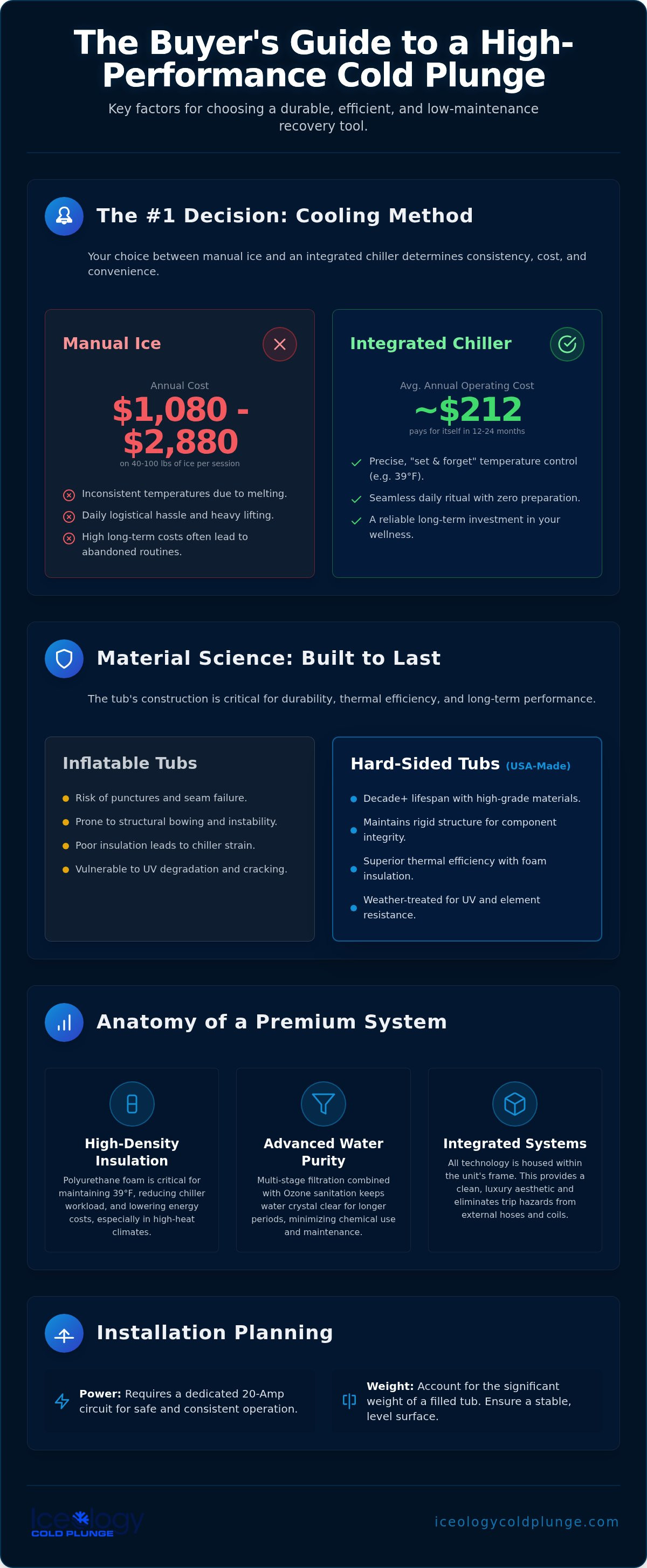
Maintaining a consistent routine requires 40 to 100 pounds of ice for every session. Sourcing this volume is both expensive and logistically exhausting. Research indicates that manual ice users spend between $1,080 and $2,880 annually just on cooling. Beyond the cost, ice melts quickly. This leads to inconsistent temperatures that fail to trigger the desired metabolic response. A digital chiller offers "set it and forget it" precision, allowing you to hit a perfect 39°F every single morning without leaving your home.
Integrated Systems vs. External Hoses
Most entry-level units rely on external hoses and drop-in cooling coils that clutter your space. High-end, USA-made tubs utilize integrated chilling systems where the technology is housed within the unit's frame. This design offers a clean, luxury aesthetic that complements a professional home gym. It also eliminates safety risks. By removing external plumbing, you reduce trip hazards and potential leak points in your home. These plug-and-play units are engineered for durability, focusing on a quality-first mindset that prioritizes your safety and comfort.
Drop-in coils are often secondary additions that struggle to maintain depth in temperature. In contrast, integrated systems are built into the basin's circulation path. This ensures every gallon of water passes through the heat exchanger, resulting in uniform cooling without warm pockets. Analyzing this technical distinction ensures you reach that 39°F benchmark even during the peak of summer heat.
A premium chiller is an essential factor in what to look for when buying a cold plunge because it represents an investment in thermal engineering. While the initial cost is higher, the average annual operating cost for a chiller in the U.S. is approximately $212. For daily users, a chiller-equipped system typically pays for itself in 12 to 24 months by eliminating ice purchases. You gain a reliable partner in your wellness journey that operates quietly and efficiently for years to come.
Material Science: Hard-Sided Tubs vs. Inflatable Options
Selecting the basin material is just as vital as the chiller system. When determining what to look for when buying a cold plunge, you must choose between the portability of an inflatable and the permanence of a hard-sided tub. Inflatable models often appeal to beginners due to their lower entry price. However, they carry inherent risks like seam failure and accidental punctures. A hard-sided tub is a piece of thermal engineering designed to serve as a reliable partner in your wellness journey for a decade or more.
Durability is the primary differentiator. Hard-sided tubs utilize high-grade materials that resist the structural bowing common in PVC units. This stability is essential for maintaining a consistent seal around the integrated chiller components. Over time, the repeated expansion and contraction of inflatable walls can lead to micro-leaks that compromise thermal efficiency. Investing in a rigid structure ensures your water stays at 39°F without the chiller working overtime to compensate for air-gap heat transfer.
The Durability of USA-Made Construction
Precision engineering is the hallmark of domestic manufacturing. Choosing a Cold Plunge Tub Made in USA means your unit is built to withstand intense environmental stressors. In climates like Miami or Orlando, UV resistance is mandatory. Cheap, imported plastics often degrade and become brittle under the Florida sun, leading to surface cracking within just a few seasons. American-made craftsmanship utilizes thicker, weather-treated basin materials that maintain their integrity. This quality-first mindset protects your investment from the elements and ensures long-term reliability.
Aesthetic Integration in Wellness Spaces
Your recovery environment significantly impacts your mental state. A dedicated, hard-sided station creates a psychological anchor for your daily discipline. While an inflatable tub feels temporary, a premium hard-sided unit becomes a centerpiece in a high-end home gym. This professional setup mirrors the standards found in elite recovery centers. Beyond the looks, a stable unit is safer for users managing the cardiovascular effects of cold plunges, as it provides a firm edge and solid footing for entry and exit.
Resale value is another factor often overlooked. A premium hard-sided tub maintains its worth over time because the materials don't degrade like soft-shell alternatives. If you ever decide to upgrade your space, a well-maintained, rigid tub remains a high-value asset. You can explore a variety of premium cold plunge tubs that blend functional engineering with sophisticated design to elevate your recovery routine. Choosing quality today prevents the frustration of a replacement purchase tomorrow.
Thermal Efficiency: Insulation Requirements for High-Heat Climates
Maintaining 39°F water in a humid climate like Miami or Tampa is a rigorous test of thermal engineering. If you are learning what to look for when buying a cold plunge, thermal efficiency should be at the top of your list. Without proper insulation, your chiller will fight a losing battle against the ambient air. This constant strain doesn't just waste energy; it leads to premature motor failure and inconsistent water temperatures that can ruin your recovery routine.
In Florida, the annual cost to run a chiller averages around $212, but this figure assumes a well-insulated unit. In high-heat environments, a poorly insulated tub can see these costs spike significantly as the motor runs double the necessary hours. High R-value materials provide the necessary resistance to heat flow required to keep operational costs low. It's a clear feature-then-benefit scenario: superior insulation leads to lower monthly expenses and a much quieter home gym environment.
Poor insulation also creates a frustrating maintenance issue: condensation. When cold water meets warm, humid air through a thin basin wall, the tub "sweats." This moisture pools on your floor, potentially damaging expensive hardwood or gym mats over time. High-quality thermal management prevents this by creating a total barrier between the internal temperature and the external environment. It ensures the cold stays inside the tub where it belongs.
The Power of Polyurethane Foam
Injected high-density foam is far superior to simple air-gap insulation found in budget models. It fills every void in the tub's structure, providing a rigid thermal break that prevents heat transfer. Polyurethane foam is the gold standard for cold plunge efficiency. This technical attribute ensures your water stays crisp while the chiller remains in a low-power state for most of the day. By choosing a tub with this specific insulation, you are investing in a system that respects both your time and your utility bill.
Lid Integrity and Seal Quality
Don't ignore the top of the unit. Research suggests that approximately 80% of thermal loss occurs through the surface of the water when the tub is not in use. A heavy-duty, insulated lid is non-negotiable for outdoor setups in Orlando or Tampa. It must create a tight, airtight seal to lock in the cold and keep out heat and debris. A locking lid also adds a layer of safety, ensuring the unit remains a private sanctuary for your discipline. When you evaluate what to look for when buying a cold plunge, treat the lid as a critical component of the overall thermal system, not just an accessory.
Hygiene and Ergonomics: Ensuring a Low-Maintenance Experience
Maintaining water quality is often the hidden burden of cold therapy. Many first-time buyers focus on the temperature and forget the cleanliness. When researching what to look for when buying a cold plunge, prioritize systems that minimize manual labor. You want to step into crystal-clear water every time, not spend your weekend scrubbing a basin. A quality-first mindset means choosing a tub that manages the technical details of hygiene so you can focus entirely on your personal results.
Sanitation technology has advanced significantly for 2026. Ozone and UV-C are now the industry standards for premium units. Ozone injection breaks down organic matter on a molecular level, while UV-C light neutralizes bacteria as water passes through the chiller loop. Using these advanced sanitation methods significantly reduces your reliance on harsh chemicals like chlorine or bromine. This creates a skin-friendly environment that feels more like a natural spring than a swimming pool. It's a professional approach that ensures your recovery sanctuary remains pristine.
The Science of Water Clarity
Constant circulation is the secret to a low-maintenance tub. Stagnant water, even when kept at 39°F, eventually develops a biofilm or "slime" that is difficult to remove. A high-performance Cold Plunge Tub with Chiller ensures the water is moving 24/7 through a 20-micron filter. This fine particulate filtration captures skin cells and debris before they can cloud the water. Look for easy-access filter housings that allow you to swap cartridges in under sixty seconds. This simple weekly task is the only effort required to maintain perfect clarity.
Comfort and Interior Design
Ergonomics dictate the actual quality of your session. If you can't fully submerge your shoulders and neck, you are missing out on the full metabolic benefits of the practice. Proper internal length is essential, especially for taller users who need room to recline comfortably. Step-in height is another critical safety factor. A tub that is too high can be difficult to exit when your limbs are numb from the cold. Non-slip interior surfaces and built-in seating options provide the necessary grip and stability to ensure every entry is controlled and safe.
Consider the drainage logistics as well. Even with the best filtration, you'll eventually need to refresh the water. A well-placed drain that connects to a standard garden hose makes this process effortless. It prevents water from pooling around the base of your unit, protecting your flooring and the structural integrity of your home gym. If you're ready to invest in a low-maintenance, high-performance system, explore our collection of premium cold plunge tubs that are engineered for comfort and clarity.
Planning Your Installation: Power, Placement, and Local Factors
The final step in your journey is preparing the physical space for your new recovery tool. When determining what to look for when buying a cold plunge, the installation requirements are just as vital as the chiller's horsepower. You're not just buying a tub; you're integrating a sophisticated piece of thermal engineering into your home. Proper planning ensures that your unit operates at peak efficiency while remaining a safe, seamless part of your daily routine.
Electrical safety is paramount. Most premium home units are designed for a standard 120V outlet, but they often require a dedicated 20A GFCI circuit. This prevents nuisance tripping and ensures the chiller has the consistent power it needs to maintain a crisp 39°F. Before your unit arrives, verify that your outdoor or gym outlet meets these specifications. It's a small technical detail that prevents significant frustration during your first setup.
Weight is the most overlooked factor in the buying process. A filled cold plunge tub can weigh between 1,500 and 4,000 pounds depending on its size and material. This is a massive load for a standard residential deck or a high-rise balcony in Miami. You must confirm that your chosen surface can support this concentrated weight. If you're placing the tub on a deck, a concrete pad or reinforced joists might be necessary to ensure long-term structural integrity.
Strategic Placement for Florida Homes
Florida's climate presents unique challenges for outdoor installations. Chillers generate heat as they cool the water, so they require ample airflow to breathe. Tucking a unit into a tight, unventilated corner will force the motor to work harder, shortening its lifespan. If you live in coastal areas like Naples or West Palm Beach, salt air corrosion is a real threat. Choosing a tub with USA-made components ensures that the fittings and valves are rated for high-salinity environments. For a deeper dive into the logistics, consult our guide on Cold Plunge Tub Setup to prepare your space correctly.
The Final Checklist for Buyers
Before you finalize your investment, run through a high-level quality check. Reliable support is the difference between a lifetime of recovery and a broken tub sitting in your yard. Use this checklist to confirm your choice meets the "quality-first" standard:
- Domestic Support: Verify the warranty is backed by a US-based company for faster parts and service.
- Acoustic Profile: Confirm the chiller noise level is neighbor-friendly, especially for tight residential setups.
- Safety Sensors: Look for integrated features like auto-shutoff and water-level sensors to protect the pump.
Understanding what to look for when buying a cold plunge means looking beyond the price tag to the long-term operational reality. By choosing a partner that values precision and durability, you're securing a tool that will empower your wellness journey for years to come. Your future self, standing in 39°F water after a hard workout, will thank you for the meticulous planning you do today.
Take Command of Your Performance Journey
You now understand exactly what to look for when buying a cold plunge to ensure your recovery routine remains a permanent part of your lifestyle. Prioritizing technical precision over cheap convenience prevents the frustration of failed equipment or inconsistent temperatures. Focus on hard-sided durability and advanced thermal management. By doing so, you secure a sanctuary for your mental and physical health that lasts a decade. It's about more than just cold water. It's about investing in the art of craftsmanship and the science of resilience.
Your path to peak performance deserves a reliable partner that won't quit when the Florida heat intensifies. Our systems feature an integrated chiller system and superior polyurethane insulation to deliver consistent 39°F water every morning. Every unit reflects our commitment to Made in the USA quality and professional-grade recovery. Explore Iceology’s Premium USA-Made Cold Plunge Tubs to find the perfect fit for your home. You've done the research. Now, take the final step toward total-body optimization and master your recovery today.
Frequently Asked Questions
How much electricity does a cold plunge tub use per month?
A cold plunge with an integrated chiller costs approximately $18 per month to operate based on average electricity rates. In Florida, this cost is heavily influenced by the quality of your insulation. High-density polyurethane foam creates a superior thermal break, preventing the motor from running continuously. This efficiency protects your investment and ensures your monthly utility bill remains predictable even during the peak of summer in Miami or Tampa.
Can I keep my cold plunge tub outdoors in the Florida heat?
Yes, you can keep a premium hard-sided tub outdoors in the Florida heat. It's essential to choose a model with UV-resistant materials and high-grade insulation to maintain a crisp 39°F. Residents in coastal areas like Naples or West Palm Beach should prioritize USA-made craftsmanship. These units use durable components that resist salt air corrosion. Proper airflow around the chiller unit is also necessary to prevent overheating in humid conditions.
What is the best temperature for a cold plunge?
The ideal temperature for cold water immersion typically falls between 45°F and 55°F for most users. However, experienced practitioners often prefer reaching as low as 39°F for maximum metabolic and inflammatory benefits. When researching what to look for when buying a cold plunge, ensure the chiller is powerful enough to reach these lower thresholds consistently. This precision allows you to customize your recovery protocol based on your specific physical and mental goals.
How often do I need to change the water in a chilled cold plunge?
With a 24/7 circulation system and advanced sanitation like Ozone or UV-C, you only need to change the water every three to six months. This low-maintenance schedule is possible because 20-micron filters constantly remove particulate matter. Maintaining proper water chemistry and rinsing off before entry further extends the life of the water. This efficiency is a key factor in what to look for when buying a cold plunge to minimize your weekly chores.
Do I need a special electrical outlet for a cold plunge chiller?
Most premium 120V chillers require a dedicated 20A GFCI circuit to operate safely and effectively. Sharing a circuit with other high-draw appliances in your garage or home gym can lead to frequent breaker trips. For outdoor installations in Florida, your setup must comply with local electrical codes, including the use of outdoor-rated wiring. Consulting with a licensed electrician ensures your recovery station is safe and provides consistent power to the chilling system.
Is a hard-sided cold plunge worth the extra cost over an inflatable?
A hard-sided tub is a superior long-term investment because it offers better thermal efficiency and structural durability. Inflatable models are prone to seam failures and punctures, especially in the intense Florida sun. Hard-sided units feature integrated chillers and injected foam insulation that keep water at 39°F without wasting energy. They also maintain a much higher resale value and provide a more stable, professional aesthetic for a dedicated home wellness space.
How much maintenance does a premium cold plunge actually require?
Maintenance for a premium system is surprisingly minimal, requiring only about five minutes of attention per week. You should check the 20-micron filter and rinse it or replace it if it appears dirty. Periodically checking the water chemistry ensures the Ozone or UV-C systems are working at peak performance. This quality-first design approach allows you to focus on your recovery discipline rather than spending your weekends managing complex equipment repairs.
What is the difference between an ice bath and a cold plunge tub?
The primary difference lies in the cooling method and temperature consistency. A traditional ice bath requires manual ice, which is expensive and results in fluctuating temperatures. A cold plunge tub uses a powerful mechanical chiller to maintain a precise, digital temperature 24/7. This technology removes the friction of preparation. It ensures that your water is always ready for a session at exactly 39°F whenever you are.