
Creating a Backyard Wellness Sanctuary in Florida: The 2026 Guide
What if your backyard could outperform a professional recovery center while standing up to the harshest environmental conditions in the country? You understand that true recovery requires consistency, yet the Sunshine State presents a unique set of challenges for anyone creating a backyard wellness sanctuary in Florida. Between the corrosive salt air and the relentless UV index, standard equipment often fails long before you see a return on your investment. It's frustrating to invest in your health only to watch your setup degrade or your electricity bill skyrocket as your chiller struggles against 90-degree humidity.
We believe your sanctuary should be a source of calm, not a maintenance burden. This 2026 guide teaches you how to design a high-performance recovery space that delivers professional-grade benefits regardless of the external temperature. You'll learn the science of thermal insulation and the importance of hard-sided, USA-made craftsmanship in maintaining water at a precise 39°F. We cover everything from navigating local building codes to selecting materials that offer true longevity. By the end, you'll have a clear blueprint for a private retreat that optimizes your physical performance and adds lasting value to your home.
Key Takeaways
- Understand why environmental stressors like salt air and high UV demand specific equipment choices when creating a backyard wellness sanctuary in Florida.
- Discover why integrated chillers are mandatory for maintaining a consistent 39°F, especially when Florida tap water often exceeds 80°F.
- Learn the technical requirements for a safe installation, including structural foundation needs and critical GFCI electrical standards.
- Explore how to combine cold water immersion with infrared heat to create a professional-grade contrast therapy routine at home.
- Identify the benefits of hard-sided, USA-made construction for long-term durability and energy efficiency in high-humidity climates.
The Florida Wellness Challenge: Designing for Heat and Humidity
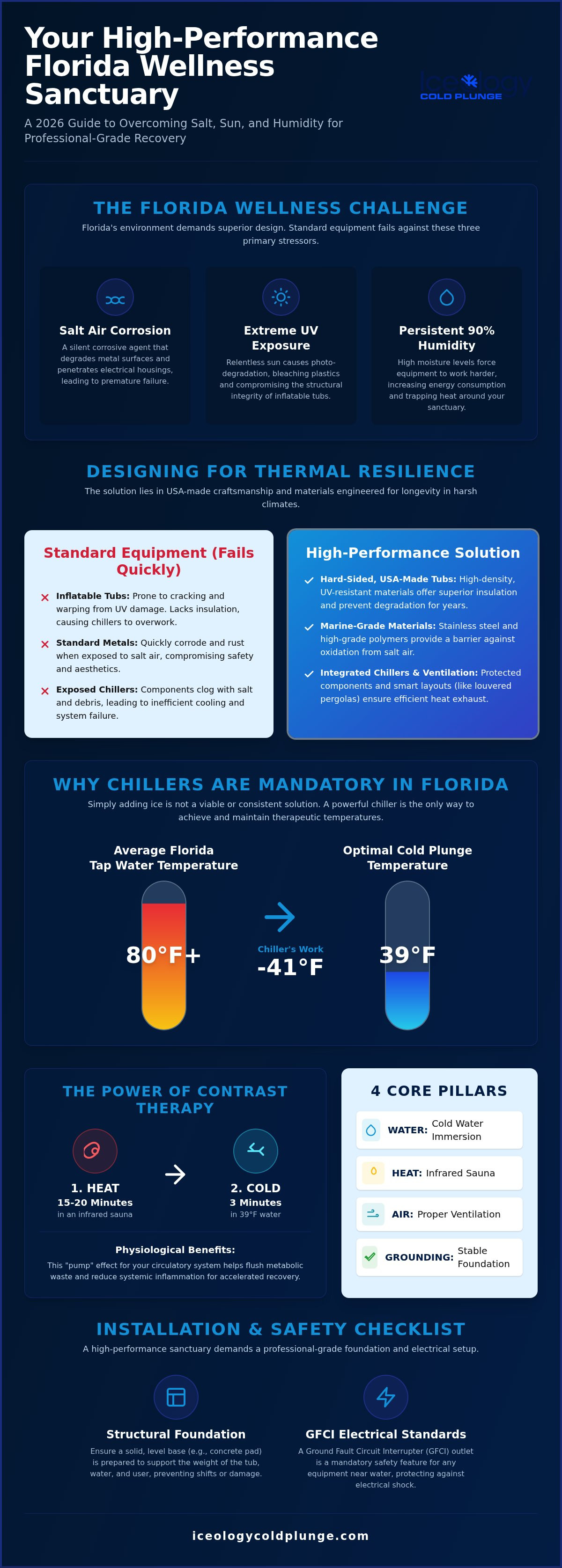
A backyard wellness sanctuary is more than an aesthetic addition to your home. It is a functional engine for physical and mental restoration. While a standard patio is designed for passive leisure, a recovery space is built for active results. It is a dedicated environment where you can master your physiology through disciplined practice. However, creating a backyard wellness sanctuary in Florida requires a strategy that accounts for the state’s aggressive environmental chemistry. You aren't just designing for comfort; you're designing for survival against three primary local stressors: salt air corrosion, extreme UV exposure, and persistent 90% humidity.
Standard outdoor furniture and entry-level recovery tools often fail because they lack "thermal resilience." This is the ability of a system to maintain internal performance standards despite external environmental chaos. In the Florida heat, your equipment must work harder to stay cool, and your materials must resist the breakdown caused by constant moisture. Incorporating various Hydrotherapy techniques into your daily routine requires equipment that can maintain precise temperatures, ensuring your recovery doesn't stop just because the thermometer hits triple digits.
Battling Salt Air and Corrosion in Coastal Florida
If you live in coastal hubs like Miami or Naples, salt air is your primary adversary. It is a silent corrosive agent that penetrates electrical housings and degrades metal surfaces within months. For these environments, stainless steel and high-grade polymers are non-negotiable. These materials provide a protective barrier against oxidation, ensuring your investment remains structurally sound. Salt is particularly brutal on external chiller components. It can clog cooling fins and lead to premature system failure if the unit isn't built with marine-grade considerations. To protect your sanctuary, implement a simple weekly maintenance routine: rinse external surfaces with fresh water to remove salt deposits and check seals for any signs of moisture intrusion.
UV Protection and Material Longevity
Florida’s sun is a powerful solvent. It bleaches cheap plastics and causes inflatable recovery tubs to lose their structural integrity through a process called photo-degradation. When creating a backyard wellness sanctuary in Florida, hard-sided construction is the only viable path for longevity. High-density materials, such as those used in USA-made cold tubs, offer the UV resistance needed to prevent cracking and warping over years of exposure.
Your choice of shade also impacts performance. While a solid roof provides total shade, it can trap rising humidity and heat, making the air around your cold plunge feel oppressive. Consider a pergola with adjustable louvers. This design provides significant UV protection while allowing for critical airflow. Proper ventilation ensures that your chiller can exhaust heat efficiently, which reduces energy consumption and extends the life of the motor.
The Core Pillars of a High-Performance Sanctuary
Building a high-performance retreat requires more than just high-end gear. It requires a cohesive ecosystem. When creating a backyard wellness sanctuary in Florida, you must balance four core pillars: water, heat, air, and grounding. Each element serves a specific physiological purpose, working in tandem to accelerate recovery and sharpen mental focus. By treating your backyard as a laboratory for personal optimization, you turn a simple outdoor space into a professional-grade recovery center.
Cold water immersion is the anchor of the modern sanctuary. In a climate where the ambient temperature rarely provides relief, having a dedicated space for cold therapy is essential. It provides an immediate reset for the central nervous system. By integrating an infrared sauna alongside your cold plunge, you unlock the potential of contrast therapy. This practice involves moving between extreme heat and cold to stimulate the vascular system, providing a level of recovery that passive rest cannot match.
The Power of Contrast Therapy
Moving from the deep heat of a sauna to the crisp 39°F of a cold tub creates a powerful "pump" effect for your circulatory system. This sequence encourages rapid vasoconstriction and vasodilation, which helps flush metabolic waste and reduces systemic inflammation. For a deeper dive into the data behind these physiological shifts, you can read about The Scientific Benefits of Cold Plunge. To maximize results, most professionals recommend 15 to 20 minutes in the heat followed immediately by a 3-minute immersion in the cold. This routine strengthens the immune system and improves overall sleep quality.
Your sanctuary's foundation also plays a critical role in your experience. Florida's sun can make standard concrete patios reach temperatures that burn bare skin. Opt for natural stone like travertine or light-colored composite decking. These materials stay cool underfoot, allowing for seamless movement between recovery stations without the discomfort of scorching surfaces.
Creating a Breathwork and Meditation Zone
Recovery is as much mental as it is physical. Designing for "Blue Mind" involves using the sight and sound of water to lower cortisol levels and induce a state of calm. Surround your space with native greenery by following Florida-Friendly Landscaping™ principles. Plants like Sabal Palms or Star Jasmine provide natural screening and a calming fragrance. These elements mask local traffic noise, creating a private pocket of stillness for meditation. If you're ready to anchor your space with professional-grade equipment, consider exploring premium cold tubs designed specifically for the Florida environment.
Selecting Equipment: Why Chillers are Mandatory in Florida
Florida’s groundwater temperature presents a significant hurdle for recovery enthusiasts. In regions like Orlando and Tampa, tap water often exits the faucet at 80°F or higher during the summer months. This "Tap Water Problem" makes traditional ice baths functionally obsolete for anyone creating a backyard wellness sanctuary in Florida. To reach a therapeutic 39°F, you'd need to haul hundreds of pounds of ice for a single session. This is not just physically exhausting; it’s economically unsustainable for a daily practice.
The Chiller Advantage: Consistent 39-Degree Water
Choosing a Cold Plunge Tub with Chiller transforms your recovery from a chore into a reliable ritual. Integrated chillers are designed to combat high ambient temperatures, ensuring your water stays at your target temperature 24/7. While the upfront investment is higher than a stock tank, the cost-benefit analysis favors the chiller. You eliminate the recurring expense of ice and the time lost to preparation. This precision allows you to focus entirely on the mental discipline of the plunge rather than the logistics of cooling.
Effective thermal management also depends on the environment surrounding your equipment. By applying Florida-Friendly Landscaping principles, such as placing your unit in a naturally shaded area with adequate airflow, you can further optimize system performance. Proper placement reduces the thermal load on your equipment, allowing it to operate with maximum efficiency.
Insulation Science: Keeping the Cold In
Insulation is the silent partner of the chiller. In a tropical climate, the "Thermos Effect" is more critical than the raw horsepower of your cooling unit. High-performance tubs utilize polyurethane foam insulation to create a thermal barrier that traps the cold inside. This material is particularly effective in Florida’s humidity, where temperature transfer happens rapidly. High-quality insulation prevents the chiller from overworking in 100-degree heat, which directly translates to lower monthly electricity costs.
Durability is another factor where equipment choice matters. Inflatable options often fail under Florida’s intense UV index, leading to leaks and structural collapse. Hard-sided, USA-made construction offers the rigidity needed to withstand the elements while providing a premium aesthetic that complements your home. By prioritizing engineering and material science, you ensure your sanctuary remains a high-performance tool for years to come.
Layout and Installation: A Florida How-To
Precision in the planning phase ensures your recovery space remains a sanctuary rather than a source of stress. When creating a backyard wellness sanctuary in Florida, the physical layout must prioritize both structural safety and environmental resilience. You are managing more than just aesthetics. You are coordinating weight distribution, electrical safety, and moisture management in a climate that tests the limits of every material used.
Successful installation follows a logical progression from the ground up. First, you must assess the foundation to handle significant weight. Second, electrical systems must meet strict safety codes for proximity to water. Third, your site must account for the sudden, heavy downpours typical of Florida afternoons. Finally, you must balance the need for privacy with the technical requirement for airflow around your chiller. Each step is a building block toward a professional-grade retreat that adds lasting value to your lifestyle and home.
Foundation and Structural Integrity
Calculating the "wet weight" of your equipment is critical before placement. A tub like the Grizzly 450 holds 112.5 gallons of water, which weighs approximately 938 pounds. When you add the weight of the tub itself and a 200-pound adult, the total pressure on your surface can exceed 1,300 pounds. While some reinforced decks can handle this load, concrete pads remain the gold standard for Florida wellness setups. A level concrete base prevents the tub from shifting during heavy rain and provides a stable, rot-proof surface for your chiller. For a deeper look at site preparation, consult our Cold Plunge Tub Setup Guide to ensure your space is ready for delivery.
Ventilation and Chiller Placement
Your chiller is the heart of your sanctuary, and it needs room to breathe. In Florida’s humid air, chillers require 12 to 18 inches of clearance on all sides to exhaust heat effectively. Without this space, the unit will recycle its own hot air, forcing the motor to work harder and increasing your energy costs. If you prefer to hide the mechanical components, use louvred screens or breathable fencing. These options provide seclusion without blocking the airflow necessary for thermal management.
Managing "Summer Rain" is equally important. Florida code requires outlets to be at least 5 feet from the tub, with GFCI protection mandatory for any outlet within 10 feet. Ensure your equipment is slightly elevated or placed on a sloped surface so it does not sit in standing water after a tropical storm. Proper drainage protects your electrical components and prevents the buildup of mold around your foundation. If you are ready to begin your installation with a unit built for these conditions, you can shop our USA-made cold tubs today.
Elevating Your Sanctuary with Iceology Craftsmanship
The final step in creating a backyard wellness sanctuary in Florida is selecting a partner who understands the intersection of engineering and recovery. While imported products often use inferior insulation and non-marine grade components, American-made equipment is built to endure the specific atmospheric pressures of the Southeast. Expert craftsmanship ensures that every seal, chiller, and insulation layer works in harmony to deliver a consistent 39°F experience. When you choose a system designed for high-performance use, you aren't just buying a tub. You're securing a reliable tool for your daily discipline.
USA-Made: Quality You Can Trust
Expert craftsmanship is non-negotiable when dealing with high-pressure water systems and integrated electronics. A Cold Plunge Tub Made in USA represents a commitment to precision that imported alternatives cannot match. For Florida residents, this choice provides more than just a superior product. It offers the peace of mind that comes with local expertise. Iceology supports customers from the high-rises of Miami to the estates of West Palm Beach, providing the technical guidance needed to maintain your system in a tropical climate. This local support ensures that any maintenance needs are handled by experts who understand the local environment.
Investing in Longevity
A premium cold tub is a one-time investment in your future health. While cheaper, disposable alternatives might seem attractive initially, they often fail under Florida’s intense UV exposure and humidity. Investing in quality materials is the most critical decision you'll make when creating a backyard wellness sanctuary in Florida, as it determines the longevity of your recovery practice. Our hard-sided construction is designed for high-frequency use, ensuring that your sanctuary remains operational for years without structural degradation.
Beyond performance, the aesthetic value of a sleek, hard-sided tub complements Florida’s modern architecture, turning your recovery space into a visual centerpiece of your home. It’s a professional-grade addition that reflects a commitment to quality and results. If you're ready to elevate your routine and secure a system built for the Sunshine State, you can Explore Iceology's Premium Cold Plunge Tubs to find the perfect fit for your space.
Your 30-Day Sanctuary Checklist
Transitioning from a standard backyard to a high-performance wellness sanctuary is a methodical process. Follow this 30-day blueprint to ensure a seamless setup:
- Days 1-7: Finalize your layout, ensuring 12-18 inches of chiller clearance and proximity to a GFCI outlet.
- Days 8-14: Install your foundation, preferably a level concrete pad or travertine stone to manage heat and weight.
- Days 15-21: Select your equipment, prioritizing hard-sided construction and integrated cooling.
- Days 22-30: Complete your landscaping with Florida-native plants and establish your first contrast therapy routine.
Commit to Your Peak Performance
Transforming your outdoor space is an investment in your most valuable asset: your health. When creating a backyard wellness sanctuary in Florida, your focus must remain on thermal resilience and marine-grade durability. You've learned that consistent recovery requires more than just water; it demands precise engineering that can maintain a crisp 39°F even when the humidity peaks. By prioritizing high-density insulation and proper ventilation, you ensure your sanctuary remains a reliable tool for physical and mental optimization for years to come.
Your path to improved clarity and faster recovery starts with equipment that's built to withstand the unique challenges of the Sunshine State. Don't settle for temporary solutions that degrade in the salt air. Instead, choose professional-grade tools that deliver results every single day. Design your professional Florida recovery sanctuary with Iceology to experience the difference of USA-made craftsmanship. With integrated chillers reaching 39°F and marine-grade durability for coastal homes, your retreat will be ready whenever you are. Take control of your recovery and begin your journey toward total-body optimization today.
Frequently Asked Questions
Do I need a special permit to install a cold plunge in my Florida backyard?
A building permit is typically required for any backyard structure larger than 100 to 200 square feet, depending on your specific Florida county. While the cold plunge tub itself is a portable appliance, any dedicated electrical work or plumbing requires a permit from a licensed professional. Florida code specifically requires a dedicated 20-amp circuit for chillers. Always check local municipal regulations before finalizing your installation to ensure full compliance with the 9th Edition Florida Building Code.
How does Florida’s humidity affect cold plunge maintenance?
High humidity accelerates the growth of mold and mildew on external surfaces and can lead to condensation within electrical components. When creating a backyard wellness sanctuary in Florida, regular maintenance is essential to combat these tropical stressors. We recommend a weekly fresh water rinse to remove salt deposits and checking all seals for moisture intrusion. Using a system with an integrated ozone sanitation system significantly reduces the organic load in the water, making maintenance much easier in the heat.
Can I leave my cold plunge tub outside during a hurricane?
Hard-sided cold tubs are exceptionally stable during high winds due to their significant wet weight, which can exceed 1,300 pounds when full. However, the primary risk during a Florida hurricane is flying debris damaging the external chiller or the tub's finish. If a storm is approaching, it's best to drain the unit and move it to a garage or secure it under a heavy-duty, marine-grade cover. Always disconnect the power to prevent electrical surges from lightning strikes.
How much does it cost to run a cold plunge chiller in Florida’s summer?
The estimated monthly electricity cost to run a cold plunge chiller in Florida ranges between $30 and $80 during the peak summer months. This cost varies based on your target temperature and the quality of your unit's thermal barrier. Tubs equipped with high-performance polyurethane foam insulation are much more efficient. They create a thermos effect that prevents the chiller from overworking against 90-degree ambient heat, keeping your operating costs predictable and manageable even in July.
What is the best way to keep my wellness sanctuary private from neighbors?
The most effective way to ensure privacy is by combining structural louvred screens with Florida-native landscaping. Sabal Palms and Star Jasmine provide excellent natural screening without trapping stagnant, humid air around your equipment. Louvred panels are particularly useful because they block the line of sight from neighbors while maintaining the 12 to 18 inches of clearance your chiller needs for ventilation. This balance ensures your retreat remains secluded and your equipment stays cool during high-performance use.
Is a hard-sided tub really better than an inflatable one for the Florida sun?
Hard-sided tubs are far superior to inflatables because they are immune to the photo-degradation caused by Florida’s extreme UV index. Cheaper plastic and inflatable materials often warp, leak, or lose structural integrity after just one summer of direct sun exposure. A premium, hard-sided tub is a one-time investment built with UV-resistant materials. It provides the durability needed for a permanent recovery space while maintaining its aesthetic value and performance standards over many years of intense tropical exposure.
How often should I change the water in my outdoor cold plunge?
You should generally change the water every three to four months if your unit includes an integrated filtration and ozone sanitation system. Without these features, the high Florida temperatures would require a water change every few days to prevent bacterial growth. Regular testing of the water chemistry is vital to ensure a safe and effective experience. Keeping the tub covered when it's not in use also prevents organic debris like leaves and insects from compromising the water quality.
What are the best plants for a Florida wellness garden?
The best plants for a wellness garden are those that thrive in local conditions while providing sensory benefits, such as Saw Palmetto or Coontie. These species are part of the Florida-Friendly Landscaping principles and require minimal irrigation once established. Fragrant options like Star Jasmine can enhance the meditative atmosphere of your breathwork zone. Avoid plants with aggressive root systems that could interfere with your concrete pad or electrical lines, ensuring your sanctuary remains low-maintenance and structurally sound.