
DIY Chest Freezer Ice Bath Problems: Why Your Homemade Setup Might Fail
What if your shortcut to peak performance is actually a liability waiting to happen? Many athletes start with a repurposed appliance to save money, but the technical reality rarely matches the ambition. You likely value the mental clarity and physical resilience that cold therapy provides, yet facing DIY chest freezer ice bath problems can quickly turn a recovery ritual into a source of stress. You shouldn't have to worry about electrical safety or leaking seams every time you attempt to plunge.
The truth is that homemade rigs frequently fail because they were never built for constant water immersion. It's frustrating to deal with murky water and the constant chore of manual draining when your goal is simply to optimize your health. In this article, we'll uncover the hidden risks of freezer conversions and explain why serious recovery requires a professional system. We will look at why these setups fail and how a purpose-built cold plunge delivers a safe, crystal-clear, 39-degree experience that works every single time.
Key Takeaways
- Understand the structural risks of placing over 800 pounds of water into a frame designed only for frozen food and air.
- Identify the most common DIY chest freezer ice bath problems, including electrical safety hazards and the difficulty of maintaining sanitary, clear water.
- Evaluate the true cost of DIY components versus the long-term efficiency of professional-grade insulation and integrated cooling systems.
- Discover how a dedicated cold plunge setup provides consistent 39-degree temperatures and built-in filtration for a reliable, worry-free recovery ritual.
The Rising Trend and Hidden Realities of DIY Chest Freezers
The biohacking movement has transformed cold therapy from an elite athlete's secret into a mainstream wellness ritual. Many enthusiasts begin their journey by attempting to build a chest freezer cold plunge, which is simply a standard kitchen appliance repurposed for human immersion. While the low entry cost is attractive, the fundamental design conflict between air-cooling and water-immersion engineering leads to several DIY chest freezer ice bath problems that most beginners don't anticipate. Without the precision of a professional system, users also face increased risks of hypothermia if they cannot accurately monitor or control the water temperature during deep sessions.
Repurposing a freezer might seem like a clever hack. It's accessible. It's immediate. However, these appliances were never intended to hold hundreds of pounds of liquid while an adult climbs inside. This mismatch between intent and engineering creates a fragile environment where technical failures aren't just possible; they're likely.
Why Chest Freezers Weren't Built for You
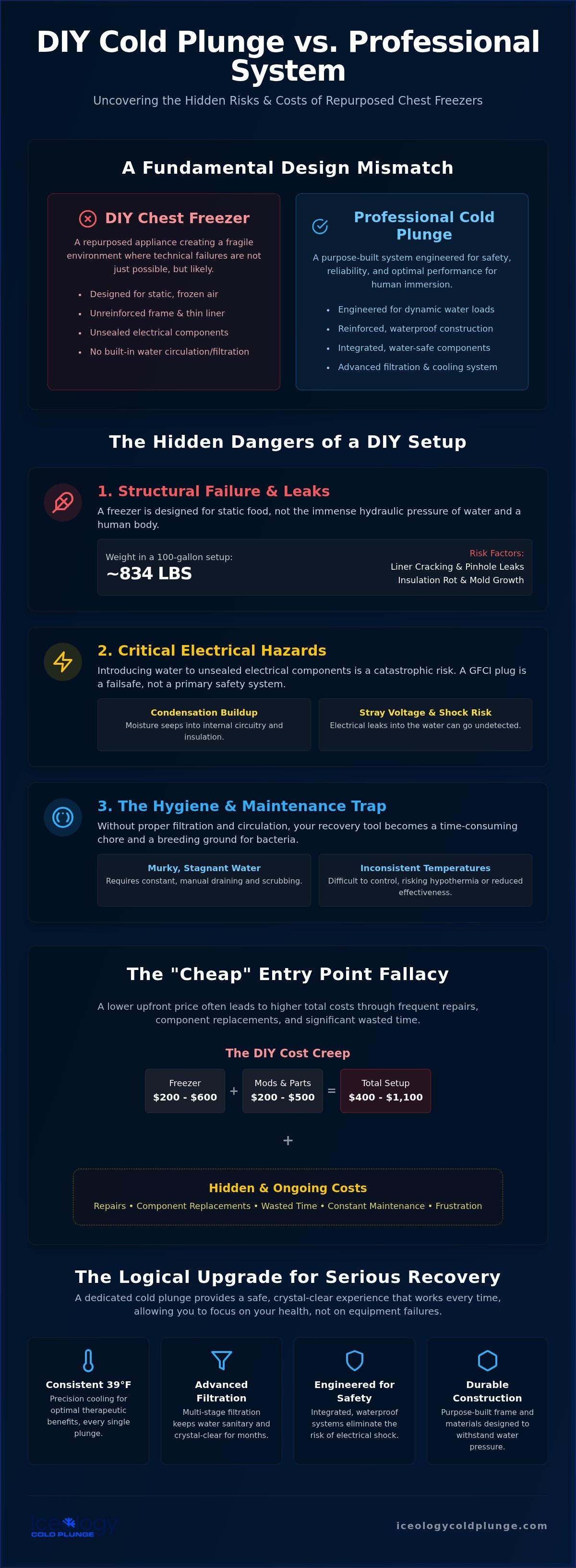
Kitchen appliances are designed to handle static loads. They're built to hold bags of frozen vegetables and meat that sit perfectly still. When you fill a freezer with 100 gallons of water, you're adding approximately 834 lbs of weight to a frame that wasn't reinforced for that kind of pressure. Every time you step into the water, you create a dynamic load. The water shifts, the pressure spikes, and the freezer walls flex.
Standard freezer insulation is also optimized for maintaining air temperature, not for the 24/7 thermal management of a high-density liquid. Over time, the internal plastic or thin aluminum liners often develop micro-cracks under this hydraulic stress. These cracks allow moisture to seep into the insulation, which destroys the unit's efficiency and can lead to structural rot from the inside out.
The 'Cheap' Entry Point Fallacy
The initial savings of a DIY build are often an illusion. While a used freezer might cost between $200 and $600, the necessary modifications quickly add up. You'll need high-grade marine sealants, submersible pumps, external timers, and GFCI protection to make the unit even remotely functional. When you factor in these additions, the total investment for a functional setup often climbs between $400 and $1,100.
False economy in the context of DIY wellness equipment is the decision to choose a lower upfront price that ultimately yields higher total costs through frequent repairs, component replacements, and significant wasted time. You must also consider the hidden cost of maintenance. Many DIYers spend more hours scrubbing murky liners and troubleshooting leaks than they do actually enjoying the benefits of the cold. A professional solution eliminates this technical debt so you can focus entirely on your recovery.
Critical Safety and Structural DIY Chest Freezer Problems
Safety is the most significant concern when modifying a kitchen appliance for water immersion. While a freezer is grounded for external protection, its internal components were never designed to be submerged. The most dangerous of all DIY chest freezer ice bath problems is the risk of electric shock. When an uncertified electrical rig fails, the sudden surge can be catastrophic, especially when your body is already managing the dangers of cold shock in near-freezing water. A professional setup prioritizes your well-being through integrated, waterproof engineering.
The Reality of Electrical Hazards
Standard freezers rely on air circulation to stay cool. They feature unsealed lid gaps and mechanical housings that allow ambient moisture to enter the internal circuitry. When you fill the unit with water, condensation builds up inside the insulation layers. This moisture can create "stray voltage," a subtle electrical leak into the water that many users ignore until it becomes a full-blown hazard. External GFCI plugs provide some protection, but they cannot always detect faults occurring deep within the freezer's own compressor wiring. Investing in a professional ice bath ensures that your safety is engineered into the design, not added as an afterthought.
Hydraulic Pressure and Liner Cracking
A typical 100-gallon setup holds approximately 834 lbs of water. This weight exerts a constant, outward hydraulic pressure that freezer frames simply weren't reinforced to handle. Over months of use, the thin plastic or aluminum liners begin to bow. This stress leads to the "pinhole" leak phenomenon. A tiny, invisible crack develops in the liner, allowing water to seep into the insulation. Once the insulation is saturated, it becomes a breeding ground for mold and begins to rot the exterior steel shell from the inside out. You might not notice the damage until you find a puddle on your garage floor and realized the structural integrity of your setup has vanished.
Sealant degradation adds another layer of failure. Even high-quality marine-grade silicone is not immune to the constant expansion and contraction caused by extreme temperature shifts. As the freezer cycles on and off, the sealant eventually pulls away from the liner. These small gaps invite water into the internal mechanical areas, leading to rust, corrosion, and eventual total system failure. True recovery requires a vessel built for the load, not a repurposed box struggling to hold its shape.
The Maintenance Trap: Filtration and Hygiene Issues
Stagnant water is a primary contributor to DIY chest freezer ice bath problems. Unlike professional tubs equipped with high-flow circulation systems, a repurposed freezer has no internal movement. This stillness creates an environment where bacteria flourish. Within just a few days of use, the water often turns murky and develops a distinct odor. Without a continuous flow through a dedicated filtration system, your recovery space quickly transforms into a biological petri dish.
Why Aquarium Filters Fail
Many DIY enthusiasts attempt to solve hygiene issues with internal aquarium filters. These devices are engineered for the biological load of small fish, not a human body covered in sweat, skin oils, and debris. They lack the turnover rate required to maintain sanitary conditions. Professional systems utilize ozone or UV-C sanitation to neutralize pathogens, but these are difficult to integrate into a freezer without drilling through the hull. Furthermore, adding chlorine or bromine to a metal-lined box creates a significant corrosion risk. These chemicals can eat through thin internal liners, leading to the structural leaks and electrical hazards mentioned in previous sections.
The Struggle for Crystal Clear Water
Maintaining crystal clear water in a homemade rig is an uphill battle. Skin oils and sweat quickly saturate primitive DIY filters, rendering them useless within a few sessions. Most chest freezers feature textured aluminum or plastic liners that are perfect for trapping biofilm and slime. Removing this buildup is a back-breaking chore. You're forced to lean deep into a narrow, cold box to scrub every corner manually, which often results in an incomplete clean.
Because DIY filtration is so ineffective, most users eventually resort to a "drain and refill" cycle. This process wastes hundreds of gallons of water every month and adds a massive time burden to your routine. If you want to experience the true benefits of a consistent practice, following a comprehensive guide on cold water immersion therapy will show you that water quality is essential for both safety and performance.
Poor hygiene isn't just an aesthetic issue; it's a medical one. Sitting in unsanitary, bacteria-laden water can lead to skin infections or systemic stress. While cold therapy is praised for its health benefits, performing it in a compromised environment can be harmful for your heart and immune system if your body is forced to fight off pathogens during the recovery process. A professional-grade cold plunge eliminates these variables, ensuring your water stays pristine and your focus remains on your results.
Cost Comparison: DIY vs. Premium Cold Plunge Tubs
At first glance, a repurposed freezer seems like a budget-friendly bargain. However, when you tally the costs of marine-grade sealants, high-flow pumps, filtration units, and ozone generators, the financial gap narrows significantly. Many enthusiasts also overlook the 'Compressor Death' cycle. A freezer motor is engineered to cool air, not the massive thermal load of 100 gallons of water. This technical mismatch causes the motor to run for hours on end, leading to premature failure and recurring DIY chest freezer ice bath problems that eventually require a total unit replacement.
Energy Efficiency in the Florida Heat
In regions like Miami and Orlando, high humidity and ambient heat force DIY units to work overtime. Standard freezers rely on thin, basic insulation that allows for rapid 'heat soak' from the outside environment. In contrast, insulated cold plunge tubs utilize high-efficiency polyurethane foam that creates a superior thermal barrier. While a repurposed freezer often draws excessive wattage struggling to maintain sub-40 temperatures, a dedicated chiller system operates with surgical precision, often consuming significantly less energy for the same thermal output. This efficiency is vital for maintaining a consistent recovery routine without a massive spike in your monthly utility bill.
Durability and Longevity
The average lifespan of a DIY freezer plunge is often limited to 12 to 18 months before structural or mechanical failure occurs. These units simply aren't built for the long haul. On the other hand, USA made cold plunge tubs are engineered for decade-long performance. They represent an investment in your long-term health rather than a temporary fix. When you choose a professional system, you're paying for the peace of mind that comes with knowing your equipment will be ready whenever you are.
Finally, consider the resale value. A used DIY freezer is often viewed as a liability or a piece of junk once the owner is finished with it. A premium tub maintains its value as a piece of high-end wellness equipment. It's the difference between a 'buy once, cry once' professional solution and a recurring cycle of repairs and replacements. If you're ready to stop troubleshooting and start recovering, it's time to explore a premium cold plunge solution that actually lasts.
Why Iceology is the Logical Upgrade for Serious Recovery
Transitioning from a homemade setup to a professional system is a pivotal moment for any athlete or wellness seeker. It represents a shift from managing technical failures to focusing entirely on the mental and physical results of the practice. While DIY chest freezer ice bath problems often stem from using appliances for tasks they weren't designed for, Iceology tubs are engineered from the ground up for the specific rigors of cold water immersion. Our hard-sided tubs handle the immense hydraulic load of 100 gallons with ease, ensuring the vessel never warps, bows, or leaks under pressure.
Safety shouldn't be a secondary consideration. Unlike the "rigged" electrical setups common in DIY builds, our systems feature integrated chillers with professional-grade grounding and water-safe components. You get the peace of mind that comes from a setup built to industrial standards, allowing you to submerge without the lingering fear of stray voltage or catastrophic failure. It's a reliable partner in your daily routine, providing consistent 39°F water without the exhausting cycle of hauling ice blocks or troubleshooting a burnt-out compressor.
The Iceology Chiller Advantage
Consistency is the hallmark of high-level performance. Our built-in filtration and sanitation systems ensure your water is always ready when you are, eliminating the murky "petri dish" effect found in stagnant freezer setups. For those living in the intense South Florida climate, our high-efficiency cooling technology maintains icy temperatures even in high ambient heat. You can find more details on our technical specifications in our guide to the cold plunge tub with chiller. This system doesn't just cool; it cleans and circulates, providing a level of water clarity that a repurposed appliance simply cannot match.
Craftsmanship You Can Trust
We believe that recovery equipment should be as resilient as the person using it. Every Iceology tub is made in the USA using premium materials designed to resist rust, corrosion, and UV damage. The ergonomic design provides ample room for full-body immersion, avoiding the cramped, awkward positioning required in narrow chest freezers. This intentional engineering enhances your home gym or patio, turning a recovery tool into a functional piece of high-end wellness furniture. It's time to stop fighting with your equipment and start investing in your longevity. Explore the Iceology Premium Tub Collection today and experience the difference of a professional cold plunge.
Commit to a Professional Standard of Recovery
Choosing a dedicated system over a repurposed appliance is a commitment to your long-term wellness and safety. While the initial appeal of a homemade rig is understandable, the persistent DIY chest freezer ice bath problems like structural leaks, electrical risks, and poor water hygiene often derail the very habits you're trying to build. You deserve a setup that works as hard as you do; it should provide a reliable environment for total-body optimization without the stress of constant repairs.
True recovery requires precision and durability. By investing in a solution that is USA manufactured and capable of chilling to 39°F without the need for ice, you eliminate the technical guesswork. Our built-in sanitation systems ensure your water remains pristine, allowing you to focus entirely on the transformative power of the cold. It's time to move past the limitations of a freezer and embrace a tool designed for peak performance. Upgrade your recovery with a premium Iceology Cold Plunge and take the next step in your mental and physical journey today.
Frequently Asked Questions
Is it safe to plunge in a chest freezer while it's plugged in?
Plunging into a chest freezer while it remains plugged in is dangerous and never recommended. These appliances aren't engineered for water immersion, and the risk of stray voltage or electrical failure is high. You should always unplug the unit before entering the water. This daily inconvenience is one of the primary DIY chest freezer ice bath problems that athletes face. A professional system with integrated, grounded components provides a much safer alternative.
How do I stop my DIY chest freezer from leaking?
Stopping leaks in a DIY setup is a constant challenge because the freezer walls aren't reinforced for hydraulic pressure. While marine-grade sealants can temporarily plug gaps, the liner will continue to flex every time you step inside. This movement eventually pulls the sealant away from the surface. In the humid Florida climate, moisture also builds up behind the liner, leading to hidden rot that eventually compromises the entire unit's structural integrity.
Can a chest freezer actually reach 39 degrees consistently?
A standard chest freezer rarely maintains a consistent 39 degrees when filled with water. Its compressor is designed to cool air, not the massive thermal mass of a liquid. In cities like Tampa or Orlando, the high ambient temperature forces the motor to run continuously, which often leads to a compressor death cycle. Iceology tubs use dedicated chillers engineered to reach 39°F reliably, ensuring your water is always ready for a deep plunge.
How often do I need to change the water in a DIY ice bath?
Without a professional filtration and sanitation system, you'll need to change the water every three to five days to prevent bacterial growth. Stagnant water quickly becomes a breeding ground for pathogens and skin oils. This frequent drain and refill cycle is labor-intensive and wastes hundreds of gallons of water monthly. Professional tubs include built-in filtration and ozone systems, keeping your water crystal clear and sanitary for months at a time.
Will a chest freezer rust if I use it for an ice bath?
Yes, a chest freezer will eventually rust when used as an ice bath. These units are made of thin steel that is vulnerable to corrosion once water breaches the internal liner. Even microscopic cracks allow moisture to reach the outer shell, causing it to rot from the inside out. This degradation is accelerated in coastal South Florida environments where salt air is present. Professional tubs use non-corrosive materials designed for decades of water contact.
What is the best sealant for a DIY chest freezer plunge?
Most builders use marine-grade silicone or specialized underwater epoxy to seal seams, but no sealant is permanent in this application. The constant expansion and contraction of the unit during cooling cycles, combined with the weight of the water, eventually causes the bond to fail. This recurring maintenance is a significant part of the DIY chest freezer ice bath problems that frustrate users. A purpose-built tub eliminates the need for messy, unreliable sealants entirely.
Is a professional cold plunge tub worth the higher price?
A professional cold plunge tub is a superior investment for anyone serious about long-term recovery. While the upfront cost is higher, you're paying for safety, integrated filtration, and a chiller that reaches 39°F without the hassle of ice. You avoid the recurring costs of replacing burnt-out freezers and the time lost to manual cleaning. It's a buy once, cry once solution that provides a safe, consistent, and premium experience for years.
How much weight does a full chest freezer ice bath put on a floor?
A 100-gallon ice bath puts approximately 834 pounds of water weight on your floor. When you add the weight of the freezer itself and a human body, the total load can easily exceed 1,100 pounds. This concentrated weight can damage standard garage floors or wooden decks if they aren't properly reinforced. It's crucial to verify the structural integrity of your space before installation to avoid costly repairs to your home's foundation or flooring.